
 8.1/10
 89% Critics / 91% Audience
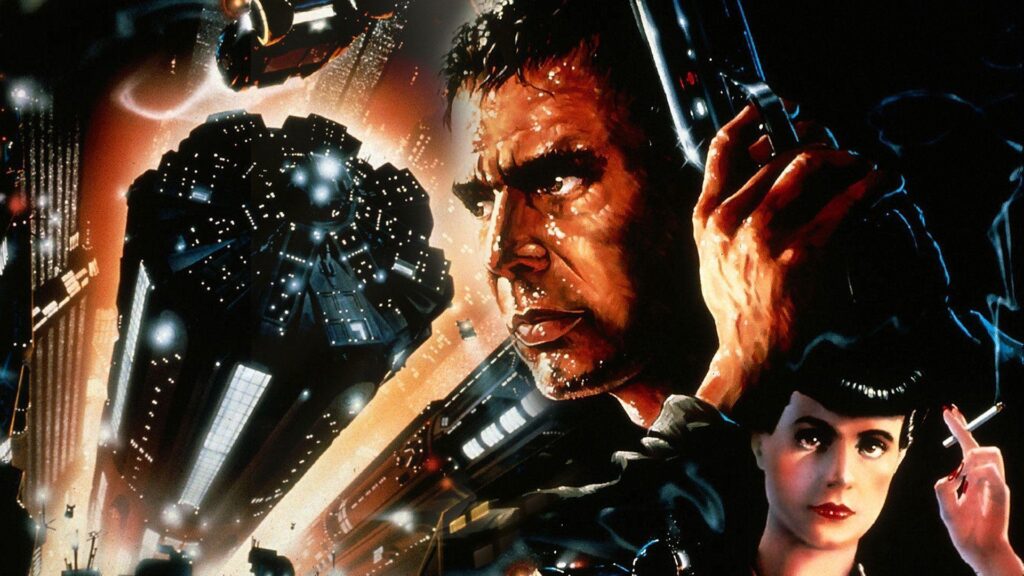
Blade Runner, directed by Ridley Scott and released in 1982, is a groundbreaking science fiction film adapted from Philip K. Dick’s novel Do Androids Dream of Electric Sheep? Set in a dystopian future Los Angeles in 2019, the film stars Harrison Ford as Rick Deckard, a former “blade runner” tasked with tracking down and “retiring” rogue bioengineered humans called replicants. With its haunting atmosphere, philosophical themes, and ahead-of-its-time visuals, Blade Runner became a cult classic and one of the most influential sci-fi films ever made.
Despite a lukewarm initial reception, the film gained recognition over time and now stands as a cornerstone of both cyberpunk and neo-noir cinema, celebrated for its world-building, complex characters, and exploration of what it means to be human.
Blade Runner 1982 – Official Trailer
What Is Blade Runner About?
Set in a dark and decaying Los Angeles in 2019, the film follows Rick Deckard, a retired “blade runner” who is forced back into duty to hunt down a group of Nexus-6 replicants—synthetic humans who have illegally returned to Earth from off-world colonies.
These replicants, led by Roy Batty (Rutger Hauer), are stronger and more intelligent than humans, but have a built-in four-year lifespan. As Deckard investigates their trail, he meets Rachael (Sean Young), a replicant who believes she is human due to implanted memories. His encounters with her and with Batty challenge his views on morality, empathy, and identity.
The story builds toward a climactic confrontation between Deckard and Batty, culminating in one of the most iconic scenes in cinema history—the “Tears in Rain” monologue.
Is Blade Runner Worth Watching?
Without question — Blade Runner is essential sci-fi viewing.
Why it’s worth your time:
-
- Philosophical Depth – Explores identity, memory, and mortality through replicants who are more human than they appear.
- Immersive Worldbuilding – A dark, neon-lit, rain-soaked Los Angeles that set the visual tone for cyberpunk and future sci-fi.
- Complex Characters – Antiheroes, tragic villains, and morally grey figures make every interaction emotionally layered.
- Multiple Cuts – With versions like The Final Cut and Director’s Cut, you can experience different thematic nuances.
- Vangelis’ Score – A legendary, ambient soundtrack that enhances the mood and tension of every scene.
Blade Runner Watch Order
Here is the best way to explore the Blade Runner universe:
Chronological Order:
-
- Blade Runner Black Out 2022 (anime short)
- 2036: Nexus Dawn (short film)
- 2048: Nowhere to Run (short film)
- Blade Runner (1982) — Final Cut recommended
- Blade Runner 2049 (2017)
- Blade Runner: Black Lotus (2021 anime series) (optional)
- Blade Runner 2099 (upcoming Amazon series)
Note: There are seven different versions of the original Blade Runner film, but The Final Cut (2007) is considered Ridley Scott’s definitive version.
Blade Runner – Frequently Asked Questions
Which version of Blade Runner should I watch?
Blade Runner: The Final Cut (2007) is Ridley Scott’s official version, with restored footage, no voiceover narration, and the famous unicorn dream scene that adds a layer of ambiguity to Deckard’s identity.
Is Deckard a replicant?
The film leaves this intentionally ambiguous. Different versions offer subtle clues, and Ridley Scott has confirmed that he intended Deckard to be a replicant, though Harrison Ford disagreed. The mystery adds to the film’s philosophical depth.
What is the “Tears in Rain” scene?
A powerful monologue delivered by Roy Batty moments before his death. It reflects on the impermanence of life and is widely regarded as one of the greatest scenes in film history.
Why did the film fail at the box office initially?
It was overshadowed by other 1982 sci-fi releases like E.T., The Thing, and Star Trek II. Its pacing and tone also differed from typical action-packed sci-fi films of the time.
Main Cast and Characters
| Actor | Character |
|---|---|
| Harrison Ford | Rick Deckard |
| Rutger Hauer | Roy Batty |
| Sean Young | Rachael |
| Edward James Olmos | Gaff |
| Daryl Hannah | Pris |
| M. Emmet Walsh | Bryant |
| William Sanderson | J.F. Sebastian |
| Brion James | Leon Kowalski |
| Joe Turkel | Eldon Tyrell |
Legacy and Cultural Impact
-
- Blade Runner inspired a wave of cyberpunk media, from The Matrix and Ghost in the Shell to Altered Carbon.
- Its production design and use of special effects became a visual blueprint for dystopian futures.
- The film raised deep questions about empathy, human identity, and free will in an age of artificial intelligence.
- The Spinner cars, Voight-Kampff test, and Tyrell Corporation became iconic sci-fi lore.
- The Final Cut’s release in 2007 revitalized interest and introduced the film to new audiences.
Conclusion – A Thought-Provoking, Timeless Sci-Fi Classic
Blade Runner isn’t just a sci-fi film — it’s a meditative exploration of what it means to be human. Its lasting appeal lies in its ambiguity, mood, and refusal to offer easy answers. Whether you’re drawn to philosophical storytelling, noir aesthetics, or thought-provoking sci-fi, Blade Runner stands as a genre-defining masterpiece that continues to inspire and provoke discussion to this day.
“All those moments will be lost in time, like tears in rain.” – Roy Batty
If you don’t know where to watch this Movie for FREE make sure to contact me via E-mail, or in the comments below. Thank you for reading and make sure to bookmark the site.
How useful was this post?
Click on a star to rate it!
Average rating 0 / 5. Vote count: 0
No votes so far! Be the first to rate this post.