
 5.5/10
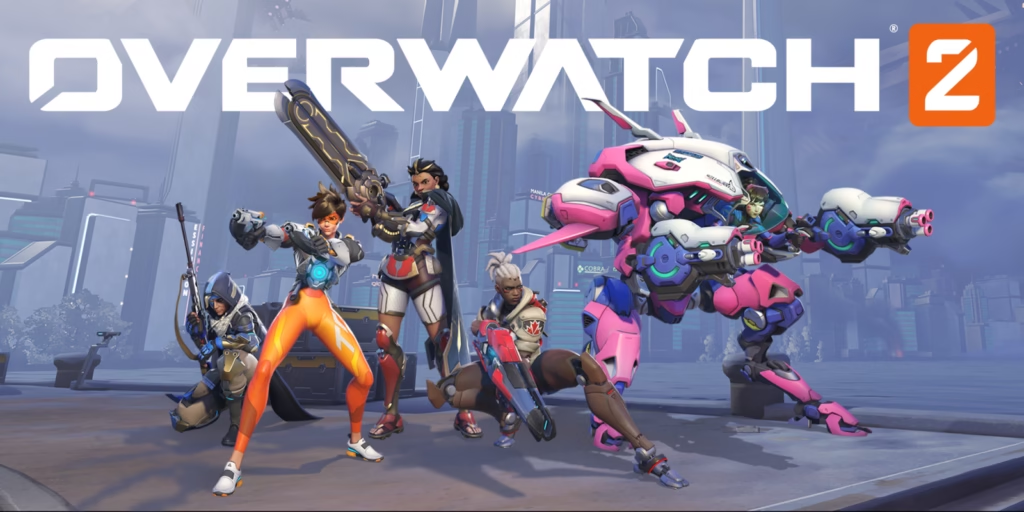
Overwatch 2 is a 2023 first-person hero shooter developed and published by Blizzard Entertainment. Released as the direct sequel—and eventual replacement—to the original Overwatch (2016), the game brought major changes to the franchise’s structure and gameplay. Officially released in August 2023 after an early access period beginning in October 2022, Overwatch 2 adopted a free-to-play model with cross-play and cross-progression across Nintendo Switch, PlayStation, Xbox, and PC.
The game reduced team sizes from 6v6 to 5v5, introduced new modes like Push, Flashpoint, and Clash, and replaced loot boxes with a seasonal battle pass system. Despite controversy over the cancellation of its large-scale story-driven PvE content, Overwatch 2 has maintained a strong presence with over 100 million total players by mid-2024.
Overwatch 2 – Official Cinematic Trailer
What is Overwatch 2 About?
At its core, Overwatch 2 is a team-based hero shooter. Players choose from a roster of 40+ heroes, each falling into one of three roles:
Damage (DPS): Focused on offense and eliminating enemies.
Tank: Designed to absorb damage, create space, and disrupt opponents.
Support: Healers and buffers who sustain the team.
Matches are objective-based, with modes like Control, Escort, Hybrid, and newer additions such as Push and Stadium. Blizzard also integrated a ping system, perks (Season 15), hero reworks, and seasonal updates that constantly evolve the game.
Is Overwatch 2 Worth Playing?
Yes—if you enjoy fast-paced, competitive shooters with diverse character playstyles and evolving seasonal content. While the removal of PvE disappointed many fans, Overwatch 2 excels as a dynamic, replayable PvP experience.
It’s worth playing because:
It remains one of the most polished hero shooters on the market.
Blizzard continues to add new heroes, maps, and modes each season.
Cross-progression and free-to-play access lower the barrier for new players.
Why Should I Play Overwatch 2?
Unique Heroes & Abilities – Every character feels distinct, with creative mechanics and synergies.
Tactical Depth – Team compositions, positioning, and ultimate economy add layers of strategy.
Evolving Content – Frequent seasonal events, hero reworks, and new modes keep gameplay fresh.
Competitive Play – Ranked ladders and esports presence make it appealing to both casual and competitive players.
Global Community – With over 100 million players worldwide, the game thrives on its large, active playerbase.
Gameplay Evolution
Team Size Reduction: From 6v6 to 5v5, emphasizing faster gameplay and reducing visual clutter.
Hero Redesigns: Notably Orisa (defense → offense-focused tank) and Doomfist (damage → tank).
New Modes:
Push – Escort-style tug-of-war with a central robot.
Flashpoint – Multiple capture points, first to three wins.
Clash – Sequential objective captures.
Stadium – Competitive-only, best-of-seven rounds with upgrades.
Seasonal Updates: Balance tweaks, new heroes, and cosmetic collaborations (e.g., One-Punch Man, Cowboy Bebop, Diablo IV).
Development and Release
Announced at BlizzCon 2019, Overwatch 2 faced years of delays and internal struggles at Blizzard. Originally planned to feature extensive PvE campaigns inspired by the canceled Project Titan, these were later scrapped in 2023 due to development issues.
Key milestones:
2019: Announcement at BlizzCon.
2021: Director Jeff Kaplan leaves; Aaron Keller becomes lead.
October 2022: Early access release; servers for original Overwatch shut down.
August 2023: Full release, focusing on PvP.
2023–2025: Continuous seasonal expansions, hero reworks, and introduction of perks, loot box revival, and map voting.
Reception
Overwatch 2 received generally favorable reviews from critics, with praise for its core gameplay but criticism for monetization and content cuts.
Positive: Improved pacing from 5v5, polished hero shooter mechanics, strong character design.
Negative: PvE cancellation, aggressive monetization, and loss of the premium Overwatch 1 model.
Metacritic scores:
PC: 79/100
PS5: 76/100
Despite initial backlash, the game has grown significantly, reaching 100M+ players by 2024. Steam reviews, which launched negatively, improved to “Mixed” after later updates.
Legacy and Impact
Established itself as a long-term service game with evolving seasonal structures.
Inspired competitors like Marvel Rivals (2024), sparking renewed competition in the hero shooter space.
Continues to fuel esports, though with less dominance than its predecessor’s peak.
Blizzard is committed to keeping it as a live-service centerpiece alongside Diablo IV and World of Warcraft.
Overwatch 2 FAQ
Q: Is Overwatch 2 free-to-play?
Yes. Unlike the premium Overwatch 1, the sequel is free across all platforms.
Q: What happened to PvE?
Large-scale PvE was scrapped in 2023, though limited story missions were released before being discontinued.
Q: Do I need to have played Overwatch 1?
No. All essential cosmetics and progress carried over for veteran players, but new players can start fresh in Overwatch 2.
Q: Is the game still popular?
Yes. While it faced criticism, it still maintains millions of active players worldwide and continues to expand seasonally.
Conclusion
Overwatch 2 represents both a new chapter and a controversial shift for Blizzard’s iconic shooter. Though the cancellation of PvE disappointed many fans, its core PvP gameplay remains fast, fun, and uniquely strategic. With frequent updates, a strong esports scene, and global community support, Overwatch 2 remains one of the most significant competitive shooters in gaming today.
Thank you for reading and make sure to bookmark the site, comment and follow up on the newest posts!
How useful was this post?
Click on a star to rate it!
Average rating 0 / 5. Vote count: 0
No votes so far! Be the first to rate this post.