
 6.9/10
 67% Critics / 74% Audience
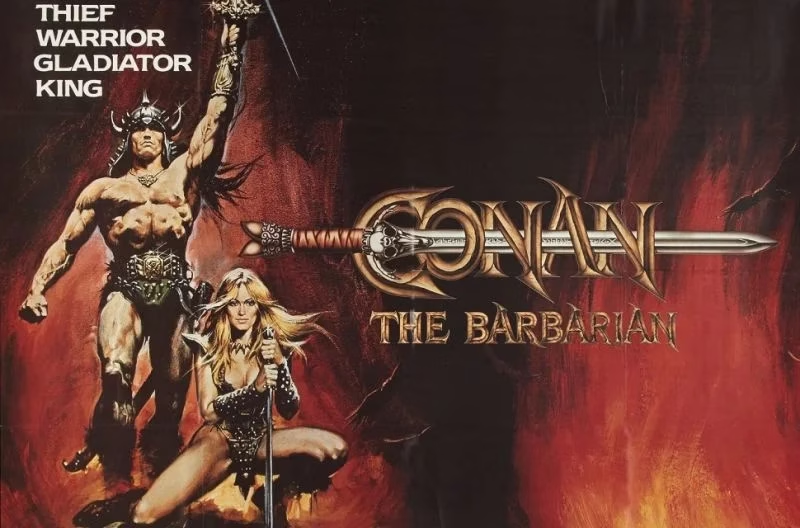
Few films have left a greater mark on the fantasy genre than John Milius’ 1982 Conan the Barbarian, an epic that redefined sword-and-sorcery cinema and launched Arnold Schwarzenegger into superstardom. Based on the pulp tales of Robert E. Howard, this brutal, mythic adventure follows a young warrior’s rise from slavery to vengeance, all set in the grim and mystical Hyborian Age.
With its combination of raw violence, striking cinematography, and a thunderous score by Basil Poledouris, Conan the Barbarian became more than a movie — it was a cinematic ritual of muscle, might, and destiny. The film’s gritty realism, magnificent set design, and mythic themes of strength and survival helped it become a cult classic that still influences fantasy and action filmmaking today.
Conan the Barbarian (1982) – Official Trailer
What Is Conan the Barbarian About?
The story begins with the forging of a sword and a father’s lesson to his son about the Riddle of Steel — a lesson that will define the young Conan’s fate. When a marauding cult led by Thulsa Doom (James Earl Jones) slaughters his village and parents, Conan is enslaved and forced to push the Wheel of Pain until he grows into a towering, hardened warrior.
After years of captivity and gladiatorial combat, he earns his freedom and sets out on a bloody journey to avenge his family. Along the way, he allies with Subotai, a cunning thief and archer, and Valeria, a fierce warrior woman whose love offers Conan fleeting peace before tragedy strikes again.
Their quest leads them into the heart of Doom’s serpent cult, a world of ancient temples, flesh sacrifices, and dark sorcery. What follows is a tale of vengeance and transcendence — one that explores steel, flesh, and the indomitable will of man.
Is Conan the Barbarian Worth Watching?
Absolutely — it remains one of the greatest fantasy epics ever filmed. Conan the Barbarian is not merely a muscle-bound spectacle; it’s a visual poem about revenge, survival, and destiny. Director John Milius infused the film with a mythological gravitas reminiscent of Homeric legends, while Schwarzenegger’s physicality and silent intensity perfectly embodied the archetypal warrior hero.
For fans of dark fantasy, practical effects, and timeless hero’s journeys, Conan the Barbarian offers a cinematic experience that feels simultaneously primal and grand. It’s as much a product of its era as it is an immortal myth that transcends time.
Why Should You Watch Conan the Barbarian?
Here’s why the film still matters over 40 years later:
-
The Birth of a Legend: This film launched Arnold Schwarzenegger’s movie career and cemented him as an icon of strength and determination.
-
Basil Poledouris’ Score: The film’s soundtrack is among the greatest ever composed — operatic, emotional, and deeply atmospheric.
-
Epic Visuals: From vast deserts to haunting temples, the film’s Spanish landscapes and practical sets are breathtaking.
-
Authentic Action: Every sword swing and stunt was performed by the actors themselves — raw and real.
-
Philosophical Depth: Beneath the blood and steel lies a Nietzschean exploration of willpower, destiny, and the nature of strength.
Conan the Barbarian isn’t just a film; it’s an experience — one that defined a generation of fantasy cinema.
Cast and Characters
-
Arnold Schwarzenegger as Conan the Barbarian – The enslaved Cimmerian warrior who becomes a legend through strength, vengeance, and destiny.
-
James Earl Jones as Thulsa Doom – The enigmatic cult leader whose serpent magic and hypnotic power make him a terrifying antagonist.
-
Sandahl Bergman as Valeria – The fearless warrior and thief whose love for Conan adds both tragedy and tenderness to the story.
-
Gerry Lopez as Subotai – The archer and loyal companion who aids Conan in his revenge.
-
Max von Sydow as King Osric – A noble ruler seeking the return of his daughter from Doom’s cult.
-
Mako as Akiro the Wizard – The mysterious necromancer who resurrects Conan and narrates his tale.
Each performance contributes to the film’s mythic tone — from Jones’ godlike menace to Bergman’s fierce humanity.
Production Background
Development of Conan the Barbarian was a long and difficult process. Producer Edward R. Pressman acquired the rights in the mid-1970s and brought in Oliver Stone to draft the initial screenplay — an ambitious post-apocalyptic take on the character. However, when Dino De Laurentiis took over production and John Milius stepped in as director, the script was rewritten to focus on Howard’s original Hyborian Age.
Filming took place primarily in Spain, using natural landscapes to convey an otherworldly realism. The sets, designed by Ron Cobb, drew inspiration from Dark Age cultures and Frank Frazetta’s artwork, giving the movie its distinctive visual identity.
The film’s practical effects and handcrafted swords — forged at $10,000 each — exemplified Milius’ commitment to authenticity. Many of the film’s stunts were performed by Schwarzenegger and Bergman themselves, contributing to the visceral energy that still defines its action sequences.
Themes and Symbolism
Conan the Barbarian explores profound philosophical ideas beneath its brutal surface:
-
The Riddle of Steel: A metaphor for strength, will, and the illusion of power — suggesting that true might lies not in the weapon but in the hand that wields it.
-
Death and Rebirth: Conan’s crucifixion and resurrection symbolize transformation — the hero’s journey from innocence to immortality.
-
Pagan Heroism: The film rejects organized morality and celebrates raw, primal courage — a reflection of Nietzschean ideals of the übermensch.
-
Individualism: Conan embodies self-reliance and defiance against oppression, mirroring the Reagan-era celebration of personal power and independence.
It’s both an action film and a philosophical parable — a story where myth and flesh are one.
Music and Cinematic Score
Composed by Basil Poledouris, the soundtrack of Conan the Barbarian is among cinema’s finest. Orchestral, choral, and thunderous, it drives the film with operatic force.
Key tracks include:
-
“Anvil of Crom” – The iconic opening theme, filled with pounding drums and heroic horns.
-
“Riders of Doom” – The haunting choral anthem that introduces Thulsa Doom’s serpent cult.
-
“Love Theme” – A melancholic melody that underscores Conan and Valeria’s tragic romance.
Poledouris’ music gives Conan its soul — transforming it from a simple revenge story into a timeless legend.
Box Office and Reception
Upon its release in May 1982, Conan the Barbarian became a box office hit, grossing between $69 million and $79 million worldwide against its $20 million budget.
Critics were divided — some dismissed it as overly violent or simplistic, while others hailed its operatic ambition and striking visuals. Over time, its reputation grew, and today it’s widely regarded as a cult masterpiece that defined the fantasy genre for decades.
The film’s success earned Sandahl Bergman a Golden Globe Award for Best New Star, and Basil Poledouris’ score is still celebrated as one of cinema’s great achievements.
Legacy and Impact
The legacy of Conan the Barbarian is immense. It not only redefined the sword-and-sorcery genre but also established Arnold Schwarzenegger as one of Hollywood’s most bankable stars. The film inspired countless imitators — from The Beastmaster to Deathstalker — and paved the way for future fantasy franchises like The Lord of the Rings.
It also influenced pop culture and politics alike: Schwarzenegger’s “Conan the Republican” persona followed him into his political career, and the film’s philosophical undertones continue to be analyzed by scholars and fans alike.
The film spawned a sequel, Conan the Destroyer (1984), and inspired the later 2011 reboot starring Jason Momoa. Though none captured the same raw magic, the original remains untouchable — the blueprint for cinematic barbarism.
Conan the Barbarian (1982) FAQ
Q: Is Conan the Barbarian based on a book?
Yes, it’s based on the Conan stories by Robert E. Howard, first published in the 1930s in Weird Tales magazine.
Q: Who composed the iconic soundtrack?
The music was composed by Basil Poledouris, whose orchestral score is considered one of the greatest in film history.
Q: What made Arnold Schwarzenegger perfect for the role?
His physique, intensity, and minimal-dialogue charisma perfectly embodied the primal warrior image that defined the character.
Q: Was the movie controversial?
Yes. Upon release, it drew criticism for its violence and perceived fascist overtones, though it was later reevaluated as a philosophical action film.
Q: How successful was it commercially?
It grossed between $68.9 million and $79.1 million, making it one of 1982’s major box office successes.
Q: Did it win any awards?
Yes. Sandahl Bergman won a Golden Globe for Best New Star, and the film was nominated for multiple Saturn Awards, including Best Fantasy Film.
Q: How did it influence later movies?
It shaped the visual and thematic foundation for nearly all fantasy epics that followed — from Red Sonja and Beastmaster to The Lord of the Rings trilogy.
Conclusion
Conan the Barbarian stands as both a cinematic relic and a timeless legend — a brutal, beautiful meditation on strength, fate, and the human will to overcome.
Director John Milius and star Arnold Schwarzenegger created not just a hero, but a myth reborn from steel and fire. From its unforgettable soundtrack to its larger-than-life performances, Conan the Barbarian remains the definitive sword-and-sorcery film — as raw, grand, and uncompromising as its titular hero.
More than four decades later, its legacy endures — not merely as a story of vengeance, but as a cinematic hymn to power, freedom, and the indomitable spirit of man.
If you don’t know where to watch this Movie for FREE make sure to contact me via E-mail, or in the comments below. Thank you for reading and make sure to bookmark the site.
How useful was this post?
Click on a star to rate it!
Average rating 0 / 5. Vote count: 0
No votes so far! Be the first to rate this post.