
 6.9/10
 68% Critics / 73% Audience
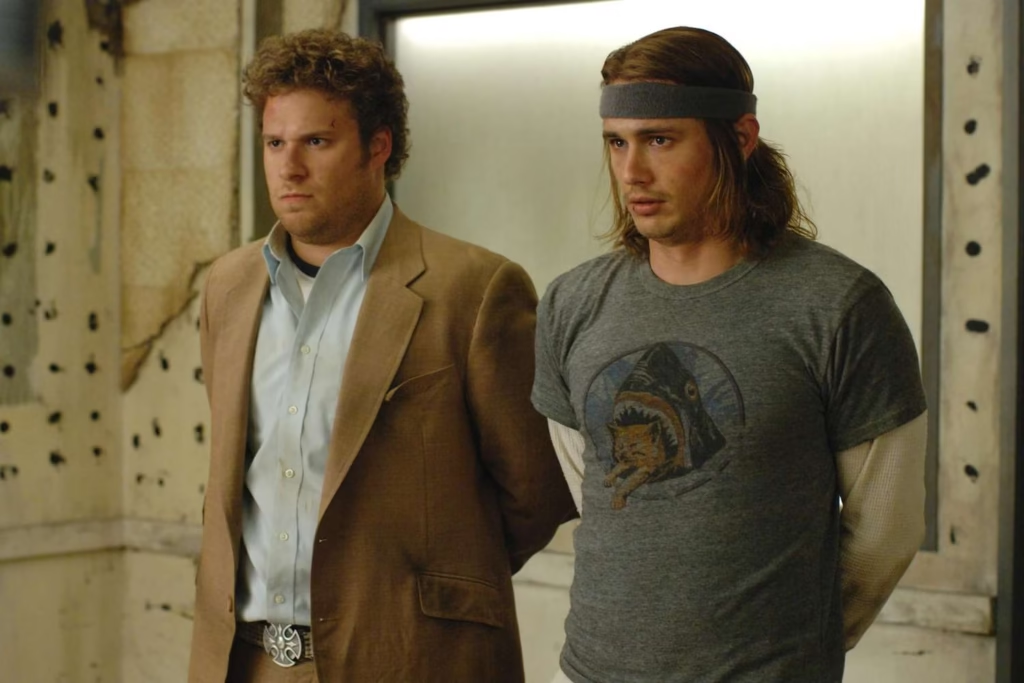
When Pineapple Express hit theaters in 2008, it wasn’t just another stoner comedy—it was a wild, genre-bending adventure that blended sharp humor, explosive action, and a surprising amount of heart. Directed by David Gordon Green and written by Seth Rogen and Evan Goldberg, the film stars Seth Rogen as Dale Denton and James Franco as Saul Silver—an unlikely duo whose lives spiral into chaos after witnessing a murder.
Produced by Judd Apatow, who had already made waves with Superbad and Knocked Up, Pineapple Express marked a turning point for stoner cinema. It turned lazy high jinks into a fully cinematic, adrenaline-fueled experience. Released by Columbia Pictures on August 6, 2008, the movie earned over $102 million worldwide against a $26 million budget, becoming a cult classic and securing Franco a Golden Globe nomination for Best Actor in a Comedy.
Beyond the laughs, the film’s legacy continues to shape comedy filmmaking—its mix of action and absurdity proving that even the highest of ideas can reach cinematic heights.
Pineapple Express – Official Trailer
What Is Pineapple Express About?
At its core, Pineapple Express is a story about two unlikely friends thrown into a violent, chaotic world.
Dale Denton is a process server who spends his days smoking weed and serving subpoenas. His dealer, Saul Silver, supplies him with a rare marijuana strain called Pineapple Express. When Dale accidentally witnesses a murder committed by local drug lord Ted Jones (Gary Cole) and a corrupt cop Carol Brazier (Rosie Perez), he panics—leaving behind a roach containing the distinctive strain.
Ted traces the weed back to Saul, forcing the pair to go on the run. Along the way, they’re hunted by hitmen, betrayed by fellow dealers, and hilariously out of their depth as they try to survive a world that suddenly feels more like an action movie than a stoner daydream.
Despite the chaos, Pineapple Express is ultimately about friendship and loyalty. As Dale and Saul stumble through gunfights, car chases, and drug dens, their growing bond becomes the heart of the story—showing that even under the influence, true friendship can shine through.
Is Pineapple Express Worth Watching?
Absolutely. Pineapple Express remains one of the most original and entertaining comedies of the 2000s. It’s the rare stoner film that successfully combines over-the-top humor with stylish action sequences and sharp writing.
Here’s why it stands out:
-
Unpredictable Blend of Genres: It’s part buddy comedy, part action movie, and part absurdist crime thriller—all rolled into one.
-
Iconic Performances: James Franco’s portrayal of the goofy, lovable Saul Silver earned him a Golden Globe nomination and remains one of his career highlights.
-
Smart Yet Ridiculous Humor: The dialogue between Dale and Saul—filled with paranoia, friendship, and confusion—feels hilariously authentic.
-
Stylish Cinematography: Director David Gordon Green brought a unique visual polish rarely seen in stoner comedies.
-
Timeless Soundtrack and Energy: From Electric Avenue to Dr. Greenthumb, the music amplifies the film’s chaotic tone perfectly.
If you enjoy movies like Superbad, 21 Jump Street, or This Is the End, Pineapple Express sits comfortably among the best in that lineage—funny, frantic, and endlessly rewatchable.
Why Should I Watch Pineapple Express?
Because Pineapple Express takes the stoner comedy formula and turns it into an action-packed adventure with real stakes.
Rather than just being about weed jokes, the film explores themes of friendship, loyalty, and moral growth, hidden beneath its haze of smoke and slapstick violence. It’s a story of two men forced to grow up—sort of—while running for their lives.
Reasons to watch:
-
Hilarious chemistry between Rogen and Franco, whose natural banter carries the entire film.
-
A cult classic for a reason—it defined an entire generation’s idea of “stoner comedy.”
-
Unlikely emotional depth hidden beneath the chaos and profanity.
-
Memorable action sequences that parody and celebrate Hollywood blockbusters at the same time.
-
Cultural legacy: The film even inspired the name of a real cannabis strain, cementing its place in pop culture.
Whether you’re watching it for the laughs or the nostalgia, Pineapple Express still delivers an unforgettable ride.
Cast and Characters
-
Seth Rogen as Dale Denton: A lazy process server whose life unravels after witnessing a murder.
-
James Franco as Saul Silver: A laid-back weed dealer with a heart of gold and a head full of smoke.
-
Danny McBride as Red: Saul’s violent yet oddly loyal supplier who provides some of the movie’s wildest moments.
-
Gary Cole as Ted Jones: A ruthless drug lord who will stop at nothing to silence witnesses.
-
Rosie Perez as Carol Brazier: A corrupt cop entangled in Ted’s criminal operations.
-
Craig Robinson and Kevin Corrigan as hitmen Matheson and Budlofsky: Lovable but lethal enforcers.
-
Amber Heard as Angie Anderson: Dale’s much-younger girlfriend, representing his immaturity.
-
Ed Begley Jr. and Nora Dunn as Angie’s strict, disapproving parents.
The ensemble’s chemistry brings chaotic energy to every scene—especially the unforgettable trio of Rogen, Franco, and McBride, whose constant near-death arguments remain comedic gold.
Production and Inspiration
Producer Judd Apatow revealed that Pineapple Express was inspired by Brad Pitt’s stoner character Floyd from True Romance. Apatow imagined what would happen if that character suddenly got involved in a full-blown action movie—and the rest was history.
-
Director David Gordon Green approached the film with cinematic ambition, citing The Blues Brothers and Midnight Run as influences.
-
Originally, Seth Rogen was supposed to play Saul, and Franco was to play Dale—but Apatow suggested swapping roles after a table read, resulting in perfect comedic balance.
-
The film’s $26 million budget was lower than Rogen hoped for, as studios were hesitant to fund a “weed movie.” Despite that, it became a major box office hit.
-
Ironically, Pineapple Express also led to the naming of a real cannabis strain that remains popular to this day.
Rogen later described it best: “It’s a movie about friendship and weed—but mostly friendship.”
Box Office and Reception
Released on August 6, 2008, Pineapple Express grossed $12.1 million on its opening day and $101.5 million worldwide by the end of its theatrical run. It ranked second at the box office behind The Dark Knight, an impressive feat for a stoner comedy.
Critically, it received generally positive reviews:
-
Rotten Tomatoes: 68% approval
-
Metacritic: 64/100
-
CinemaScore: B+ from audiences
Critics praised its writing, chemistry, and energy. Michael Phillips of the Chicago Tribune admired its dialogue and humor, while Kelly Vance of East Bay Express noted Franco “steals the movie easily.”
The only divisive aspect was its sudden bursts of violent action, which some found jarring next to the comedy—but for many fans, that contrast became part of the film’s charm.
Soundtrack Highlights
The Pineapple Express soundtrack perfectly complements the film’s chaotic energy, blending reggae, hip-hop, and classic rock.
Notable Tracks:
-
“Pineapple Express” – Huey Lewis and the News
-
“Electric Avenue” – Eddy Grant
-
“Dr. Greenthumb” – Cypress Hill
-
“Poison” – Bell Biv DeVoe
-
“Wanted Dread and Alive” – Peter Tosh
-
“Time Will Tell” – Bob Marley
-
“Everybody Have Fun Tonight” – Wang Chung
Although M.I.A.’s Paper Planes appeared in the trailer, it wasn’t used in the actual film—but the trailer’s popularity helped push the song to the top of the charts.
Cancelled Sequel and Legacy
Following its success, Rogen, Goldberg, and Apatow discussed a sequel, but production costs halted the idea. Rogen later joked, “We wanted too much money.”
A fake trailer for Pineapple Express 2 appeared in the 2013 film This Is the End as an April Fool’s gag, giving fans a hilarious glimpse of what a sequel might’ve looked like.
Even without a follow-up, Pineapple Express remains one of the defining comedies of the 2000s, influencing countless films in both the stoner and buddy-action genres. Its mix of violence, absurdity, and genuine heart continues to attract new audiences.
Pineapple Express FAQ
1. Is Pineapple Express based on a true story?
No, but it’s loosely inspired by classic crime and buddy movies, mixed with Rogen and Goldberg’s signature humor.
2. What does “Pineapple Express” mean?
In the film, it refers to a rare strain of marijuana—but it’s also a real meteorological term for a Pacific weather pattern, which inspired the name.
3. Is there going to be a Pineapple Express 2?
No official sequel exists, though a parody trailer was made in 2013 for This Is the End.
4. Who wrote Pineapple Express?
Seth Rogen and Evan Goldberg wrote the screenplay, continuing their creative partnership after Superbad.
5. Why is Pineapple Express so popular?
Because it blends genuine action with relatable humor and unforgettable chemistry between Rogen and Franco.
Conclusion
Pineapple Express isn’t just a stoner comedy—it’s a wild buddy adventure that perfectly captures the chaos of bad luck, friendship, and the paranoia of being way too high. Its clever writing, unforgettable performances, and blend of genres turned it into one of the most influential comedies of the 21st century.
Fifteen years later, its legacy endures as a cult favorite—quoted endlessly, rewatched religiously, and still as funny (and ridiculous) as the day it released. Whether you come for the weed jokes or stay for the friendship, Pineapple Express guarantees a high-quality trip.
If you don’t know where to watch this Movie for FREE make sure to contact me via E-mail, or in the comments below. Thank you for reading and make sure to bookmark the site.
How useful was this post?
Click on a star to rate it!
Average rating 0 / 5. Vote count: 0
No votes so far! Be the first to rate this post.