
 9.0/10
 98% Critics / 97% Audience
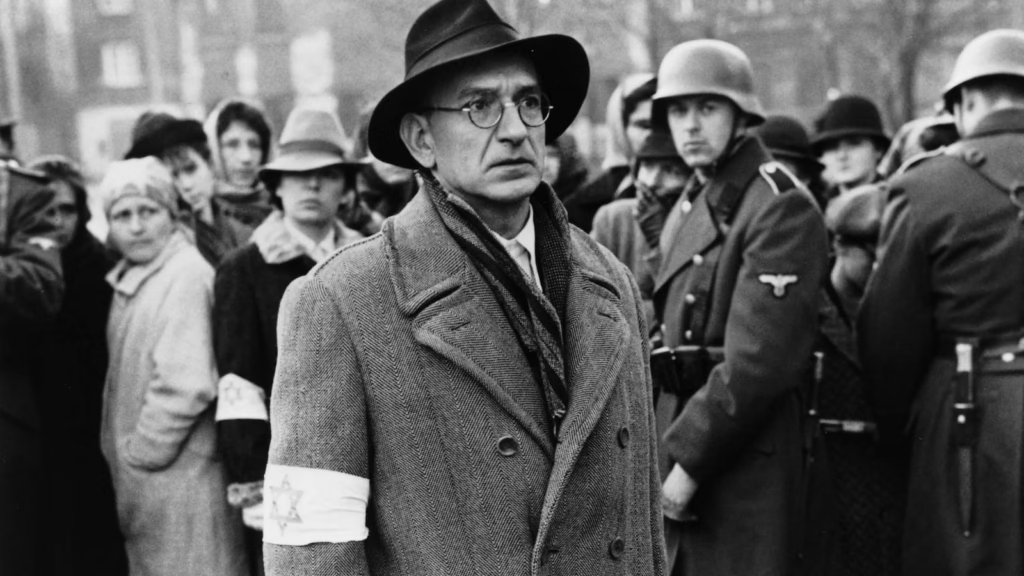
Released in 1993 and directed by Steven Spielberg, Schindler’s List is a deeply emotional and haunting portrayal of one man’s moral awakening during one of history’s darkest times — the Holocaust. Based on Thomas Keneally’s novel Schindler’s Ark, the film follows Oskar Schindler (played by Liam Neeson), a German businessman and member of the Nazi Party, who initially seeks profit through wartime manufacturing but gradually transforms into a savior for more than a thousand Jewish people. Supported by a stellar cast including Ben Kingsley as Itzhak Stern and Ralph Fiennes as the chilling SS officer Amon Göth, the film stands as one of cinema’s most powerful depictions of human resilience and compassion.
Spielberg chose to shoot the movie in black and white to evoke a documentary-like realism, with selective use of color in key moments — a creative choice that made Schindler’s List instantly iconic. Accompanied by John Williams’ haunting musical score, featuring violinist Itzhak Perlman, the film became a global success, both critically and culturally, earning seven Academy Awards, including Best Picture and Best Director.
Schindler’s List – Official Trailer (25th Anniversary)
What Is Schindler’s List About?
The film tells the story of Oskar Schindler, a German industrialist who uses his factory in Kraków to employ Jewish workers during World War II. At first motivated by greed, Schindler witnesses the horrific persecution of Jews and undergoes a profound change of heart. He begins to bribe Nazi officials and risk his own life and fortune to protect his workers from deportation and death in concentration camps.
Through Schindler’s transformation, Spielberg explores the complex moral choices of individuals living under tyranny and the extraordinary impact of compassion in the face of unimaginable cruelty. The story unfolds with realism and emotional restraint, focusing not only on Schindler’s actions but also on the suffering and endurance of the Jewish community.
Why Should You Watch Schindler’s List?
Schindler’s List is more than just a film — it is a historical document and a moral lesson on humanity’s capacity for good amid overwhelming evil. It challenges viewers to confront the atrocities of the Holocaust while reflecting on the importance of empathy, courage, and moral responsibility.
-
Historical significance: The film captures the Holocaust with accuracy and respect, ensuring that the horrors of genocide are neither forgotten nor minimized.
-
Emotional impact: Its storytelling, performances, and cinematography evoke deep emotional resonance without sensationalism.
-
Moral depth: Schindler’s transformation reminds us that redemption is possible even in the darkest times.
-
Cinematic excellence: Spielberg’s direction and Janusz Kamiński’s cinematography turn each frame into a powerful piece of visual storytelling.
-
Universal message: It serves as a timeless reminder that individual actions can change the course of history.
Whether you’re a student of history, a lover of cinema, or someone seeking stories of hope and humanity, Schindler’s List remains an essential viewing experience.
Cast and Performances
-
Liam Neeson as Oskar Schindler delivers a commanding performance, portraying both charisma and internal conflict as his character evolves from opportunist to savior.
-
Ben Kingsley as Itzhak Stern provides quiet strength and moral grounding, acting as Schindler’s conscience and guide.
-
Ralph Fiennes as Amon Göth brings chilling realism to the role of a brutal SS officer, embodying the terrifying banality of evil.
-
Caroline Goodall as Emilie Schindler gives the film emotional warmth, highlighting loyalty and quiet courage amid chaos.
The ensemble cast contributes to the film’s sense of realism, ensuring that every performance, no matter how small, feels authentic and necessary.
Production and Cinematic Approach
Spielberg approached Schindler’s List with a documentary-like realism, filming on location in Poland and even near the grounds of Auschwitz. The choice to shoot in black and white lends the movie a timeless, stark quality, emphasizing the contrast between life and death, innocence and evil.
Cinematographer Janusz Kamiński created visuals reminiscent of wartime footage, while the brief use of color — most notably the red coat of a little girl — serves as a powerful symbol of innocence lost. John Williams’ emotionally charged score, paired with Itzhak Perlman’s violin, captures the soul of the film, adding to its enduring emotional power.
Spielberg also founded the Shoah Foundation after completing the movie, dedicating himself to preserving the testimonies of Holocaust survivors. This commitment to remembrance solidified Schindler’s List as not just a cinematic masterpiece, but also a humanitarian legacy.
Themes and Symbolism
Schindler’s List explores themes of redemption, morality, humanity, and survival. Schindler’s gradual awakening symbolizes the idea that even one person can make a difference. The girl in the red coat stands out as a symbol of innocence amid horror — a visual reminder of how visible the atrocities were, yet how little was done to stop them.
The candles seen at the film’s beginning and end symbolize hope and continuity, representing life rekindled after immense tragedy. The black-and-white cinematography reflects the moral and emotional desolation of the era, while the few bursts of color signify the persistence of human spirit.
Reception and Legacy
Upon release, Schindler’s List received universal acclaim. Critics praised Spielberg’s restraint, the performances, and the film’s emotional honesty. It went on to win seven Academy Awards, including Best Picture, Best Director, and Best Cinematography, as well as numerous BAFTA and Golden Globe Awards.
Beyond its awards, Schindler’s List became a vital educational tool used in classrooms and museums worldwide to teach about the Holocaust. It continues to inspire discussion about moral responsibility, empathy, and remembrance.
Today, it stands as a cornerstone of historical cinema — a film that not only portrays tragedy but also the triumph of compassion in the face of evil.
Schindler’s List FAQ
What is Schindler’s List based on?
The film is based on Thomas Keneally’s 1982 novel Schindler’s Ark, which recounts the true story of Oskar Schindler and the people he saved during World War II.
Is Schindler’s List historically accurate?
Yes, while dramatized, it stays true to historical events and was extensively researched. Many of the characters and situations are based directly on real individuals and testimonies.
Why is the film shot in black and white?
Spielberg chose black and white to give the film a documentary-style realism and to reflect the bleakness of the Holocaust era.
Who composed the film’s score?
John Williams composed the score, with violinist Itzhak Perlman performing the haunting main theme that has become synonymous with the film’s emotional weight.
What is the significance of the girl in the red coat?
Her red coat symbolizes innocence and the world’s indifference to the suffering of the Jews during the Holocaust. It is one of the film’s most powerful visual metaphors.
Conclusion
Schindler’s List remains one of the most profound and emotionally resonant films ever made. Steven Spielberg transformed a story of unbearable tragedy into one of courage, compassion, and redemption. Through its stunning performances, haunting visuals, and powerful message, the film continues to educate and move audiences across generations.
It is not merely a movie — it is a memorial in motion, a cinematic reminder that even in the darkest of times, humanity can shine through.
If you don’t know where to watch this Movie for FREE make sure to contact me via E-mail, or in the comments below. Thank you for reading and make sure to bookmark the site.
How useful was this post?
Click on a star to rate it!
Average rating 0 / 5. Vote count: 0
No votes so far! Be the first to rate this post.