
 8.6/10
 81% Critics / 92% Audience
The Crown is one of the most ambitious and visually striking television dramas ever produced, offering an in-depth look into the political, personal, and cultural events that shaped the reign of Queen Elizabeth II. From its breathtaking cinematography to its richly detailed character portrayals, the series transforms real historical milestones into fully realized dramatic narratives. Each episode blends political complexity with personal emotion, allowing viewers to witness the pressures, duties, and sacrifices of monarchy in a way that feels both intimate and monumental. Over six seasons, the show spans nearly six decades, chronicling key moments from Elizabeth’s marriage to Prince Philip in 1947 all the way to the wedding of Prince Charles and Camilla Parker Bowles in 2005.
What elevates the series is its commitment to performance, production design, and narrative continuity. The cast changes every two seasons, matching the natural aging of its characters, which allows the story to move through time without losing authenticity. This approach also highlights different interpretations of the Queen, each actress bringing a new emotional texture suited to the era being explored. Despite criticisms regarding historical accuracy, The Crown remains a cultural landmark, often blurring the lines between prestige television and cinematic storytelling. Its ability to humanize the royal family while maintaining dramatic weight has positioned it as one of Netflix’s defining productions.
The Crown – Official Trailer
What Is The Crown About?
The Crown traces the reign of Queen Elizabeth II, using historical events as the framework for a character-driven drama that explores leadership, duty, family conflict, political transitions, and the evolving role of the monarchy. The series begins shortly before Elizabeth’s marriage to Philip Mountbatten and follows her unexpected rise to the throne after King George VI’s death. Each season focuses on major political crises, domestic struggles within the royal household, and cultural shifts that redefine Britain’s position in the world.
Throughout the narrative, major events are reinterpreted through dramatic storytelling: the Suez Crisis, Churchill’s resignation, the Profumo scandal, the marriage and divorce of Charles and Diana, and the rise of modern media scrutiny. As the decades progress, the Queen faces constant challenges balancing her personal desires with her constitutional obligations. The series also explores the tension between tradition and modernization, particularly as younger members of the family push against the rigid expectations of royal life.
Bulletpoints to highlight major arcs:
-
Seasons 1–2: Early reign, political crises, Princess Margaret’s heartbreak
-
Seasons 3–4: Cultural change, the arrival of Diana, Thatcher’s policies
-
Seasons 5–6: Divorce, tragedy, the Al-Fayed storyline, Charles’s remarriage
The show evolves tonally over time, becoming darker, more political, and more emotionally layered as public scrutiny of the monarchy intensifies.
Cast and Characters
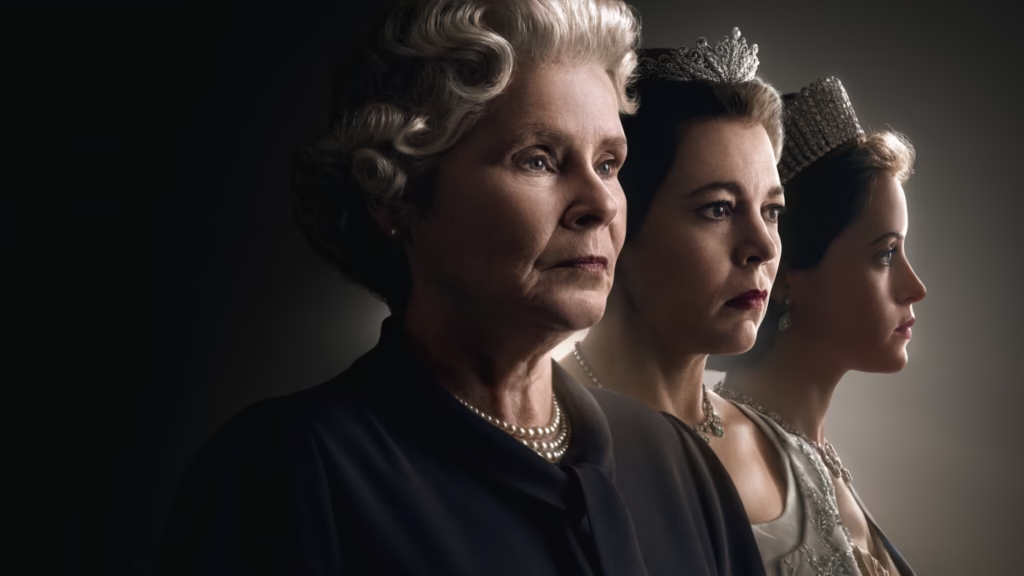
The cast of The Crown is central to its identity, with each pair of seasons featuring a completely new ensemble to portray the characters at different ages. Claire Foy, Olivia Colman, and Imelda Staunton each offer distinct portrayals of Queen Elizabeth II, capturing her evolution from a hesitant young monarch to a seasoned leader navigating the complexities of the modern era. Their performances highlight different emotional stages of the Queen’s life, from early insecurity to mature resilience.
Prince Philip’s character, portrayed by Matt Smith, Tobias Menzies, and Jonathan Pryce, is equally compelling, showing the Duke’s journey from a spirited naval officer to an elder statesman wrestling with identity, purpose, and legacy. Princess Margaret, played by Vanessa Kirby, Helena Bonham Carter, and Lesley Manville, adds dramatic intensity through her rebellious personality and turbulent romantic life.
Bulletpoints for key recurring characters:
-
Prince Charles: Josh O’Connor and Dominic West portray his coming-of-age, marriage to Diana, and political ambitions.
-
Princess Diana: Emma Corrin and Elizabeth Debicki deliver two critically acclaimed performances capturing her fragility, charisma, and struggles.
-
Prime Ministers: John Lithgow as Churchill, Jason Watkins as Harold Wilson, and Gillian Anderson as Margaret Thatcher contribute powerful political counterpoints to the Queen.
Each season’s cast brings a new perspective, shaping the monarchy’s internal dynamics and the show’s emotional tone.
Production and Development
The development of The Crown stands out as one of Netflix’s most expensive and meticulously crafted productions. Created by Peter Morgan, the series builds on earlier works like The Queen (2006) and The Audience (2013), expanding the narrative into a multi-season exploration of the monarchy. The show’s budget—reported to exceed $260 million—allowed the production team to recreate iconic royal settings with remarkable detail.
Filming took place across the United Kingdom and internationally, using a combination of studio sets, historical estates, and digital enhancements. Lancaster House, Ely Cathedral, Wrotham Park, and Wilton House served as doubles for Buckingham Palace and other royal locations. This dedication to authenticity enhances the series’s immersive quality, even when dramatic license is employed.
The decision to recast actors every two seasons was a bold production choice that paid off creatively. It allowed the series to maintain realism without relying on extensive prosthetics or visual effects to depict aging. The show’s consistent visual language—soft lighting, muted color palettes, and sweeping camera movements—creates a signature style that reinforces the gravity of its historical subject matter.
Costumes, props, and set designs were crafted with archival research, resulting in some of the most accurate period recreations ever seen on television. Even when controversial, the production values make The Crown an unmatched visual experience.
Themes
At its core, The Crown explores the conflict between personal identity and public obligation. Much of the drama centers on the Queen’s struggle to balance emotional truth with the expectations of monarchy, creating a recurring theme of sacrifice. The show also interrogates power—how it is wielded, inherited, contested, and protected.
Another major theme is generational change. Each decade presents new challenges as the monarchy confronts modernity, media scrutiny, political reform, and shifting cultural values. The tension between tradition and adaptation defines many character arcs.
Bulletpoints identifying key thematic layers:
-
Public duty vs. private life
-
Media influence and the shaping of public perception
-
The burden and isolation of leadership
-
Classism and political change in post-war Britain
-
Love, betrayal, marriage, and the impossible expectations placed on royal relationships
Across its six seasons, The Crown presents monarchy not as a fairy tale but as a complex institution shaped by human flaws, political necessity, and historical momentum.
Why You Should Watch The Crown
The Crown is worth watching for its exceptional storytelling, world-class performances, and its ability to transform historical events into deeply emotional narratives. The series blends political drama with intimate character studies, offering a rare look at the personal struggles behind global headlines. Even viewers unfamiliar with British history will find the show accessible due to its character-driven approach.
The production quality is another standout reason to watch. From lavish costumes to breathtaking recreations of historical settings, the show delivers cinematic visuals in every episode. Each performance—particularly those portraying the Queen, Princess Margaret, and Princess Diana—offers depth, complexity, and nuance rarely found in traditional biographical dramas.
Bulletpoints highlighting reasons to watch:
-
Award-winning performances
-
Complex character development
-
High-budget production design
-
Emotional storytelling across decades
-
Balanced mix of politics, romance, and personal conflict
Whether you watch for the drama, the history, or the performances, The Crown remains one of Netflix’s signature achievements.
Is The Crown Worth Watching?
Yes. The Crown is absolutely worth watching, especially for viewers who enjoy prestige dramas rooted in real historical events. While it sometimes takes creative liberties, it succeeds in offering emotional insight into the monarchy and the individuals who shaped it. The series captures the psychological and emotional cost of power, presenting Elizabeth II not just as a symbol but as a fully realized human being navigating extraordinary circumstances.
For audiences who appreciate political intrigue, royal history, or complex character portrayals, The Crown consistently delivers compelling narrative arcs. Even its later seasons, which received more mixed reviews, offer memorable performances—especially Elizabeth Debicki’s portrayal of Diana. The show’s commitment to excellence in writing, cinematography, and acting ensures it remains engaging from start to finish.
Reception and Critical Response
Critics widely praised the first four seasons of The Crown for their performances, direction, writing, and production value. Claire Foy’s early portrayal of the Queen earned widespread acclaim, while Olivia Colman and Gillian Anderson brought powerful presence to seasons three and four. John Lithgow’s depiction of Winston Churchill was especially celebrated, winning multiple awards.
The series maintained high ratings through seasons one to four, with season four often cited as the show’s creative peak. However, seasons five and six received more mixed reactions due to increased dramatic license and portrayals of more recent events. Some critics argued that dramatizing sensitive modern history created inaccuracies that were potentially misleading.
Bulletpoints summarizing reception:
-
Seasons 1–4: Near-universal acclaim
-
Seasons 5–6: Mixed reviews but praised performances
-
Multiple awards including Emmys and Golden Globes
-
Praise for production, criticism for historical liberties
Despite controversies, The Crown remains one of Netflix’s most decorated series, solidifying its legacy as a landmark in television drama.
The Crown (TV Series) Watch Order
Watching The Crown is best done in chronological order, as every season builds on character developments and political shifts introduced in previous episodes. The series is structured to reflect different eras of Elizabeth II’s reign, making the natural progression essential for understanding long-term story arcs.
Recommended watch order:
-
Season 1 – Early reign, Churchill era
-
Season 2 – Suez Crisis, Profumo affair
-
Season 3 – Harold Wilson’s government, rise of Charles
-
Season 4 – Thatcher era, Diana enters the story
-
Season 5 – “War of the Waleses,” media frenzy
-
Season 6 – Diana’s death, William and Kate’s early relationship
Because each pair of seasons features a new cast, following the release order ensures the transitions feel seamless and intentional. Viewers new to royal history may also benefit from watching short documentaries or reading historical summaries alongside the show to distinguish dramatic license from factual events.
The Crown FAQ
Is The Crown historically accurate?
It blends real history with dramatized storytelling. Major events are correct, but conversations, motivations, and some timelines are fictionalized.
Do I need to know British history to enjoy the show?
No. The series explains enough context within the story for newcomers to follow.
Which season is considered the best?
Season 4 is widely regarded as the show’s peak due to its portrayal of Diana and Thatcher.
Is the show respectful to the royal family?
It is generally balanced, though some portrayals sparked controversy due to their dramatic interpretation.
Why does the cast change every two seasons?
To reflect aging and maintain realism without relying on heavy makeup or CG effects.
Conclusion
The Crown stands as one of the defining television dramas of the streaming era, blending cinematic production values with emotionally rich storytelling. Through its meticulous attention to detail, it transforms historical events into intimate human stories that resonate far beyond their political implications. Each season builds on the last, offering new insights into the monarchy, the pressures of leadership, and the sacrifices required of individuals living under constant public scrutiny. While some controversy surrounds the series’s historical liberties, its artistic impact and cultural reach cannot be denied.
In its final seasons, The Crown concludes its exploration of the House of Windsor with the same ambition and emotional depth that defined its beginning. Whether portraying triumph, tragedy, or quiet personal struggle, the show maintains a consistent thematic focus on duty, identity, and the cost of power. For viewers seeking a richly layered drama that spans generations, The Crown remains an essential experience and a landmark in serialized storytelling.
If you don’t know where to watch this Series for FREE make sure to contact me via E-mail, or in the comments below. Thank you for reading and make sure to bookmark the site.
How useful was this post?
Click on a star to rate it!
Average rating 0 / 5. Vote count: 0
No votes so far! Be the first to rate this post.