
 9.0/10
 78% Critics / 83% Audience
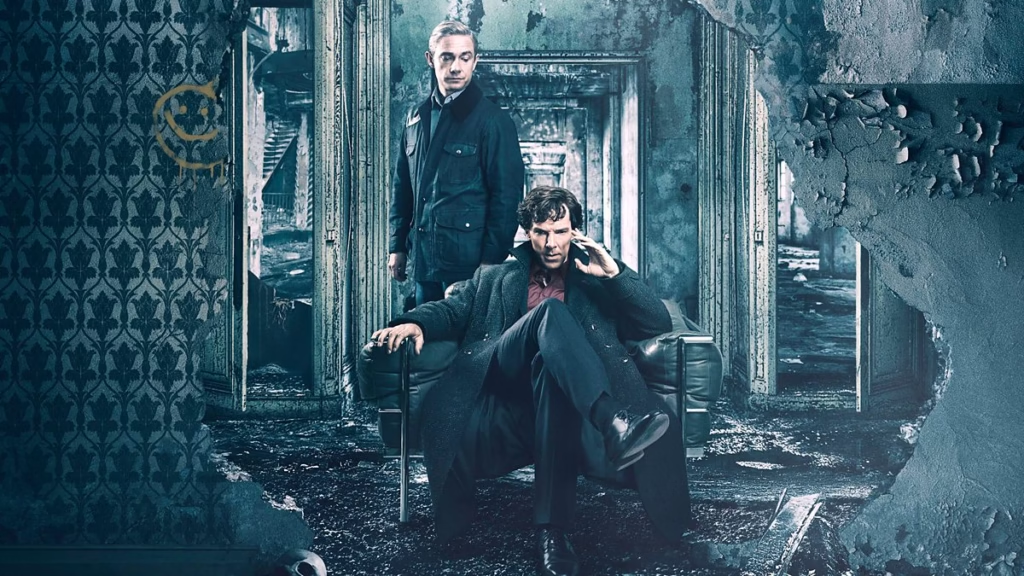
Sherlock is one of the most influential and widely acclaimed television adaptations of Sir Arthur Conan Doyle’s detective stories, presenting the legendary Sherlock Holmes in a sharply modernized format. While the original tales were written in the late nineteenth century, this BBC series brings Holmes into the twenty-first century with smartphones, digital clues, high-speed investigations, and psychological complexity suited to a contemporary audience. Starring Benedict Cumberbatch as the brilliant but abrasive detective and Martin Freeman as the grounded and empathetic Dr. John Watson, the series immediately became known for its cinematic style, exceptional writing, and magnetic performances. The decision to translate Victorian characters into present day London was bold, yet it worked seamlessly because the core spirit of Doyle’s work remained intact: deduction, mystery, tension, and an unmatched dynamic between Holmes and Watson.
Across four series and a Victorian-era special, Sherlock explores not only the logic-driven world of crime-solving but also the emotional and moral struggles of its characters. It transforms simple mysteries into character studies, turning Holmes’ intellect into both a gift and a burden. Even as the show takes creative liberties, its admiration for Doyle’s original works is clear through subtle references, episode titles, narrative structures, and recurring motifs. Sherlock became a global phenomenon, captivating audiences with its fast-paced storytelling, stylized visuals, and an audacious reinterpretation of one of fiction’s most beloved detectives.
Sherlock (TV Series) – Official Season 1 Trailer
What Is Sherlock About?
Sherlock follows the adventures of a consulting detective living in modern-day London, solving crimes that range from cryptic murders to high-level conspiracies. The series introduces Sherlock Holmes as an eccentric genius whose powers of deduction allow him to see patterns, motivations, and connections that others miss entirely. Each episode functions almost like a feature-length film, presenting complex mysteries that push Holmes and Watson to the limits of their intellect and emotional endurance. The modern setting affects not only the nature of the crimes but also the tools Holmes uses, including mobile phones, GPS tracking, digital archives, and advanced forensic techniques.
Dr. John Watson serves as both a companion and counterbalance to Sherlock’s emotional detachment. Recently returned from military service in Afghanistan, Watson struggles with trauma, loneliness, and a renewed sense of purpose—elements that the partnership with Sherlock gradually restores. The stories explore the evolving bond between the two men, showing how friendship becomes both an anchor and a vulnerability. Across the series, Sherlock faces both external threats and deeply personal challenges, especially through his relentless rivalry with Jim Moriarty. The show blends suspense, humor, psychological tension, and philosophical commentary, resulting in a narrative that is both intellectually stimulating and emotionally grounded.
Cast and Characters
The cast of Sherlock is one of the core reasons behind the show’s worldwide success. Benedict Cumberbatch brings Sherlock Holmes to life with an intense, analytical portrayal that captures the detective’s brilliance while emphasizing his social detachment. His rapid-fire delivery, physical expressiveness, and emotional restraint form a version of Sherlock that feels familiar yet uniquely modern. Cumberbatch’s performance shows how Sherlock prioritizes logic over emotion, often at the expense of his relationships, yet reveals glimpses of compassion that shape his journey across the series.
Martin Freeman portrays Dr. John Watson with a mix of warmth, frustration, loyalty, and subtle humor. His grounded performance offers a sharp contrast to Holmes’ eccentricity, making their partnership believable and emotionally compelling. Watson serves as the audience’s viewpoint, providing relatable reactions to Sherlock’s deductions and impulsive behavior. The chemistry between the two actors is central to the show’s impact, creating a dynamic that feels authentic, tense, and deeply human.
Supporting characters add depth to the narrative.
-
Mrs. Hudson (Una Stubbs) offers domestic warmth and stability.
-
Mycroft Holmes (Mark Gatiss) provides political intrigue and intellectual rivalry.
-
Jim Moriarty (Andrew Scott) delivers one of the most memorable portrayals of Holmes’s nemesis.
-
Molly Hooper (Louise Brealey) offers emotional nuance and moral complexity.
Together, the ensemble enhances the worldbuilding and keeps the narrative vibrant.
Production and Development
Sherlock was created by Steven Moffat and Mark Gatiss, both long-time admirers of Conan Doyle’s work and experienced writers known for their ability to blend wit, tension, and emotional intelligence. The idea originated during train rides to Cardiff for Doctor Who production, eventually evolving into a modern Holmes adaptation that preserved the essence of the original stories. BBC initially commissioned the project as a shorter pilot, but after reworking the format, the show expanded into three full-length episodes per series, each with cinematic scope and high production value.
Filming primarily took place in Cardiff and London, with 187 North Gower Street standing in for the iconic Baker Street. The production team crafted a visual style that blends noir atmospheres, fast-paced editing, and contemporary digital overlays, such as on-screen text representing Sherlock’s thoughts or messages. These stylistic choices made the detective’s deductive process more accessible and visually engaging. The music, composed by David Arnold and Michael Price, further shaped the show’s identity by mixing orchestral tension with modern rhythmic patterns.
Sherlock’s production also faced significant challenges due to the rising careers of its lead actors. Coordinating schedules for Benedict Cumberbatch and Martin Freeman became increasingly difficult, leading to long gaps between series. Despite this, each new season was met with anticipation thanks to the show’s established reputation and its ability to reimagine classic stories in bold and inventive ways. The series eventually expanded into a Victorian-era special, exploring alternate continuities and offering a tribute to the original setting of Doyle’s works.
Themes
Sherlock incorporates a wide variety of themes, ranging from intellectual puzzles to deeper emotional and moral questions. The central theme is the contrast between logic and emotion. Sherlock approaches the world through reason, observation, and deduction, often dismissing emotional responses as distractions. Yet the series continually challenges this worldview, showing how empathy, relationships, and emotional vulnerability shape his development. This tension becomes one of the show’s defining elements, giving the detective more depth than a traditional procedural portrayal.
Another major theme is identity. Sherlock constantly struggles with how he is perceived—by the public, the police, and even himself. His reputation as a “high-functioning sociopath” becomes both a shield and a burden. The show explores how labels influence behavior and examines whether genius justifies unconventional or unethical methods. Similarly, characters like John Watson and Jim Moriarty reflect different paths of identity shaped by trauma, ambition, or obsession.
The series also explores trust, friendship, and moral integrity. Sherlock often tests the limits of loyalty, especially Watson’s, and the show questions how far friendship can extend when strained by danger or emotional negligence. Themes of duality appear frequently as well, especially through the antagonistic relationship between Sherlock and Moriarty, who represents an unrestrained, chaotic counterpart to Sherlock’s structured brilliance. Finally, the show examines the impact of fame and public scrutiny, particularly as Watson’s blog turns their private investigations into public narratives.
Why You Should Watch Sherlock
Sherlock remains one of the most distinctive modern adaptations of classic literature, blending traditional detective storytelling with contemporary filmmaking techniques. The series offers an engaging mix of mystery, character study, and emotional depth, making it appealing to both longtime fans of Sherlock Holmes and newcomers. The writing is sharp and intelligent, requiring viewers to follow nuanced clues and fast-paced deductions that make each episode feel like a puzzle to solve. This level of sophistication gives the audience an active role, encouraging close attention and rewarding thoughtful engagement.
Another reason to watch Sherlock is its exceptional cast. Benedict Cumberbatch and Martin Freeman deliver performances that elevate their characters beyond archetypes. Their relationship evolves throughout the series, exploring themes of trust, loyalty, conflict, and growth. Fans appreciate not only the mysteries but also the emotional journey of the characters, which adds weight to even the most action-driven episodes. The supporting cast enhances the narrative further, adding layers of humor, tension, or intrigue depending on the situation.
From a production standpoint, Sherlock is visually impressive. Creative editing, stylized visuals, and atmospheric music make the viewing experience immersive. The incorporation of modern technology into the detective’s toolkit adds freshness to the stories without sacrificing the essence of Conan Doyle’s world. The show balances humor with suspense, delivering episodes that are both entertaining and intellectually stimulating. Whether you are drawn to mysteries, character-driven drama, or high-quality storytelling, Sherlock offers a compelling blend that stands out among modern television series.
Is Sherlock Worth Watching?
Yes, Sherlock is absolutely worth watching, especially if you enjoy intelligent narratives, strong character development, and stylish production. What sets the series apart is its balance between loyalty to the original Sherlock Holmes stories and bold reinterpretation. The mysteries remain faithful to the spirit of Conan Doyle, but the modern setting creates new layers of complexity, relevance, and emotional resonance. This combination allows the series to appeal to both traditional fans and those seeking a contemporary crime drama.
The performances alone justify the viewing experience. Benedict Cumberbatch delivers an iconic portrayal that captures Sherlock’s brilliance, arrogance, vulnerability, and evolving humanity. Martin Freeman offers emotional grounding, creating a partnership that enriches every episode. Their dynamic is the backbone of the series and one of the reasons it has accumulated such a dedicated global audience. The show also features standout performances from Andrew Scott, Mark Gatiss, Una Stubbs, and Louise Brealey.
Despite some debates about the later seasons, Sherlock remains one of the most influential detective series of the 21st century. Its narrative structure, pacing, and stylistic innovations set new standards for the genre. It is a series that encourages attention, rewards rewatching, and resonates through its themes of friendship, identity, and the consequences of genius. If you are searching for a series with depth, intelligence, and emotional complexity, Sherlock is a worthwhile and memorable experience.
Reception and Critical Response
Sherlock received widespread acclaim during its first three series, earning praise for its writing, direction, and performances. Critics celebrated the show’s creativity in adapting classic stories into modern contexts, as well as its ability to balance fast-paced action with rich character development. Benedict Cumberbatch and Martin Freeman both received numerous awards and nominations, including Emmy wins for their performances. The show was also recognized for its music, cinematography, visual effects, and production design, which contributed to its cinematic feel.
Reviewers noted that the series succeeded because it remained faithful to the essence of Sherlock Holmes while being unafraid to innovate. The inclusion of modern technology, dynamic editing, and psychological depth gave the stories renewed energy. Many episodes—such as “A Study in Pink”, “A Scandal in Belgravia”, and “The Reichenbach Fall”—are widely regarded as some of the strongest detective episodes ever produced for television. The writing was praised for its cleverness, emotional weight, and narrative intricacy.
However, the fourth series garnered more mixed reviews, with some critics arguing that the show had become overly complex or self-referential. Others maintained that the performances remained strong and that the emotional stakes continued to provide compelling drama. Despite these criticisms, Sherlock is still viewed as one of the most impactful television series of its time, with a devoted international fanbase and enduring influence on modern detective storytelling.
Watch Order
Because Sherlock uses long, cinematic episodes rather than traditional seasons, watching it in the correct order ensures you follow the character development and overarching story arcs. The series is straightforward to follow, but the special episode should be watched at a specific point to maintain continuity.
Main Watch Order (Chronological Broadcast Order)
-
Series 1 (2010)
-
A Study in Pink
-
The Blind Banker
-
The Great Game
-
-
Series 2 (2012)
-
A Scandal in Belgravia
-
The Hounds of Baskerville
-
The Reichenbach Fall
-
-
Christmas Mini-Episode (2013)
-
Many Happy Returns
-
-
Series 3 (2014)
-
The Empty Hearse
-
The Sign of Three
-
His Last Vow
-
-
Special (2016)
-
The Abominable Bride
-
-
Series 4 (2017)
-
The Six Thatchers
-
The Lying Detective
-
The Final Problem
-
Why This Order Matters
-
Character arcs progress across each series.
-
Sherlock’s relationship with Moriarty develops steadily.
-
Watson’s personal life changes significantly and affects later episodes.
-
The Victorian special, while alternate in style, ties directly into events after Series 3.
-
Skipping episodes disrupts the emotional continuity and reveals major spoilers out of order.
This watch order preserves the intended flow of the narrative and ensures that all major arcs, emotional beats, and character developments unfold naturally.
Sherlock (TV Series) FAQ
1. Is Sherlock based on the original books by Arthur Conan Doyle?
Yes. The series is adapted from Conan Doyle’s Sherlock Holmes stories, using many plot elements, characters, and references. However, the show reimagines them in a modern-day setting.
2. Why are there so few episodes per season?
Each episode is 90 minutes long and produced with cinematic quality. As a result, each series contains only three episodes to maintain high production value.
3. Do I need to read the Sherlock Holmes books before watching the show?
No. The series is designed to be accessible for newcomers. Reading the books may enhance your appreciation, but it is not required.
4. Is the Sherlock series connected to the Sherlock manga?
The manga is an illustrated adaptation of the TV series, following the show’s exact episodes. It does not provide new storylines but visually adapts existing ones.
5. Is the show appropriate for younger viewers?
The series contains intense scenes, violence, and mature themes. It is recommended for older teens and adults.
6. Was there a planned Season 5?
The creators have expressed interest in continuing, but scheduling conflicts between the actors have delayed any official confirmation. As of now, no fifth series has been released.
Conclusion
Sherlock remains a defining television achievement that reinvented a classic literary detective for a modern audience without losing the spirit of the original stories. Through its innovative filmmaking techniques, exceptional performances, and bold narrative choices, the series created an immersive world where logic battles emotion, intuition clashes with evidence, and relationships unfold with depth and complexity. The series invites viewers into a London filled with mysteries, psychological puzzles, and high-stakes confrontations that challenge both the characters and the audience.
Its impact extends far beyond its four-series run. Sherlock inspired renewed interest in detective fiction, created global admiration for its cast, and influenced the style of later crime dramas. Even with debates surrounding its later seasons, the show’s strongest episodes remain landmarks of television storytelling. Whether you are drawn to mysteries, character-driven narratives, or modern reinterpretations of classic literature, Sherlock offers a compelling and unforgettable experience. It is a series worth watching, revisiting, and discussing long after the final episode ends.
If you don’t know where to watch this Series for FREE make sure to contact me via E-mail, or in the comments below. Thank you for reading and make sure to bookmark the site.
How useful was this post?
Click on a star to rate it!
Average rating 0 / 5. Vote count: 0
No votes so far! Be the first to rate this post.