
 8.9/10
 89% Critics / 92% Audience
Seinfeld is widely regarded as one of the most influential American television series ever created, a sitcom that not only defined the 1990s but reshaped the entire landscape of television comedy. Premiering in 1989 and running for nine seasons, the show followed the everyday lives of comedian Jerry Seinfeld and his eccentric circle of friends living in Manhattan’s Upper West Side. Unlike the sentimental and lesson-driven sitcoms of its era, Seinfeld chose a radically different approach: episodes centered on life’s smallest annoyances, social misunderstandings, and the mundane frustrations that everyone experiences but rarely discusses. This unique angle became its signature, earning it the famous label “a show about nothing.”
The brilliance of Seinfeld lies in how deeply it explores the humor of the ordinary. Through Jerry’s observational wit, George’s insecurities, Elaine’s chaotic energy, and Kramer’s bizarre antics, the series crafted a comedic tone rooted in irony, awkwardness, and the unexpected consequences of seemingly simple decisions. Rather than focusing on character development or emotional arcs, the show embraced a “no hugging, no learning” philosophy. This allowed it to remain consistently funny, sharp, and brutally honest about human behavior. Even decades after its finale aired, Seinfeld continues to influence writers, comedians, and sitcoms worldwide, proving that everyday life, when examined closely, can be the funniest material of all.
Seinfeld – Official Trailer
What Seinfeld Is About
At its core, Seinfeld follows Jerry Seinfeld, a stand-up comedian navigating the absurdities of modern life alongside his unpredictable friends. The show does not rely on dramatic arcs or big emotional turning points; instead, each episode highlights relatable annoyances — waiting for restaurant tables, misreading romantic signals, losing parking spots, or navigating complicated social etiquette. These simple premises often expand into chaotic webs of misunderstandings, coincidences, and comedic payoffs where multiple storylines collide in unexpected ways.
The heart of the series lies in the ensemble’s interactions. Jerry embodies the observational humor of a comedian, George is a neurotic mess constantly sabotaging himself, Elaine tackles life with confidence and frustration, and Kramer barges into situations with wild enthusiasm. Together, they form a dysfunctional yet inseparable group whose antics mirror the quirks and contradictions of real urban life. Rather than offering solutions or moral lessons, the show amplifies life’s awkwardness, revealing the comedy hidden in everyday experiences. This unconventional approach became the foundation of its cult status.
Cast and Characters
Main Cast
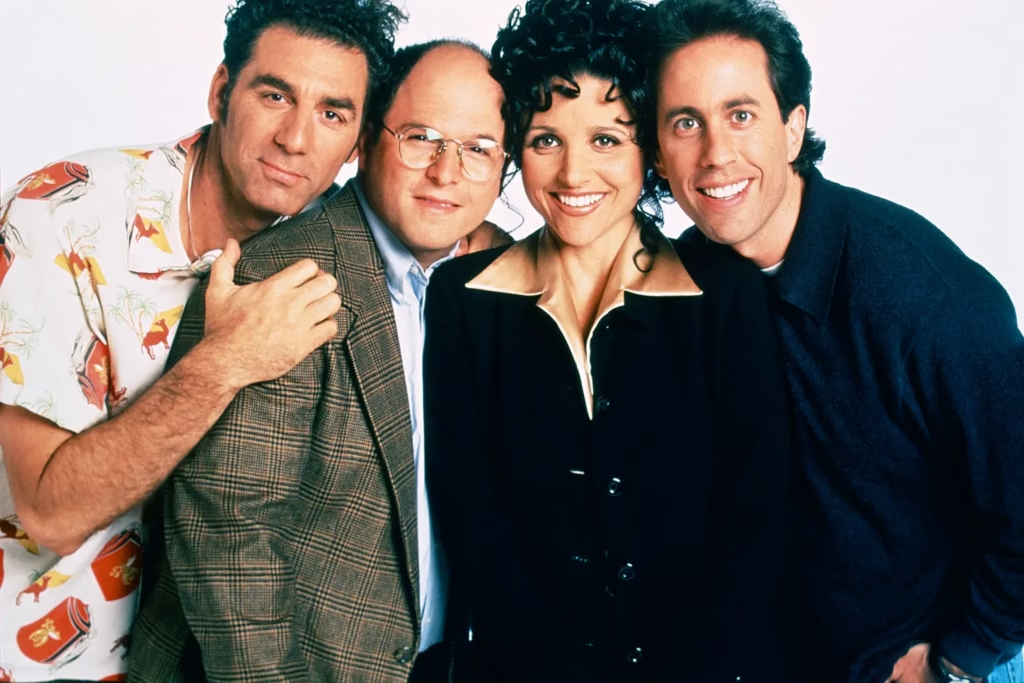
Jerry Seinfeld – A fictionalized version of the comedian himself. Calm, logical, picky in relationships, and the anchor of the group.
George Costanza – Jerry’s best friend since high school. Insecure, dishonest, petty, and hilariously self-defeating.
Elaine Benes – Jerry’s ex-girlfriend turned close friend. Smart, outspoken, cynical, and constantly entangled in bizarre situations.
Cosmo Kramer – Jerry’s eccentric neighbor. Energetic, unpredictable, unintentionally brilliant, and beloved for his physical comedy.
Recurring and Guest Characters
The show features a wide array of recurring characters, including:
Newman, Jerry’s nemesis and fellow tenant
Frank and Estelle Costanza, George’s over-the-top parents
Morty and Helen Seinfeld, Jerry’s mild-mannered parents
J. Peterman, Elaine’s dramatic boss
David Puddy, Elaine’s on-again off-again boyfriend
Celebrity guest stars, romantic partners, and quirky acquaintances appear throughout the series, adding comedic variety and extending the show’s universe.
Production and Development
Larry David and Jerry Seinfeld created the series based on their shared love of observational humor. NBC initially doubted the show’s appeal, believing it was “too New York” and too unconventional. The original pilot even tested poorly with audiences. However, network supporters saw its potential and commissioned a short first season. This gamble became one of the most successful decisions in television history, with Seinfeld soon evolving into a cultural sensation.
During production, the cast and writers embraced a high standard of comedic precision. Scenes were rewritten on the spot if jokes failed, physical movements were coordinated for maximum effect, and the comedy was carefully tuned to maintain its distinctive tone. The show was filmed primarily in Los Angeles, despite being set in New York, with soundstages and backlot recreations used for iconic locations like Monk’s Café and Jerry’s apartment. Writers often drew inspiration from real-life incidents — from legal disputes to awkward social moments — transforming ordinary experiences into comedy gold.
Themes
Seinfeld broke television conventions by focusing on themes rarely explored in sitcoms at the time:
Everyday absurdity – The humor arises from life’s smallest annoyances and coincidences.
Self-centered behavior – Characters act out of selfishness, insecurity, or pettiness, with no moral lessons learned.
Social etiquette – Many episodes revolve around awkward interactions and unspoken rules.
Irony and cynicism – The series thrives on dry wit, sarcasm, and the comedic consequences of poor decisions.
Postmodern storytelling – The show frequently uses meta-humor, self-references, and commentary on sitcom tropes.
This thematic mixture created a comedic identity distinct from anything else on TV at the time and continues to influence modern comedy writing.
Why You Should Watch
You should watch Seinfeld because it remains one of the most brilliantly crafted sitcoms in television history. Its writing is sharp, its characters unforgettable, and its situations hilariously relatable no matter the decade. The show offers a blend of understated moments, absurd twists, and clever observational humor that appeals to a wide range of audiences. Whether you enjoy smart dialogue, quirky characters, or comedy based on social mishaps, Seinfeld delivers consistently.
It’s also a masterclass in comedic timing. Jerry’s clean humor contrasts beautifully with George’s neurotic spirals, Elaine’s chaotic energy, and Kramer’s physical comedy. The ensemble cast works with flawless chemistry, making even the simplest scenes — waiting in a parking garage or arguing over a soup order — some of the funniest moments ever aired. Watching Seinfeld means experiencing a series that changed television forever and continues to be quoted, referenced, and rediscovered by new generations.
Is Seinfeld Worth Watching
Yes — Seinfeld is absolutely worth watching today. Despite being a ’90s sitcom, its humor, dialogue, and characters remain timeless. Its focus on ordinary life makes the show universally relatable, and its comedic structure feels surprisingly modern thanks to its influence on nearly every sitcom that followed. The pacing, writing, and originality make Seinfeld a show that rewards both new viewers and long-time fans rewatching their favorite episodes.
Even for those who didn’t grow up watching it, the series stands as a vital piece of cultural history. Its catchphrases, iconic episodes, and memorable moments have become permanently embedded in pop culture. Seinfeld remains consistently entertaining and continues to inspire comedy writers, stand-up comedians, and sitcom creators worldwide.
Reception
Seinfeld achieved massive critical and commercial success. It reached No. 1 in the Nielsen ratings, won Emmy Awards, Golden Globes, Screen Actors Guild Awards, and even a Peabody Award. Critics praised its innovative writing, unconventional style, and outstanding ensemble cast. Many of its episodes — including The Contest, The Soup Nazi, The Parking Garage, and The Chinese Restaurant — are now considered some of the greatest sitcom episodes ever produced.
Over the years, it has been ranked among the best TV shows of all time by TV Guide, Rolling Stone, Variety, and many other publications. Despite the divisive finale, Seinfeld left an enormous legacy and remains one of the most syndicated and streamed comedies in television history.
Watch Order
Because Seinfeld is a sitcom, the recommended order is simply chronological. However, here is a clean, structured viewing guide covering all nine seasons:
Season 1
5 episodes – Short debut season introducing the main characters and tone.
Season 2
12 episodes – Expands character dynamics and begins shaping the show’s format.
Season 3
23 episodes – Establishes its comedic rhythm and includes early classic episodes.
Season 4
24 episodes – Features the famous “show within a show” arc and iconic episodes like The Contest.
Season 5
22 episodes – Continues to grow in popularity; includes memorable moments like The Puffy Shirt.
Season 6
24 episodes – Achieves No. 1 status in ratings; some of the best ensemble work.
Season 7
24 episodes – Features the Susan engagement storyline and major character arcs.
Season 8
22 episodes – Faster-paced style with broader humor after Larry David’s departure.
Season 9
24 episodes – Final season culminating in the series finale.
Seinfeld FAQ
Is Seinfeld actually a show about nothing?
It’s a joke from the series, but the show is actually about the humor behind everyday life.
Do I need to watch Seinfeld in order?
It helps, but episodes are mostly standalone.
Is Seinfeld still funny today?
Yes — its humor and themes remain timeless and continue to resonate.
Where can I watch Seinfeld?
The series is currently available on Netflix in remastered quality.
Is the Seinfeld finale good?
Opinions vary, but it remains one of the most-watched finales in TV history.
Conclusion
Seinfeld remains a groundbreaking achievement in television comedy, a show that dared to challenge sitcom norms and create humor from the smallest details of life. Its innovative writing, unforgettable characters, and sharp observational humor have left a permanent mark on pop culture. The show’s dedication to avoiding sentimentality and embracing flawed, relatable personalities made it both refreshing and revolutionary for its time.
Even decades later, Seinfeld holds up as a brilliantly written and perfectly acted series that rewards viewers with its wit, originality, and memorable moments. Whether you’re watching it for the first time or revisiting classic episodes, Seinfeld remains essential television — a timeless exploration of everyday absurdity that continues to influence modern comedy and entertain audiences worldwide.
If you don’t know where to watch this Series for FREE make sure to contact me via E-mail, or in the comments below. Thank you for reading and make sure to bookmark the site.
How useful was this post?
Click on a star to rate it!
Average rating 0 / 5. Vote count: 0
No votes so far! Be the first to rate this post.