
 8.5/10
 89% Critics / 93% Audience
Samurai Champloo stands as one of the most influential anime series of the 2000s, a show that effortlessly blends Edo-period samurai adventure with modern hip-hop culture. Released in 2004 and directed by the legendary Shinichirō Watanabe, the anime immediately set itself apart with its rhythmic editing, unconventional tone, and a trio of unforgettable main characters whose chemistry carried every episode. While the story is set in Japan’s Edo era, the presentation is contemporary, pulsing with graffiti-style art, breakbeat-inspired animation, and a soundtrack that remains iconic decades later.
The anime’s popularity quickly grew both in Japan and internationally, leading to a manga adaptation serialized in Monthly Shōnen Ace the same year. Unlike many manga tie-ins, the Samurai Champloo manga took creative liberties and expanded on the world with original stories. This cross-media presence helped solidify the franchise as a cultural landmark, bridging anime, manga, hip-hop, and chanbara (samurai cinema) into a single, distinctive experience.
Samurai Champloo – Official Trailer
What Is Samurai Champloo About?
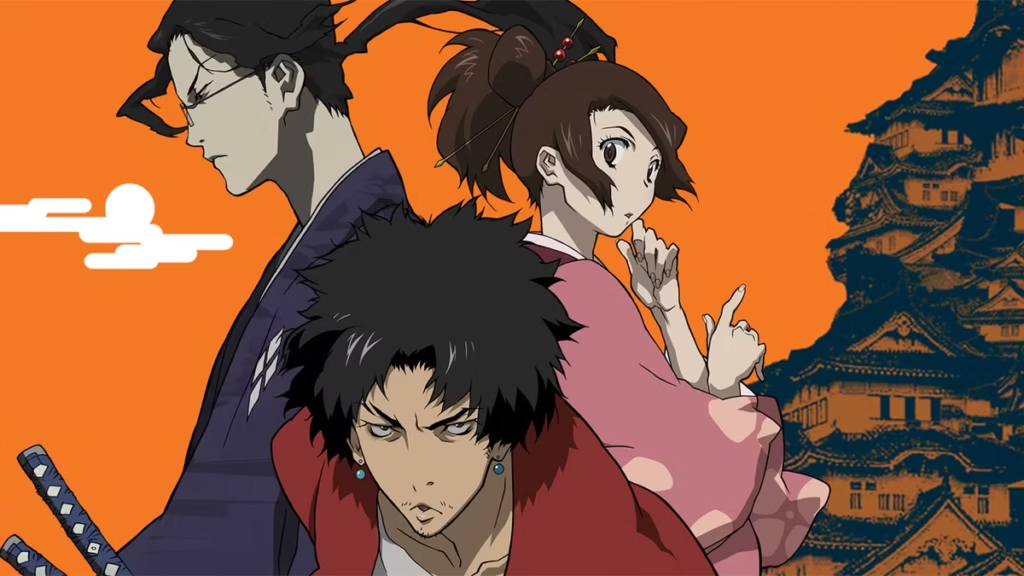
At its core, Samurai Champloo is a road-trip adventure following three unlikely companions: a tea-shop waitress named Fuu, the fierce and unpredictable swordsman Mugen, and the calm and disciplined ronin Jin. After a chaotic encounter that leaves a local establishment in ruins, the trio ends up bonded by circumstance, with Fuu forcing Mugen and Jin to postpone killing each other until they help her search for a mysterious “samurai who smells of sunflowers.”
The story moves from town to town across a stylized Edo-period Japan, exploring each location through episodic adventures that range from comedic diversions to deep emotional confrontations. The anime cleverly blends historical elements with anachronistic humor—graffiti, baseball, hip-hop MC battles, and even breakdancing sword fights—resulting in a world that feels both familiar and wildly original. Beneath the humor and kinetic action, however, lies a powerful theme centered around identity, loss, and confronting one’s past. By the time the journey ends, every character is transformed in subtle but meaningful ways.
Cast and Characters
Samurai Champloo thrives on character chemistry, built around three main leads whose personalities constantly spark conflict, humor, and heartfelt moments.
Mugen
A brash, impulsive outlaw from the Ryukyu Islands, Mugen fights with a breakdance-inspired technique that makes every battle explosive and unpredictable. His chaotic upbringing shaped him into someone who trusts no authority and lives purely on instinct. Voiced by Kazuya Nakai in Japanese and Steve Blum in English, Mugen embodies raw energy, recklessness, and an untamable spirit.
Jin
The calm counterbalance to Mugen’s wild nature, Jin is a highly skilled ronin who follows a strict code of discipline. Forced into exile after killing his own master, Jin represents the more traditional samurai archetype—but his internal conflicts make him far from stereotypical. His reserved nature and quiet intelligence form a striking contrast with Mugen’s intensity.
Fuu
The emotional anchor of the trio, Fuu is bright, determined, and more resourceful than she first appears. She brings humor, heart, and vulnerability to the story, grounding the anime’s wilder elements with a sense of purpose. While often placed in difficult situations, her resilience shapes much of the series’ emotional core.
The supporting characters—whether assassins, criminals, artists, or wandering eccentrics—fill the world with life and personality. Many appear briefly but leave lasting impressions, contributing to the show’s road-trip rhythm.
Production and Development
Directed by Shinichirō Watanabe—famous for Cowboy Bebop—Samurai Champloo was developed at Manglobe, a studio known for its stylistic ambition. Watanabe began forming the concept in the late 1990s, inspired by both samurai cinema and hip-hop culture. Instead of following traditional historical storytelling, the team adopted a “freestyle” production method: loose structure, changing tone, and a willingness to experiment each episode.
Character designer Kazuto Nakazawa crafted the stylish visuals, mixing Edo-era clothing with modern silhouettes. The series also featured contributions from multiple guest creators and animators, giving certain episodes unique artistic flair. This collaborative, improvisational approach mirrored hip-hop’s sampling culture, shaping the anime’s identity both visually and thematically.
Themes
Samurai Champloo blends humor and history with deeper philosophical ideas. Among its central themes:
-
Death and impermanence: Characters confront their pasts, mistakes, and mortality throughout the journey.
-
Identity and self-expression: Mugen, Jin, and Fuu come from marginalized or unconventional backgrounds, each seeking purpose.
-
Cultural fusion: The series uses hip-hop elements not as decoration but as thematic symbolism—freedom, rebellion, rhythm, and individuality.
-
Minority representation: The anime consciously includes Ainu people, foreigners, Christians, and other marginalized groups rarely depicted in period Japan.
-
Nonconformity: From its structure to its characters, the show embraces the idea of breaking rules, challenging traditions, and forging one’s own path.
These layers allow Samurai Champloo to remain relevant to modern audiences, despite its historical setting.
Why You Should Watch
Samurai Champloo is a rare anime that blends style with substance. The action is beautifully animated, the characters are memorable, and the soundtrack—featuring Nujabes, Fat Jon, Tsutchie, and Force of Nature—remains one of the most celebrated in anime history. The episodic structure makes it easy to watch at any pace, while the overarching emotional journey gives the show surprising depth. Whether you’re a fan of samurai stories, hip-hop culture, road-trip narratives, or just want a show that dares to try something different, Samurai Champloo delivers an unforgettable experience.
Is Samurai Champloo Worth Watching?
Absolutely. Few anime manage to blend genres as fluidly and confidently as Samurai Champloo. It balances humor, action, atmosphere, and character development with remarkable ease. Even viewers who normally avoid historical anime often find themselves hooked by its modern sensibility and smooth style. The show remains widely respected for its animation, storytelling, and cultural impact. It is a must-watch for anyone exploring foundational anime classics.
Reception
Samurai Champloo earned strong praise from international audiences and critics, particularly for its soundtrack and animation quality. Western releases were especially successful and helped solidify Watanabe’s reputation as a master of stylish, genre-bending storytelling. While some reviewers noted that its episodic approach can be uneven, the overall impact of the series has remained overwhelmingly positive. Today it is frequently listed among the most influential anime of the early 2000s.
Watch Order
Samurai Champloo has a simple watch order, as the story is self-contained:
-
Samurai Champloo (2004–2005, 26 episodes)
-
Samurai Champloo: Sidetracked (Video Game) – optional “lost episode” side story
-
Samurai Champloo Manga (2004) – alternate retelling with original arcs
The anime is the main experience; the manga and game are optional expansions.
Samurai Champloo FAQ
Is Samurai Champloo connected to Cowboy Bebop?
No direct connection exists, but both series share director Shinichirō Watanabe and a similar blend of music-driven storytelling.
Is the manga the same as the anime?
Not exactly. The manga adapts the premise but explores original stories and situations.
Is Samurai Champloo historically accurate?
It uses a real era as backdrop but intentionally includes anachronistic elements like graffiti, hip-hop music, and baseball.
How long is the anime?
26 episodes, each about 22 minutes.
Does the story have a real ending?
Yes. The final episodes bring the main journey to a meaningful and emotionally complete conclusion.
Conclusion
Samurai Champloo remains a powerful example of how anime can transcend genre boundaries, blending the old with the new in ways that feel effortless and entirely original. Its road-trip structure, vibrant characters, and rhythmic editing make it a joy to watch, while its emotional core ensures the story resonates long after the final episode. The blend of hip-hop and samurai culture is more than a stylistic choice—it is a statement about individuality, rebellion, and finding one’s own path in a world filled with expectations.
Even after two decades, the anime continues to influence creators, inspire new fans, and stand as one of Shinichirō Watanabe’s strongest works. Whether you’re revisiting the series or discovering it for the first time, Samurai Champloo offers a journey filled with energy, heart, and unforgettable style.
If you don’t know where to watch this Anime for FREE make sure to contact me via E-mail, or in the comments below. Thank you for reading and make sure to bookmark the site.
How useful was this post?
Click on a star to rate it!
Average rating 0 / 5. Vote count: 0
No votes so far! Be the first to rate this post.