
 8/10
8/10
The Total War franchise has defined large-scale strategy gaming for more than twenty years. Developed by Creative Assembly, the series combines turn-based empire management with massive real-time battles involving thousands of units. From ancient Rome to fantasy Warhammer realms, each historical and mythological entry has pushed the boundaries of strategy gameplay and tactical complexity.
Released in 2000 with Shogun: Total War, the series quickly became a foundational title for strategy gamers. Over time, it expanded across different technologies, eras, and historical settings, evolving into one of the most recognizable strategy game brands in the world. Today, Total War continues to innovate thanks to passionate fan support, modding communities, and major global releases.
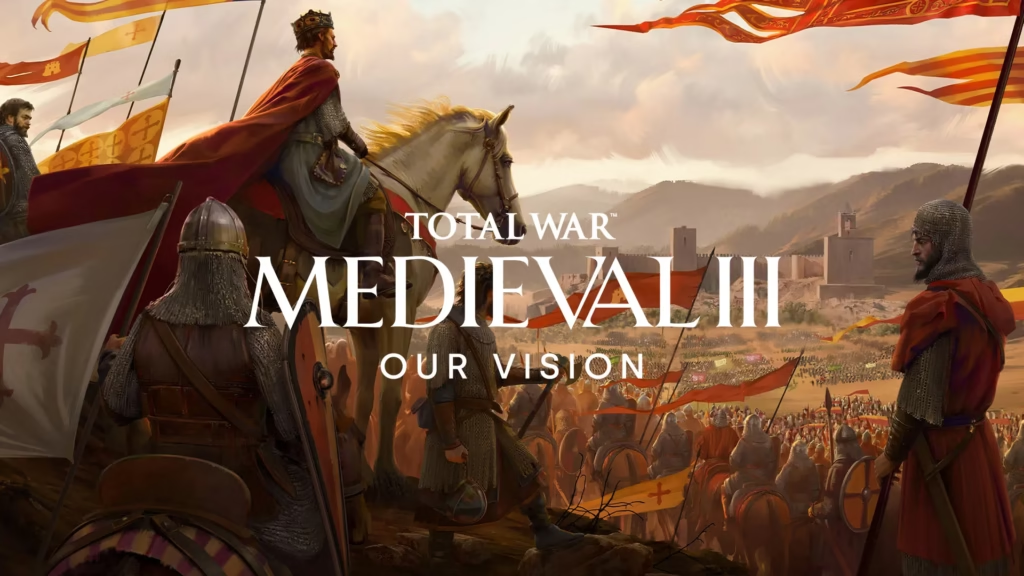
With the future already taking shape through the official announcement of Total War: Medieval III, excitement is rising once again for a return to one of the franchise’s most beloved settings.
Total War: Medieval Warfare III – Official Announce Trailer
What Is Total War About?
At its core, Total War offers two interlinked layers of gameplay:
-
Turn-based campaign — manage territories, diplomacy, trade, armies, and espionage
-
Real-time battles — command thousands of troops using formations, flanking, morale, weather, and terrain
This formula allows players to experience both grand strategic decisions and the tactical thrill of leading warriors directly into battle. Each title focuses on political challenges, cultural expansion, and historical conflicts that shaped civilizations.
Creative Assembly has also experimented with different rule sets, such as naval warfare, hero-focused combat, siege redesigns, and fantasy mechanics in the Warhammer trilogy.
The Main Games of the Total War Franchise
Below is a narrative overview of each major title’s setting and legacy in the franchise.
Shogun: Total War (2000)
Feudal Japan during the Sengoku Jidai war era. A strong foundation that introduced large-scale tactics and provincial control.
Medieval: Total War (2002)
Expanded the formula to medieval Europe, crusades, and religious influence — widely praised for depth and historical authenticity.
Rome: Total War (2004)
A revolutionary leap with a 3D campaign map and iconic battles of the Roman Republic. Mods and remasters extended its lifespan for nearly two decades.
Medieval II: Total War (2006)
A beloved classic featuring the Age of Discovery, Mongol invasions, and one of the strongest campaign structures in the franchise’s history.
Empire: Total War (2009)
Brought the 18th century to life with muskets, global expansion, and the first real-time naval combat. Ambitious but heavily patched after release.
Napoleon: Total War (2010)
A refined military campaign experience following Napoleon’s rise and fall across Europe.
Total War: Shogun 2 (2011)
A celebrated return to Japan with polished systems, enhanced AI, and massive armies.
Total War: Rome II (2013)
Initial technical issues overshadowed a deep, content-rich experience that eventually reclaimed fan approval.
Total War: Attila (2015)
A darker age of destruction and climate change — harsh survival, migrating cultures, and historical realism.
Total War: Warhammer Series (2016–2022)
The first fantasy Total War trilogy — dragons, magic, monsters, and a legendary combined campaign map. Hugely successful with long-term DLC support.
Total War Saga Series (2018–2020)
Focused titles exploring specific regions and time periods such as 9th-century Britain and the Trojan War.
Total War: Three Kingdoms (2019)
A fresh political approach inspired by Chinese history and heroes of Romance of the Three Kingdoms. Critically acclaimed for diplomacy systems.
Total War: Pharaoh (2023)
A deep look at Ancient Egypt’s crisis era. The Dynasties update expanded the campaign greatly with new maps and civilizations.
The franchise continues to evolve with new engines, better visuals, and more detailed political systems — all while keeping Total War’s signature focus on strategic depth.
Evolution of Gameplay and Technology
Over the decades, major technological improvements have shaped how Total War plays:
| Era | Breakthrough Features |
|---|---|
| Early 2000s | First large-scale real-time battles and cinematic camera views |
| Mid 2000s | 3D campaign maps, detailed units, territorial depth |
| 2009–2013 | Naval warfare, weather effects, improved diplomacy |
| 2016 onward | Fantasy content, mega-maps, multi-engine optimizations |
| Upcoming | New Warcore engine, historically detailed physics, and larger world scales |
The engine upgrades have allowed more units, complex environments, and smarter AI to bring battles closer to historical reality or fantasy spectacle.
Why You Should Play Total War
Total War appeals to fans who enjoy commanding armies and building empires. Some of its strongest selling points include:
-
Massive battles with thousands of soldiers acting independently
-
Meaningful political choices that shape your civilization
-
Unique historical and cultural exploration through gameplay
-
Huge replayability with sandbox outcomes and branching campaign paths
-
A vibrant modding community that has produced fan-favorite overhauls
Whether you enjoy forging alliances or crushing enemies, Total War offers endless strategic possibilities.
Is Total War Worth Playing Today?
Without question — the franchise remains one of the best choices in strategy gaming. Even older entries are still enjoyable due to strong mod support, remasters, and historical variety. Newer titles add more advanced combat mechanics and deeper role-playing systems, making every battle feel personal and cinematic.
For new players, Total War offers something no other strategy game delivers on this scale: the unforgettable thrill of real-time command.
The Future: Total War – Medieval III
Return to One of the Most Loved Eras
Announced on December 4, 2025, Total War: Medieval III is currently in early development and marks a long-awaited return to medieval Europe — a setting fans have requested for more than a decade.
The medieval era is perfect for Total War due to:
-
Diverse religions and cultural rivalries
-
Crusades and holy wars
-
Feudal politics and rebellious nobility
-
Siege warfare and castle dominance
-
Technological leaps, such as gunpowder’s arrival
The game will release on the new Warcore engine, expected to significantly upgrade battlefield realism, physics, and visual depth.
What We Expect to See
While full gameplay details are still unrevealed, here are features fans and industry analysts anticipate:
-
Expanded global map beyond Europe — including Silk Road, Middle East, and early world trade
-
Dynamic feudal systems affecting loyalty, rebellion, and power struggles
-
Advanced siege mechanics with multi-layer fortifications and siege equipment
-
Religious politics influencing diplomacy, crusades, and civil war
-
Authentic medieval warfare — knights, longbows, cavalry charges, and brutal melee combat
Given the legacy of Medieval II, the bar for this sequel is extremely high.
What Makes Medieval III So Important?
Medieval settings sit at the emotional core of Total War’s history. Fans cherish the deep role-playing elements, emerging narratives, and gritty realism that come from political instability and holy conflict.
A modern return to medieval Europe promises to:
-
Rekindle the golden era of historical Total War
-
Showcase a darker world full of betrayal and conquest
-
Deliver huge replayability and dramatic storytelling
Medieval III represents not only fan passion but also a pivot back to the historical roots after years of fantasy dominance.
Total War FAQ
Which Total War game is best for beginners?
Shogun 2 and Warhammer II are considered the most accessible introductions to campaign structure and battles.
Is Total War only about historical warfare?
Not anymore. The Warhammer trilogy opened the door to fantasy with magic, monsters, and epic narrative arcs.
Do you need a strong PC to play?
Most recent games benefit from powerful hardware due to the large number of units and high-fidelity graphics.
What makes Medieval III different from older games?
A completely new engine, expanded geography, and improved realism are expected to make it a major leap in historical gameplay.
Will Medieval III include multiplayer?
Multiplayer is a core Total War feature, so it is highly expected to return.
Conclusion
For over twenty years, Total War has consistently delivered some of the most ambitious and unforgettable strategy experiences in gaming. Each entry lets players reshape history or rewrite legends through military strength, diplomacy, and long-term planning. The blend of real-time battles and turn-based empire control sets Total War apart as a franchise where every decision carries weight — and every victory carries a story.
As we look forward to Total War: Medieval III, the excitement is stronger than ever. The medieval era is filled with conflict, faith, power, ambition, and revolution — everything that makes Total War such a powerful and emotional strategy experience.
The future of conquest is coming once again. Prepare your armies, sharpen your blades, and return to the age where empires rose from battlefields — because Medieval III promises to lead Total War into a new era of glory.
Thank you for reading and make sure to bookmark the site, comment and follow up on the newest posts!
How useful was this post?
Click on a star to rate it!
Average rating 0 / 5. Vote count: 0
No votes so far! Be the first to rate this post.