
 ?/10
?/10
 ? Critics / ? Audience
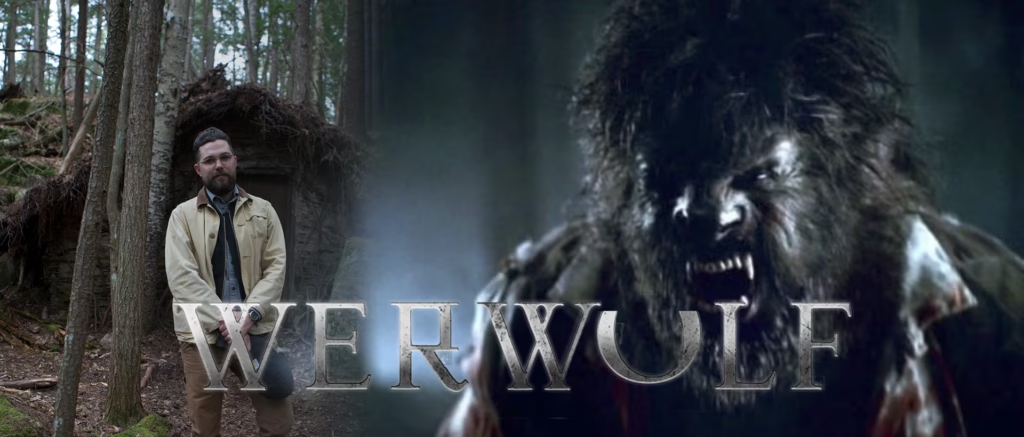
Werwulf is an upcoming American period horror film directed by Robert Eggers, one of modern cinema’s most distinctive and uncompromising filmmakers. Known for The Witch, The Lighthouse, The Northman, and Nosferatu, Eggers has built a reputation for historically grounded horror that leans heavily into atmosphere, language, and psychological dread rather than traditional jump scares.
Set in 13th-century England, Werwulf stars Aaron Taylor-Johnson alongside Lily-Rose Depp, Willem Dafoe, and Ralph Ineson. The film is co-written by Eggers and Sjón, continuing a creative partnership that previously delivered The Northman. Scheduled for release on December 25, 2026, the film is described by Eggers himself as the darkest script he has ever written—an alarming and exciting claim given his existing filmography.
Werwulf – Fanmade Trailer – Teaser
What Is Werwulf About?
At its core, Werwulf is a folklore-driven horror story rooted in medieval England. The film follows a rural community living in fear as a mysterious creature stalks the fog-covered countryside. What begins as whispered superstition slowly transforms into undeniable terror as folklore becomes reality.
Rather than portraying werewolves as purely fantastical monsters, Eggers’ approach suggests a grounded, historically authentic interpretation. The threat is not only physical but psychological, tied deeply to religious fear, isolation, superstition, and humanity’s fragile understanding of the natural world during the Middle Ages.
The use of Middle English further reinforces the film’s commitment to immersion, making Werwulf feel less like a modern horror film and more like a nightmare pulled directly from medieval imagination.
Cast and Performances
Aaron Taylor-Johnson leads the film in the titular role, marking a dramatic shift from his recent blockbuster appearances toward darker, character-driven storytelling. His casting suggests a physically demanding and psychologically intense performance.
Lily-Rose Depp reunites with Eggers after Nosferatu, continuing her trajectory into gothic and psychological horror. Willem Dafoe, a frequent collaborator with Eggers, brings his unmistakable presence once again, while Ralph Ineson—whose voice and gravitas made him unforgettable in The Witch—adds further weight to the cast.
This ensemble strongly signals a film driven by performance, tension, and atmosphere rather than spectacle.
Robert Eggers’ Vision and Style
Robert Eggers’ films are defined by obsessive historical research, authentic dialects, and unsettling realism. Werwulf appears to push this philosophy even further. Eggers has stated that the screenplay is his bleakest yet, suggesting minimal comfort, little relief, and a heavy emphasis on dread.
Cinematographer Jarin Blaschke returns once again, ensuring the stark, painterly visuals that have become synonymous with Eggers’ work. Filming locations across England and Wales—including forests, quarries, and remote countryside—reinforce the film’s raw and primal tone.
Why Werwulf Is Different From Traditional Werewolf Films
Unlike classic werewolf movies that focus on transformation spectacle or modern curse mythology, Werwulf appears to strip the concept down to its folkloric roots. In medieval Europe, werewolves symbolized fear of the wilderness, moral corruption, divine punishment, and humanity’s animal nature.
By embracing period authenticity, archaic language, and religious paranoia, Werwulf positions itself closer to historical horror than genre fantasy. This approach could redefine how werewolves are portrayed in modern cinema.
Is Werwulf Worth Watching?
If you enjoy slow-burn horror, psychological tension, and historical authenticity, Werwulf is shaping up to be essential viewing. However, it will likely not appeal to audiences seeking fast-paced action or traditional monster horror.
Eggers’ films demand patience and engagement, often prioritizing mood over narrative clarity. For fans of his previous work, this film represents a natural evolution—and possibly his most uncompromising project yet.
Suggested Viewing Order: Robert Eggers Films
While Werwulf is a standalone story, watching Eggers’ previous films provides valuable context for his style:
-
The Witch (2015) – Religious paranoia and folklore horror
-
The Lighthouse (2019) – Psychological descent and mythic symbolism
-
The Northman (2022) – Brutal historical realism and myth
-
Nosferatu (2024) – Gothic horror revival
-
Werwulf (2026) – Medieval folklore terror
Werwulf FAQ
What is the release date for Werwulf?
Werwulf is scheduled for theatrical release in the United States on December 25, 2026.
Is Werwulf based on a book or legend?
The film is inspired by medieval European werewolf folklore rather than a single source.
Will the film use modern English?
No. The film will feature Middle English to enhance historical authenticity.
Is Werwulf connected to other Eggers films?
No narrative connection, but it shares thematic and stylistic DNA with his previous work.
Is this a traditional monster movie?
No. It is expected to be a psychological and folkloric horror film rather than a conventional werewolf story.
Conclusion
Werwulf stands poised to become one of the most distinctive horror films of the decade. By combining medieval folklore, linguistic authenticity, and Robert Eggers’ uncompromising vision, the film promises an experience that is as intellectually unsettling as it is emotionally brutal.
Rather than reinventing the werewolf through spectacle, Werwulf seeks to resurrect the fear that originally gave birth to the legend. If Eggers delivers on his promise, this will not be a comfortable holiday release—but it may be one of the most haunting cinematic experiences of 2026.
If you don’t know where to watch this Movie for FREE once it’s out, make sure to contact me via E-mail, or in the comments below. Thank you for reading and make sure to bookmark the site.
How useful was this post?
Click on a star to rate it!
Average rating 0 / 5. Vote count: 0
No votes so far! Be the first to rate this post.