
 8.5/10
Some anime attempt to capture attention through spectacular battles, supernatural powers, or dramatic twists. Journal with Witch takes a completely different path. Its greatest strength comes from ordinary conversations, uncomfortable silences, unresolved emotions, and the gradual formation of a relationship between two people who never expected to become a family.
Also known by its Japanese title Ikoku Nikki, or literally Diary of a Strange Land, the story originated as a josei manga written and illustrated by Tomoko Yamashita. It was serialized in Feel Young between June 2017 and June 2023, eventually reaching 11 collected volumes. A live-action movie followed in 2024 before a 13-episode anime adaptation produced by Shuka aired from January to March 2026.
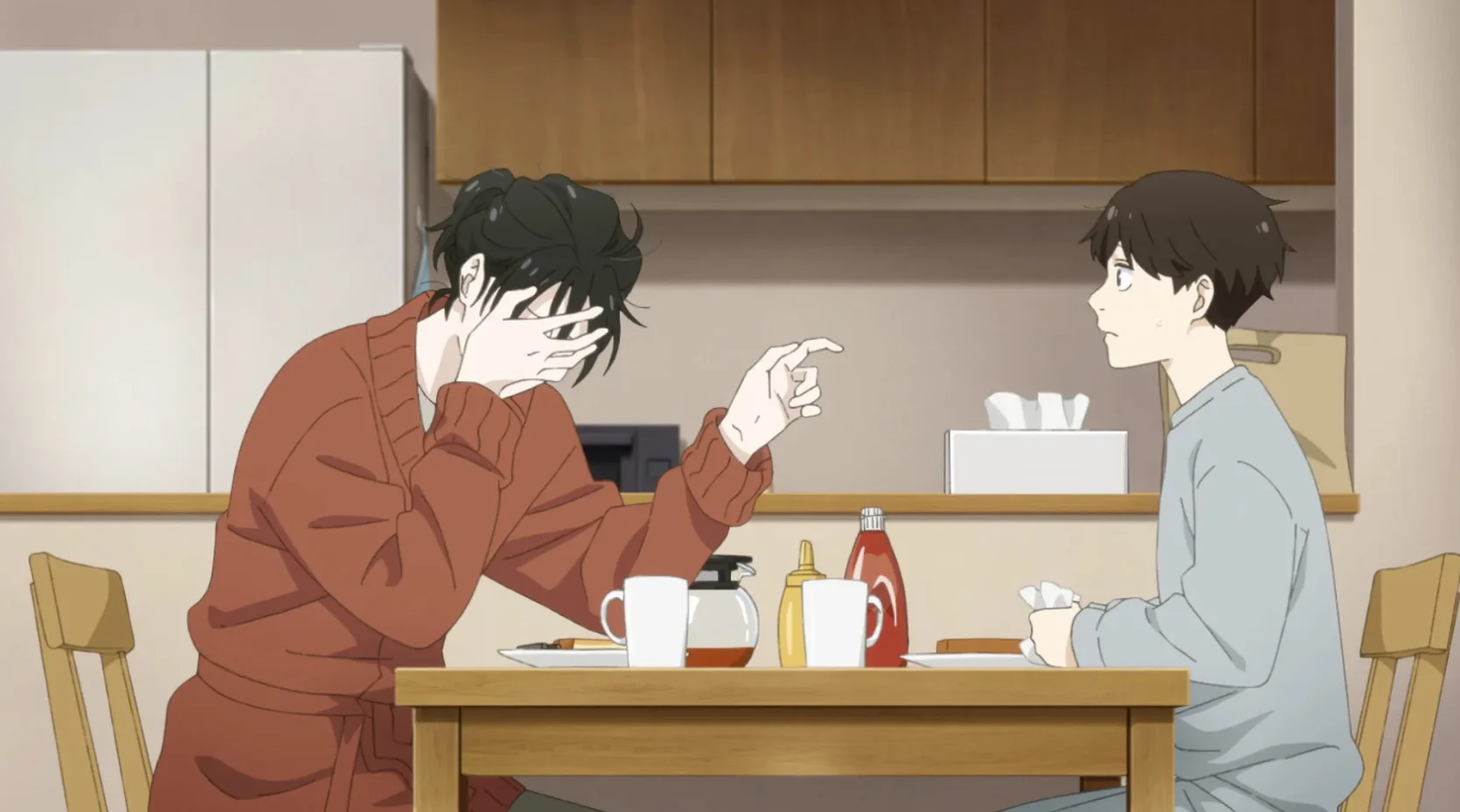
The story centers on 35-year-old novelist Makio Kōdai and her 15-year-old niece, Asa Takumi. After Asa suddenly loses both parents in a car accident, the deeply introverted Makio unexpectedly becomes her guardian. What follows is not a conventional story about one person magically healing another. Instead, Journal with Witch explores what happens when two fundamentally different people share a home while carrying emotional burdens neither fully understands.
The anime received overwhelmingly positive reviews for its writing, emotional maturity, animation, performances, and thoughtful exploration of grief. Several critics even named it the best anime of the Winter 2026 season.
Key Highlights
- A deeply emotional coming-of-age drama
- Based on Tomoko Yamashita’s acclaimed josei manga
- Focuses on grief without relying on excessive melodrama
- Features two remarkably complex female protagonists
- Explores family, identity, boundaries, and emotional independence
- Adapted into both a live-action film and anime series
- One of the most critically acclaimed anime releases of Winter 2026
Journal with Witch – Official Trailer
What Is Journal with Witch About?
At the center of Journal with Witch is an unusual relationship formed under tragic circumstances.
Makio Kōdai is a 35-year-old novelist who prefers solitude and openly dislikes most forms of social interaction. Asa Takumi is her 15-year-old niece, suddenly left without parents following a fatal car accident. Makio had a deeply strained relationship with Asa’s mother and has remained distant from much of her extended family for years.
Yet when she witnesses relatives treating the newly orphaned Asa as though she were an inconvenient responsibility to be passed around, Makio becomes frustrated and decides to take her in herself.
That decision begins a relationship neither of them is prepared for.
Asa is friendly, expressive, curious, and still trying to understand what she actually feels about losing her parents. Makio is withdrawn, disorganized, brutally honest, and often uncertain about how to comfort another human being. Their personalities clash, but the series never treats those differences as problems that must be eliminated.
Instead, they slowly learn how to exist alongside one another.
At Makio’s suggestion, Asa begins keeping a journal about her everyday experiences and emotions. This simple act becomes deeply connected to the show’s larger exploration of identity, memory, grief, and the difficulty of finding words for feelings that may not yet make sense.
Story Highlights
- An orphaned teenager begins living with her introverted aunt
- Two completely different personalities must share a home
- Asa gradually confronts complicated feelings surrounding her parents
- Makio struggles with the responsibilities of becoming a guardian
- Journaling becomes a means of exploring emotions and identity
- The story avoids simplistic answers about grief and healing
Is Journal with Witch Worth Watching?
Yes, particularly for viewers who appreciate mature character dramas that trust their audience.
Journal with Witch is deliberately quiet. It does not constantly manufacture conflicts to keep viewers interested, nor does it turn grief into a succession of dramatic breakdowns designed purely to provoke tears. Its emotional power instead comes from recognizing how inconsistent and confusing real feelings can be.
Asa does not always react to loss in ways society expects. Makio does not suddenly transform into a warm, conventional parental figure. Their relationship grows through small interactions, misunderstandings, difficult conversations, shared meals, moments of loneliness, and gradual acceptance.
That restraint gives the anime unusual authenticity. Critics particularly praised how the story avoids artificial emotional breakthroughs created merely for narrative convenience and instead depicts grief as something messy, contradictory, and without a perfectly organized conclusion.
For audiences tired of predictable anime formulas, this series offers something genuinely distinctive.
Reasons to Watch
- Exceptional character writing
- Emotionally mature storytelling
- Realistic depiction of grief
- Beautifully restrained drama
- Strong voice performances
- Thought-provoking themes
- Meaningful relationships between female characters
Why You Should Watch Journal with Witch
The greatest reason to watch Journal with Witch is its emotional honesty.
Many stories about grief follow a recognizable pattern. A character suffers a terrible loss, initially refuses to accept it, experiences a dramatic emotional breakthrough, and eventually finds closure. Journal with Witch understands that real human beings rarely work that way.
Feelings can contradict each other.
Someone can love a person and resent them. Someone can grieve without crying. A person can feel angry when everyone expects sadness or relief when they believe they should feel guilt. Makio and Asa’s relationship creates room for those uncomfortable emotional truths without judging them.
The series also has something increasingly rare: confidence in silence. Characters are not required to explain everything they feel. Body language, pauses, unfinished conversations, and everyday behavior frequently communicate more than lengthy monologues ever could.
This is where Journal with Witch provides genuine value beyond simply retelling its premise. The series encourages viewers to consider whether understanding another person is always necessary—or whether accepting their feelings without fully understanding them might sometimes be the more compassionate choice.
Biggest Strengths
- Refuses to simplify complicated emotions
- Treats teenagers and adults as equally complex individuals
- Respects personal boundaries
- Uses silence as effectively as dialogue
- Avoids forced melodrama
- Offers a mature perspective on grief and family
Makio Kōdai – An Unconventional Guardian
Makio is not the kind of guardian usually seen in family dramas.
She is 35 years old, lives alone, writes novels, dislikes social interaction, and has been largely disconnected from her relatives because of longstanding conflicts with her mother and older sister. She is not naturally nurturing in a conventional sense, and the series never pretends otherwise.
What makes Makio compelling is her honesty.
She doesn’t promise Asa that everything will eventually be fine. She doesn’t claim to understand emotions that she cannot understand. Instead, she repeatedly affirms Asa’s right to feel whatever she genuinely feels, even when those emotions appear contradictory, uncomfortable, or socially unacceptable.
That distinction is central to the series.
Makio’s greatest strength as a guardian is not her ability to give perfect advice. It is her refusal to dictate what Asa should feel.
At the same time, taking responsibility for her niece forces Makio outside the isolation she has built around herself. Their relationship therefore never feels one-sided. Asa is not merely a troubled child whom Makio must rescue; both characters gradually influence each other’s lives.
Makio’s Character Highlights
- A successful but deeply introverted novelist
- Asa’s maternal aunt and unexpected guardian
- Values honesty over empty reassurance
- Respects emotional boundaries
- Carries unresolved family conflicts of her own
- Gradually confronts her own relationship with isolation
Asa Takumi – Growing Up After Sudden Loss
Asa is only 15 when her entire life changes.
Following the death of both parents, she suddenly moves into the home of an aunt she barely knows. Yet the series avoids reducing Asa to the role of a tragic orphan.
She remains curious, sociable, occasionally impulsive, frustrated, confused, and deeply interested in discovering who she might become. Her friendships, school experiences, musical interests, and developing independence are treated as meaningful parts of her life rather than distractions from her grief.
Most importantly, Asa does not experience grief in a predictable way.
Her initial response includes anger, confusion, and uncertainty rather than conventional sadness. The complicated nature of her previous relationship with her parents makes understanding those emotions even more difficult.
Her journal gradually becomes a space where she can confront thoughts she cannot easily express aloud. It also reflects one of the story’s most meaningful ideas: sometimes people need to record their feelings before they can begin to understand them.
Asa’s Character Highlights
- A 15-year-old dealing with sudden loss
- Friendly and expressive compared with Makio
- Struggles with contradictory emotions
- Gradually discovers her own identity
- Develops an interest in music
- Uses her journal to explore her thoughts and experiences
Cast and Characters
The relationship between Makio and Asa forms the emotional foundation of Journal with Witch, but its supporting characters significantly expand the story’s exploration of friendship, identity, adulthood, family expectations, and personal independence.
Makio Kōdai
Voiced by Miyuki Sawashiro, Makio is a 35-year-old novelist who unexpectedly becomes responsible for her orphaned teenage niece. Her blunt honesty and introverted personality make her one of the most unconventional guardians in anime.
Asa Takumi
Voiced by Fuko Mori, Asa is Makio’s teenage niece. Following the sudden death of her parents, she begins navigating a completely unfamiliar life while gradually trying to identify and express her own feelings.
Nana Daigo
Voiced by Eriko Matsui, Nana is Makio’s longtime best friend. Their friendship stretches back to their teenage years, giving viewers another perspective on Makio’s personality and past.
Emiri Nara
Voiced by Sumire Morohoshi, Emiri is Asa’s childhood friend and an important figure in her life. Through her own personal experiences, the story expands its examination of identity and the difficulty of sharing private parts of ourselves with others.
Shingo Kasamachi
Voiced by Junichi Suwabe, Shingo is Makio’s former boyfriend. His continued presence in her life creates opportunities to explore Makio’s past, emotional limitations, and complex relationship with intimacy.
The anime’s voice performances received considerable critical praise, particularly the chemistry between Miyuki Sawashiro and Fuko Mori as Makio and Asa.
Cast Highlights
- Miyuki Sawashiro as Makio Kōdai
- Fuko Mori as Asa Takumi
- Eriko Matsui as Nana Daigo
- Sumire Morohoshi as Emiri Nara
- Junichi Suwabe as Shingo Kasamachi
- Strong supporting characters with independent emotional lives
The Relationship Between Makio and Asa
The relationship between Makio and Asa is where Journal with Witch becomes truly exceptional.
Many stories built around opposing personalities eventually make those characters increasingly similar. The cold character becomes warmer. The energetic character becomes calmer. Differences disappear because mutual understanding supposedly requires people to change.
This series rejects that idea.
Makio and Asa don’t need to become alike. They don’t always understand one another, and sometimes they never fully resolve those differences. What matters is that they gradually learn to respect each other’s independence.
Tomoko Yamashita has described the inability to ever completely understand another person as one of the story’s themes. Rather than presenting that reality as tragic, Journal with Witch asks whether acceptance might be more valuable than perfect understanding.
That idea gives their relationship extraordinary emotional depth.
What Makes Their Relationship Special
- Neither character exists simply to fix the other
- Their personality differences remain meaningful
- Emotional boundaries are respected
- Understanding is never presented as automatic
- Acceptance becomes more important than agreement
- Both characters grow without losing their individuality
How Journal with Witch Explores Grief Differently
Grief is the emotional foundation of the series, but Journal with Witch approaches it with remarkable restraint.
Asa does not immediately know how she feels about losing her parents. Her emotions are influenced by complicated memories, unresolved frustrations, love, resentment, and the sudden destruction of everything familiar.
The anime recognizes that losing someone does not erase the difficulties that existed while they were alive.
This creates a far more nuanced depiction of bereavement than stories where the deceased are immediately transformed into perfect memories. Asa must process not only death but also everything that remained unresolved before it happened.
Makio faces grief differently. Her estranged relationship with her sister creates its own emotional contradictions, while her refusal to perform emotions for the benefit of others makes her appear cold to people who expect grief to look a particular way.
Neither character is presented as grieving incorrectly.
That may be the show’s most important insight.
Themes of Grief
- There is no universally correct way to mourn
- Anger can exist alongside sadness
- Love and resentment can coexist
- Loss does not erase difficult memories
- Healing does not happen according to a schedule
- People deserve ownership over their own emotions
Episodes and Seasons
The anime adaptation of Journal with Witch consists of 13 episodes.
Produced by Shuka, it aired between January 4 and March 29, 2026. Miyuki Oshiro directed the series, Kōhei Kiyasu handled the scripts, Kenji Hayama designed the characters, and Kensuke Ushio composed the music.
Each episode contributes to the gradual development of Makio and Asa rather than rushing toward dramatic milestones. The season follows Asa’s changing home life, school experiences, friendships, growing independence, musical interests, and attempts to make sense of her memories.
The 13 episode titles are:
- Episode 1: Overflow
- Episode 2: Wrap
- Episode 3: Discard
- Episode 4: Cower
- Episode 5: Decide
- Episode 6: Overlap
- Episode 7: Leave in Writing
- Episode 8: Wander
- Episode 9: Intersect
- Episode 10: Bind
- Episode 11: Set Free
- Episode 12: Find
- Episode 13: Morning is Here
The anime’s complete episode run and broadcast dates are documented from January through March 2026.
Manga
Before becoming an anime, Journal with Witch began as a manga created entirely by Tomoko Yamashita.
The series was serialized in Shodensha’s josei magazine Feel Young from June 8, 2017, until June 8, 2023. Its complete story was collected across 11 tankōbon volumes, with the final Japanese volume released in August 2023.
The manga earned significant recognition long before the anime adaptation. It received multiple Manga Taishō nominations, appeared repeatedly on Kono Manga ga Sugoi! rankings, topped Da Vinci magazine’s 2023 Book of the Year list, and was nominated for the Tezuka Osamu Cultural Prize in 2024.
For readers who value subtle characterization and introspective storytelling, the manga offers the complete version of Makio and Asa’s journey.
Manga Highlights
- Written and illustrated by Tomoko Yamashita
- 11 completed volumes
- Serialized between 2017 and 2023
- Multiple major award nominations
- Complete original story
Live-Action Film
Journal with Witch also received a live-action film adaptation before the anime premiered.
Directed by Natsuki Seta, the movie stars Yui Aragaki as Makio Kōdai and Ikoi Hayase as Asa Takumi. It was released theatrically in Japan on June 7, 2024.
The existence of three distinct versions—the manga, live-action movie, and anime—demonstrates how strongly the central relationship and emotional themes resonate across different storytelling formats.
Each medium offers a different interpretation, but all are built around the same fundamental question: how do two people live together when neither can ever fully understand the world inside the other?
Production and Development
The anime adaptation was first announced in May 2024.
Animation studio Shuka handled production, with Miyuki Oshiro directing, Kōhei Kiyasu writing the scripts, Kenji Hayama designing the characters, and acclaimed composer Kensuke Ushio creating the score.
The anime aired on BS Asahi’s Anime A programming block and other Japanese networks. Its opening theme, “Sonare,” is performed by Tomoo, while Bialystocks performs the ending theme, “Kotozute.”
The production’s visual approach proved especially important because so much of the story depends on subtle expressions, physical distance between characters, quiet environments, and seemingly ordinary moments.
Critics praised the animation for supporting the grounded and realistic atmosphere rather than distracting from it. The show’s visual storytelling allows tiny gestures to carry enormous emotional weight.
Production Highlights
- Produced by Shuka
- Directed by Miyuki Oshiro
- Series scripts by Kōhei Kiyasu
- Character designs by Kenji Hayama
- Music by Kensuke Ushio
- 13 episodes
Reception and Critical Response
The anime adaptation received exceptional critical acclaim.
Reviewers praised its characterization, emotional intelligence, realistic portrayal of grief, animation, editing, music, dialogue, and performances. Multiple critics considered it the finest anime of the Winter 2026 season, while others described it as a potential contender for one of the year’s best shows.
The praise was not simply based on the show’s ability to make viewers emotional. Critics repeatedly emphasized its restraint and refusal to simplify its characters.
The series also won one of the four monthly Galaxy Awards for March 2026, adding another significant recognition to the franchise’s already impressive history.
Critical Highlights
- Overwhelmingly positive reviews
- Frequently named among Winter 2026’s best anime
- Acclaimed characterization
- Praised animation and voice performances
- Recognized for mature emotional storytelling
- Galaxy Award winner
Legacy and Impact
Although the anime adaptation is relatively recent, Journal with Witch already possesses an impressive legacy through its manga, movie, and television versions.
Its greatest contribution may be demonstrating how powerful anime can become when it refuses to underestimate its audience.
There are no supernatural monsters to defeat and no world-ending catastrophe to prevent. The challenges are quieter: learning to live with another person, recognizing emotional boundaries, accepting contradictory feelings, confronting loneliness, and discovering who you are when your old life has suddenly disappeared.
Those struggles may not be spectacular, but they are universally human.
The series also stands out as an example of mature animation centered primarily on women’s emotional relationships without reducing those relationships to simple archetypes. Makio, Asa, Nana, and Emiri all possess individual concerns, identities, contradictions, and lives.
That complexity is exactly why Journal with Witch has the potential to remain relevant long after its original broadcast.
FAQ
What is Journal with Witch about?
Journal with Witch follows introverted novelist Makio Kōdai, who unexpectedly takes in her 15-year-old niece Asa after the teenager loses both parents in a car accident. The story explores their developing relationship, grief, family, identity, and emotional independence.
Is Journal with Witch based on a manga?
Yes. The anime is based on Tomoko Yamashita’s manga, which was serialized between 2017 and 2023 and completed in 11 volumes.
How many episodes does the Journal with Witch anime have?
The anime consists of 13 episodes, which aired from January 4 through March 29, 2026.
Is Journal with Witch worth watching?
Yes, especially for viewers who enjoy mature, character-driven dramas. Its strongest qualities include exceptional writing, complex relationships, subtle emotional storytelling, and a realistic approach to grief.
Is Journal with Witch sad?
The series deals extensively with death, grief, loneliness, and complicated family relationships, so it can certainly be emotional. However, it is not relentlessly depressing. There is also warmth, humor, friendship, personal growth, and hope throughout the story.
Does Journal with Witch have a live-action movie?
Yes. A Japanese live-action film adaptation directed by Natsuki Seta was released in June 2024.
Will there be a Journal with Witch Season 2?
As of the information currently available, a second anime season has not been confirmed. The original manga is complete, however, giving the adaptation additional source material depending on how much of the story remains uncovered.
Conclusion
Journal with Witch is a remarkable example of how quiet storytelling can sometimes have the loudest emotional impact. It doesn’t need extravagant action or artificial twists because its greatest mysteries exist inside its characters: feelings they cannot name, memories they cannot escape, and relationships they cannot completely understand.
Through Makio and Asa, the series explores grief without prescribing a correct way to mourn, family without pretending that blood automatically creates understanding, and personal growth without requiring characters to become completely different people.
Its greatest lesson is deceptively simple. We may never fully understand another human being, no matter how deeply we care about them. But perhaps complete understanding isn’t always necessary. Sometimes respecting another person’s feelings, giving them room to exist, and remaining beside them is enough.
For viewers searching for an intelligent, emotionally mature, beautifully produced anime that offers genuine substance beyond familiar genre formulas, Journal with Witch deserves serious attention.
If you don’t know where to watch this Anime for FREE make sure to contact me via E-mail, or in the comments below. Thank you for reading and make sure to bookmark the site.
How useful was this post?
Click on a star to rate it!
Average rating 0 / 5. Vote count: 0
No votes so far! Be the first to rate this post.