
 8.1/10
Some romantic films rely on grand gestures, dramatic misunderstandings, or idealized relationships to create emotion. A Moment to Remember takes a different approach. It begins with the warmth and awkwardness of two people falling in love, then gradually transforms into a much heavier story about memory, identity, commitment, and what happens when love is tested by something neither person can control.
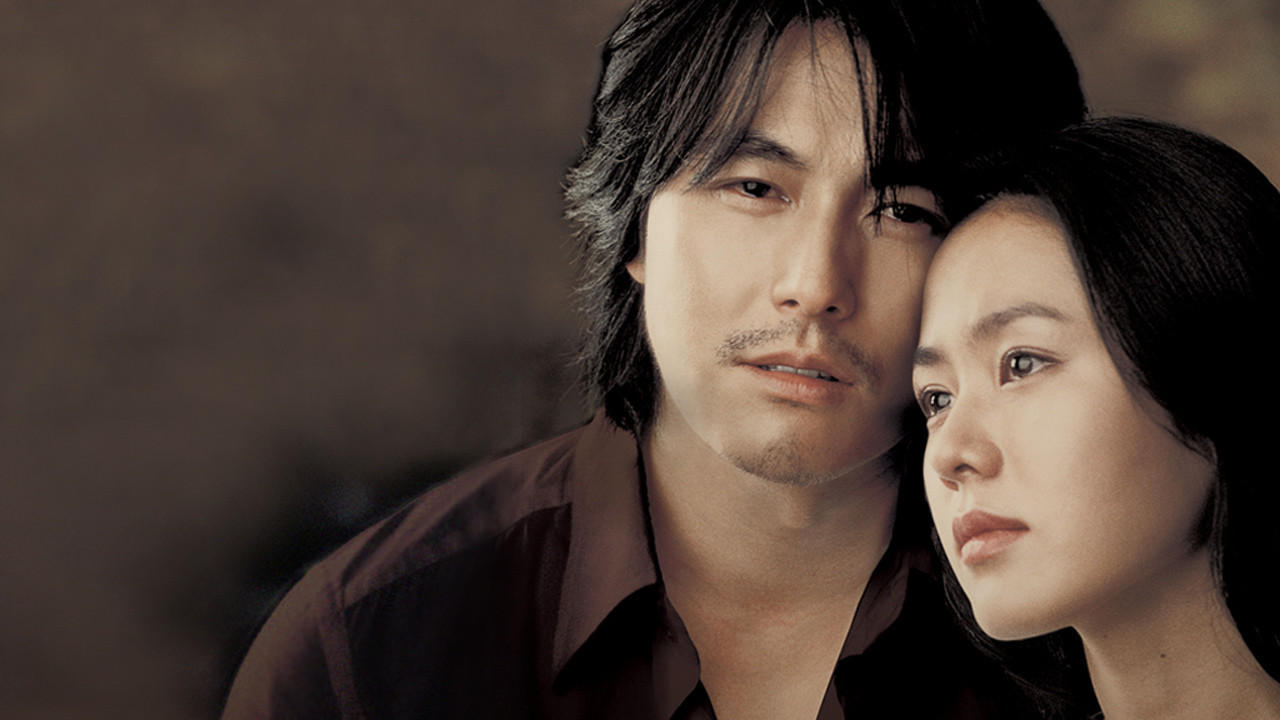
Directed by John H. Lee, the 2004 South Korean film stars Son Ye-jin as Kim Su-jin and Jung Woo-sung as Choi Chul-soo. Their relationship forms the emotional center of a story that explores early-onset Alzheimer’s disease without immediately presenting itself as a medical drama. Instead, the film allows audiences to become invested in the couple first, making the later challenges feel deeply personal rather than purely tragic.
Released in South Korea on November 5, 2004, A Moment to Remember became a major commercial success. It topped the domestic box office for two consecutive weeks and finished as the fifth highest-grossing Korean film of 2004. The movie also performed exceptionally well in Japan, where it broke previous records for Korean films and became one of the highest-grossing releases of 2005.
Its enduring appeal is easy to understand. Beneath the melodrama is a simple but powerful question: if memories disappear, can love still remain meaningful?
Highlights
- Released in 2004
- Directed by John H. Lee
- Stars Son Ye-jin and Jung Woo-sung
- Explores romance, memory, and early-onset Alzheimer’s disease
- Major box-office success in South Korea and Japan
- Won Best Adapted Screenplay at the Grand Bell Awards
- Inspired several international remakes
A Moment to Remember – Official Trailer
What Is A Moment to Remember About?
The story follows Kim Su-jin, a 27-year-old fashion designer trying to rebuild her life after a painful relationship ends.
During an ordinary stop at a convenience store, she has an awkward encounter with Choi Chul-soo, a rough but charismatic construction foreman who is also studying architecture. Their first meeting is brief, but circumstances bring them together again through Su-jin’s father’s construction business.
Despite differences in personality, background, and lifestyle, Su-jin becomes increasingly interested in Chul-soo.
Their relationship develops naturally through small moments rather than immediate declarations of love. Chul-soo is guarded and somewhat emotionally distant, while Su-jin is far more direct about what she wants.
The early portion of the film is therefore warm, playful, and romantic.
As their relationship deepens, however, Su-jin begins experiencing unusual episodes of forgetfulness. At first they seem like ordinary mistakes, but they gradually become serious enough to require medical attention.
From that point onward, the film shifts toward a more difficult examination of what happens when memory itself becomes uncertain.
Story Highlights
- Su-jin meets Chul-soo by accident
- Their relationship develops despite social differences
- Chul-soo works in construction and studies architecture
- Su-jin works as a fashion designer
- Memory problems gradually become part of their lives
- The romance evolves into a story about commitment and loss
Is A Moment to Remember Worth Watching?
Absolutely, particularly for viewers who appreciate emotional romances that give their characters time to develop before introducing major conflict.
The film works because the relationship between Su-jin and Chul-soo feels believable.
They tease one another, misunderstand each other, become comfortable together, and gradually build a shared life. The movie spends enough time on this stage that audiences understand what is at risk later.
Son Ye-jin and Jung Woo-sung also have excellent chemistry.
Neither performance feels designed purely to make viewers cry. Su-jin is energetic and emotionally open, while Chul-soo initially appears tougher and less expressive. Their contrasting personalities give the romance texture.
The second half becomes much heavier, but the emotional impact comes from the connection established earlier rather than constant manipulation.
Reasons to Watch
- Strong chemistry between the leads
- Beautifully paced romance
- Emotionally powerful without relying only on tragedy
- Memorable performances
- Thoughtful themes involving memory and identity
- Excellent introduction to Korean romantic melodrama
Why A Moment to Remember Still Works Today
Many romantic dramas from the early 2000s are strongly tied to the filmmaking trends of their era.
A Moment to Remember certainly has some of those characteristics, including heightened emotion, expressive music, and dramatic romantic imagery. Yet the central relationship still feels surprisingly sincere.
The film is not really about whether Su-jin and Chul-soo are perfectly compatible.
It is about choosing another person despite uncertainty.
When Su-jin’s condition begins changing their future, the central conflict cannot be solved through a clever conversation or dramatic apology. There is no villain responsible for the problem.
That forces the characters to confront something far more difficult: love does not guarantee control.
The movie’s emotional strength therefore comes from watching two people attempt to preserve connection even as memory becomes increasingly unreliable.
Biggest Strengths
- Emotionally sincere relationship
- Strong contrast between romance and illness
- Memorable central performances
- Themes that remain relevant
- Effective shift from light romance to serious drama
- Emotional stakes built through character rather than spectacle
Son Ye-jin as Kim Su-jin
Son Ye-jin plays Kim Su-jin, one of the defining roles of her early film career.
Su-jin begins the story as someone trying to recover from personal disappointment.
She is impulsive, emotionally expressive, occasionally forgetful, and willing to pursue Chul-soo even when he initially appears difficult to approach.
Those characteristics make the later story particularly affecting because her personality is so strongly established before memory loss becomes serious.
Son Ye-jin avoids portraying Su-jin simply as a passive victim.
Even after realizing the seriousness of what she is facing, Su-jin remains concerned about the effect her illness may have on Chul-soo.
Her fear is not only forgetting events.
It is forgetting the people and feelings that define her life.
Su-jin Highlights
- Played by Son Ye-jin
- Fashion designer
- Emotionally direct and optimistic
- Pursues Chul-soo confidently
- Later faces early-onset Alzheimer’s disease
- Central to the film’s themes of memory and identity
Jung Woo-sung as Choi Chul-soo
Jung Woo-sung plays Choi Chul-soo, a construction foreman and architecture student.
Chul-soo initially appears rougher and less emotionally available than Su-jin.
He is practical, independent, and accustomed to protecting himself from emotional vulnerability.
His relationship with Su-jin gradually changes that.
Rather than transforming into a completely different person, he slowly becomes more comfortable expressing affection and imagining a shared future.
Jung Woo-sung’s restrained acting complements Son Ye-jin’s more expressive performance extremely well.
As the story becomes more serious, his character is forced to deal with helplessness in a way that physical strength or determination cannot solve.
That contrast gives his performance much of its emotional weight.
Chul-soo Highlights
- Played by Jung Woo-sung
- Construction foreman
- Studies architecture
- Initially emotionally guarded
- Gradually becomes more open through the relationship
- Faces circumstances he cannot solve through strength alone
The Relationship Between Su-jin and Chul-soo
The film’s greatest achievement is making the central romance feel substantial before the heavier drama begins.
Their relationship is built through ordinary experiences.
They eat together, argue, flirt, build routines, and gradually become more dependent on one another.
Chul-soo’s architectural ambitions also become symbolic.
He dreams of creating spaces and structures that last.
That idea becomes especially meaningful in a story where memory itself becomes fragile.
Su-jin, meanwhile, brings warmth and spontaneity into his life.
Their relationship therefore feels less like an idealized fantasy and more like two very different personalities slowly learning how to live together.
Relationship Highlights
- Begins through an accidental encounter
- Develops gradually rather than instantly
- Strong personality contrast
- Built around ordinary shared moments
- Marriage becomes part of the emotional foundation
- Their bond is tested by circumstances beyond either person’s control
How the Film Handles Alzheimer’s Disease
The movie focuses specifically on early-onset Alzheimer’s disease, which is particularly devastating because Su-jin is still young when symptoms begin appearing.
The film shows memory problems initially through everyday mistakes.
Forgetting an item, leaving something unfinished, or confusing familiar details may not immediately seem alarming.
As those incidents become more frequent, they begin affecting safety, relationships, and Su-jin’s confidence in herself.
The emotional emphasis is less on medical detail than on what memory loss means for identity.
Su-jin becomes frightened not simply because she might forget facts, but because she may eventually lose access to the emotional history connecting her to Chul-soo.
That is where the film finds its most powerful idea.
A relationship is partly built from shared memory. If one person can no longer access those memories, what happens to the relationship itself?
Alzheimer’s Themes
- Early symptoms appear gradually
- Forgetfulness becomes increasingly serious
- The disease affects independence
- Identity becomes a major concern
- Shared memories become emotionally significant
- The film focuses heavily on the impact on relationships
Memory as the Film’s Central Theme
The Korean title literally translates to “The Eraser in My Head,” which describes the film’s core metaphor more directly than the international title.
Memory is presented as something capable of slowly disappearing piece by piece.
Names.
Places.
Routines.
Shared experiences.
Eventually, even emotional connections can become difficult to access.
Yet A Moment to Remember does not suggest that memories are the only thing making a relationship meaningful.
The film repeatedly asks whether love can continue through actions, loyalty, and presence even when the person experiencing that love cannot always remember its history.
This creates a distinction between remembering love and continuing to love someone.
That idea is what gives the film depth beyond its melodramatic premise.
Memory Themes
- Memory shapes personal identity
- Relationships depend partly on shared history
- Forgetting creates emotional fear
- Love can exist through action as well as recollection
- The title itself reflects memory being erased
Love and Commitment
The film’s view of love becomes increasingly serious as it progresses.
Early romance is exciting because everything is new.
Later commitment is difficult because the future becomes uncertain.
This transition gives A Moment to Remember more emotional substance than a romance focused entirely on courtship.
The film asks whether loving someone means remaining only when the relationship continues rewarding both people equally.
Chul-soo’s situation forces him to confront a version of commitment where affection may not always be recognized or remembered.
Su-jin faces the opposite fear.
She worries about becoming a burden to someone she loves.
Neither position has an easy answer.
Commitment Themes
- Love changes after marriage
- Illness tests expectations
- Fear of becoming a burden
- Caregiving and emotional exhaustion
- Devotion without guaranteed recognition
- Commitment as a repeated choice
Social Class and Personality Differences
Before illness becomes the dominant concern, the film also explores the differences between its leads.
Su-jin comes from a financially comfortable family.
Her father runs a construction company, while she works in fashion design.
Chul-soo works directly on construction sites and presents himself as more working-class, independent, and physically grounded.
Their differences create some initial tension, but the film does not turn the romance into a simplistic story about wealth versus poverty.
More important is the difference in emotional style.
Su-jin is more willing to express affection.
Chul-soo is more hesitant.
Their relationship becomes meaningful because both gradually adapt without completely losing their personalities.
Supporting Cast
Although the film is overwhelmingly centered on Su-jin and Chul-soo, the supporting characters help establish their wider lives.
The cast includes:
- Baek Jong-hak as Seo Yeong-min
- Lee Seon-jin as Jung An-na
- Park Sang-gyu as Mr. Kim
- Kim Hee-ryeong as Su-jin’s mother
- Seon Ji-hyun as Jeong-eun
- Kim Bu-seon as Madam Oh
- Kim Joong-ki as Section Chief Cha
- Hyun Young as Yu-na
- Park Mi-suk as Ji-hyun
- Shin Cheol-jin as Manager Park
- Kwon Byeong-kil as Dr. Lee
- Oh Kwang-rok in a supporting role
- David Lee McInnis as a model
Most of these characters remain secondary to the central romance, but family and workplace relationships help make Su-jin and Chul-soo feel connected to a believable social environment rather than existing only for each other.
Direction by John H. Lee
John H. Lee approaches the film with a polished romantic style.
The early relationship scenes are warm and visually inviting, allowing audiences to become comfortable with Su-jin and Chul-soo before the tone changes.
That contrast is essential.
If the entire movie were emotionally heavy from the beginning, later developments would have less impact.
The direction therefore creates two experiences.
First comes discovery.
Then comes preservation.
The shift mirrors the relationship itself. At first, the characters are trying to understand one another. Later, they are trying to hold onto what they have already built.
Lee’s visual approach also emphasizes intimate gestures and expressions rather than relying entirely on dialogue.
Screenplay and Adaptation
John H. Lee co-wrote the adapted screenplay with novelist Kim Young-ha.
Their work won Best Adapted Screenplay at the 2005 Grand Bell Awards.
The story was adapted from the Japanese television drama Pure Soul, but the Korean film develops its own visual and emotional identity.
Rather than feeling like a literal television remake compressed into feature length, it uses a three-part progression that moves from romance into domestic life and eventually into a more serious exploration of illness.
That structure is one reason the movie feels emotionally complete despite covering a substantial period in the characters’ lives.
Screenplay Highlights
- Written by John H. Lee and Kim Young-ha
- Adapted from earlier Japanese material
- Won Best Adapted Screenplay
- Structured around different stages of the relationship
- Balances romance with illness-driven drama
Visual Style and Cinematography
The film uses romantic imagery without making every scene feel artificial.
Urban locations, construction sites, restaurants, homes, and ordinary public spaces become associated with important stages of the relationship.
This makes the world feel personal.
Locations gain emotional meaning because viewers remember what happened there.
That approach complements the memory theme particularly well.
The idea of physically rebuilding or revisiting places also connects naturally with Chul-soo’s architectural background.
Rather than treating setting as simple decoration, the movie turns familiar environments into emotional landmarks.
Visual Highlights
- Warm romantic photography
- Everyday locations gain emotional importance
- Construction and architecture become recurring visual ideas
- Intimate close-ups support the performances
- Strong contrast between happier and more difficult periods
Music and Emotional Tone
Music plays a significant role in shaping the film’s emotional atmosphere.
The soundtrack moves between gentle romantic pieces and more dramatic compositions as Su-jin and Chul-soo’s circumstances change.
This approach reflects the melodramatic tradition in which the movie operates.
Some viewers may find parts of the score emotionally direct compared with more restrained contemporary dramas.
Others will see that emotional openness as part of the film’s appeal.
A Moment to Remember never pretends it does not want viewers to feel deeply.
Its strength is that the performances usually earn those emotions before the music emphasizes them.
Release and Box Office Success
A Moment to Remember opened in South Korea on November 5, 2004.
The movie quickly became a major domestic hit.
It topped the Korean box office for two consecutive weeks and became the fifth highest-grossing film of 2004 in the country.
Its success extended well beyond South Korea.
The film became especially popular in Japan, where Korean entertainment was gaining significant cultural momentum during the Korean Wave.
It broke previous box-office records for Korean movies released there and became the 19th highest-grossing film at the Japanese box office in 2005.
That performance demonstrated that the emotional story could connect strongly with audiences outside its home market.
Box Office Highlights
- Released November 5, 2004
- Topped the South Korean box office for two weeks
- Fifth highest-grossing Korean film of 2004
- Major success in Japan
- Broke previous Japanese records for Korean films
- Strengthened the international reach of Korean cinema
Reception and Lasting Popularity
The movie’s continued reputation comes primarily from its emotional impact and its two leading performances.
Son Ye-jin would later become one of South Korea’s most recognizable actresses, while Jung Woo-sung continued building a major career across film and television.
Looking back, A Moment to Remember captures both performers during an important period in their careers.
The film also remains frequently recommended among viewers exploring classic Korean romantic dramas.
Its combination of attractive cinematography, emotionally accessible storytelling, strong chemistry, and serious subject matter makes it easy to understand even for audiences unfamiliar with Korean cinema.
Its international remakes are another sign of how adaptable the central story has proven.
A Moment to Remember and the Korean Wave
The film arrived during a period when South Korean television, movies, and music were expanding rapidly throughout Asia.
Romantic dramas played an especially important role in this development.
A Moment to Remember benefited from that growing interest but also helped strengthen it.
Its strong Japanese box-office performance demonstrated that Korean romantic cinema could succeed theatrically rather than only through television distribution.
The film therefore belongs to an important period in the international growth of Korean popular culture.
Today, global audiences have easy access to Korean series and movies through streaming platforms.
In 2004, however, successes like this helped build that audience.
Cultural Impact
- Released during the growth of the Korean Wave
- Strong theatrical success in Japan
- Helped expand interest in Korean romantic cinema
- Remains widely recommended internationally
- Later adaptations demonstrate global appeal
Turkish Remake – Evim Sensin
The story was remade in Turkey as Evim Sensin in 2012.
The remake adapted the central romantic and memory-loss premise for Turkish audiences while changing characters, cultural details, and dramatic presentation.
Its existence demonstrates how easily the fundamental idea crosses cultural boundaries.
A relationship challenged by memory loss does not depend heavily on one particular social environment.
The emotional question works almost anywhere.
That universality is one reason the original story has continued inspiring adaptations.
Hindi Adaptation – Saiyaara
The source material also identifies the 2025 Hindi film Saiyaara as a remake of A Moment to Remember.
The Indian adaptation once again demonstrates the longevity of the premise more than two decades after the Korean film’s release.
Each version can modify characters and cultural context while preserving the central emotional conflict involving romance, memory, and the fear of losing connection.
For audiences discovering the story through later adaptations, the 2004 Korean movie remains the version that established its strongest international reputation.
Planned American Remake
Hollywood also pursued an English-language adaptation.
CBS Films secured remake rights in 2008, with Susannah Grant attached to write the screenplay.
The project later changed hands.
By 2013, Scott Pictures, Sobini Films, and Film 360 were associated with the production, while Ben Lewin was set to direct and Katherine Heigl was announced as the female lead.
Further changes followed.
By 2016, Josh Hartnett was reportedly in discussions to star, while Jena Malone had replaced Heigl.
The supplied information does not indicate that this version ultimately entered completed production.
That long development history illustrates how difficult it can be to remake a movie whose impact depends so strongly on casting chemistry.
Philippine Remake Development
A Philippine remake has also experienced a lengthy development process.
The project was initially announced with Alden Richards and Bea Alonzo, with production expected to involve GMA Pictures and Viva Films.
It was later renamed Special Memory.
Production delays and scheduling issues followed, with Julia Barretto eventually reported as replacing Alonzo.
By August 2025, the project had undergone another major overhaul. According to the supplied information, GMA Pictures exited, the principal cast was changed, and Bela Padilla and Carlo Aquino became the new leads, with Jerry Sineneng directing.
This repeated redevelopment again demonstrates the continued interest in adapting the original film for different audiences.
Why the Film Inspired So Many Remakes
The reason A Moment to Remember travels so easily between countries is straightforward.
Its central premise is highly universal.
Two people meet.
They fall in love.
Then something threatens not just their future together, but their ability to remember that future ever existed.
The story does not rely heavily on Korean history, politics, mythology, or regional humor.
Those cultural details enrich the original, but the emotional structure can survive relocation.
That makes the film particularly attractive to producers seeking an established romance that can be reshaped for another national cinema.
Adaptation Strengths
- Universal romantic premise
- Emotion understandable across cultures
- Simple but powerful central conflict
- Flexible setting
- Strong opportunities for lead performances
- Themes remain relevant decades later
Similar Movies You May Enjoy
Viewers who connect with A Moment to Remember may also appreciate other emotionally driven romantic dramas involving memory, illness, separation, or long-term commitment.
The Classic
Another acclaimed Korean romance starring Son Ye-jin, combining past and present relationships with sweeping melodrama.
Be With You
A Korean romantic fantasy centered on grief, reunion, family, and the fragile nature of time together.
Always
A Korean romance involving a former boxer and a visually impaired woman, with strong chemistry and emotionally direct storytelling.
More Than Blue
A deeply sentimental Korean romance exploring love, illness, sacrifice, and unspoken emotions.
The Father
Very different in tone and structure, but another powerful film examining memory loss and the emotional effect cognitive decline has on relationships.
Eternal Sunshine of the Spotless Mind
A more surreal approach to the relationship between memory and love, asking whether removing painful memories also removes something essential about connection.
Frequently Asked Questions
What Is A Moment to Remember About?
The film follows Su-jin and Chul-soo as an unexpected meeting develops into a serious relationship that is later challenged when Su-jin begins experiencing symptoms of early-onset Alzheimer’s disease.
When Was A Moment to Remember Released?
The film was released in South Korea on November 5, 2004.
Who Stars in A Moment to Remember?
Son Ye-jin plays Kim Su-jin, while Jung Woo-sung plays Choi Chul-soo.
Is A Moment to Remember Based on a True Story?
No. The film is not presented as a true story. It was adapted from earlier dramatic material rather than a documented real-life couple.
What Does the Korean Title Mean?
The Korean title literally translates to “The Eraser in My Head,” directly referencing Su-jin’s memory loss.
Is A Moment to Remember About Alzheimer’s Disease?
Yes. Early-onset Alzheimer’s becomes a major part of the story and affects both Su-jin’s identity and her relationship with Chul-soo.
Is A Moment to Remember Very Sad?
It is emotionally intense and deals with illness, memory deterioration, and the fear of losing someone emotionally while they are still physically present. However, the film also contains substantial warmth and romance.
Did A Moment to Remember Win Any Awards?
John H. Lee and Kim Young-ha won Best Adapted Screenplay at the 2005 Grand Bell Awards.
Was A Moment to Remember Successful?
Yes. It became one of South Korea’s highest-grossing films of 2004 and was also a major theatrical success in Japan.
Has A Moment to Remember Been Remade?
Yes. It has inspired international adaptations including Turkey’s Evim Sensin and the Hindi film Saiyaara, with additional remake projects developed in other countries.
Is A Moment to Remember Worth Watching?
Yes. It remains one of the most memorable Korean romantic melodramas of its era, largely because of the chemistry between Son Ye-jin and Jung Woo-sung and its emotionally powerful exploration of love and memory.
Conclusion
A Moment to Remember has endured for more than two decades because its emotional premise remains painfully easy to understand.
Falling in love requires building memories together.
The characters remember the first awkward encounter, the first moments of attraction, shared meals, arguments, routines, promises, and plans for the future. Those memories gradually become part of the relationship itself.
The possibility of losing them therefore feels like losing more than information.
It threatens identity.
Son Ye-jin gives Su-jin warmth and vulnerability without defining her entirely through illness, while Jung Woo-sung’s restrained performance makes Chul-soo’s transformation from emotionally guarded outsider into devoted partner feel convincing. Their chemistry allows the movie’s dramatic second half to carry genuine weight because viewers have already spent time understanding why these two people matter to one another.
The movie undoubtedly embraces melodrama, but it earns much of that emotion through careful character development rather than tragedy alone. Its box-office success in South Korea and Japan, Grand Bell Award recognition, and numerous international remake attempts all demonstrate how strongly the story connected with audiences.
Ultimately, A Moment to Remember is not simply about forgetting.
It is about the question left behind when memory becomes unreliable: if someone can no longer remember all the reasons they loved you, can the love you shared still matter?
The film’s answer is what has kept audiences remembering it long after the credits end.
If you don’t know where to watch this Movie for FREE make sure to contact me via E-mail, or in the comments below. Thank you for reading and make sure to bookmark the site.
How useful was this post?
Click on a star to rate it!
Average rating 0 / 5. Vote count: 0
No votes so far! Be the first to rate this post.