
 7.8/10
After years of waiting for a new traditional entry in one of gaming’s most influential gothic franchises, Castlevania has finally returned with an original adventure that embraces the series’ legendary identity while introducing a new generation of vampire hunters. Castlevania: Belmont’s Curse, released on October 15, 2026, marks a significant moment for Konami’s long-running franchise, bringing exploration-driven action, supernatural enemies, interconnected environments, and the iconic Belmont family whip back into the spotlight.
Developed by Evil Empire with advisory support from Motion Twin and published by Konami, Castlevania: Belmont’s Curse arrives as part of the franchise’s 40th-anniversary celebrations. The game builds upon the foundations established by classics such as Castlevania: Symphony of the Night, offering a side-scrolling adventure centered on exploration, character progression, challenging encounters, and the gradual discovery of new abilities.
This time, however, the story takes players to an unexpected location. Set in 1499, the game follows Rose Belmont, daughter of the legendary vampire hunter Trevor Belmont and the sorceress Sypha Belnades, as she investigates a supernatural catastrophe unfolding in medieval Paris. With demonic creatures overrunning the city and Dracula’s castle appearing at its heart, Rose must confront terrifying enemies while uncovering the mystery behind the invasion.
The game also carries considerable historical significance within the franchise. Its events take place twenty-three years after Castlevania III: Dracula’s Curse and twenty years after Castlevania: Curse of Darkness, positioning it within one of the most important periods of the original Castlevania timeline. Rather than reinventing the franchise through an entirely separate continuity, Belmont’s Curse returns to the established mythology surrounding Dracula, the Belmont family, and the eternal struggle against darkness.
With an emphasis on non-linear exploration, role-playing progression, tarot-based supernatural abilities, and traditional side-scrolling combat, Castlevania: Belmont’s Curse attempts to combine the strengths of the franchise’s past with modern action-game design. Its positive critical reception and availability across major contemporary platforms make it one of the most notable releases in the series’ recent history.
Castlevania: Belmont’s Curse – Release Date Trailer
What Is Castlevania: Belmont’s Curse About?
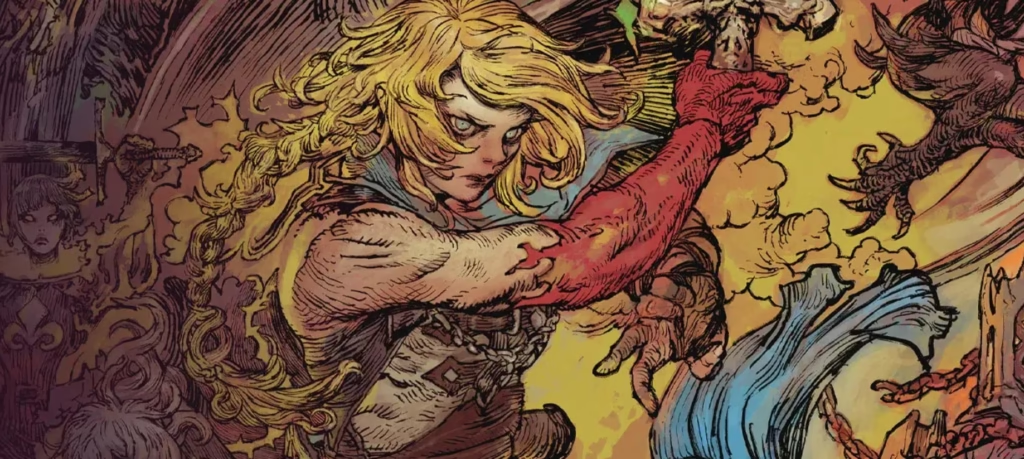
Castlevania: Belmont’s Curse follows Rose Belmont, a young vampire hunter carrying the legacy of two legendary figures from the franchise’s history: Trevor Belmont and Sypha Belnades.
The story unfolds in 1499, when the city of Paris becomes overwhelmed by supernatural creatures and Dracula’s castle mysteriously manifests within the city. As the situation deteriorates, the local bishop requests assistance from Trevor Belmont, whose previous victory over Dracula has made him one of the most respected vampire hunters of his era.
Trevor responds to the crisis alongside his daughter, Rose, whom he has trained to continue the Belmont family’s centuries-long battle against supernatural evil. However, Rose’s personal circumstances make her journey particularly complicated. She has inherited a mysterious affliction connected to Dracula’s curse, affecting her right arm and linking her fate to the very darkness she has been raised to oppose.
Upon arriving in Paris, Trevor and Rose begin investigating the demonic invasion. Their search leads them through streets, underground passages, ancient structures, and locations connected to the supernatural forces threatening the city.
Along the way, Rose encounters dangerous monsters, mysterious figures, and enemies associated with Dracula’s influence. Her journey becomes more than a mission to eliminate creatures terrorizing Paris; it is also an opportunity to understand the nature of her inherited curse and her place within the Belmont family’s legacy.
The narrative connects established Castlevania mythology with a new protagonist, allowing longtime fans to revisit familiar characters while introducing newcomers to a different chapter of the franchise’s history.
Is Castlevania: Belmont’s Curse Worth Playing?
Castlevania: Belmont’s Curse is worth considering for players who enjoy exploration-focused action games, gothic fantasy, interconnected environments, and combat systems built around character progression.
Its strongest appeal lies in its return to the classic Castlevania formula. Rather than focusing on a purely linear sequence of stages, the game encourages players to explore a large connected world, acquire new abilities, discover equipment, and revisit previously inaccessible locations.
This structure gives exploration a central role in the experience. Progression depends not only on defeating enemies but also on understanding how different areas connect and which abilities are required to overcome particular obstacles.
The combat system also offers variety through multiple weapon categories and supernatural abilities. Rose can equip weapons suited to different fighting styles while developing magical powers that provide additional tactical options.
For longtime fans, the connection to Dracula’s Curse and Curse of Darkness adds another reason to play. The game revisits an important period in the series’ fictional chronology and introduces a protagonist directly connected to two established heroes.
Critical reception has also been favorable overall, although reviews indicate that opinions differ regarding the game’s execution. Players who prioritize demanding exploration, atmospheric environments, and traditional side-scrolling action are likely to find the experience particularly appealing.
Why Should You Play Castlevania: Belmont’s Curse?
One of the most compelling reasons to play Castlevania: Belmont’s Curse is its commitment to the franchise’s exploration-driven identity. The game draws inspiration from the interconnected level design associated with Symphony of the Night, allowing players to discover new routes, uncover hidden areas, and expand their capabilities over time.
Another major attraction is Rose Belmont herself. As the daughter of Trevor Belmont and Sypha Belnades, she brings a direct connection to the series’ established history while introducing a personal storyline shaped by inheritance, responsibility, and supernatural danger.
The setting also distinguishes the game from many earlier installments. Medieval Paris provides an atmospheric environment filled with gothic architecture, underground locations, and supernatural threats. The appearance of Dracula’s castle within the city creates a striking premise that blends historical surroundings with the franchise’s dark fantasy mythology.
The game’s progression systems offer additional depth. Experience points, equipment choices, tarot-based abilities, and upgrade objectives allow players to shape Rose’s development as they explore.
Finally, Belmont’s Curse represents a significant moment for the franchise itself. Its release demonstrates Konami’s renewed interest in developing original Castlevania experiences rather than relying exclusively on collections and reissues of older games.
Castlevania: Belmont’s Curse Story and Setting
The events of Castlevania: Belmont’s Curse take place in medieval Paris during the year 1499.
The city is experiencing a supernatural catastrophe as monstrous creatures begin appearing throughout its streets and surrounding areas. The crisis becomes even more alarming when Dracula’s castle manifests in the heart of Paris, suggesting that the forces responsible for the invasion possess extraordinary power.
The situation prompts the local bishop to seek assistance from Trevor Belmont, a vampire hunter whose reputation was established through his earlier confrontation with Dracula.
Trevor travels to Paris with his daughter Rose, who has been trained in the family’s combat traditions and supernatural knowledge.
However, Rose’s journey is complicated by the curse affecting her right arm. This affliction creates a personal connection between the protagonist and the supernatural forces she is attempting to defeat.
The story introduces characters associated with established Castlevania mythology, including Dracula, Carmilla, Medusa, Isaac, and Death.
Their presence reinforces the game’s connection to the broader franchise while providing Rose with a series of dangerous adversaries.
Although the narrative builds upon earlier games, its central focus remains Rose’s investigation into the catastrophe threatening Paris and her development as a Belmont vampire hunter.
Rose Belmont – The New Protagonist of Castlevania
Rose Belmont is the playable protagonist of Castlevania: Belmont’s Curse and one of the most important additions to the franchise’s mythology.
As the daughter of Trevor Belmont and Sypha Belnades, Rose inherits a remarkable legacy. Her father is a legendary vampire hunter who previously confronted Dracula, while her mother was a powerful magic user whose abilities played an important role in the struggle against supernatural evil.
Rose’s background therefore connects two distinct traditions within the franchise: the Belmont family’s mastery of weapons and the Belnades family’s association with magic.
Her upbringing has prepared her for combat, but her personal circumstances introduce an additional challenge. Rose carries an inherited curse affecting her right arm, creating a direct connection to the supernatural forces that threaten her world.
This condition gives the character a personal reason to investigate Dracula’s influence beyond the traditional Belmont responsibility to protect humanity.
In gameplay, Rose combines physical combat with magical abilities, allowing players to experiment with different approaches to exploration and enemy encounters.
Her introduction also provides an opportunity for the series to explore the generation following Trevor and Sypha, expanding the original timeline without abandoning its established history.
Trevor Belmont – The Legendary Vampire Hunter Returns
Trevor Belmont is one of the most recognizable characters in the Castlevania franchise, particularly because of his central role in Castlevania III: Dracula’s Curse.
In Belmont’s Curse, Trevor is an experienced vampire hunter whose reputation has endured since his earlier confrontation with Dracula.
When Paris becomes overwhelmed by supernatural creatures, the local bishop requests his assistance, recognizing his experience in combating threats of this magnitude.
Trevor responds by traveling to the city with his daughter Rose, whom he has trained to continue the family’s traditions.
His presence creates a direct narrative connection between the new game and the earlier adventures that established the Belmont family’s importance.
Trevor is voiced by JB Blanc, adding another recognizable performer to the game’s cast.
Although Rose is the central playable character, Trevor’s involvement reinforces the generational nature of the franchise’s ongoing conflict against Dracula and his followers.
Sypha Belnades – Rose’s Magical Heritage
Sypha Belnades is another important figure in the history of Castlevania.
Originally introduced in Castlevania III: Dracula’s Curse, Sypha is associated with powerful magical abilities and her alliance with Trevor Belmont.
In Belmont’s Curse, Sypha’s influence is central to Rose’s background, even though the game’s story establishes that she has died before the events of 1499.
Her legacy survives through her daughter, who inherits both the Belmont family’s responsibilities and a connection to supernatural power.
Rose also possesses tarot cards associated with Sypha, linking the game’s magical systems to the protagonist’s family history.
Alejandra Reynoso voices Sypha, reprising the character from the Castlevania animated television series.
Her inclusion strengthens the connection between the new game’s characters and the wider recognition of the franchise’s mythology.
Dracula – The Eternal Threat Behind Castlevania
Dracula remains the central supernatural figure associated with the Castlevania franchise.
Across numerous installments, his influence has shaped the destinies of the Belmont family and the many allies who have fought against his forces.
In Belmont’s Curse, the appearance of Dracula’s castle within Paris immediately establishes a connection to the vampire lord’s legacy.
The game’s story also explores the continuing consequences of Dracula’s curse, particularly through Rose’s inherited affliction.
Graham McTavish voices Dracula, reprising his role from the animated Castlevania series.
His involvement adds continuity to the character’s modern portrayal while reinforcing the importance of Dracula within the franchise’s larger mythology.
The game’s supernatural invasion also demonstrates that Dracula’s influence extends beyond a single confrontation, continuing to affect the world long after previous battles.
Carmilla – A Familiar Vampire Antagonist
Carmilla is a recurring antagonist associated with the Castlevania franchise and its broader gothic mythology.
Her appearance in Belmont’s Curse connects Rose’s adventure to the established supernatural enemies that have challenged previous generations of vampire hunters.
As a vampire associated with Dracula’s forces, Carmilla represents the dangerous aristocratic side of the franchise’s monstrous world.
Her presence contributes to the game’s emphasis on recognizable gothic horror figures.
Dawn M. Bennett provides Carmilla’s voice performance.
For longtime fans, her inclusion offers another connection to the franchise’s history, while newcomers encounter her as part of the dangerous supernatural hierarchy surrounding Dracula.
Medusa – The Serpent-Headed Prophetess
Medusa is another recognizable supernatural figure appearing in Castlevania: Belmont’s Curse.
Drawing upon the mythological image of a serpent-haired creature, the character fits naturally within the franchise’s tradition of adapting monsters from folklore and classical mythology.
In the game, Medusa is described as a serpent-headed prophetess associated with Dracula’s forces.
Her presence contributes to the variety of enemies and supernatural personalities Rose encounters during her investigation.
Melique Berger voices Medusa.
The character’s inclusion reinforces the series’ longstanding mixture of vampire mythology, European folklore, and classical monster imagery.
Isaac – The Devil Forgemaster
Isaac is a devil forgemaster associated with the events of Castlevania: Curse of Darkness.
His appearance in Belmont’s Curse is particularly significant because the new game’s story takes place twenty years after that earlier installment.
Isaac’s history connects him to the supernatural conflicts involving Trevor Belmont and Dracula’s forces.
His return therefore strengthens the relationship between the new adventure and the established chronology.
Liam O’Brien reprises the role, having previously voiced Isaac in Curse of Darkness.
For fans familiar with the earlier game, Isaac’s inclusion provides an important connection to one of the franchise’s most distinctive character arcs.
Death – Dracula’s Loyal Servant
Death is one of the most enduring supernatural antagonists in the Castlevania franchise.
Traditionally associated with Dracula, the character embodies the series’ fascination with mortality, supernatural power, and the boundary between life and death.
In Belmont’s Curse, Death is described as a loyal servant of Dracula who feeds upon the souls of the dead.
His presence reinforces the danger surrounding Rose’s investigation into the demonic invasion.
Aaron LaPlante voices the character.
As with several other returning antagonists, Death helps establish continuity between the new game and the franchise’s longstanding supernatural mythology.
The Fallen – A Mysterious New Enemy
The Fallen is a mysterious monster introduced in Castlevania: Belmont’s Curse.
The creature terrorizes Paris and becomes an important part of Rose’s investigation into the supernatural catastrophe.
Its appearance contributes to the game’s original mythology rather than relying entirely on familiar characters from earlier installments.
Ray Chase provides the voice performance.
The Fallen also features in the game’s opening playable content, making the character one of the earliest major threats encountered by players.
Its presence demonstrates how Belmont’s Curse combines established franchise enemies with new supernatural creations.
Joan of Arc – A Historical Figure in Castlevania’s Dark Fantasy
One of the more unusual characters appearing in Castlevania: Belmont’s Curse is Joan of Arc.
The historical French figure is incorporated into the game’s supernatural setting, introducing an unexpected connection between the fictional conflict and France’s medieval history.
Because the game takes place in 1499, its interpretation of Joan of Arc belongs to the series’ fantasy narrative rather than a conventional historical account.
Erica Lindbeck voices the character.
Her inclusion adds another distinctive element to the game’s setting and demonstrates the franchise’s willingness to combine historical references with gothic fantasy.
The character also reinforces the importance of France as more than a visual backdrop for Rose’s adventure.
Castlevania: Belmont’s Curse Voice Cast
The game features a cast of performers associated with animation, video games, and established Castlevania productions.
| Character | Voice Actor |
|---|---|
| Rose Belmont | Abby Trott |
| Trevor Belmont | JB Blanc |
| Sypha Belnades | Alejandra Reynoso |
| Dracula | Graham McTavish |
| The Fallen | Ray Chase |
| Joan of Arc | Erica Lindbeck |
| Carmilla | Dawn M. Bennett |
| Medusa | Melique Berger |
| Isaac | Liam O’Brien |
| Death | Aaron LaPlante |
Several casting choices create recognizable connections to earlier Castlevania adaptations. Graham McTavish and Alejandra Reynoso reprise characters they voiced in the animated series, while Liam O’Brien returns to the role of Isaac from Curse of Darkness.
These returning performers help connect the new game’s presentation to different parts of the franchise’s history.
Castlevania: Belmont’s Curse Gameplay Explained
Castlevania: Belmont’s Curse is a side-scrolling action-adventure game built around exploration, combat, character progression, and the gradual unlocking of new areas.
Players control Rose Belmont as she travels through a large interconnected environment comprising Dracula’s castle and sections of medieval Paris.
Rather than following a completely linear path, the game encourages exploration through an automatically updating map divided into multiple regions and sub-areas.
Some locations are inaccessible when first discovered, requiring players to acquire new abilities, defeat bosses, or obtain specific items before progressing.
Combat involves a combination of physical weapons and supernatural powers.
Rose gains experience by defeating enemies, allowing her to level up and improve attributes such as attack and defense.
The game also introduces a tarot-based ability system, providing an alternative to the traditional sub-weapon mechanics associated with earlier Castlevania titles.
Together, these systems create an experience that emphasizes exploration and long-term character development.
Exploration and Metroidvania Level Design
One of the defining elements of Belmont’s Curse is its non-linear world structure.
The game draws upon the exploration-focused approach associated with Castlevania: Symphony of the Night, where progress depends on discovering new abilities and understanding the connections between different locations.
Rose explores a large map containing multiple areas and sub-areas, with previously inaccessible routes becoming available as she develops new powers.
This design encourages players to revisit earlier locations rather than simply moving forward through a sequence of isolated stages.
The map updates as exploration continues, helping players identify discovered areas and potential routes.
Certain passages are restricted by special requirements, including doors that require keys obtained through boss encounters.
This approach makes exploration an essential part of progression rather than an optional activity.
For players who enjoy discovering hidden routes and gradually mastering interconnected environments, this structure is one of the game’s central attractions.
Combat System – Weapons, Magic, and Special Abilities
Combat in Castlevania: Belmont’s Curse combines traditional side-scrolling action with a variety of weapon types and supernatural abilities.
Rose can equip different melee weapons, allowing players to adapt their approach to specific enemies and situations.
Weapon categories include swords, spears, and gauntlets, each offering different practical advantages.
Short-range weapons may encourage aggressive positioning, while longer weapons provide opportunities to engage enemies from greater distances.
The iconic Belmont family whip, Vampire Killer, also plays an important role in the game’s combat identity.
Magical abilities introduce additional tactical options, allowing Rose to use supernatural powers alongside conventional weapons.
The combination encourages experimentation rather than requiring players to rely on a single attack pattern throughout the adventure.
Boss encounters provide particularly important opportunities to test these systems, as defeating powerful enemies contributes directly to progression.
Vampire Killer – The Legendary Belmont Whip
The Vampire Killer whip is one of the most iconic weapons in video game history and a defining symbol of the Castlevania franchise.
Traditionally wielded by members of the Belmont family, the weapon represents their inherited responsibility to confront Dracula and other supernatural threats.
Its inclusion in Belmont’s Curse reinforces Rose’s connection to the generations of vampire hunters who preceded her.
Although the game introduces multiple weapon categories and magical abilities, the whip remains an essential part of its identity.
For longtime fans, its return provides a recognizable link to the series’ earliest installments.
For newcomers, it introduces one of the most important traditions associated with the Belmont family.
Tarot Cards and the Arcana System
One of the most distinctive gameplay systems in Castlevania: Belmont’s Curse is its use of tarot cards and arcana.
Instead of relying on the traditional sub-weapons found by breaking candles and other environmental objects, Rose uses magical abilities associated with her tarot cards.
These powers consume mana rather than the hearts traditionally used by certain weapons in earlier Castlevania games.
The system provides a different approach to supernatural combat, allowing players to equip and use abilities suited to particular encounters.
Defeating bosses also enables Rose to acquire powers that can be stored and equipped as arcana.
This creates a direct connection between major encounters and the development of the protagonist’s abilities.
The tarot system also has narrative significance because of Rose’s connection to Sypha Belnades and her magical heritage.
By combining gameplay progression with character background, Belmont’s Curse gives its magical systems a recognizable place within the story.
Works of Mercy – How Ability Upgrades Work
Castlevania: Belmont’s Curse includes a progression mechanic known as Works of Mercy.
These objectives encourage players to use particular abilities or spells under specified conditions.
Completing a Work of Mercy awards a point that can be allocated toward upgrading skills associated with an arcanum.
The system adds another layer of development beyond conventional experience points and equipment acquisition.
Rather than unlocking every improvement simply through repeated combat, players are encouraged to experiment with their available powers.
This approach can make ability progression feel more closely connected to practical gameplay.
It also rewards players who explore the different tactical possibilities provided by Rose’s magical abilities.
Leveling, Experience Points, and Character Progression
Role-playing mechanics play an important role in Belmont’s Curse.
Rose earns experience points by defeating enemies and bosses, allowing her to increase her level as the adventure progresses.
Leveling improves combat-related attributes, including attack and defense.
These improvements influence how much damage Rose deals and how effectively she withstands enemy attacks.
The system provides a sense of long-term growth as players explore increasingly dangerous locations.
Equipment upgrades and supernatural abilities add further layers to progression.
Together, these mechanics allow players to strengthen Rose through a combination of exploration, combat experience, and skill development.
Healing, Save Points, and Fast Travel
Survival is an important part of Castlevania: Belmont’s Curse, particularly during difficult combat encounters and extended exploration.
Rose can restore health through consumable items, including food such as meat.
The game also provides potion flasks that can be used for healing.
These flasks refill at designated save points, encouraging players to consider their resources while exploring dangerous areas.
Mirrors function as important locations within the game’s world, serving as save points and fast-travel destinations.
This system helps reduce unnecessary travel through previously explored areas while preserving the importance of navigating the interconnected map.
The combination of healing items, refillable potions, and fast travel supports the game’s exploration-focused structure.
Boss Battles and Progression
Boss battles are a central feature of Castlevania: Belmont’s Curse.
These encounters test the player’s understanding of combat mechanics, movement, weapon selection, and magical abilities.
Defeating bosses can provide access to new powers, making major encounters essential to both character development and exploration.
Certain sections of the world also require keys obtained from defeating designated bosses.
This structure links combat success directly to progression through the environment.
The Fallen is one of the early major enemies featured in the game and its pre-release demo.
Additional encounters involve supernatural figures connected to the broader Castlevania mythology.
By combining recognizable enemies with new creations, Belmont’s Curse maintains the franchise’s tradition of memorable monster encounters.
Castlevania: Belmont’s Curse Timeline – Where Does It Fit?
Castlevania: Belmont’s Curse takes place in 1499 within the original series’ fictional chronology.
This places the story after two important earlier installments:
1476 – Castlevania III: Dracula’s Curse: Trevor Belmont and his allies confront Dracula.
1479 – Castlevania: Curse of Darkness: The story continues through another conflict connected to Dracula’s legacy.
1499 – Castlevania: Belmont’s Curse: Rose Belmont investigates a supernatural catastrophe in Paris.
The placement is particularly significant because Rose is the daughter of Trevor Belmont and Sypha Belnades.
Her story expands the consequences of the earlier adventures while introducing a new generation of the Belmont family.
The game also occupies a period before later installments centered on other members of the family.
For longtime fans, this timeline placement provides an important connection to the franchise’s established mythology.
For newcomers, the story can be understood through Rose’s immediate mission, although familiarity with the earlier games adds context to the returning characters.
Connection to Castlevania III: Dracula’s Curse
Castlevania III: Dracula’s Curse, originally released in 1989, is one of the most important games in the franchise’s history.
Set in 1476, it follows Trevor Belmont and his allies during their confrontation with Dracula.
The game established characters and relationships that later became central to the broader Castlevania mythology.
Belmont’s Curse takes place twenty-three years afterward, allowing players to see the consequences of those earlier events through Trevor’s daughter.
Rose’s connection to Sypha Belnades also gives the new game a direct relationship with the original adventure’s magical traditions.
The return of Trevor and other recognizable figures reinforces the sense that Belmont’s Curse is continuing an established historical period rather than introducing an unrelated storyline.
This connection is one of the game’s strongest attractions for fans interested in the franchise’s chronology.
Connection to Castlevania: Curse of Darkness
Castlevania: Curse of Darkness was released in 2005 and takes place in 1479, three years after the events of Dracula’s Curse.
Its story explores the continuing consequences of Dracula’s defeat and introduces additional characters connected to the supernatural conflict.
Belmont’s Curse takes place twenty years later, creating an opportunity to revisit figures whose histories were established in that earlier game.
Isaac’s return is particularly important because of his connection to Curse of Darkness.
The decision to bring back Liam O’Brien as the character’s voice actor strengthens this relationship.
By connecting its narrative to both Dracula’s Curse and Curse of Darkness, the new game expands an established section of the franchise’s history.
Development – How Castlevania: Belmont’s Curse Was Created
The development of Castlevania: Belmont’s Curse reflects Konami’s broader effort to revive major franchises through original console and PC productions.
In 2021, reports indicated that Konami was restructuring its approach to premium game development after a period in which mobile and pachislot projects had received considerable attention.
Among the franchises associated with this renewed strategy was Castlevania.
The project that became Belmont’s Curse entered development in 2022.
Evil Empire was selected to lead development, while Motion Twin contributed in an advisory capacity.
The collaboration followed the studios’ previous involvement with Dead Cells: Return to Castlevania, an expansion that demonstrated their understanding of the franchise’s atmosphere and action-game traditions.
Konami positioned the project as part of the series’ 40th-anniversary celebrations.
The result was a new original installment designed to reconnect the franchise with its exploration-focused roots while introducing contemporary gameplay systems.
Evil Empire – The Studio Behind Belmont’s Curse
Evil Empire is the principal developer of Castlevania: Belmont’s Curse.
The studio had previously worked on content for Dead Cells, gaining experience with demanding side-scrolling combat, interconnected environments, and action-oriented progression.
Its collaboration with Konami developed through discussions surrounding Dead Cells and the possibility of incorporating Castlevania content.
Those discussions eventually led to the Return to Castlevania expansion, released in 2023.
The success of that collaboration helped establish a relationship that made a larger project possible.
For Belmont’s Curse, Evil Empire was given the opportunity to develop a full original entry in the franchise.
The studio’s experience with responsive combat and exploration made it a natural candidate for a game inspired by the series’ classic design principles.
Motion Twin’s Involvement
Motion Twin, the studio associated with the original development of Dead Cells, contributed to Castlevania: Belmont’s Curse in an advisory role.
Its involvement followed the earlier collaboration surrounding Dead Cells: Return to Castlevania.
However, Belmont’s Curse was not designed as another roguelike game.
Konami emphasized that the project would instead follow the exploration-focused structure associated with traditional Castlevania adventures.
This distinction is important because Dead Cells and classic Castlevania games approach progression differently.
While roguelike games often emphasize repeated runs and procedural variation, Belmont’s Curse centers on exploring a persistent interconnected world.
Motion Twin’s participation therefore provided relevant development experience without changing the game’s fundamental genre identity.
Castlevania’s 40th Anniversary – Why This Release Matters
The original Castlevania debuted in 1986, establishing a franchise that would become one of the defining names in action-platform gaming.
Over the following decades, the series evolved through numerous installments, introducing new protagonists, expanding its fictional chronology, and experimenting with different gameplay structures.
One of its most influential achievements came with Castlevania: Symphony of the Night, whose exploration-driven design helped popularize the gameplay style now commonly described as Metroidvania.
Despite this legacy, original traditional installments became less frequent during the 2010s.
Castlevania: Belmont’s Curse therefore represents more than another anniversary release.
It signals a renewed commitment to developing original adventures within the franchise’s established mythology.
By returning to side-scrolling exploration and introducing a new Belmont protagonist, the game celebrates the series’ history while creating opportunities for future installments.
Castlevania: Belmont’s Curse Release Date and Platforms
Castlevania: Belmont’s Curse was released on October 15, 2026.
The game launched on the following platforms:
Nintendo Switch
PlayStation 5
Windows PC
Xbox Series X/S
Its announcement took place during Sony’s State of Play presentation in February 2026.
A second trailer appeared during the Xbox Games Showcase in June 2026, providing additional information about the game and its release plans.
Although the Nintendo Switch version was initially expected to arrive later, Konami subsequently confirmed that it would launch alongside the other versions.
The simultaneous release made the game accessible across several major gaming platforms.
Castlevania: Belmont’s Curse Demo
A playable demo of Castlevania: Belmont’s Curse was released on October 1, 2026, approximately two weeks before the full game’s launch.
The demo introduced players to the opening areas of the adventure and included an early boss encounter against the Fallen.
This provided an opportunity to experience the game’s combat, movement, exploration, and supernatural ability systems before purchasing the full release.
Importantly, progress made in the demo could be carried over into the complete game.
That feature made the demo particularly useful for players who wanted to begin their adventure early without repeating the opening content.
The demo also offered a practical introduction to the game’s new protagonist and its approach to traditional Castlevania gameplay.
Castlevania: Belmont’s Curse Reviews and Critical Reception
Castlevania: Belmont’s Curse received generally favorable reviews following its October 2026 release.
Critics responded positively to the return of traditional exploration-focused Castlevania gameplay, although individual publications differed in their overall assessments.
The game’s reception reflects considerable enthusiasm for a new original installment in the franchise, particularly one that returns to side-scrolling action and interconnected level design.
Review aggregation also indicates that the game was received differently across platforms, with Metacritic scores ranging from the high seventies to the high eighties in the supplied data.
OpenCritic reported that 96% of critics recommended the game.
These figures suggest a broadly positive response, although the variation among individual review scores demonstrates that the game was not universally praised.
Metacritic and OpenCritic Scores
According to the review data supplied for October 2026, Castlevania: Belmont’s Curse received the following aggregate scores:
| Platform | Metacritic Score |
|---|---|
| Nintendo Switch | 79/100 |
| PC | 82/100 |
| PlayStation 5 | 84/100 |
| Xbox Series X/S | 87/100 |
OpenCritic recommendation rate: 96%.
The differences between platform scores may reflect variations in the number of reviews, reviewer preferences, or platform-specific assessments.
Aggregate scores can also change as additional reviews are added.
Individual Critic Review Scores
Several established gaming publications reviewed Castlevania: Belmont’s Curse following its release.
| Publication | Review Score |
|---|---|
| GameSpot | 10/10 |
| Shacknews | 10/10 |
| RPGFan | 97/100 |
| Game Informer | 9.25/10 |
| IGN | 8/10 |
| GamesRadar+ | 4/5 |
| Nintendo World Report | 7.5/10 |
| Push Square | 7/10 |
| RPGamer | 3.5/5 |
| Eurogamer | 3/5 |
| The Guardian | 3/5 |
| Video Games Chronicle | 3/5 |
The range of scores demonstrates that critical opinion varied despite the generally favorable aggregate reception.
Some publications awarded the game exceptionally high marks, while others offered more reserved evaluations.
This variation is worth considering when deciding whether the game’s exploration, combat, and progression systems match individual preferences.
Castlevania: Belmont’s Curse vs. Symphony of the Night
Comparisons between Belmont’s Curse and Castlevania: Symphony of the Night are inevitable because both games emphasize non-linear exploration and character progression.
Symphony of the Night, released in 1997, helped establish the design principles that later became associated with the Metroidvania genre.
Its interconnected castle, role-playing systems, and ability-based exploration became influential throughout the gaming industry.
Belmont’s Curse follows a similar philosophy by encouraging players to explore a large map, acquire new abilities, and revisit previously inaccessible areas.
However, the newer game introduces its own systems, including tarot-based magic and Works of Mercy upgrades.
Its setting also extends beyond a traditional castle environment into medieval Paris.
Rather than functioning as a direct remake of Symphony of the Night, Belmont’s Curse uses its exploration-focused foundations to tell a different story centered on Rose Belmont.
Castlevania: Belmont’s Curse vs. Dead Cells
The connection between Belmont’s Curse and Dead Cells is particularly interesting because of the involvement of Evil Empire and Motion Twin.
Both projects share a background in side-scrolling action and demanding combat.
However, their progression structures are fundamentally different.
Dead Cells is built around roguelike mechanics, where repeated runs and changing conditions are central to the experience.
Belmont’s Curse instead follows a persistent exploration-focused structure.
Players gradually expand their access to an interconnected world through acquired abilities, defeated bosses, and progression milestones.
This makes Belmont’s Curse closer to traditional Metroidvania design than to the repeated-run structure associated with Dead Cells.
The development connection therefore helps explain the game’s action-oriented approach without making the two experiences identical.
Is Castlevania: Belmont’s Curse a Metroidvania?
Yes. Castlevania: Belmont’s Curse follows the exploration-driven structure commonly associated with Metroidvania games.
The term describes games built around interconnected environments, ability-based progression, and revisiting previously inaccessible locations.
These characteristics are central to Belmont’s Curse.
Rose explores a large connected map, acquires powers through combat and progression, and unlocks routes that were initially unavailable.
The game also incorporates role-playing systems, including experience points, character levels, and equipment upgrades.
These mechanics place it firmly within the tradition established by earlier exploration-focused Castlevania installments.
However, it remains an action-adventure game at its core, with combat and platforming playing major roles throughout the experience.
Is Castlevania: Belmont’s Curse a Roguelike?
No. Castlevania: Belmont’s Curse is not designed as a roguelike.
Although its developers previously worked on Dead Cells, the new game follows a traditional exploration-based structure.
Players explore a persistent world rather than repeatedly restarting procedurally structured runs.
Progression involves acquiring abilities, defeating bosses, improving equipment, and unlocking new areas.
This approach is more closely associated with classic Metroidvania games.
The distinction is particularly important for players who enjoy the combat style of Dead Cells but prefer a more traditional interconnected adventure.
How Difficult Is Castlevania: Belmont’s Curse?
The difficulty of Castlevania: Belmont’s Curse depends on several factors, including the player’s familiarity with side-scrolling action games, preferred weapons, and understanding of the available progression systems.
Combat requires players to manage positioning, recognize enemy behavior, and make effective use of their abilities.
Boss encounters can introduce additional challenges because they often require players to understand specific attack patterns and use their available tools effectively.
However, the game’s role-playing progression provides opportunities to strengthen Rose through experience points, equipment, and magical upgrades.
Exploration can also reward players with additional resources that improve their chances of surviving difficult encounters.
For newcomers, learning the relationships between combat, progression, and map exploration may be particularly important.
Experienced Metroidvania players are likely to recognize many of the game’s fundamental design principles.
Frequently Asked Questions
What Is Castlevania: Belmont’s Curse?
Castlevania: Belmont’s Curse is a 2026 side-scrolling action-adventure game developed by Evil Empire and published by Konami. It follows Rose Belmont as she investigates a supernatural invasion of medieval Paris.
When Was Castlevania: Belmont’s Curse Released?
The game was released on October 15, 2026.
Who Developed Castlevania: Belmont’s Curse?
Evil Empire developed the game, with Motion Twin providing advisory support.
Who Published Castlevania: Belmont’s Curse?
Konami published the game.
What Platforms Is Castlevania: Belmont’s Curse Available On?
The game is available on Nintendo Switch, PlayStation 5, Windows PC, and Xbox Series X/S.
Who Is the Main Character in Castlevania: Belmont’s Curse?
Rose Belmont is the main playable protagonist.
Is Rose Belmont Related to Trevor Belmont?
Yes. Rose is the daughter of Trevor Belmont and Sypha Belnades.
Who Voices Rose Belmont?
Abby Trott voices Rose Belmont.
Who Voices Trevor Belmont?
JB Blanc voices Trevor Belmont.
Who Voices Dracula?
Graham McTavish voices Dracula.
Is Castlevania: Belmont’s Curse Connected to Dracula’s Curse?
Yes. The story takes place twenty-three years after Castlevania III: Dracula’s Curse.
Is Castlevania: Belmont’s Curse Connected to Curse of Darkness?
Yes. It takes place twenty years after Castlevania: Curse of Darkness and features returning characters connected to that game.
When Does Castlevania: Belmont’s Curse Take Place?
The story is set in 1499.
Where Is Castlevania: Belmont’s Curse Set?
The game takes place in medieval Paris, where supernatural creatures have overrun the city and Dracula’s castle has appeared.
Is Castlevania: Belmont’s Curse a Metroidvania?
Yes. It features interconnected environments, non-linear exploration, ability-based progression, and role-playing mechanics.
Is Castlevania: Belmont’s Curse a Roguelike?
No. Despite its development connection to Dead Cells, it uses a traditional exploration-focused structure.
Can You Use the Vampire Killer Whip?
Yes. The Belmont family’s iconic Vampire Killer whip is included among the game’s weapons.
Does Castlevania: Belmont’s Curse Have Magic?
Yes. Rose can use supernatural abilities associated with tarot cards and arcana.
What Are Works of Mercy?
Works of Mercy are objectives that reward players with points used to improve skills associated with arcana.
Does Castlevania: Belmont’s Curse Have Leveling?
Yes. Rose gains experience from defeating enemies and bosses, allowing her to improve attributes such as attack and defense.
Does Castlevania: Belmont’s Curse Have Fast Travel?
Yes. Mirrors serve as save points and fast-travel locations.
Is There a Castlevania: Belmont’s Curse Demo?
Yes. A demo was released on October 1, 2026, featuring the opening areas and an early boss encounter.
Does Demo Progress Carry Over?
Yes. Progress from the demo can be transferred to the full game.
What Is the Metacritic Score for Castlevania: Belmont’s Curse?
The supplied October 2026 scores range from 79/100 on Nintendo Switch to 87/100 on Xbox Series X/S, with different scores for PC and PlayStation 5.
What Is the OpenCritic Recommendation Rate?
OpenCritic reported a 96% critic recommendation rate in the supplied review data.
Is Castlevania: Belmont’s Curse Worth Playing?
It is worth considering for players who enjoy exploration-focused action, gothic fantasy, challenging combat, and traditional Metroidvania progression.
Conclusion
Castlevania: Belmont’s Curse represents an important return for one of gaming’s most influential franchises. Released on October 15, 2026, the game brings traditional side-scrolling exploration back to the forefront while introducing a new protagonist, a distinctive medieval Paris setting, and modern progression systems. Its arrival during the franchise’s 40th anniversary gives the release additional significance, demonstrating Konami’s renewed interest in developing original adventures within the established Castlevania universe.
Rose Belmont is central to the game’s identity. As the daughter of Trevor Belmont and Sypha Belnades, she carries a legacy connected to some of the franchise’s most important characters. Her inherited curse and responsibility as a vampire hunter create a personal storyline that expands the mythology established in Dracula’s Curse and Curse of Darkness. By placing her adventure in 1499, the game explores a period of the original timeline that offers opportunities for both returning characters and new supernatural threats.
The gameplay reinforces this connection to the series’ history. Interconnected environments, ability-based exploration, role-playing progression, and challenging boss encounters recall the design principles that made Symphony of the Night so influential. At the same time, tarot-based arcana, Works of Mercy objectives, and varied weapon categories provide additional systems that distinguish the new adventure from its predecessors. The result is a game that respects the franchise’s traditions while introducing new mechanics for contemporary players.
The collaboration between Evil Empire, Motion Twin, and Konami is also significant. Their previous work on Dead Cells: Return to Castlevania helped establish a creative relationship that eventually developed into a full original installment. Rather than transforming the franchise into a roguelike experience, the developers chose to embrace the exploration-focused structure associated with classic Castlevania. This decision reinforces the game’s identity as a continuation of the series’ established design philosophy.
Critical reception has been generally favorable, with review scores demonstrating substantial enthusiasm alongside some more reserved assessments. The game’s availability across Nintendo Switch, PlayStation 5, PC, and Xbox Series X/S also makes it accessible to a broad range of players. For longtime fans, its connections to the original timeline provide an additional attraction, while newcomers can discover the franchise through Rose Belmont’s adventure.
Ultimately, Castlevania: Belmont’s Curse is more than a nostalgic anniversary project. It represents an effort to move the franchise forward without abandoning the atmosphere, exploration, and supernatural mythology that made it influential. With a new Belmont hero, the return of familiar enemies, and a city threatened by Dracula’s legacy, the game offers another chapter in the enduring battle between humanity and the forces of darkness.
Thank you for reading and make sure to bookmark the site, comment and follow up on the newest posts!
How useful was this post?
Click on a star to rate it!
Average rating 0 / 5. Vote count: 0
No votes so far! Be the first to rate this post.