
 7.4/10
Why do people dance?
Is it to entertain others, escape suffering, express emotions, or communicate something that words can never fully explain?
For most people, dancing is simply a form of artistic expression. But for one young performer living in fourteenth-century Japan, understanding the meaning of dance becomes a lifelong pursuit—one that could change the history of Japanese theater forever.
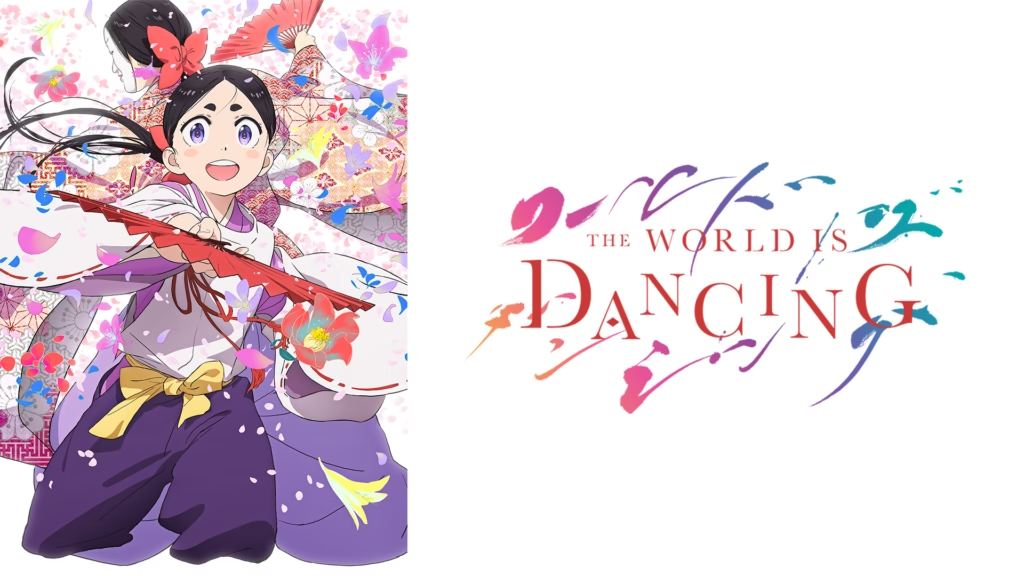
The World Is Dancing is a 2026 historical drama anime that follows Oniyasha, the childhood name of Zeami Motokiyo, one of the most influential figures in the development of traditional Japanese Noh theater.
Based on the manga written and illustrated by Kazuto Mihara, the anime transports viewers to the Muromachi period, an era marked by political instability, social divisions, and extraordinary cultural transformation.
At the center of the story is a young boy who struggles to understand why people devote their lives to performing.
Oniyasha belongs to a respected theatrical troupe led by his father, Kan’ami, a master performer determined to preserve and develop the traditions of Sarugaku.
However, unlike the performers surrounding him, Oniyasha cannot simply accept the established rules of his craft.
He wants to discover something deeper.
Why does a beautiful performance move an audience? Can dance communicate suffering? Can movement bring hope to people living through war and poverty? And can an artist create something meaningful without first understanding the world around them?
These questions drive a story that combines historical fiction, artistic philosophy, personal tragedy, and the struggles of a young performer searching for his identity.
Produced by Cypic and directed by Toshimasa Kuroyanagi, The World Is Dancing aired in Japan from July 2 to September 24, 2026, completing its 13-episode television run.
The anime features Yumiri Hanamori as the young Oniyasha, Nobunaga Shimazaki as his older self, Katsuyuki Konishi as Kan’ami, Takahiro Sakurai as Ashikaga Yoshimitsu, and an extensive supporting cast portraying performers, nobles, and ordinary people whose lives influence Oniyasha’s artistic development.
Its creative team also includes specialists in Noh choreography and supervision, emphasizing the importance of the traditional performing arts at the center of the narrative.
Unlike historical anime focused primarily on warfare, political conquest, or legendary warriors, The World Is Dancing examines history through the experiences of artists.
Its conflicts unfold not only in the courts of powerful rulers but also on stages, in impoverished villages, and within the personal relationships of people struggling to preserve their traditions.
The result is an unusual historical coming-of-age story about artistic ambition, compassion, and the discovery that a performance can mean something different to every person watching it.
But what makes The World Is Dancing special? Who was the real Zeami Motokiyo? How does the anime explore the development of Noh theater? And is this 2026 historical drama worth watching?
Here is everything you need to know about The World Is Dancing, including its story, characters, voice cast, historical background, manga, production, music, episode guide, and the meaning behind its title.
The World is Dancing – Official Trailer
What Is The World Is Dancing About?
The World Is Dancing follows Oniyasha, a young performer living in fourteenth-century Japan during a period of political instability and cultural change.
He belongs to the Kanze troupe, a group of Sarugaku performers led by his father, Kan’ami.
Although Oniyasha has grown up surrounded by theatrical performances, he struggles to understand the purpose of dance.
He observes the dedication of experienced performers but cannot explain what makes their movements meaningful.
His father expects him to develop discipline and respect the traditions of their profession.
However, Oniyasha is restless, curious, and increasingly dissatisfied with simply imitating established techniques.
His perspective begins to change when he encounters people whose experiences differ dramatically from his own.
He witnesses impoverished villagers using dance to cope with suffering and meets a mysterious woman whose movements communicate emotions that conventional performances cannot easily express.
These encounters inspire him to search for a form of dance capable of capturing the experiences of ordinary people.
As Oniyasha develops his abilities, his journey brings him into contact with influential historical figures, including Shogun Ashikaga Yoshimitsu.
The young performer must navigate artistic rivalries, political expectations, and the complicated relationship between creativity and authority.
His ambitions gradually evolve beyond becoming a successful performer.
He begins to imagine an art form that can preserve human emotions, challenge social divisions, and connect people across generations.
Is The World Is Dancing Worth Watching?
The World Is Dancing is particularly worth considering for viewers who enjoy historical anime, character-driven drama, and stories about the creative process.
Its central appeal lies in an unusual subject.
Rather than focusing on warriors or military campaigns, the anime explores the development of a theatrical tradition through the experiences of a young artist.
The historical setting provides more than visual atmosphere.
Political instability, poverty, and social inequality directly influence Oniyasha’s understanding of performance.
The series also examines the relationship between artistic talent and personal experience.
Oniyasha does not develop simply by practicing techniques. His growth comes from observing other people, confronting uncomfortable realities, and learning that creativity can communicate experiences beyond his own.
The rivalry between different theatrical traditions adds another compelling dimension.
Performers must balance innovation with the need to preserve established practices, while powerful patrons influence which forms of art receive recognition.
The anime’s 13-episode structure offers a focused journey through Oniyasha’s artistic development.
Its appeal is likely strongest for audiences who appreciate thoughtful storytelling and cultural history rather than constant action.
Why Should You Watch The World Is Dancing?
One of the strongest reasons to watch The World Is Dancing is its distinctive approach to historical storytelling.
The series explores a period of Japanese history through the development of performing arts, allowing viewers to experience the Muromachi era from a perspective rarely emphasized in mainstream anime.
Another important attraction is its protagonist.
Oniyasha is not presented as a flawless prodigy who immediately understands his abilities.
He is uncertain, occasionally disobedient, emotionally vulnerable, and deeply curious about the world.
His development feels connected to the people he encounters rather than simply to victories over rivals.
The anime also explores the emotional importance of artistic expression.
Dance becomes a way for people to confront grief, preserve memories, express dissatisfaction, and imagine a better future.
The supporting cast adds complexity to these themes.
Characters such as Kan’ami, Ishiya, Kogane, Zojiro, and Ashikaga Yoshimitsu represent different relationships with performance, social expectations, and political authority.
Finally, the series introduces audiences to the historical foundations of Noh theater, one of Japan’s most distinctive traditional performing arts.
The World Is Dancing (2026) – Quick Facts
| Category | Details |
|---|---|
| Anime Title | The World Is Dancing |
| Japanese Title | ワールド イズ ダンシング |
| Romanized Title | Wārudo Izu Danshingu |
| Genre | Historical Drama, Performing Arts, Coming-of-Age |
| Original Creator | Kazuto Mihara |
| Original Format | Manga |
| Manga Publisher | Kodansha |
| Manga Magazine | Morning |
| Manga Serialization | March 2021 – October 2022 |
| Manga Volumes | 6 |
| Anime Studio | Cypic |
| Director | Toshimasa Kuroyanagi |
| Assistant Director | Shūhei Fuchimoto |
| Series Composition | Sawako Kawamitsu |
| Character Designers | Keigo Sasaki and Iori Hisatake |
| Music Composer | Daisuke Shinoda |
| Japanese Premiere | July 2, 2026 |
| Japanese Finale | September 24, 2026 |
| Episode Count | 13 |
| North American Streaming | HIDIVE |
| Historical Setting | Fourteenth-century Japan |
| Main Character | Oniyasha / Zeami Motokiyo |
The World Is Dancing Story – A Boy Searching for the Meaning of Art
The story begins in 1374, during a period of conflict between rival imperial courts in Japan.
Oniyasha performs as part of his father’s troupe but struggles to understand the importance of dance.
His father, Kan’ami, approaches performance with discipline and determination.
For Kan’ami, preserving the troupe’s reputation is essential to the survival of their artistic tradition.
Oniyasha, however, sees a contradiction between the strict rules of performance and the emotional experiences of ordinary people.
He begins questioning whether established techniques are enough to communicate the complexity of human life.
An important turning point comes when he witnesses people dancing despite poverty and hardship.
Their movements are not necessarily refined or technically sophisticated.
Nevertheless, their performances express feelings that Oniyasha recognizes as genuine.
He also encounters a woman whose expressive dancing reveals a different relationship between movement and emotion.
These experiences challenge his assumptions.
Rather than asking only how to dance correctly, Oniyasha begins asking what makes a dance meaningful.
As his journey continues, the answer becomes increasingly complicated.
He must understand his father, confront rival performers, and navigate the influence of political leaders.
Most importantly, he must discover how to create an artistic identity without abandoning the traditions that made his development possible.
The Historical Setting – Japan During the Muromachi Period
The World Is Dancing takes place during the Muromachi period, an important era in Japanese political and cultural history.
The period is associated with the Ashikaga shogunate, which exercised military and political authority while Japan experienced continuing tensions between competing factions.
The anime begins in 1374, during the broader era of conflict between the Northern and Southern Courts.
This historical background is essential to the story.
Political instability affects the lives of ordinary people, contributing to displacement, poverty, and uncertainty.
Artists are not isolated from these conditions.
Their opportunities depend on patronage, social status, and the preferences of powerful figures.
At the same time, the period witnessed significant developments in Japanese cultural traditions.
Performing arts, poetry, and religious practices influenced one another.
The series uses this environment to explore how artistic innovation can emerge during difficult historical circumstances.
Oniyasha’s journey therefore takes place within a society where beauty and suffering exist side by side.
Who Was Zeami Motokiyo?
Zeami Motokiyo was a historical Japanese performer, playwright, and theorist whose contributions helped shape Noh theater.
He was the son of Kan’ami, another major figure in the development of the performing arts.
Zeami grew up within the theatrical traditions associated with Sarugaku.
His artistic development was influenced by his father and by the political and cultural environment of the Ashikaga shogunate.
Over time, Zeami became one of the most influential figures in the history of Japanese theater.
His importance extends beyond performance.
He also developed ideas about acting, artistic discipline, beauty, and the relationship between performers and audiences.
These ideas helped establish a theoretical foundation for Noh.
The World Is Dancing focuses on his formative years, when he was known as Oniyasha.
Rather than presenting him exclusively as an accomplished historical figure, the story imagines the experiences that might shape his understanding of art.
It is important to distinguish the historical Zeami from the fictionalized portrayal in the manga and anime.
The series draws on real people and traditions but uses dramatic storytelling to explore its themes.
What Is Noh Theater?
Noh is a traditional Japanese theatrical art form that combines performance, music, chanting, dance, and highly stylized movement.
It is known for its deliberate pacing, symbolic gestures, and distinctive aesthetic principles.
Rather than attempting to reproduce ordinary life through realistic acting, Noh often communicates emotions and ideas through carefully controlled movement.
Masks are particularly important in many Noh performances.
They can represent different characters, ages, emotional states, or supernatural beings.
The performer must communicate meaning through posture, movement, and the relationship between the mask and the surrounding stage.
Music and chanting also contribute to the atmosphere.
The result is a theatrical tradition in which relatively restrained movements can carry considerable emotional significance.
The World Is Dancing explores the historical foundations of this art form.
Through Oniyasha’s experiences, the anime examines how dance, poetry, music, and personal expression can develop into a sophisticated theatrical language.
Sarugaku – The Tradition That Shaped Noh
Sarugaku was an important performing tradition that contributed to the development of Noh theater.
Its historical forms included various types of entertainment and performance.
Over time, certain Sarugaku traditions became increasingly refined and developed into theatrical forms associated with Noh.
Kan’ami and Zeami played major roles in this evolution.
In The World Is Dancing, Sarugaku represents both an artistic inheritance and a source of creative tension.
Kan’ami seeks to preserve the discipline and reputation of his troupe.
Oniyasha, meanwhile, wants to discover new possibilities within the tradition.
The series does not present innovation and tradition as simple opposites.
Instead, it explores how new artistic forms can emerge through an understanding of existing practices.
Oniyasha’s challenge is to respect the foundation created by earlier performers while discovering something that reflects his own experiences.
Dengaku – The Rival Performing Tradition
Dengaku is another important traditional performance form featured in The World Is Dancing.
Historically, Dengaku was associated with agricultural rituals and evolved into various forms of entertainment.
In the anime, the Shinza troupe represents this tradition.
Its members compete with the Kanze troupe, creating a rivalry between different approaches to performance.
Zojiro, the young leader of the Shinza troupe, is particularly committed to preserving Dengaku.
His rivalry with Oniyasha reflects more than personal ambition.
Both performers are concerned about the future of their respective traditions.
The series uses their relationship to explore artistic competition and the fear of cultural disappearance.
It also suggests that different forms of performance can influence one another.
The tension between Sarugaku and Dengaku becomes an important part of Oniyasha’s development.
The World Is Dancing Characters and Japanese Voice Cast
The anime features an extensive ensemble of performers, nobles, political figures, and ordinary citizens.
Each character contributes to Oniyasha’s understanding of art and the world around him.
Some challenge his assumptions about performance.
Others introduce him to suffering, ambition, friendship, or political responsibility.
Together, they create a story in which artistic development is inseparable from human relationships.
Oniyasha / Zeami Motokiyo – The Young Performer Who Wants to Change Theater
Japanese voice actors: Yumiri Hanamori (childhood) and Nobunaga Shimazaki (young adult)
English voice actor: Melissa Molano
Oniyasha is the protagonist of The World Is Dancing.
He is a young member of the Kanze troupe and the son of its leader, Kan’ami.
Although he possesses artistic potential, he struggles to understand the purpose of dance.
His early performances are shaped by uncertainty.
He observes the techniques of experienced performers but finds it difficult to connect those techniques with genuine emotion.
This frustration leads him to question the meaning of artistic expression.
Oniyasha’s development begins when he encounters people whose experiences challenge his sheltered understanding of the world.
He learns that dance can express suffering, preserve memories, and communicate feelings that cannot easily be spoken.
His curiosity sometimes places him in conflict with authority figures.
However, his determination to discover something meaningful gradually transforms him into a more thoughtful performer.
As the series progresses, Oniyasha must confront the responsibility that comes with artistic recognition.
His journey ultimately concerns not only becoming a better dancer but also understanding what kind of artist he wants to become.
Kan’ami – Oniyasha’s Father and Master of Sarugaku
Japanese voice actor: Katsuyuki Konishi
English voice actor: Joe Daniels
Kan’ami is Oniyasha’s father and the leader of the Kanze troupe.
He is an accomplished performer who understands the importance of discipline, reputation, and artistic continuity.
His relationship with Oniyasha is one of the central emotional conflicts of the story.
Kan’ami recognizes his son’s potential but often struggles with his unconventional approach to performance.
He expects Oniyasha to respect the established techniques of their profession.
However, Kan’ami is not simply an obstacle to artistic innovation.
His own career reflects the development and refinement of Sarugaku.
As Oniyasha matures, he begins to recognize that his father’s achievements were also built through experimentation and observation.
Their relationship explores the complicated process of passing artistic knowledge from one generation to another.
Ashikaga Yoshimitsu – The Powerful Shogun
Japanese voice actor: Takahiro Sakurai
English voice actor: Brandon Hearnsberger
Ashikaga Yoshimitsu is the young shogun who becomes interested in Oniyasha’s abilities.
He possesses enormous political authority and occupies a central position in the cultural life of the period.
His support can transform the fortunes of a performing troupe.
However, Yoshimitsu’s relationship with Oniyasha is complicated by the imbalance of power between them.
The young performer seeks artistic freedom, while the shogun represents the political institutions that influence which forms of art receive recognition.
Yoshimitsu appreciates artistic talent but also expects performers to understand their place within the social order.
His interactions with Oniyasha explore the relationship between political authority and cultural development.
The character is especially important because the historical Ashikaga Yoshimitsu played a major role in the patronage of performing arts associated with Zeami.
Ishiya – Oniyasha’s Closest Friend
Japanese voice actor: Shimba Tsuchiya
English voice actor: Tyler Galindo
Ishiya is a member of the Kanze troupe and one of Oniyasha’s closest companions.
He does not perform onstage because of a leg condition.
However, he possesses considerable skill in chanting and contributes to the troupe through his musical abilities.
Ishiya provides emotional support during Oniyasha’s artistic struggles.
He is often more patient and observant than his friend.
His perspective also challenges conventional assumptions about performance.
Although he cannot participate in every aspect of dance, his artistic contributions remain meaningful.
His friendship with Oniyasha explores inclusion, loyalty, and the different ways individuals can participate in the performing arts.
Kogane – Friendship Beyond the Stage
Japanese voice actor: Maaya Uchida
English voice actor: Nickolette Kong
Kogane is one of Oniyasha’s friends outside the formal environment of the Kanze troupe.
He has a rough personality but possesses his own interest in dance.
His background includes an earlier connection to the Shinza troupe.
Kogane introduces Oniyasha to experiences that differ from those of established performers.
Through him, Oniyasha becomes more aware of poverty, displacement, and the suffering of ordinary people.
Their friendship is important because it challenges the boundaries between art and society.
Kogane’s experiences demonstrate that dance is not exclusively the property of professional performers or wealthy patrons.
It can also belong to people who have little else.
Zojiro – The Proud Leader of the Shinza Troupe
Japanese voice actor: Romi Park
Zojiro is the young leader of the Dengaku Shinza troupe.
He is disciplined, demanding, and deeply committed to the survival of his artistic tradition.
His relationship with Oniyasha begins through rivalry.
Zojiro questions the younger performer’s unconventional methods and challenges his understanding of what makes a performance meaningful.
However, his criticism is not merely personal hostility.
He is concerned about preserving Dengaku in a changing cultural environment.
The rivalry between the two performers explores the tension between artistic innovation and the fear of losing established traditions.
Zojiro also provides a perspective on the emotional sacrifices involved in dedicating one’s life to performance.
Junigoro – Discipline Within the Kanze Troupe
Japanese voice actor: Haruki Ishiya
English voice actor: Stephen Alcalá
Junigoro is a serious member of the Kanze troupe.
He is skilled with the kotsuzumi, a traditional hand drum used in Japanese performing arts.
Junigoro values discipline and takes the responsibilities of performance seriously.
He can be critical of Oniyasha’s behavior, particularly when the younger performer appears distracted or unwilling to follow expectations.
However, his strict personality reflects his own difficult experiences.
His loyalty to the troupe is connected to the stability and belonging it provides.
Junigoro represents the performers whose commitment helps preserve artistic traditions through years of hardship.
Inuo – The Mysterious White-Haired Performer
Japanese voice actor: Yōji Matsuda
English voice actor: Scott Gibbs
Inuo is a mysterious white-haired man who repeatedly influences Oniyasha’s artistic journey.
He appears at important moments and offers observations that challenge the young performer’s assumptions.
Rather than providing simple instructions, Inuo encourages Oniyasha to think differently about movement, expression, and artistic identity.
His presence gives the story an unusual philosophical dimension.
He represents an approach to performance that cannot easily be reduced to established rules.
As Oniyasha develops, Inuo becomes an important figure in his understanding of artistic freedom and the demands of mastery.
Nijo Yoshimoto – The Noble Who Loves Poetry
Japanese voice actor: Nobuo Tobita
Nijo Yoshimoto is a court noble and regent with a strong interest in poetry.
He recognizes Oniyasha’s artistic potential and becomes an enthusiastic supporter.
His role highlights the relationship between literary culture and theatrical performance.
Poetry provides another means of expressing emotion, atmosphere, and human experience.
Through Yoshimoto, Oniyasha encounters ideas that help him think about dance as more than physical movement.
The character also demonstrates how intellectual and artistic traditions can influence one another.
Nariko – A Patron of the Performing Arts
Japanese voice actor: Mamiko Noto
Nariko is the wife of Ashikaga Yoshimitsu.
She is gentle, cultured, and deeply interested in the performing arts.
Her appreciation of waka poetry gives her a distinctive perspective on artistic expression.
Nariko encourages Oniyasha to consider how literary ideas can influence movement.
Her support provides an important contrast to the more demanding expectations of political authority.
She represents the role that thoughtful patrons can play in encouraging artistic development.
Chiharu – A Young Performer Searching for Her Place
Japanese voice actor: Inori Minase
Chiharu is a member of the Shinza troupe.
She admires Nariko and participates in flute practice as an alternative to dance.
Her relationship with Oniyasha develops through the rivalry between their troupes.
However, her experiences also reveal the personal insecurities that can exist beneath artistic competition.
Chiharu’s character explores the different expectations placed upon performers and the ways individuals search for meaningful participation in the arts.
Satsuki – The Determined Dumpling Shop Worker
Japanese voice actor: Hazuki Seto
English voice actor: Shelby Blocker
Satsuki is a straightforward young woman who works at a dumpling shop.
She has one arm and remains dedicated to her responsibilities.
Her character contributes to the series’ broader portrayal of people whose lives exist outside the formal world of professional performance.
Through figures such as Satsuki, the anime reinforces the importance of ordinary experiences in Oniyasha’s understanding of the world.
Shirabyoshi – The Woman Who Changes Oniyasha’s Understanding of Dance
Japanese voice actor: Miyuki Sawashiro
English voice actor: Emily Neves
Shirabyoshi is a frail woman struggling to survive through prostitution.
Despite her difficult circumstances, she possesses an expressive approach to dance.
Her movements leave a profound impression on Oniyasha.
He recognizes something emotionally powerful in her performance that he has not experienced through conventional training.
Her character introduces one of the story’s central ideas.
Artistic beauty does not necessarily depend on wealth, recognition, or social status.
It can emerge from suffering, longing, and the need to communicate emotions that ordinary language cannot express.
Shirabyoshi’s influence becomes an important part of Oniyasha’s artistic development.
Hosokawa Yoriyuki – Advisor to the Shogun
Japanese voice actor: Kenichirou Matsuda
English voice actor: Ty Mahany
Hosokawa Yoriyuki serves as an advisor to Ashikaga Yoshimitsu.
He possesses extensive knowledge of the performing arts.
His position places him at the intersection of political authority and cultural patronage.
Yoriyuki understands that artistic recognition can have significant consequences for performers and their troupes.
His involvement in theatrical competitions reflects the influence of the shogunate over cultural life.
Additional Characters
The series also features several supporting members of the Kanze troupe.
Chōrō is an elderly performer voiced by Katsuhisa Hōki.
Samanosuke, voiced by Haruo Yamagishi, is a troupe member who mentors Junigoro.
Mantarō, voiced by Sōshirō Hori, and Senri, voiced by Kōsuke Echigoya, contribute to the troupe’s wider ensemble.
Toshigo, voiced by Kaito Udagawa, and Hifumi, voiced by Reiō Tsuchida, are young apprentices whose experiences reflect the importance of learning and cooperation within the theatrical community.
Although these characters receive different amounts of attention, they help establish the Kanze troupe as a functioning artistic collective rather than a background setting for Oniyasha alone.
The World Is Dancing Anime – Production and Creative Team
The television anime adaptation of The World Is Dancing was announced on January 21, 2026.
The series was produced by Cypic.
Toshimasa Kuroyanagi served as director, with Shūhei Fuchimoto as assistant director.
Sawako Kawamitsu supervised the scripts.
Keigo Sasaki and Iori Hisatake handled character design.
Daisuke Shinoda composed the music.
The production also involved specialists responsible for the portrayal of Noh.
Tsumura Reijiro handled Noh choreography, while Kohei Kawaguchi provided Noh supervision.
Satoshi Nemoto was responsible for calligraphy and title lettering.
These roles are particularly significant because the anime’s central subject depends on the presentation of historical performing arts.
Movement, music, visual composition, and cultural detail are not merely decorative elements.
They are essential to communicating the story’s ideas.
Toshimasa Kuroyanagi – The Director
Toshimasa Kuroyanagi directed the anime adaptation.
The project required an approach capable of combining historical drama with the expressive possibilities of animation.
Unlike stories where movement primarily communicates combat or physical action, The World Is Dancing uses movement as its central subject.
A character’s gestures, posture, and rhythm can reveal emotional states that dialogue does not explicitly explain.
The direction must therefore establish why particular performances matter to the people watching them.
The series also moves between different social environments.
The world of professional performers exists alongside impoverished communities and the political authority of the shogunate.
Connecting these perspectives is essential to the narrative’s broader examination of art and society.
The Importance of Noh Choreography and Supervision
One of the anime’s most distinctive production details is the involvement of specialists in Noh choreography and supervision.
Tsumura Reijiro handled Noh choreography.
Kohei Kawaguchi provided Noh supervision.
Their involvement reflects the importance of movement to the story.
Traditional performing arts contain techniques and conventions that differ significantly from contemporary dance.
Posture, pacing, gestures, and the relationship between performers and music all contribute to the meaning of a performance.
An anime about the development of Noh must communicate these ideas visually.
Specialized choreography and supervision provide a foundation for portraying the artistic traditions that inspire the narrative.
The series also explores how established techniques can evolve through experimentation.
This makes the depiction of movement especially important.
The World Is Dancing Opening Theme
The opening theme song is “Shusho” (終宵), performed by Macaroni Empitsu.
The opening introduces the series’ musical identity and prepares viewers for its historical and emotional atmosphere.
Music plays an especially important role in The World Is Dancing because the narrative concerns performance itself.
The opening theme exists alongside a story in which rhythm, chanting, and movement are central to the characters’ lives.
Its inclusion helps establish the anime’s identity as a work about artistic expression.
The World Is Dancing Ending Theme
The ending theme is “Namonai Hana” (名もない花), performed by hockrockb.
The title can be translated as “Unnamed Flower.”
The imagery of an unnamed flower is particularly appropriate for a story concerned with overlooked lives and artistic expression.
Throughout the anime, Oniyasha encounters people whose experiences rarely receive recognition from powerful institutions.
Their emotions nevertheless influence his understanding of dance.
The ending theme provides a reflective conclusion to the episodes and complements the series’ interest in memory, identity, and beauty.
The World Is Dancing Episode Guide – All 13 Episodes
The first season consists of 13 episodes.
It premiered on July 2, 2026, and concluded on September 24, 2026.
The episodes follow Oniyasha’s development from a confused young performer into an artist increasingly capable of expressing his own ideas.
The following guide includes brief, largely spoiler-free descriptions of each episode.
| Episode | Title | Japanese Air Date |
|---|---|---|
| 1 | Why Do People Dance? | July 2, 2026 |
| 2 | You Have a Body | July 9, 2026 |
| 3 | You Have Your Own Sense of “Good” | July 16, 2026 |
| 4 | Differing Scales of Progress | July 23, 2026 |
| 5 | A Budding Throb | July 30, 2026 |
| 6 | Connection | August 6, 2026 |
| 7 | In Between | August 13, 2026 |
| 8 | To the Other Side of the Bridge | August 20, 2026 |
| 9 | Concealed Feelings | August 27, 2026 |
| 10 | A World Overflowing | September 3, 2026 |
| 11 | The Moon Before It’s Full | September 10, 2026 |
| 12 | Reclaiming Intentions | September 17, 2026 |
| 13 | Noh | September 24, 2026 |
Episode 1 – Why Do People Dance?
The opening episode introduces Oniyasha and the Kanze troupe.
Oniyasha struggles with the expectations surrounding his performances and begins questioning the purpose of dance.
His encounters with ordinary people reveal that movement can communicate emotions beyond formal artistic training.
The episode establishes the philosophical question that drives the entire series.
Episode 2 – You Have a Body
Oniyasha seeks guidance from the mysterious woman whose dancing left such a strong impression on him.
Their interactions challenge his understanding of artistic ability.
The episode explores the relationship between physical expression, emotional experience, and the social circumstances of performers.
Episode 3 – You Have Your Own Sense of “Good”
Oniyasha prepares for an important performance connected to the shogunate.
His difficulties expose the tension between personal expression and the expectations of his troupe.
The episode also develops the importance of individual artistic identity.
Episode 4 – Differing Scales of Progress
Oniyasha confronts the limits of his abilities while preparing for a significant performance.
His experiences encourage him to reconsider the relationship between established techniques and creative freedom.
The episode further develops his connection with Ashikaga Yoshimitsu.
Episode 5 – A Budding Throb
Oniyasha enters a new artistic environment and encounters members of the rival Shinza troupe.
Competition forces him to question whether his unconventional approach can succeed against established traditions.
The episode explores rivalry, experimentation, and the uncertainty of artistic growth.
Episode 6 – Connection
Oniyasha begins reconsidering his abilities and the relationships that influence his development.
The episode expands the story’s political context and reveals more about the difficulties faced by people living outside privileged society.
Its central themes concern connection, belonging, and responsibility.
Episode 7 – In Between
Oniyasha becomes increasingly aware of the suffering caused by political conflict.
His experiences challenge the assumption that performance can remain separate from society.
The episode examines the relationship between artistic expression and the lives of marginalized people.
Episode 8 – To the Other Side of the Bridge
Oniyasha attempts to communicate a more personal and socially conscious message through dance.
His performance challenges established expectations.
The episode also develops his relationship with rival performers and the political figures who influence their careers.
Episode 9 – Concealed Feelings
Oniyasha explores the relationship between poetry, atmosphere, and theatrical performance.
His growing understanding of emotional expression influences his approach to collaboration.
The episode emphasizes the importance of artistic communication beyond technical skill.
Episode 10 – A World Overflowing
A major performance brings several artistic and personal conflicts into focus.
The episode explores the consequences of creative ambition and the complicated relationship between art, friendship, and political authority.
It also marks an important transition in Oniyasha’s journey.
Episode 11 – The Moon Before It’s Full
The story moves into a later stage of Oniyasha’s life.
His growing recognition brings new expectations and emotional difficulties.
The episode explores the loneliness that can accompany artistic success and the fear of losing one’s original purpose.
Episode 12 – Reclaiming Intentions
Oniyasha reflects on the experiences that shaped his understanding of performance.
Relationships from his past become increasingly important as he attempts to rediscover his motivation.
The episode prepares the story for its concluding artistic statement.
Episode 13 – Noh
The finale brings Oniyasha’s journey toward a defining performance.
His experiences with tradition, friendship, suffering, and artistic experimentation converge.
The episode emphasizes the relationship between individual expression and the development of a theatrical tradition capable of enduring beyond a single performer’s lifetime.
The World Is Dancing Manga – Original Source Material
The World Is Dancing originated as a manga written and illustrated by Kazuto Mihara.
It was serialized in Kodansha’s seinen manga magazine Morning.
Serialization began on March 25, 2021, and concluded on October 27, 2022.
The manga was collected into six tankōbon volumes.
The first volume was released in Japan on August 23, 2021.
The sixth and final volume followed on November 22, 2022.
The series later received an English-language release through Kodansha USA.
The English digital publication began on August 1, 2023, and concluded on August 27, 2024.
The manga provides the foundation for the anime’s exploration of Zeami Motokiyo and the historical development of Noh theater.
Its relatively concise six-volume structure also distinguishes it from longer historical manga series.
The World Is Dancing Manga Volumes and Release Dates
| Volume | Japanese Release | English Digital Release |
|---|---|---|
| Volume 1 | August 23, 2021 | August 1, 2023 |
| Volume 2 | October 21, 2021 | October 3, 2023 |
| Volume 3 | January 21, 2022 | December 5, 2023 |
| Volume 4 | April 21, 2022 | February 6, 2024 |
| Volume 5 | August 23, 2022 | April 2, 2024 |
| Volume 6 | November 22, 2022 | August 27, 2024 |
Kazuto Mihara – The Creator of The World Is Dancing
Kazuto Mihara wrote and illustrated the original manga.
The series takes an unusual approach to historical storytelling by focusing on the development of an artistic tradition rather than military or political conquest.
Its protagonist is a historical figure whose influence on Japanese culture extends far beyond his lifetime.
However, the manga approaches his early years through personal questions and emotional experiences.
The central question—why people dance—allows the story to examine creativity from several perspectives.
Professional performers, political patrons, impoverished villagers, and individuals excluded from conventional performance all contribute to the protagonist’s understanding.
This approach gives the historical material a broader human dimension.
The manga also connects the development of Noh with the cultural and political circumstances of fourteenth-century Japan.
The World Is Dancing Manga vs. Anime
The anime adapts Kazuto Mihara’s completed six-volume manga.
Both versions center on Oniyasha’s artistic development and the historical circumstances surrounding the emergence of Noh.
However, manga and animation communicate movement in fundamentally different ways.
A manga must suggest rhythm, physical motion, and performance through illustrations and page composition.
Animation can portray those movements directly through timing, choreography, and sound.
This distinction is particularly important for a story about dance.
The anime also incorporates voice acting, chanting, and musical composition.
These elements allow viewers to experience aspects of theatrical performance that exist differently on the printed page.
Readers interested in Mihara’s original illustrations and storytelling can explore the manga, while the anime offers a more direct audiovisual interpretation of the performances.
Where to Watch The World Is Dancing
The World Is Dancing was licensed in North America by Sentai Filmworks for streaming on HIDIVE.
The anime also received licensing through Muse Communication in South and Southeast Asia.
In Japan, the television broadcast began on Tokyo MX and other networks on July 2, 2026.
The supplied release information also identifies Amazon Prime Video and regional simulcast platforms among the services carrying episodes.
Availability may vary by country, licensing territory, and subscription service.
Viewers should check their local streaming catalogs for the currently available version.
Does The World Is Dancing Have an English Dub?
Yes. The supplied cast information identifies English-language voice actors for several characters.
Melissa Molano voices Oniyasha in the English version.
Joe Daniels voices Kan’ami, while Brandon Hearnsberger portrays Ashikaga Yoshimitsu.
Tyler Galindo voices Ishiya, and Nickolette Kong voices Kogane.
Other English cast members include Stephen Alcalá, Scott Gibbs, Emily Neves, and Ty Mahany.
The availability of dubbed episodes may vary depending on the streaming platform and region.
The Meaning Behind the Title The World Is Dancing
The title The World Is Dancing reflects the series’ central philosophy.
At the beginning of the story, Oniyasha thinks of dance primarily as something performed by trained artists.
He sees it as a skill that requires discipline, technique, and recognition.
However, his experiences gradually challenge this understanding.
He encounters people who dance because they are suffering.
Others dance to preserve traditions, celebrate life, express grief, or communicate feelings that cannot easily be spoken.
Movement becomes a way of understanding the world.
The title suggests that dance is not confined to a stage.
It exists within human relationships, cultural practices, and the emotional experiences of ordinary life.
For Oniyasha, becoming a meaningful artist requires recognizing that the world itself contains the rhythms and emotions he seeks to express.
The World Is Dancing and the Importance of Artistic Freedom
Artistic freedom is one of the central themes of the series.
Oniyasha belongs to an established troupe with its own techniques and expectations.
His father wants him to become a disciplined performer.
Rival troupes defend their own traditions.
Political patrons influence which performances receive recognition.
Within this environment, Oniyasha must discover how to express his own ideas.
However, the series does not suggest that freedom requires abandoning tradition entirely.
Instead, it explores how innovation can emerge through observation, experimentation, and an understanding of earlier artistic achievements.
Oniyasha’s journey is therefore about finding a balance between inherited knowledge and personal expression.
Art, Poverty, and Social Inequality
Another important theme is the relationship between art and social inequality.
The story takes place during a period when political instability has serious consequences for ordinary people.
Some characters struggle with poverty, displacement, and limited opportunities.
Their experiences contrast sharply with the world of nobles and influential patrons.
Oniyasha gradually realizes that meaningful artistic expression cannot be separated from these realities.
The people he encounters outside the theatrical establishment possess emotions and experiences that deserve recognition.
Their suffering becomes part of his understanding of performance.
The series also raises questions about who has access to artistic opportunities.
Physical disability, social status, and economic circumstances influence the roles available to different characters.
Through these conflicts, The World Is Dancing presents art as something that should connect people rather than reinforce divisions between them.
The Relationship Between Art and Political Power
Political authority plays a major role in the development of the story.
Ashikaga Yoshimitsu possesses the power to elevate particular performers and traditions.
His support can provide recognition, financial stability, and access to influential audiences.
However, patronage also creates expectations.
Artists may feel pressure to satisfy the preferences of powerful figures rather than pursue their own ideas.
Oniyasha’s relationship with Yoshimitsu therefore becomes an important test of artistic independence.
The series examines whether a performer can communicate uncomfortable truths while depending on political authority for support.
It also explores the possibility that art can influence the people who possess power.
Why Oniyasha’s Journey Is More Than a Coming-of-Age Story
At first glance, The World Is Dancing follows a familiar coming-of-age structure.
A young protagonist struggles with his abilities, encounters rivals, and gradually develops confidence.
However, the series uses that structure to explore larger historical and philosophical questions.
Oniyasha is not simply trying to become the best performer in his troupe.
He wants to understand what makes performance meaningful.
His development is influenced by people whose experiences differ from his own.
Some provide artistic guidance.
Others challenge his assumptions about suffering, loyalty, or social responsibility.
As he matures, his ambitions become increasingly connected to the preservation and transformation of an entire artistic tradition.
His personal journey therefore reflects a broader cultural development.
The Role of Friendship in The World Is Dancing
Friendship is essential to Oniyasha’s development.
Characters such as Ishiya and Kogane provide perspectives that differ from those of his father and other professional performers.
Ishiya supports Oniyasha while confronting limitations associated with his physical condition.
Kogane introduces him to the struggles of people living outside privileged artistic institutions.
These relationships challenge Oniyasha to reconsider his assumptions.
Friendship also creates emotional responsibilities.
Oniyasha cannot pursue artistic recognition without confronting the consequences of his choices for the people around him.
The series suggests that creativity becomes more meaningful when it grows from genuine human connection.
Tradition vs. Innovation – The Central Conflict
The tension between tradition and innovation shapes nearly every major artistic conflict in The World Is Dancing.
Kan’ami represents the discipline required to preserve Sarugaku.
Zojiro is determined to protect Dengaku.
Oniyasha wants to discover new forms of expression.
These perspectives initially appear incompatible.
However, the story gradually reveals that artistic traditions survive through both preservation and change.
A tradition that never evolves may struggle to remain meaningful.
At the same time, innovation without an understanding of earlier achievements can lack depth.
Oniyasha’s challenge is to learn from the past while creating something that reflects his own experiences.
This conflict gives the series relevance beyond its historical setting.
It reflects a question faced by artists in every era.
How The World Is Dancing Differs From Other Historical Anime
Many historical anime explore the past through warfare, political rivalry, or the lives of legendary military figures.
The World Is Dancing takes a different approach.
Its central conflicts concern performance, artistic identity, and cultural preservation.
Although political instability influences the story, battles are not the primary focus.
Instead, the anime examines how ordinary people and artists experience historical change.
The series also places considerable emphasis on the meaning of movement.
A performance can communicate emotional experiences that dialogue alone cannot fully express.
This makes the anime especially distinctive within historical drama.
Its combination of cultural history, artistic philosophy, and personal growth provides an alternative to more action-oriented interpretations of the period.
Will There Be The World Is Dancing Season 2?
The first season of The World Is Dancing concluded on September 24, 2026, after 13 episodes.
The supplied information does not confirm a second season.
The original manga is complete, consisting of six volumes.
That does not automatically establish whether additional anime content will be produced.
Any continuation would depend on official production decisions and announcements.
For now, viewers should treat the completed 13-episode series as the confirmed anime adaptation.
Frequently Asked Questions
What Is The World Is Dancing About?
The World Is Dancing follows Oniyasha, the young Zeami Motokiyo, as he searches for the meaning of dance and develops his artistic identity during fourteenth-century Japan.
Is The World Is Dancing Based on a Manga?
Yes. It is based on the manga written and illustrated by Kazuto Mihara.
Who Created The World Is Dancing?
Kazuto Mihara created the original manga.
When Did The World Is Dancing Anime Premiere?
The anime premiered in Japan on July 2, 2026.
When Did The World Is Dancing End?
Its first television season concluded on September 24, 2026.
How Many Episodes Does The World Is Dancing Have?
The anime has 13 episodes.
Who Animated The World Is Dancing?
The anime was produced by Cypic.
Who Directed The World Is Dancing?
Toshimasa Kuroyanagi directed the television series.
Who Is the Main Character?
The protagonist is Oniyasha, the childhood name of Zeami Motokiyo.
Was Zeami Motokiyo a Real Person?
Yes. Zeami Motokiyo was a historical Japanese performer and theorist who made major contributions to Noh theater.
Is The World Is Dancing Historically Accurate?
The story features real historical figures and performing traditions, but it is a dramatized work rather than a documentary. Specific conversations and narrative events should not automatically be treated as historical fact.
What Historical Period Is The World Is Dancing Set In?
It takes place during the Muromachi period, beginning in 1374.
What Is Noh Theater?
Noh is a traditional Japanese theatrical form combining stylized movement, music, chanting, and dramatic performance.
What Is Sarugaku?
Sarugaku was an important performing tradition that contributed to the historical development of Noh theater.
What Is Dengaku?
Dengaku is a traditional Japanese performance form associated with agricultural rituals and entertainment.
Who Is Kan’ami?
Kan’ami is Oniyasha’s father, the leader of the Kanze troupe, and a major historical figure in the development of Noh.
Who Is Ashikaga Yoshimitsu?
Ashikaga Yoshimitsu was a powerful shogun and patron of the performing arts. He appears as an important political figure in the anime.
Who Voices Oniyasha?
Yumiri Hanamori voices Oniyasha as a child, while Nobunaga Shimazaki voices his young adult version in Japanese. Melissa Molano is credited in the supplied English cast.
Who Voices Kan’ami?
Katsuyuki Konishi voices Kan’ami in Japanese.
Who Voices Ashikaga Yoshimitsu?
Takahiro Sakurai voices Yoshimitsu in Japanese.
Who Is Ishiya?
Ishiya is a close friend of Oniyasha and a member of the Kanze troupe who is skilled in chanting.
Who Is Kogane?
Kogane is Oniyasha’s friend, whose experiences outside the established theatrical world influence the protagonist’s understanding of dance.
Who Is Zojiro?
Zojiro is the young leader of the rival Dengaku Shinza troupe.
Who Is Inuo?
Inuo is a mysterious performer who influences Oniyasha’s artistic development.
What Is The World Is Dancing Opening Song?
The opening theme is “Shusho,” performed by Macaroni Empitsu.
What Is The World Is Dancing Ending Song?
The ending theme is “Namonai Hana,” performed by hockrockb.
Who Composed the Anime’s Music?
Daisuke Shinoda composed the score.
Where Can I Watch The World Is Dancing?
HIDIVE is the licensed streaming platform identified for North America. Availability in other regions varies.
Does The World Is Dancing Have an English Dub?
Yes. English voice cast credits are available for several principal characters.
How Many Manga Volumes Are There?
The manga consists of six volumes.
Is The World Is Dancing Manga Finished?
Yes. Serialization ended in October 2022, and the final collected volume was released in November 2022.
Is The World Is Dancing Manga Available in English?
Yes. Kodansha USA published the six volumes digitally in English.
Will There Be a Second Season?
No second season is confirmed in the supplied information.
Is The World Is Dancing Worth Watching?
It is worth considering for viewers interested in historical drama, traditional Japanese culture, and character-driven stories about creativity and artistic identity.
Conclusion
The World Is Dancing is a distinctive historical anime that explores one of the most fundamental questions in artistic expression: why do people create?
Through the experiences of Oniyasha, the young Zeami Motokiyo, the series examines how movement can communicate emotions, preserve memories, and connect people across social and cultural boundaries.
Its setting in fourteenth-century Japan provides a fascinating historical foundation. The political instability of the Muromachi period shapes the lives of performers and ordinary citizens alike, while the development of Sarugaku and Noh reflects the relationship between artistic traditions and the society surrounding them.
The anime’s greatest strength lies in its approach to character development. Oniyasha does not become a meaningful performer simply by mastering techniques or defeating rivals. His growth comes from encountering people whose experiences challenge his understanding of the world.
His father, Kan’ami, represents the discipline and knowledge required to preserve an artistic tradition. Ishiya demonstrates that artistic contribution is not limited to conventional physical performance. Kogane reveals the emotional realities of people living through hardship. Zojiro embodies the fear of losing a cherished tradition, while Ashikaga Yoshimitsu represents the complicated relationship between cultural achievement and political authority.
Together, these characters create a narrative in which artistic expression becomes inseparable from human experience.
The anime adaptation also benefits from a production structure that recognizes the importance of traditional performance. With dedicated Noh choreography and supervision, a musical score by Daisuke Shinoda, and direction by Toshimasa Kuroyanagi, the series approaches movement as an essential part of its storytelling rather than a decorative feature.
Its 13 episodes trace Oniyasha’s development from an uncertain young performer into an artist increasingly capable of understanding the emotional and cultural possibilities of dance.
The completed six-volume manga by Kazuto Mihara provides another way to experience this story, offering readers an opportunity to explore the original illustrations and narrative that inspired the adaptation.
What ultimately makes The World Is Dancing memorable is its understanding that art does not belong exclusively to talented individuals, prestigious institutions, or powerful patrons.
Art can emerge from suffering, friendship, longing, grief, and the desire to communicate something that cannot be expressed through ordinary words.
For Oniyasha, discovering the meaning of dance requires recognizing that every person has a story worth expressing.
And perhaps that is the true meaning of the title.
The world is not waiting for someone to teach it how to dance.
The world has been dancing all along.
If you don’t know where to watch this Anime for FREE make sure to contact me via E-mail, or in the comments below. Thank you for reading and make sure to bookmark the site.
How useful was this post?
Click on a star to rate it!
Average rating 0 / 5. Vote count: 0
No votes so far! Be the first to rate this post.