
 6.9/10
 86% Critics / 90% Audience
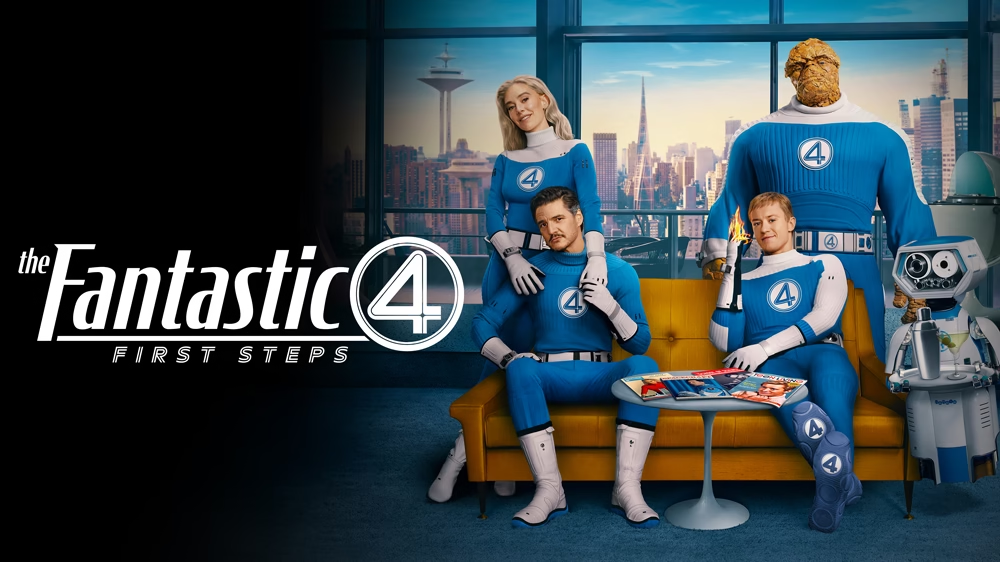
The Fantastic Four: First Steps (2025) marks a significant turning point for both Marvel Studios and the larger superhero film landscape. After multiple attempts to bring the Fantastic Four to the big screen, this film serves as a long-awaited recalibration—one that embraces the spirit, optimism, and retro-futuristic wonder that defined Marvel’s earliest stories. Rather than retreading the familiar origin narrative, the film drops audiences directly into an alternate 1960s universe where the Fantastic Four are already established icons. This approach creates a sense of momentum, identity, and worldbuilding that sets the film apart from earlier interpretations.
The film’s tone combines classic sci-fi adventure with contemporary emotional depth, giving the characters more humanity and agency than previous adaptations. By grounding the story in a compelling cosmic conflict—while still prioritizing family dynamics, heroism, idealism, and sacrifice—the movie represents the MCU’s most ambitious attempt yet to redefine a legacy franchise. With standout performances, striking design choices, and a story that balances spectacle with sincerity, First Steps positions Marvel’s First Family as a central pillar of the MCU’s future.
The Fantastic Four: First Steps – Official Trailer
What Is “The Fantastic Four: First Steps” About?
The Fantastic Four: First Steps takes place on Earth-828, a retro-futuristic 1960s timeline where Reed Richards, Sue Storm, Johnny Storm, and Ben Grimm have been superheroes for four years. Their fame as explorers, astronauts, and public figures has made them symbols of scientific progress and global unity. The story begins with a major announcement—Reed and Sue are expecting a child—which sparks public interest and speculation about what this means for humanity’s future. Their family expansion becomes intertwined with the central cosmic threat that soon emerges.
The narrative accelerates when the Silver Surfer, known here as Shalla-Bal, arrives to warn Earth of the impending arrival of Galactus, a cosmic being who consumes planets to feed his insatiable hunger. After learning Galactus intends to harvest the immense cosmic potential within Sue and Reed’s unborn child, the Fantastic Four refuse to sacrifice their future for the sake of a cosmic tyrant. What follows is an intense, emotional, and often philosophical journey as the team navigates moral dilemmas, public backlash, and the limits of their powers. The film culminates in a dramatic confrontation on Earth, where the team must use ingenuity—not violence—to survive.
Cast and Characters
The film features a highly praised ensemble cast that redefines the Fantastic Four for a new era. Pedro Pascal brings nuance, intelligence, and emotional weight to Reed Richards, portraying him as a scientist driven by responsibility and hope rather than ego. Vanessa Kirby plays Sue Storm with a complex mixture of leadership, compassion, and power, grounding the character in emotional intelligence and strength. Her role is central to the film’s themes of parenthood, sacrifice, and interstellar diplomacy.
Joseph Quinn’s portrayal of Johnny Storm injects vitality into the story, balancing humor with vulnerability as he evolves beyond youthful bravado. Ebon Moss-Bachrach’s Ben Grimm serves as the emotional backbone of the team, delivering a heartfelt and grounded performance that resonates deeply. Beyond the core four, Julia Garner stands out as the Silver Surfer, while Ralph Ineson’s Galactus brings imposing energy to the screen. Supporting cast members, including Paul Walter Hauser, Sarah Niles, Mark Gatiss, and Natasha Lyonne, help populate the film’s uniquely stylized world with character and depth.
Production and Development
The film’s development was shaped by a clear goal: create a definitive cinematic version of the Fantastic Four that honors the tone and imagination of the original 1960s comics. Director Matt Shakman embraced the aesthetic of retro future-tech, blending real 1960s cultural details with an idealized sci-fi vision reminiscent of 2001: A Space Odyssey and the art of Jack Kirby. This resulted in a visually distinctive film that differs sharply from the realism-driven MCU entries of the previous decade.
Marvel Studios also departed from its typical formula by skipping a traditional origin story. Instead, the film focuses on the team’s established legacy, their relationships, and the wider cosmic narrative. Cast rehearsals were extensive and approached with the discipline of theatrical production, allowing the actors to build chemistry and emotional coherence. Practical sets, real costumes, motion-capture enhancements, and large-scale miniatures contributed to a tactile and authentic visual experience. The combination of retro aesthetics, modern CG, and meticulous worldbuilding allowed First Steps to stand out among MCU entries and superhero films alike.
Themes
The film explores several rich themes that give the story emotional and philosophical grounding. At its core, First Steps is a story about family—what defines it, what strengthens it, and what threatens it. Reed and Sue’s impending parenthood introduces questions about responsibility, sacrifice, and the moral weight of bringing new life into a dangerous cosmos. The film also examines leadership, especially through Sue, who becomes the emotional and diplomatic anchor of the group.
Another central theme is the conflict between the greater good and individual lives. Galactus embodies pure cosmic necessity, a force beyond morality, which creates a dramatic contrast with the team’s human-centered values. The movie frequently asks whether one life—especially an unborn one—has equal value to billions. Cosmic destiny, scientific ambition, and the ethical cost of progress also feature prominently. The Silver Surfer’s arc deepens the film’s examination of guilt, redemption, and agency, adding layers to the broader moral landscape.
Why You Should Watch “The Fantastic Four: First Steps”
This film is worth watching for its refreshing shift in tone, style, and emotional range compared to the rest of the MCU. It offers a vibrant reinterpretation of Marvel’s First Family that feels closer to the heart of the comics: adventurous, imaginative, and grounded in character relationships. The retro-futuristic worldbuilding creates a cinematic experience unlike anything else in Marvel’s recent output, giving the film a distinct identity and visual appeal.
The performances are another highlight, with each cast member delivering nuanced portrayals that breathe new life into characters who struggled to find cinematic success in the past. The moral dilemmas, cosmic stakes, and family-driven narrative provide emotional weight without sacrificing Marvel’s trademark sense of wonder. Fans of classic sci-fi, superhero storytelling, and character-driven drama will find a compelling blend of all three.
Notable reasons to watch include:
-
A fresh 1960s alternate-universe setting
-
Complex character dynamics grounded in emotional realism
-
A faithful comic-inspired portrayal of Galactus and the Silver Surfer
-
Strong performances and chemistry across the ensemble
-
High-concept sci-fi integrated with family-centered storytelling
-
Visual design that pays homage to the Silver Age of Marvel Comics
Is “The Fantastic Four: First Steps” Worth Watching?
Yes. The film successfully revitalizes the Fantastic Four brand by balancing creativity, heart, and spectacle. It avoids the pitfalls of earlier adaptations by focusing on established characters rather than an origin story, giving audiences immediate access to the team’s personality and legacy. Whether viewers are long-time fans or newcomers, the film offers enough charm and narrative depth to stand on its own within the broader MCU.
The movie also fills an important narrative role, preparing audiences for the cosmic direction of the MCU’s upcoming phases. Its themes, characters, and conflicts are not only engaging on their own but also relevant to the future of the franchise. From a filmmaking perspective, First Steps manages to feel both classic and modern, delivering a cinematic experience that stands apart from its peers while still contributing meaningfully to the larger universe.
Reception and Critical Response
The Fantastic Four: First Steps received strong critical reception, with many reviewers praising its character-driven approach, retro production design, and bold reimagining of Marvel’s First Family. Critics highlighted the performances of Pascal, Kirby, Moss-Bachrach, and Garner as standout elements that elevate the film’s emotional and narrative depth. The visual effects—particularly those involving Galactus, the Silver Surfer, and the Fantastic Four’s powers—were seen as polished and creative, contributing to an immersive experience.
The film’s retro-futuristic aesthetic was widely celebrated, with many critics noting its refreshing break from contemporary MCU design trends. Though some reviewers felt the pacing fluctuated or that the cosmic stakes overshadowed quieter character moments, the overall response leaned positive. It performed well at the box office, becoming the highest-grossing Fantastic Four film to date, and earned praise for reestablishing the team as essential figures within the MCU.
Watch Order
Since The Fantastic Four: First Steps takes place on Earth-828—an alternate universe separate from the main MCU timeline—the watch order is flexible. However, viewers can enhance their experience by following a structured order.
Recommended Viewing Order
1. Essential Watch (to enjoy the film as a standalone)
-
The Fantastic Four: First Steps (2025)
This film is fully self-contained, requiring no prior MCU knowledge.
2. Suggested Extras (for context on multiverse connections)
-
Doctor Strange in the Multiverse of Madness (2022) – Introduces the concept of alternate universes.
-
Loki (Seasons 1–2) – Explores multiversal theory and timeline variants.
3. Future Connectivity (upcoming films)
These films directly continue the events of First Steps:
-
Avengers: Doomsday (2026)
-
Avengers: Secret Wars (2027)
These movies will expand on the Fantastic Four’s role in the multiverse and further develop Doctor Doom’s introduction.
Fantastic Four: First Steps FAQ
Q: Do I need to watch previous Fantastic Four movies before this one?
No. First Steps is a full reboot with no connection to prior versions.
Q: Why is the movie set in the 1960s?
The film pays homage to the original comics and uses a retro-futuristic setting to avoid timeline conflicts in the main MCU.
Q: Is this a typical origin story?
No. The team is already established, which allows the story to focus on character growth and cosmic conflict.
Q: Is Doctor Doom in this movie?
He appears in the mid-credits scene, setting up future MCU storylines.
Q: Does the film set up future Marvel movies?
Yes. It directly leads into the next two Avengers films.
Conclusion
The Fantastic Four: First Steps succeeds by embracing a style and tone that differentiates it from most modern superhero films. Its retro-futuristic setting, character-centered storytelling, and cosmic ambition create a unique identity that honors the legacy of Marvel’s First Family. Through strong writing, impressive performances, and a commitment to thematic depth, the film revitalizes a franchise that had long struggled to find its place on the big screen.
More importantly, the film positions the Fantastic Four as a crucial pillar for the MCU’s future. With its blend of heartfelt storytelling, visual imagination, and moral complexity, First Steps feels both nostalgic and forward-thinking. Whether viewed as a standalone entry or as the foundation for Marvel’s upcoming multiversal saga, it stands tall as one of the MCU’s most distinctive and meaningful films in years.
If you don’t know where to watch this Movie for FREE make sure to contact me via E-mail, or in the comments below. Thank you for reading and make sure to bookmark the site.
How useful was this post?
Click on a star to rate it!
Average rating 0 / 5. Vote count: 0
No votes so far! Be the first to rate this post.