
 7.8/10
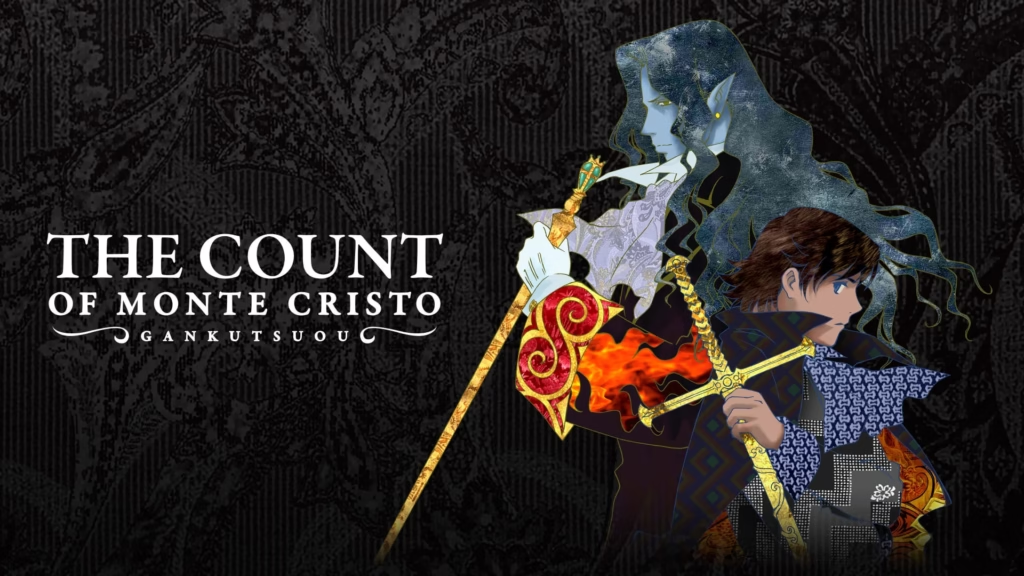
Gankutsuou: The Count of Monte Cristo is one of the most visually daring and emotionally intense anime productions ever made, blending science fiction with literary tragedy in a way that remains unmatched even today. Released between 2004 and 2005 by Studio Gonzo, the series reimagines Alexandre Dumas’ legendary novel with stylistic boldness, experimental animation, and a deeply psychological approach to storytelling. Instead of retelling the original story through traditional means, the anime transports the narrative into the distant future of the year 5053, reshaping its world, its atmosphere, and its themes while retaining the emotional weight of Dumas’ revenge narrative. This unique transformation is what made Gankutsuou a cult classic in both anime and literary circles.
At its core, the anime is far more than a simple adaptation—it is a character study, a critique of aristocratic society, and a meditation on the consuming nature of vengeance. Through the perspective of young Viscount Albert de Morcerf, the story invites viewers to witness the Count’s intricate schemes unfold while slowly unveiling the trauma and betrayal that shaped him. Combined with its signature visual style—layered textures, vibrant fabrics, and impressionist influences—the anime builds a world that feels alien yet emotionally grounded. This duality is the reason the series is often praised not only for its narrative ambition but also for its artistic courage, making it a standout experience for both longtime anime fans and newcomers seeking something extraordinary.
Gankutsuou: The Count of Monte Cristo – Official Trailer
What Is Gankutsuou: The Count of Monte Cristo About?
Gankutsuou tells the story of Edmond Dantès, a kind-hearted sailor who is betrayed by those he trusted most and imprisoned in the dark depths of Château d’If. After discovering the mysterious alien entity known as Gankutsuou, Edmond escapes and reinvents himself as the Count of Monte Cristo—an elegant, calculating figure who hides a supernatural force beneath his refined exterior. The series shifts the original narrative into a futuristic setting filled with interplanetary politics, alien cultures, and advanced aristocratic societies, giving the plot a fresh tone while staying loyal to its emotional core.
The anime follows Albert de Morcerf, a naïve young noble who becomes fascinated by the enigmatic Count after a dramatic rescue on the Moon city of Lune. Through Albert’s eyes, viewers witness the Count’s gradual infiltration of Parisian high society, all while unraveling the layers of deception surrounding Albert’s family and their past ties to Edmond. The deeper the Count embeds himself into Albert’s world, the clearer it becomes that every gesture, every alliance, and every manipulation serves a single purpose: revenge.
While the anime draws heavily from Dumas’ original plot, it also makes significant changes—altering character arcs, introducing science-fiction elements, and giving the story a darker supernatural dimension. This reinterpretation allows themes of identity, justice, betrayal, and fate to resonate in new ways, making the series both a tribute to and reinvention of the classic tale.
Cast and Characters
The characters in Gankutsuou are stylized, complex, and deeply human despite the series’ futuristic and supernatural setting. Each individual plays a specific role in the Count’s master plan, and their relationships form the backbone of the narrative. The Japanese voice cast, including Jouji Nakata as the Count and Jun Fukuyama as Albert, brings emotional weight and nuance to their roles, offering performances that are widely regarded as some of the strongest in mid-2000s anime.
Main Characters
-
The Count of Monte Cristo (Edmond Dantès) – A mysterious aristocrat driven entirely by revenge. His calm exterior hides the overwhelming presence of Gankutsuou, whose power both sustains and consumes him.
-
Albert de Morcerf – A young nobleman fascinated by the Count’s charisma. His innocence becomes a point of tension as he learns the truth of his father’s betrayal.
-
Franz d’Épinay – Albert’s loyal best friend, who becomes increasingly suspicious of the Count’s motivations and ultimately sacrifices himself.
-
Mercedes de Morcerf – Albert’s mother and Edmond’s lost love, who carries immense sorrow beneath her grace.
-
Fernand de Morcerf – Albert’s father and one of the men responsible for Edmond’s downfall.
-
Haydée – A former slave saved by the Count, whose tragic past connects deeply to his revenge.
-
Eugénie Danglars – Albert’s fiancée by arrangement, whose subplot explores personal freedom and rebellion.
Each character is layered with personal conflict, emotional depth, and symbolic purpose, making the ensemble one of the anime’s greatest strengths.
Production and Development
The anime was created by Mahiro Maeda and Studio Gonzo, who envisioned a radical reinterpretation of the classic story. Maeda originally sought to adapt The Stars My Destination, but after copyright issues blocked that project, he turned to Dumas’ novel as a thematic successor. What began as a direct sci-fi transformation quickly grew into a hybrid of literary drama, futuristic worldbuilding, and experimental animation techniques.
A defining aspect of Gankutsuou is its art style. Instead of traditional shading, the series uses layered textures, bold patterns, and static fabric overlays to give characters surreal, shimmering appearances. This method drew inspiration from Western Impressionism, Ukiyo-e art, and artists like Gustav Klimt. The result is a hyper-stylized aesthetic that immediately sets the anime apart and gives emotional scenes a dreamlike intensity.
Additional Production Notes
-
The anime was directed with “live-action sensibility,” meaning scenes were staged like theatre or cinema rather than typical animation framing.
-
Fashion designer Anna Sui collaborated on character wardrobe, adding richness to the aristocratic visual identity.
-
The music was composed by Jean-Jacques Burnel of The Stranglers, whose atmospheric score heightens the drama.
-
Several plot deviations were added to give the anime a more psychological and supernatural tone.
This combination of influences made Gankutsuou a pioneering work in anime production and a defining artistic statement for Gonzo.
Themes
The anime explores a wide range of themes that reflect both the spirit of the original novel and the darker psychological direction of Maeda’s adaptation. The most prominent theme is revenge, portrayed not as a triumphant quest for justice but as a destructive force that erodes Edmond’s humanity. In the absence of Dumas’ Christian symbolism, the anime instead focuses on emotional consequences, moral ambiguity, and the loss of identity.
Other major themes include:
Key Themes
-
The Corruption of Power – Aristocratic society is depicted as luxurious but morally rotten, showing how influence breeds manipulation.
-
Identity and Transformation – Edmond’s shift from sailor to Count, and ultimately to host of Gankutsuou, symbolizes how trauma reshapes the soul.
-
Generational Guilt – Albert represents innocence, caught between his parents’ sins and the Count’s vendetta.
-
Love vs. Hatred – The anime highlights how these emotions share the same origin: a deep connection between people.
-
Freedom vs. Fate – Characters struggle between predetermined destinies and their attempts to shape their own futures.
These themes weave together to form a powerful meditation on human emotion, responsibility, and consequence.
Why You Should Watch Gankutsuou: The Count of Monte Cristo
Gankutsuou is essential viewing for anyone who appreciates complex storytelling, unique art direction, and emotionally driven narratives. Its sci-fi setting provides a fresh approach to a timeless tale, making it accessible to modern audiences while preserving its dramatic foundation. The anime challenges the viewer with its moral ambiguity, showing revenge not as justice but as a consuming obsession that destroys both the victim and the perpetrator.
Additionally, the series stands out for its experimental visual style, which remains unmatched in the anime industry. Its layered textures and art-driven approach give each frame a sense of depth and movement, turning the entire show into a moving painting. This visual identity enhances the emotional tone of every scene, especially in moments of revelation, intimacy, or psychological unrest.
Fans of classical literature, sci-fi anime, psychological dramas, and aesthetic-heavy series will find Gankutsuou a captivating experience. It is rare to find an anime so daring in tone, style, and thematic ambition, making it a standout masterpiece well worth your time.
Is Gankutsuou Worth Watching?
Absolutely—Gankutsuou is widely regarded as one of the best anime adaptations ever created, not because it follows Dumas’ novel perfectly, but because it transforms it with creativity and emotional depth. The anime delivers a gripping narrative filled with tension, symbolism, and ethical complexity, giving viewers plenty to reflect on long after the final episode.
Its unique art style may be polarizing for some viewers, but for many, it is precisely what makes the experience unforgettable. Rather than relying on traditional animation, the series embraces an avant-garde approach that elevates the drama and gives the world a distinctive personality. Combined with compelling voice performances, haunting music, and a sharply written script, Gankutsuou becomes a rare gem in the anime landscape—one that rewards patience, attention, and emotional investment.
If you’re looking for an anime that offers sophistication, artistry, and storytelling excellence, Gankutsuou is unquestionably worth watching.
Reception and Critical Response
Upon release, Gankutsuou received overwhelming praise from critics in both Japan and the West. Reviewers admired its innovative animation, gripping narrative, and mature themes. It was celebrated for pushing the boundaries of visual storytelling and for treating its audience with respect by presenting layered, morally complex characters.
The anime won multiple awards, including the Best TV Series award at the 10th Animation Kobe Fair. Critics from sources such as Anime News Network, THEM Anime Reviews, and DVDTalk praised the series for its originality and emotional impact. Many highlighted that even when the visual style could be overwhelming, it added a surreal resonance to the story’s emotional beats.
Over the years, Gankutsuou has gained cult status, continuously recommended as an example of how anime can elevate classic literature and transform it into something new and artistically powerful. It remains one of Gonzo’s most celebrated works and a standout achievement of early 2000s anime.
Watch Order
Fortunately, Gankutsuou is very easy to watch—there is only one recommended viewing order:
Anime Watch Order
-
Gankutsuou: The Count of Monte Cristo (2004–2005) – Episodes 1–24
Additional Media
-
Manga (2005–2008) – Expands on the Count’s personal history
-
Novel trilogy (2004–2005) – Retells the story from different angles
-
Drama CD (2005) – Explores side stories and character backstories
-
Stage Play (2019) – A theatrical adaptation with dramatic reinterpretations
The anime alone provides a complete and satisfying story, but the additional media is great for fans who want to explore deeper layers of the narrative.
FAQ
Is Gankutsuou based on the original Count of Monte Cristo novel?
Yes, it is inspired by Alexandre Dumas’ novel but reimagines the story in a futuristic sci-fi setting with supernatural elements.
Do I need to read the novel before watching the anime?
No. The anime stands on its own, though knowing the original story can enrich the experience.
Is the anime faithful to the book?
It captures the emotional and thematic spirit of the novel but significantly changes plot details, characters, and the ending.
Is the art style distracting?
Some viewers need time to adjust, but most end up appreciating it as one of the show’s defining strengths.
Is Gankutsuou appropriate for younger audiences?
The series contains mature themes such as betrayal, murder, political corruption, and psychological trauma, so it’s best suited for mature viewers.
Conclusion
Gankutsuou: The Count of Monte Cristo remains one of the most extraordinary anime adaptations ever produced—a fusion of literary drama, science-fiction worldbuilding, and avant-garde artistic design. Its willingness to experiment, both visually and narratively, sets it apart from more conventional anime, making it a landmark series that continues to inspire and captivate audiences. The emotional depth of its characters, combined with its bold reinterpretation of Dumas’ classic, ensures that the anime delivers not only suspense and tragedy but also introspection and philosophical weight.
Beyond its dramatic power, the anime stands as a testament to what animation can achieve when creators aren’t afraid to innovate. Every episode feels purposeful, every visual choice intentional, and every moment charged with meaning. Whether you’re discovering it for the first time or revisiting it years later, Gankutsuou offers a richly layered experience that rewards attention and emotional engagement. For anyone seeking a sophisticated, visually stunning, and narratively compelling anime, this series is a must-watch—and a timeless masterpiece.
If you don’t know where to watch this Anime for FREE make sure to contact me via E-mail, or in the comments below. Thank you for reading and make sure to bookmark the site.
How useful was this post?
Click on a star to rate it!
Average rating 0 / 5. Vote count: 0
No votes so far! Be the first to rate this post.