
 8.5/10
 93% Critics / 95% Audience
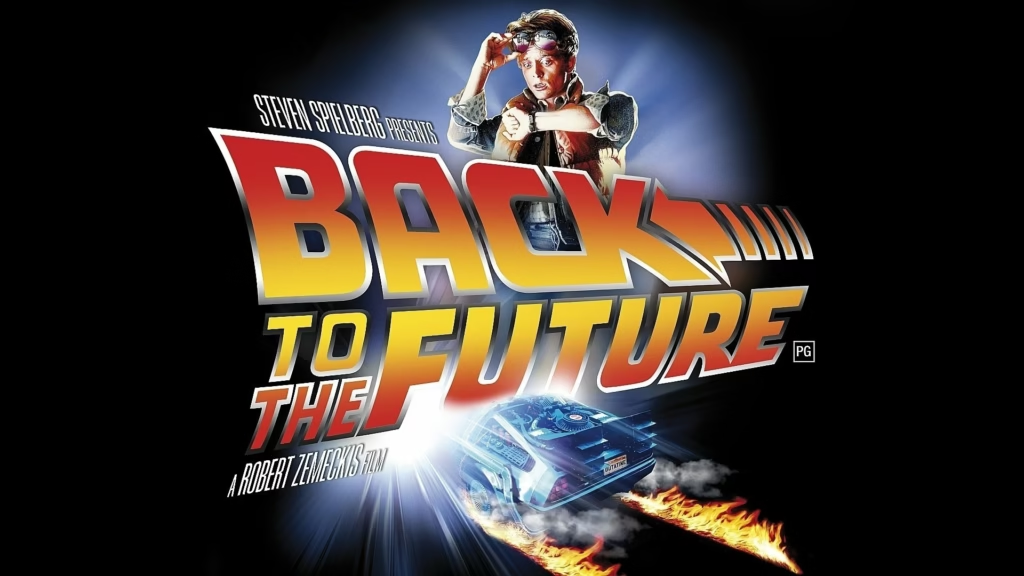
Released in 1985, Back to the Future remains one of the most iconic science fiction adventure films ever made. Directed by Robert Zemeckis and produced by Steven Spielberg, the movie blends sharp humor, heartfelt emotion, and inventive storytelling into an unforgettable cinematic experience. It stars Michael J. Fox as Marty McFly, a high school teenager accidentally sent thirty years into the past, where he meets his young parents and must make sure they fall in love before he can return to his own time.
More than just a story about time travel, Back to the Future is a film about fate, family, and the choices that define us. It cleverly intertwines the nostalgia of 1950s Americana with the optimism and anxiety of the 1980s, creating a story that resonated deeply with audiences across generations. The chemistry between Fox and Christopher Lloyd, who plays the eccentric inventor Doc Brown, remains one of cinema’s most beloved partnerships.
Nearly four decades later, the film still stands as a landmark in storytelling, special effects, and cultural influence. It inspired sequels, spin-offs, theme park rides, and generations of filmmakers who cite it as a perfect example of how to mix heart, humor, and science fiction adventure.
Back to the Future – 40th Anniversary Trailer
What Is “Back to the Future” About?
The film follows Marty McFly, a teenager from Hill Valley, California, who dreams of a better life but often finds himself caught in the middle of his family’s struggles. When his eccentric friend, Dr. Emmett “Doc” Brown, unveils his latest invention—a DeLorean sports car converted into a time machine powered by plutonium—Marty inadvertently activates it during an unexpected confrontation and is sent back to 1955.
In the past, Marty encounters his teenage parents and accidentally disrupts the moment they were meant to meet, threatening his own existence. Desperate to fix history, he seeks out the younger version of Doc Brown to find a way back to 1985 while ensuring his parents fall in love.
What follows is a perfect balance of comedy, suspense, and romance. Marty’s attempts to blend into 1950s society lead to humorous misunderstandings, while the race against time to harness a lightning strike to power the DeLorean provides thrilling tension. The film’s climax at the Hill Valley clock tower remains one of the most memorable scenes in movie history.
Popularity and Cultural Impact
From the moment of its release, Back to the Future became a pop culture phenomenon. It topped the box office in 1985, earning over $380 million worldwide, and became the highest-grossing film of that year. Critics praised its originality and pacing, while audiences fell in love with its heart and humor.
The movie introduced numerous elements that would become pop culture staples:
-
The DeLorean time machine, with its gull-wing doors and flux capacitor, became an instant icon.
-
The line “Great Scott!” became synonymous with Doc Brown’s excitable genius.
-
Marty’s red vest, skateboard, and 1950s rock performance of “Johnny B. Goode” are instantly recognizable moments of cinematic history.
Beyond its memorable imagery, Back to the Future influenced countless films and TV shows about time travel and alternate realities. Its success also inspired theme park attractions at Universal Studios, comic book adaptations, and even a stage musical. The movie’s legacy continues today, with new generations discovering its timeless charm on streaming platforms.
Why You Should Watch “Back to the Future”
There are many reasons why Back to the Future is often regarded as a perfect film:
-
A Brilliantly Structured Story: Every plot point connects seamlessly, making it one of the most well-written screenplays in cinema.
-
Unforgettable Characters: Marty and Doc Brown’s friendship is full of warmth, humor, and mutual respect.
-
Timeless Themes: Love, family, destiny, and the idea that small actions can have enormous consequences all make the story universally relatable.
-
Technical Mastery: From its practical effects to Alan Silvestri’s exhilarating score, every technical detail contributes to the film’s magic.
-
Cultural Legacy: It remains as enjoyable today as it was in 1985, proving that a well-told story never ages.
Watching Back to the Future isn’t just revisiting a piece of nostalgia—it’s experiencing cinematic craftsmanship that continues to influence storytellers worldwide.
Is “Back to the Future” Worth Watching?
Absolutely. Even decades later, Back to the Future holds up as a masterclass in entertainment. It’s endlessly rewatchable, striking a rare balance between humor, emotion, and science fiction that appeals to both children and adults. Its pacing never drags, and its characters feel genuine, making the audience care deeply about the outcome.
The movie’s optimistic tone also stands out in an era dominated by darker science fiction. It captures a sense of wonder and adventure that reminds viewers why they fell in love with movies in the first place. Whether it’s your first watch or your fiftieth, Back to the Future remains an experience that’s both comforting and thrilling.
Cast and Characters
The film’s success is largely due to its exceptional cast, each delivering performances that feel authentic and unforgettable:
-
Michael J. Fox as Marty McFly – The charismatic teenager whose accidental trip to the past leads to a race against time.
-
Christopher Lloyd as Dr. Emmett “Doc” Brown – The eccentric inventor of the DeLorean time machine, known for his wild energy and brilliant mind.
-
Lea Thompson as Lorraine Baines McFly – Marty’s mother, portrayed as both a shy 1950s teenager and a weary 1980s parent.
-
Crispin Glover as George McFly – Marty’s awkward but kind father, whose transformation is central to the story’s heart.
-
Thomas F. Wilson as Biff Tannen – The classic bully and antagonist, whose behavior creates much of the film’s tension and comedy.
Each performance contributes to the film’s emotional resonance, making these characters feel real despite the fantastical circumstances.
Production and Release
The journey to bring Back to the Future to life was almost as eventful as the film itself. Directed by Robert Zemeckis and co-written with Bob Gale, the movie was produced by Amblin Entertainment under Steven Spielberg’s guidance. The script went through numerous drafts, with over 40 rejections before Universal Pictures finally approved it.
Filming began with Eric Stoltz in the role of Marty McFly, but after several weeks, producers decided his performance lacked the energy they envisioned. Michael J. Fox, then starring in Family Ties, was brought in despite his busy schedule, shooting the series during the day and the film at night. The decision proved crucial—Fox’s charisma became central to the movie’s charm.
Released on July 3, 1985, Back to the Future became an instant success. Audiences loved its balance of humor, adventure, and emotion, while critics hailed it as one of the smartest blockbusters of the decade.
Critical Reception
Upon release, Back to the Future received widespread acclaim. Critics praised its screenplay, performances, and inventive direction. Roger Ebert called it “one of the most delightful, original, and perfectly constructed films of the year,” while Gene Siskel highlighted its humor and heart.
The film holds a 97% approval rating on Rotten Tomatoes and an 87/100 score on Metacritic, reflecting universal praise. It won the Academy Award for Best Sound Effects Editing and received nominations for Best Original Screenplay, Best Sound, and Best Original Song (“The Power of Love” by Huey Lewis and the News).
Over time, it has consistently appeared on lists of the greatest films ever made, including the American Film Institute’s “100 Years…100 Movies.”
Watch Order
For newcomers to the franchise, here’s the chronological and release order of the Back to the Future trilogy:
-
Back to the Future (1985) – Marty’s first journey to 1955.
-
Back to the Future Part II (1989) – A thrilling continuation that takes Marty and Doc to both the future and an alternate 1985.
-
Back to the Future Part III (1990) – The finale, set in the Old West, where Marty must save Doc and find a way back home.
Watching in release order provides the most natural narrative flow and mirrors how audiences originally experienced the series.
Back to the Future FAQ
Is Back to the Future suitable for all ages?
Yes. The film is family-friendly, with mild language and themes that appeal to a wide audience.
Was the DeLorean a real car?
Yes. The DeLorean DMC-12 was a real sports car produced in the early 1980s. It became world-famous because of this film.
Who wrote the script?
The screenplay was written by Robert Zemeckis and Bob Gale.
Was there ever a remake or sequel planned?
No official remake or reboot has been announced, and the creators have stated that they do not intend to remake the original trilogy.
What made the film’s time travel concept unique?
Its rules were clear and consistent, using emotional stakes (Marty’s existence) rather than purely scientific exposition to drive the story.
Conclusion
Back to the Future is more than a film—it’s a cultural milestone. Its perfect mix of adventure, humor, and emotional depth continues to inspire filmmakers, writers, and audiences nearly forty years later. From the unforgettable sound of the DeLorean’s ignition to the timeless partnership between Marty and Doc, every element of the movie feels meticulously crafted to stand the test of time.
It’s rare for a film to be both universally loved and critically acclaimed, but Back to the Future achieves that effortlessly. Whether you’re discovering it for the first time or revisiting it for the hundredth, the film’s message remains clear: the past shapes us, but the future is ours to make.
Few films capture the magic of cinema as completely as this one—and that’s why Back to the Future will always be, quite literally, timeless.
If you don’t know where to watch this Movie for FREE make sure to contact me via E-mail, or in the comments below. Thank you for reading and make sure to bookmark the site.