
 8.8/10
 93% Critics / 85% Audience
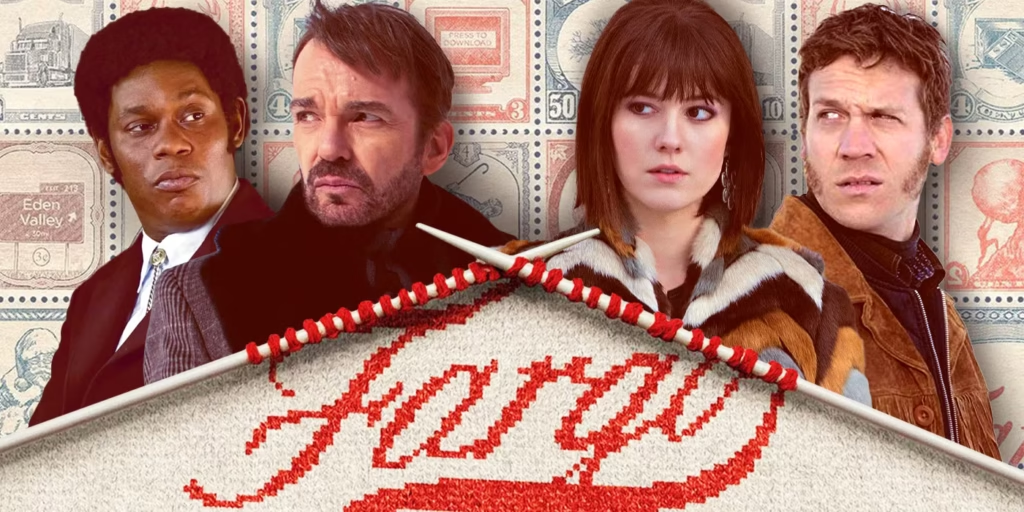
When FX premiered Fargo in 2014, few expected a TV adaptation of the Coen brothers’ 1996 film to rival its source material — yet creator Noah Hawley not only matched it, he expanded it into one of the most acclaimed anthology series in modern television. Mixing black comedy, Midwestern crime, and moral chaos, Fargo redefined how the small screen could explore human folly and fate.
Each season presents a new set of characters, timelines, and crimes — yet they all share one frozen universe where ordinary people make catastrophic choices, and “true stories” blur into tall tales. The Coen brothers, originally uninvolved, became executive producers after seeing Hawley’s first scripts, recognizing in them the same bleak humor and philosophical irony that defined their film.
From small-town murders and mob wars to philosophical meditations on evil, Fargo is not merely a crime show — it’s a moral parable draped in snow, blood, and dark laughter.
Fargo (TV Series) – Official Trailer
What Is Fargo About?
Fargo is an anthology series set in the shared universe of the original 1996 film, where each season explores a self-contained crime saga. Despite different casts and decades, the stories connect through recurring themes — greed, fate, deception, and the illusion of control.
Set across Minnesota, North Dakota, and occasionally Missouri, the series examines how ordinary Midwesterners find themselves entangled in extraordinary crimes. Every season begins with the ironic disclaimer, “This is a true story,” a Coen-esque device that blurs the line between truth and fiction.
The show’s tone is unmistakable — an icy blend of crime drama, absurdist humor, and existential tragedy, all framed within the ordinary politeness of the Midwest.
Is Fargo Worth Watching?
Without question. Fargo is one of the finest anthology dramas ever produced, combining sharp writing, complex characters, and stunning cinematography. Every season operates as both a standalone story and a meditation on morality and chance.
If you enjoy series like True Detective or Breaking Bad, Fargo offers similar grit and violence — but wrapped in wry humor and snow-covered irony. Each episode is unpredictable yet deeply human, balancing absurdity and tragedy with precision.
It’s a rare show that’s as intellectually layered as it is entertaining, proving that crime fiction can be both philosophical and hilarious.
Why Should You Watch Fargo?
Cinematic Quality: Each season feels like a ten-hour film, with remarkable attention to detail, pacing, and visuals.
Rich Performances: From Billy Bob Thornton and Martin Freeman to Kirsten Dunst, Ewan McGregor, and Juno Temple, the acting is consistently outstanding.
Dark Humor: The show balances shocking violence with the Coens’ signature absurdity and deadpan wit.
Moral Complexity: Nobody in Fargo is purely good or evil — every character wrestles with conscience and consequence.
Philosophical Tone: Beneath the mayhem lies a constant meditation on fate, chance, and what it means to be good in a world gone wrong.
Main Cast Across the Seasons
Season 1 (2014)
Billy Bob Thornton as Lorne Malvo, a manipulative hitman whose arrival corrupts a quiet town.
Martin Freeman as Lester Nygaard, a timid salesman drawn into crime.
Allison Tolman as Deputy Molly Solverson and Colin Hanks as Officer Gus Grimly, the moral anchors of the story.
Season 2 (2015)
Kirsten Dunst as Peggy Blumquist and Jesse Plemons as Ed Blumquist, an ordinary couple swept into gang warfare.
Patrick Wilson as Lou Solverson, a State Trooper trying to hold onto decency.
Jean Smart as Floyd Gerhardt, the matriarch of a crumbling crime family.
Season 3 (2017)
Ewan McGregor in a dual role as feuding brothers Emmit and Ray Stussy.
Mary Elizabeth Winstead as Nikki Swango, a cunning parolee.
David Thewlis as V. M. Varga, a chilling embodiment of corporate greed and chaos.
Season 4 (2020)
Chris Rock as Loy Cannon, a crime boss facing off against Italian mobsters.
Jason Schwartzman, Jessie Buckley, and Ben Whishaw co-star in this 1950 Kansas City saga of race, power, and betrayal.
Season 5 (2023–2024)
Juno Temple as Dot Lyon, a housewife with a violent past.
Jon Hamm as Roy Tillman, her sadistic ex-husband and sheriff.
Jennifer Jason Leigh as Lorraine Lyon, a ruthless matriarch of wealth and control.
Each cast redefines the show’s tone — from noir tragedy to black comedy — while staying true to Fargo’s DNA of crime and consequence.
Themes and Symbolism
Fargo thrives on the contrast between Midwestern normalcy and human depravity. Its themes extend beyond simple crime to probe deeper ideas:
The Banality of Evil: Ordinary people commit terrible acts under the guise of necessity or pride.
Fate vs. Free Will: The show constantly asks whether evil is chosen or inevitable.
Moral Greyness: Heroes are flawed, villains have logic — and everyone pays a price.
American Ambition: Characters chase “a better life” and lose themselves in the process.
Absurdism: Life’s coincidences and mistakes shape fate more than intention.
Every story becomes a study of how small acts of greed or cowardice snowball into chaos — all delivered with a biting sense of irony.
Production and Creative Vision
Created by Noah Hawley, Fargo carries the spirit of the Coen brothers’ world — strange coincidences, quiet towns, and philosophical violence — yet it stands independently as a literary and cinematic achievement.
Filmed mostly in Calgary, Alberta, the production captures the frozen emptiness of the Midwest with haunting precision. Hawley and his team use silence, snow, and long takes to evoke dread and dark humor simultaneously.
Each season experiments with structure and time, referencing other Coen films like No Country for Old Men and A Serious Man. Even the recurring “This is a true story” disclaimer becomes a running joke about narrative manipulation — truth twisted by storytellers.
Critical Reception and Awards
Fargo has received universal acclaim since its debut, with critics praising its writing, performances, and aesthetic.
| Season | Rotten Tomatoes | Metacritic | Summary |
|---|---|---|---|
| Season 1 | 97% | 85 | Brilliant debut; darkly comic, morally complex. |
| Season 2 | 100% | 96 | Widely hailed as one of TV’s best seasons ever. |
| Season 3 | 93% | 89 | Excellent performances, especially McGregor and Thewlis. |
| Season 4 | 84% | 68 | Ambitious but less consistent, still compelling. |
| Season 5 | 93% | 80 | A triumphant return to form with Juno Temple and Jon Hamm. |
Awards and Accolades:
7 Primetime Emmy Awards including Outstanding Limited Series (Season 1).
3 Golden Globe Awards, including Best Miniseries or Television Film and Best Actor for Billy Bob Thornton.
8 Critics’ Choice Television Awards and numerous wins for acting, writing, and directing.
Recognized by the Peabody Awards, AFI, and Producers Guild of America.
Each season maintains critical prestige, making Fargo one of the most decorated anthology series in television history.
Fargo (TV Series) FAQ
Q: Is each season of Fargo connected?
Yes. While each season has its own story and cast, subtle links — recurring surnames, objects, or characters — weave the universe together.
Q: Do I need to watch the film first?
No, but fans of the 1996 movie will appreciate the tonal and thematic callbacks. The show’s world exists in the same continuity as the film.
Q: Which season is considered the best?
Critics often praise Season 2 for its balance of story, style, and emotional power — though Season 1 and Season 5 are also highly acclaimed.
Q: What does “This is a true story” mean?
It’s an intentional lie — a storytelling device inherited from the Coens. It reflects how easily fiction masquerades as truth.
Q: Where was Fargo filmed?
Despite its Midwestern setting, all seasons were primarily filmed in Calgary, Alberta, and surrounding Canadian towns.
Q: Are the Coen brothers involved?
They serve as executive producers, but Noah Hawley is the creative force behind the writing and direction.
Q: What makes Fargo different from other crime dramas?
Its tone — a unique fusion of dark comedy, philosophical reflection, and human tragedy. It’s violent and absurd, funny and fatalistic — often in the same scene.
Conclusion
Fargo stands as one of television’s greatest achievements — a modern masterpiece of storytelling that transforms small-town crime into a mirror of human nature. Noah Hawley’s creation channels the Coen brothers’ sensibility while developing its own poetic rhythm, where humor and horror coexist under the pale winter sky.
Each season offers something new: different eras, different sins, but the same chilling truth — ordinary people can commit extraordinary evil when pushed by fear, greed, or pride.
With five seasons of brilliance and a gallery of unforgettable performances, Fargo remains the gold standard of anthology television — a testament to how art can turn blood, snow, and silence into something profoundly human.
If you don’t know where to watch this Series for FREE make sure to contact me via E-mail, or in the comments below. Thank you for reading and make sure to bookmark the site.
How useful was this post?
Click on a star to rate it!
Average rating 0 / 5. Vote count: 0
No votes so far! Be the first to rate this post.