
 8.3/10
 84% Critics / 94% Audience
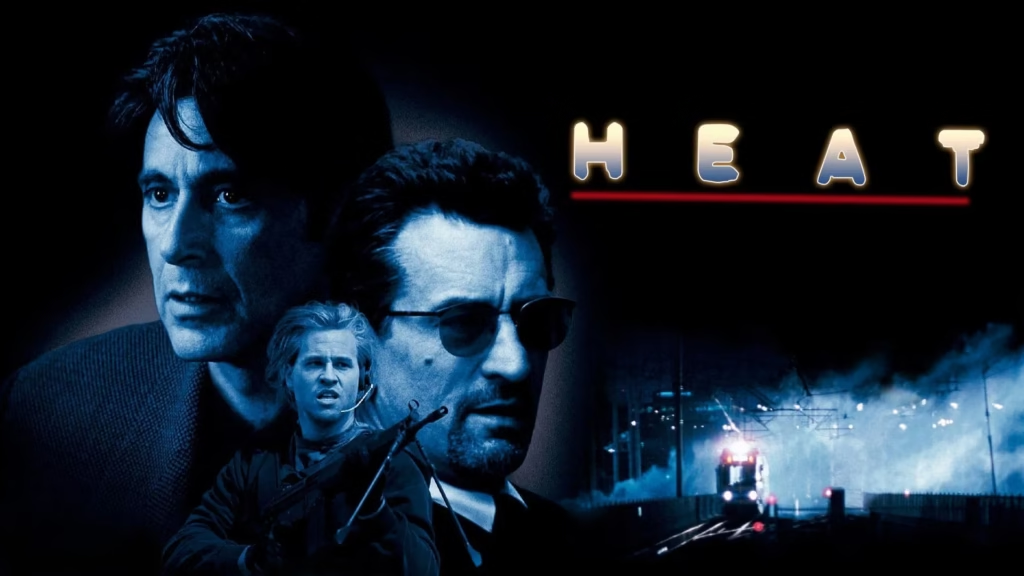
Released on December 15, 1995, Heat is an American epic crime drama written and directed by Michael Mann. Featuring powerhouse performances from Al Pacino, Robert De Niro, Val Kilmer, and Jon Voight, the film chronicles the cat-and-mouse game between an LAPD detective and a master thief — two men bound by mutual respect and doomed by their obsessions.
Mann’s film became an instant classic, not only because it united De Niro and Pacino on screen for the first time, but also for its meticulous attention to realism, emotional depth, and striking visual style. Heat is more than a cops-and-robbers story — it’s an existential study of loneliness, duty, and the high cost of professionalism.
With its iconic downtown Los Angeles shootout, atmospheric cinematography by Dante Spinotti, and haunting score by Elliot Goldenthal, Heat has been hailed as one of the most influential crime films ever made. It’s a story about two men who live by their codes — and what happens when those codes collide.
Heat (1995 Film) – Official Trailer
What Is “Heat” About?
The film follows two parallel lives: Neil McCauley (Robert De Niro), a disciplined professional thief, and Vincent Hanna (Al Pacino), a relentless LAPD robbery-homicide detective. Both men are the best at what they do, and both are consumed by their work.
McCauley leads a crew of expert criminals — Chris Shiherlis (Val Kilmer), Michael Cheritto (Tom Sizemore), and Trejo (Danny Trejo). Their heists are executed with military precision, until a volatile new recruit, Waingro, jeopardizes everything by killing a guard during a robbery. The murder draws the attention of Hanna, who becomes determined to hunt McCauley down.
As Hanna and McCauley circle each other, their personal lives unravel. Hanna’s marriage to Justine (Diane Venora) collapses under the weight of his obsession, while McCauley risks his strict rule of detachment by falling for Eady (Amy Brenneman). When the two finally meet for coffee, they acknowledge their similarities — two men on opposite sides of the law who understand each other completely.
Their fates converge during one of the most memorable action sequences in cinema — the downtown Los Angeles bank heist and shootout — a masterclass in tension, sound design, and choreography. In the end, their inevitable confrontation on the airport tarmac delivers one of the most poignant endings in crime film history.
Why “Heat” Stands Out Among Crime Dramas
Heat isn’t just about criminals and cops; it’s about the psychology of dedication and isolation. Mann presents both sides with equal empathy, avoiding clear heroes or villains.
Key reasons it stands out:
-
Dual Character Study: Hanna and McCauley mirror each other’s strengths and flaws.
-
Emotional Authenticity: Every relationship — romantic or professional — feels real and doomed by obsession.
-
Unmatched Realism: The gunfights and tactics were choreographed with help from ex–Special Forces operatives, influencing real police training worldwide.
-
Aesthetic Mastery: Mann’s use of Los Angeles as a neon-lit, sprawling character adds mood and scale.
-
Iconic Dialogue: The coffee-shop meeting between Pacino and De Niro remains one of cinema’s greatest face-offs.
At its core, Heat examines the cost of living by principle. McCauley’s code — “Don’t let yourself get attached to anything you are not willing to walk out on in 30 seconds flat” — becomes his undoing.
Is “Heat” Worth Watching?
Unquestionably yes. Heat is a landmark of modern filmmaking — a three-hour crime saga that remains gripping, emotional, and technically flawless from start to finish.
The film’s layered storytelling balances procedural detail with human vulnerability. It appeals not only to fans of crime thrillers but to anyone who appreciates character-driven drama. Whether it’s the masterful tension of the bank heist, the quiet melancholy of McCauley’s solitude, or Hanna’s explosive energy, Heat captures the human side of obsession.
For modern audiences, Heat remains relevant because it portrays the cost of chasing perfection — and the loneliness that follows.
Reasons to watch:
-
Legendary performances from Pacino and De Niro
-
The most realistic and intense shootout scene ever filmed
-
Deep character writing and moral ambiguity
-
A timeless exploration of duty, loss, and identity
Cast and Performances
Heat boasts one of the finest ensembles in film history:
-
Al Pacino as Lt. Vincent Hanna – A driven detective haunted by his job’s demands.
-
Robert De Niro as Neil McCauley – A precise and detached thief living by a personal code.
-
Val Kilmer as Chris Shiherlis – A skilled gunman torn between loyalty and love.
-
Tom Sizemore as Michael Cheritto – A loyal and fearless member of McCauley’s crew.
-
Jon Voight as Nate – McCauley’s trusted fence and strategist.
-
Diane Venora as Justine Hanna – Hanna’s wife, caught between love and frustration.
-
Amy Brenneman as Eady – McCauley’s brief chance at redemption.
-
Ashley Judd as Charlene Shiherlis – A strong woman fighting to survive in a world of men.
-
Natalie Portman as Lauren Gustafson – Hanna’s troubled stepdaughter.
-
Kevin Gage as Waingro – The chaotic element that destroys balance and sparks tragedy.
Each actor brings nuance to their role, grounding the film’s emotional and moral complexity.
Production and Direction
Michael Mann’s journey with Heat began in 1979, when he wrote an early version inspired by real Chicago detective Chuck Adamson’s pursuit of criminal Neil McCauley. After adapting the story into the 1989 TV movie L.A. Takedown, Mann finally realized his full vision in 1995 with a bigger budget and an all-star cast.
The film was shot entirely on location in Los Angeles, giving it a distinctive authenticity. Mann avoided soundstages, preferring real environments — from city streets to airport runways — to immerse viewers in the city’s atmosphere.
Cinematography by Dante Spinotti emphasized cool blues, metallic grays, and wide urban spaces. Combined with Mann’s deliberate pacing and meticulous research into real police and criminal operations, the film achieved a level of realism rarely seen in Hollywood.
Even the actors trained extensively for their roles. Ex–SAS officer Andy McNab coached the cast in live-fire exercises, and the crew’s tactics were so effective that U.S. military units later used Heat’s shootout sequence for training purposes.
Soundtrack and Atmosphere
The soundtrack, composed by Elliot Goldenthal, is as haunting as the film itself. Mixing orchestral and electronic tones, it heightens the tension while maintaining emotional restraint. Artists such as Moby, Brian Eno, and Lisa Gerrard also contribute atmospheric tracks that blend seamlessly with Mann’s visual storytelling.
The ending, underscored by Moby’s “God Moving Over the Face of the Waters,” remains one of the most iconic finales in modern cinema — a wordless symphony of sorrow, closure, and mutual respect.
Critical Reception
Upon release, Heat earned universal acclaim for its craftsmanship and performances.
-
Rotten Tomatoes: 84% (average rating 8.3/10)
-
Metacritic: 76/100 (“generally favorable”)
-
CinemaScore: “A−” audience rating
Roger Ebert praised the film’s psychological insight, writing:
“It’s not just an action picture. Above all, the dialogue is complex enough to allow the characters to say what they’re thinking.”
Todd McCarthy (Variety) called it “stunningly made and incisively acted,” while Kenneth Turan (Los Angeles Times) described it as “a sleek, accomplished piece of work, meticulously controlled and completely involving.”
Although Heat didn’t sweep awards season, it earned Saturn nominations for Best Action/Adventure Film and Best Supporting Actor (Val Kilmer), and its reputation has only grown with time.
Legacy and Influence
Over the decades, Heat has become one of the most studied and referenced crime films in history. Its influence extends far beyond Hollywood:
-
The 1997 North Hollywood Shootout drew direct comparisons to Heat’s climactic bank scene.
-
Christopher Nolan cited it as a major inspiration for The Dark Knight (2008).
-
The Grand Theft Auto video game series adapted multiple missions inspired by the film’s robberies.
-
Filmmakers like Mia Hansen-Løve and Ben Affleck have cited it as a defining influence on their storytelling.
Its cultural impact also includes Heat 2 — a novel co-written by Michael Mann and Meg Gardiner, released in 2022 as both a prequel and sequel. Mann has since confirmed plans to adapt it into a new feature film, with Adam Driver reportedly in talks to play a younger McCauley.
Heat (1995 Film) FAQ
Is Heat based on a true story?
Yes. The story is inspired by real events involving Chicago detective Chuck Adamson and criminal Neil McCauley, whose real-life confrontation ended much like the film’s.
Where was Heat filmed?
It was shot entirely on location in Los Angeles, using over 80 different sites — including the famous diner and downtown shootout locations.
Are Al Pacino and Robert De Niro together on screen?
Yes, Heat marks the first film where Pacino and De Niro share scenes together after both appearing separately in The Godfather Part II (1974).
What makes Heat so realistic?
Michael Mann’s attention to detail — consulting real criminals and detectives, using real weapons training, and shooting on live city streets — gives the film a rare authenticity.
Conclusion
Heat is not merely a heist film — it’s a cinematic symphony about obsession, honor, and loss. Michael Mann crafts a narrative that blurs the lines between hero and villain, showing how dedication can both define and destroy.
With its brilliant performances, iconic visuals, and haunting score, Heat remains a gold standard in crime filmmaking. It’s a film about men chasing purpose in a city that never sleeps, about the human cost of perfection, and the tragedy of understanding too late that connection is the one thing worth keeping.
Nearly three decades later, Heat still burns bright — as thrilling, emotional, and uncompromising as ever.
If you don’t know where to watch this Movie for FREE make sure to contact me via E-mail, or in the comments below. Thank you for reading and make sure to bookmark the site.
How useful was this post?
Click on a star to rate it!
Average rating 0 / 5. Vote count: 0
No votes so far! Be the first to rate this post.