
 7.8/10
 100% Critics / 98% Audience
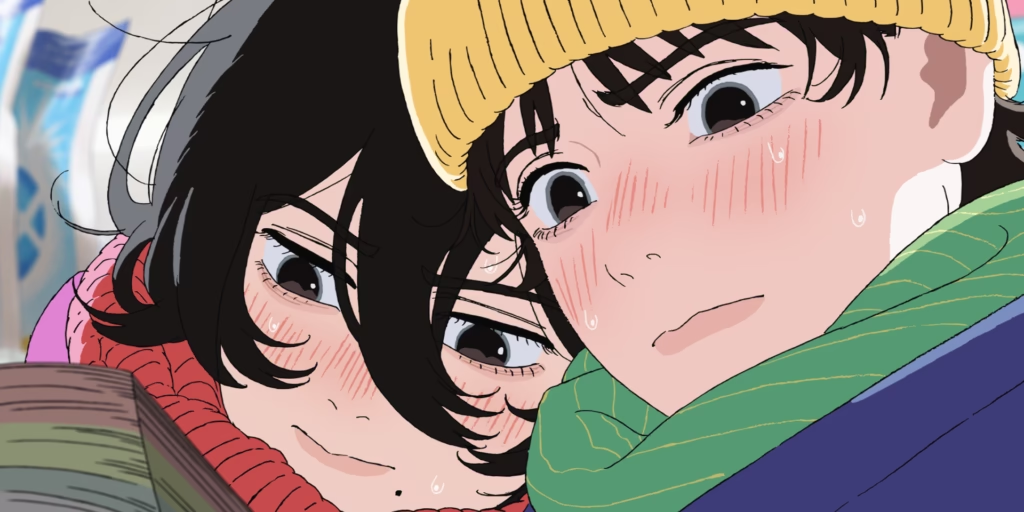
Look Back (ルックバック) is a 2024 Japanese animated coming-of-age drama film that reaffirms animation’s power to tell deeply human stories. Based on Tatsuki Fujimoto’s one-shot manga — the creator of Chainsaw Man — the film was written and directed by Kiyotaka Oshiyama, produced by Studio Durian, and features stunning performances by Yuumi Kawai (as Fujino) and Mizuki Yoshida (as Kyomoto).
Premiering at the Annecy International Animation Film Festival before its Japanese release on June 28, 2024, the film quickly became an international sensation. Its emotional depth, minimalist style, and contemplative pacing stood in contrast to most commercial anime, winning critical acclaim worldwide.
At its heart, Look Back is a story about two girls who bond over their shared love of art — and how creativity can both connect and isolate those who pursue it. It’s a film about ambition, loss, and healing, exploring the question every artist faces: Why do we create, even when it hurts?
Look Back – Official Trailer
What Is “Look Back” About?
The story follows Ayumu Fujino, a confident young artist whose manga strips are published in her school newspaper. Praised by her peers, Fujino sees herself as talented — until her teacher asks her to share space with another student, Kyomoto, a reclusive girl who draws intricate, breathtaking backgrounds. When Fujino sees Kyomoto’s superior artistry, envy sets in.
Determined to surpass her, Fujino isolates herself to improve, sacrificing friendships and comfort for perfection. Yet even as she grows, she can’t match Kyomoto’s natural skill. Defeated, she gives up drawing — until fate forces their paths to cross. When Fujino delivers Kyomoto’s diploma after graduation, she discovers that Kyomoto had always admired her. Their awkward, heartfelt meeting rekindles Fujino’s creative spark, and together they create a one-shot manga that wins an art contest.
The two become inseparable, forming the pen name Kyo Fujino and pursuing their dreams together. But their friendship takes a tragic turn when Kyomoto dies in a horrific attack inspired by a real-world arson incident. Grieving and guilt-ridden, Fujino questions whether her encouragement led Kyomoto to her death. In a surreal twist of fate, time appears to bend — showing Fujino a world where her friend survived, continuing to draw because of the inspiration she once gave her.
The film ends on a quiet, cathartic note. Fujino returns to her desk, remembering Kyomoto’s joy and passion for art, and begins drawing again — not to compete or escape, but to connect.
The Emotional and Artistic Themes
Look Back is less about external drama and more about inner conflict — a meditation on the creative struggle, identity, and loss. It portrays art as both salvation and suffering: a way to find belonging in a lonely world.
Major Themes Explored:
-
Art as Connection: Drawing becomes the shared language between Fujino and Kyomoto, expressing what words cannot.
-
Rivalry and Respect: The film explores how competition can evolve into mutual admiration and creative synergy.
-
Grief and Guilt: Fujino’s emotional spiral after Kyomoto’s death mirrors how trauma reshapes one’s sense of purpose.
-
Time and Redemption: The film’s ambiguous time loop suggests that memory and imagination can offer solace even when reality cannot.
-
Creation as Healing: By the end, Fujino’s act of drawing symbolizes acceptance — the realization that creating art keeps love and memory alive.
Director Kiyotaka Oshiyama captures these emotions through stillness and subtle movement. Scenes linger on the sound of pencils scratching paper or a gust of wind passing through a window — quiet moments that say more than dialogue ever could.
Why “Look Back” Resonated with Audiences
Unlike typical anime films that rely on spectacle or fantasy, Look Back found universal acclaim for its emotional realism and artistic honesty. Viewers and critics praised its introspective storytelling and handcrafted animation, calling it “a love letter to creation itself.”
Why It Struck a Chord:
-
It delivers a deeply human story that transcends age, culture, and genre.
-
The relationship between Fujino and Kyomoto feels raw, real, and heartbreakingly tender.
-
Its visual storytelling uses minimal dialogue and naturalistic pacing, allowing emotions to breathe.
-
The tragedy is handled with dignity and subtlety, never sensationalizing loss.
-
It invites viewers to reflect on why they pursue their passions, even in the face of pain or failure.
The film’s ending, where Fujino resumes drawing with Kyomoto’s memory guiding her, left many audiences in tears — not out of sadness, but recognition. It’s a story about rediscovering purpose through love, even after devastating loss.
Is “Look Back” Worth Watching?
Without question, Look Back is one of the most essential animated films of the 2020s. It’s emotional without being melodramatic, contemplative without losing momentum, and beautifully animated with an eye for detail and atmosphere.
For fans of introspective films like A Silent Voice, Your Name, or In This Corner of the World, this movie will feel both familiar and refreshingly honest. It proves that animation can be as emotionally sophisticated as any live-action drama.
Reasons to Watch:
-
A deeply emotional story about art, grief, and friendship.
-
Stunning, hand-drawn animation that conveys more through silence than words.
-
A haunting soundtrack by Haruka Nakamura, blending piano and ambient tones.
-
Powerful performances by Yuumi Kawai and Mizuki Yoshida.
-
A faithful yet elevated adaptation of Tatsuki Fujimoto’s original manga.
It’s not just a film to watch — it’s one to feel.
Cast and Performances
The strength of Look Back lies in its quiet, grounded performances:
-
Yuumi Kawai as Ayumu Fujino – a passionate artist driven by pride and insecurity, whose emotional journey anchors the film.
-
Mizuki Yoshida as Kyomoto – a socially anxious recluse whose quiet brilliance and empathy balance Fujino’s intensity.
-
Koya Yoshihashi as Editor – the pragmatic voice of the professional manga world.
-
Yoichiro Saito, Rina Endo, and others deliver nuanced supporting roles that add realism to the story’s school-life backdrop.
In the English dub, Valerie Rose Lohman and Grace Lu bring equal emotional resonance, maintaining the film’s delicate tone for international audiences.
Production and Animation
Look Back was produced by Studio Durian, a smaller but ambitious studio known for its experimental approach to hand-drawn animation. Director Kiyotaka Oshiyama not only directed but also wrote the screenplay and designed the characters, giving the film a unified creative vision.
The animation is hand-rendered, using soft lighting and delicate textures to mirror the inner fragility of the characters. Every sketch, room, and breeze is alive with emotion — a visual poem to the act of creation itself.
Composer Haruka Nakamura crafted an ethereal soundtrack, including the theme song “Light Song” performed by Urara, which perfectly captures the bittersweet tone of the film’s closing moments.
Reception and Awards
Upon release, Look Back received universal critical acclaim and achieved remarkable commercial success for an independent animated feature.
-
Rotten Tomatoes: 100% critic approval (average 8.7/10)
-
Metacritic: 90/100 (“Universal acclaim”)
Critics praised its emotional precision and artistry. The Telegraph called it “as delicate as a haiku, yet overflowing with feeling,” while IndieWire described it as “a masterpiece about the quiet beauty of creation.”
Major Awards and Recognition:
-
Japan Academy Film Prize (2025): Best Animated Picture – Winner
-
Tokyo Anime Award Festival: Animation of the Year – Winner
-
Crunchyroll Anime Awards (2025): Film of the Year – Winner
-
Hochi Film Awards (2024): Best Animated Picture – Winner
-
Annie Awards: Nominated for Best Independent Animated Feature
Look Back’s success solidified Tatsuki Fujimoto’s reputation as not just a manga innovator, but a storyteller capable of profound emotional impact.
Look Back (Animated Film) FAQ
Is Look Back connected to Chainsaw Man?
No, while both are based on works by Tatsuki Fujimoto, Look Back is a standalone story with no shared universe or characters.
Is it suitable for all audiences?
While not graphic, the film explores mature themes of death, trauma, and guilt, making it best suited for teens and adults.
Where can I watch Look Back?
It’s available for streaming worldwide on Amazon Prime Video, featuring both the original Japanese audio and English dub.
What is the film’s message?
At its core, Look Back celebrates the act of creation — not as an escape from pain, but as a way to process and transform it into beauty.
Conclusion
Look Back is not simply an anime film — it’s an emotional journey through creativity, loss, and rebirth. Through its quiet storytelling, breathtaking visuals, and introspective tone, it captures the essence of what it means to be an artist: to pour your soul into something ephemeral, knowing that it might outlive you.
Kiyotaka Oshiyama’s direction transforms Fujimoto’s one-shot manga into a cinematic meditation on memory and meaning. It’s a film that lingers long after the credits roll — not with spectacle, but with silence and reflection.
Whether you’re an artist, a dreamer, or simply someone who’s ever loved and lost, Look Back reminds us that creation is not about perfection or success — it’s about connection. Because as Kyomoto’s final words suggest, even in grief, art allows us to keep looking back — and moving forward.
If you don’t know where to watch this Animated Film for FREE make sure to contact me via E-mail, or in the comments below. Thank you for reading and make sure to bookmark the site.
How useful was this post?
Click on a star to rate it!
Average rating 0 / 5. Vote count: 0
No votes so far! Be the first to rate this post.