
 8.5/10
 100% Critics / 89% Audience
Neon Genesis Evangelion is one of the most important anime ever created, a series that changed the direction of the medium and set new standards for emotional depth, narrative complexity, and psychological storytelling. First released in 1995, Evangelion became a cultural milestone that continues to influence anime, film, and pop culture around the world. The story blends mecha action with introspective character studies, exploring trauma, identity, loneliness, and human connection through a deeply symbolic and often challenging narrative.
The anime’s impact did not stop with the TV series. In the years that followed, Evangelion expanded into films, manga adaptations, alternate endings, and the Rebuild movie series, each adding new layers and interpretation to the core story. Its popularity has grown for nearly three decades, leading to global fan communities, academic analysis, and a lasting legacy that few anime can match.
Neon Genesis Evangelion – Official Trailer
What Is Neon Genesis Evangelion About
At its core, Neon Genesis Evangelion follows Shinji Ikari, a teenage boy summoned by his distant father to pilot a giant biomechanical weapon known as an Evangelion. These colossal beings are humanity’s last hope against mysterious entities called Angels, whose arrival threatens to trigger a catastrophic event known as the Third Impact. While the premise begins like a classic mecha story, Evangelion quickly evolves into a far more psychological and philosophical journey.
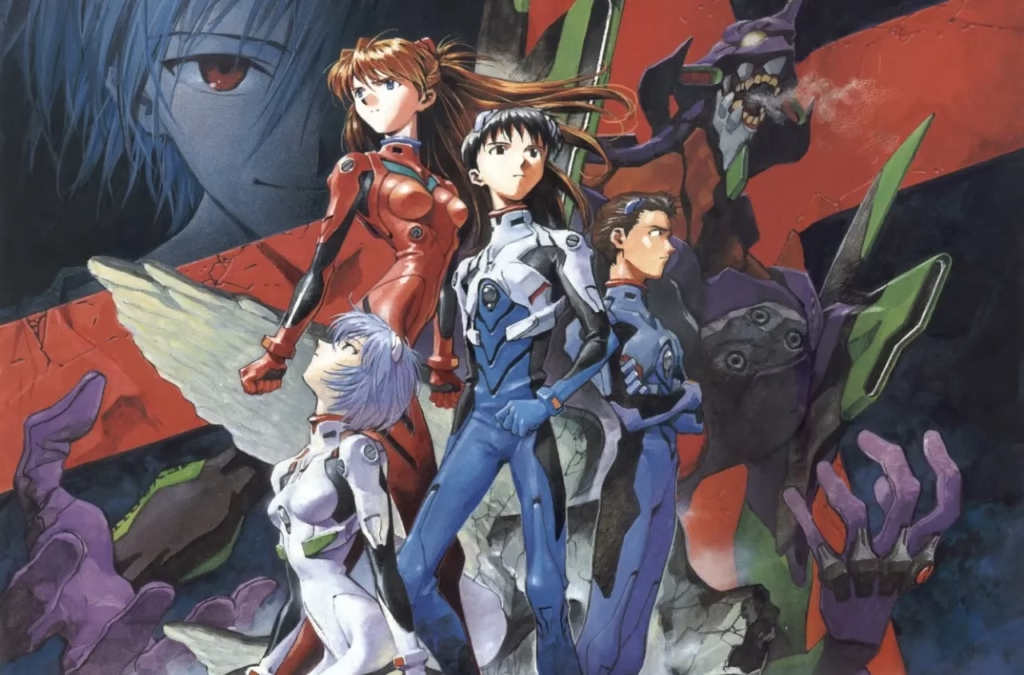
As the battles intensify, the series shifts toward the emotional struggles of its characters. Shinji grapples with feelings of abandonment, self-worth, and the pressure placed upon him. Rei Ayanami, the enigmatic pilot of Unit-00, hides secrets tied to the origin of the Evangelions. Asuka Langley Soryu, the fiery prodigy of Unit-02, masks her pain with confidence and pride. Together, their conflicts create a story not just about saving the world but also about understanding identity and human connection. Evangelion explores depression, mental illness, existential dread, and the difficulty of forming honest relationships, making it one of the most layered anime stories ever told.
Cast and Characters
The characters of Evangelion are central to its emotional impact, shaped by deep psychological development and symbolic meaning. Each pilot represents different vulnerabilities and coping mechanisms, creating a cast that viewers continue to analyze and relate to decades later.
Main Characters
-
Shinji Ikari – A fragile, introspective teenager who becomes the pilot of Unit-01. His struggle with loneliness, fear, and self-worth forms the heart of the series.
-
Rei Ayanami – The mysterious and quiet pilot of Unit-00, whose identity is tied to Nerv’s darkest secrets and the fate of humanity.
-
Asuka Langley Soryu – The confident but deeply wounded pilot of Unit-02, who hides childhood trauma behind pride, competitiveness, and emotional distance.
-
Misato Katsuragi – The operations director of Nerv, balancing professionalism with her chaotic personal life as she protects the pilots and battles her own past.
-
Gendo Ikari – Shinji’s estranged father and commander of Nerv, whose cold ambition hides grief, guilt, and a controversial plan for human evolution.
-
Additional characters such as Ritsuko Akagi, Toji Suzuhara, Kaworu Nagisa, and the Nerv staff each expand the world and contribute to the complex emotional themes.
Production and Development
The creation of Neon Genesis Evangelion began during a difficult period for director Hideaki Anno, who struggled with depression following earlier projects. This emotional state heavily influenced the series, shaping its introspective tone, psychological depth, and symbolic storytelling. Anno aimed to challenge traditional mecha conventions by focusing on the human experience rather than heroic action, resulting in one of the most personal and expressive anime productions ever made.
Produced by Gainax and Tatsunoko Production, Evangelion faced severe production challenges, including tight schedules, budget limitations, and last-minute rewrites. These issues shaped the final episodes, which abandoned traditional narrative structure in favor of experimental, symbolic, and psychological storytelling. Though controversial at the time, these episodes are now considered among the most daring moments in anime history. The success of the franchise eventually led to alternative endings, Rebuild films, and a wide range of adaptations that continued to expand the world of Evangelion.
Themes
Evangelion stands out for its ambitious exploration of psychological, philosophical, and religious themes. The series examines human loneliness, the struggle for identity, and the fear of rejection, presenting characters whose emotional conflicts are as intense as their battles. Hideaki Anno uses the Evangelions as metaphors for human connection, depicting the difficulty of letting others in while protecting oneself from pain.
The story incorporates references to psychoanalysis, including Freudian and Jungian concepts, and blends them with Judeo-Christian symbolism such as the Tree of Life, Angels, and the concept of Instrumentality. These symbols are not meant as literal religious commentary but rather as visual metaphors that reinforce the emotional and philosophical core. The combination of futuristic technology, trauma, metaphysics, and human fragility makes Evangelion uniquely complex and endlessly analyzable.
Why You Should Watch Neon Genesis Evangelion
Anyone interested in anime history, psychological storytelling, or complex character-driven narratives will find Evangelion essential viewing. It revolutionized the mecha genre by shifting focus from heroic action to emotional realism and internal conflict. The battles are spectacular, but the show’s most memorable power comes from its honesty about fear, pain, and the desire for acceptance.
Viewers also appreciate Evangelion’s ability to challenge expectations. It isn’t a simple action series—it pushes audiences to think, question, and interpret its multilayered symbolism. Its influence on modern anime is enormous, inspiring countless creators and shaping series for decades. Even today, new audiences discover Evangelion and find themes that feel timeless, relatable, and deeply human.
Is Neon Genesis Evangelion Worth Watching
Absolutely. Neon Genesis Evangelion is widely regarded as one of the most important anime ever made. Its storytelling, visuals, ideas, and emotional impact continue to resonate across multiple generations. Whether you are an anime veteran or a newcomer, Evangelion offers a unique experience that challenges traditional narrative boundaries and leaves a lasting impression.
The series is also worth watching because of its multiple versions and interpretations. The TV ending, the film ending, and the Rebuild movies all present different perspectives on the same story. This makes Evangelion not just a single show to watch, but a complete journey through alternate possibilities and emotional conclusions. Each version helps deepen the experience and understanding of the world and its characters.
Reception and Critical Response
From its original broadcast in 1995, Neon Genesis Evangelion received overwhelming praise for its bold direction, character depth, and thematic sophistication. Critics admired its psychological complexity, visual symbolism, and willingness to break the boundaries of anime storytelling. While its final two TV episodes sparked intense debate, they also helped cement the series as a groundbreaking artistic work.
Over time, Evangelion’s reputation has only grown. Reviewers consistently rank it among the greatest anime of all time, while academics analyze its themes in psychology, religion, and media studies. The franchise has won numerous awards, inspired countless creators, and generated one of the most dedicated fan communities in anime history. Its films and Rebuild series also achieved significant commercial and critical success, further solidifying its legacy.
Watch Order
Below is the complete watch order, including the TV series, films, alternate cuts, and Revival edition.
1. Neon Genesis Evangelion TV Series (1995–1996)
-
Episodes 1–26
-
The original anime series and the foundation of the entire franchise.
2. Neon Genesis Evangelion Death and Rebirth (1997)
-
“Death” is a recap with new scenes.
-
“Rebirth” is the first half of an alternate ending.
3. The End of Evangelion (1997)
-
The full, alternate cinematic ending to the series.
-
Replaces the “Rebirth” portion.
4. Revival of Evangelion (1998)
-
A remastered rerelease combining:
-
Death(true)²
-
The End of Evangelion
-
(This is the definitive version of the original ending experience.)
5. Rebuild of Evangelion Movies (Alternate Retelling)
-
Evangelion 1.0 You Are Not Alone
-
Evangelion 2.0 You Can Not Advance
-
Evangelion 3.0 You Can Not Redo
-
Evangelion 3.0+1.0 Thrice Upon a Time
These films reimagine the story with new plotlines, visuals, and an entirely different conclusion.
Neon Genesis Evangelion FAQ
Is Neon Genesis Evangelion confusing?
The story contains symbolism, psychological concepts, and surreal sequences, so some viewers may find it complex. This is intentional and part of its artistic identity.
Do I need to watch the movies after the series?
Yes. The original TV ending differs from the cinematic ending in The End of Evangelion, which many consider essential.
Should I watch the Rebuild films?
If you enjoy the original story, the Rebuild films offer an exciting alternate version with modern animation and new interpretations.
Is Evangelion suitable for beginners?
Yes, although its themes are mature and emotionally heavy. Many newcomers start with Evangelion because of its reputation and depth.
Why are there multiple endings?
Production challenges, creative decisions, and fan reactions led to alternate endings and expanded versions of the story.
Conclusion
Neon Genesis Evangelion remains one of the most influential and emotionally rich anime ever created. It delivers powerful storytelling through its unique blend of mecha action, introspective character development, symbolism, and philosophical exploration. Few series have had such a deep cultural impact, and even fewer continue to resonate so strongly decades after their release. Evangelion invites viewers to examine their own fears and vulnerabilities while following an unforgettable cast through a world on the brink of collapse.
The franchise’s multiple endings and reinterpretations only add to its legacy, allowing fans to experience the story from different angles and discover new meaning each time. Whether you follow the original series, explore the cinematic endings, or dive into the Rebuild films, Evangelion offers a journey unlike anything else in anime. It is a masterpiece worth watching, rewatching, and discussing for years to come.
If you don’t know where to watch this Anime for FREE make sure to contact me via E-mail, or in the comments below. Thank you for reading and make sure to bookmark the site.
How useful was this post?
Click on a star to rate it!
Average rating 0 / 5. Vote count: 0
No votes so far! Be the first to rate this post.