
 8.3/10
 93% Critics / 94% Audience
Few animated films have had as profound and lasting an impact as Princess Mononoke (1997), the historical fantasy masterpiece directed and written by Hayao Miyazaki and produced by Studio Ghibli. Set during the Muromachi period of Japanese history, the film blends folklore, history, and fantasy into a sweeping epic about the clash between humanity and nature. With breathtaking animation, unforgettable characters, and themes that remain relevant today, Princess Mononoke is often cited as one of the greatest works of animated cinema.
Released on July 12, 1997, the film was a box office phenomenon in Japan, becoming the highest-grossing film in the country at the time. Internationally distributed by Miramax and translated by Neil Gaiman, it introduced many Western audiences to the more mature, dramatic side of anime. Its influence has reached far beyond animation, inspiring films like Avatar (2009) and video games such as The Legend of Zelda: Breath of the Wild.
Princess Mononoke – Official Trailer
What is Princess Mononoke About?
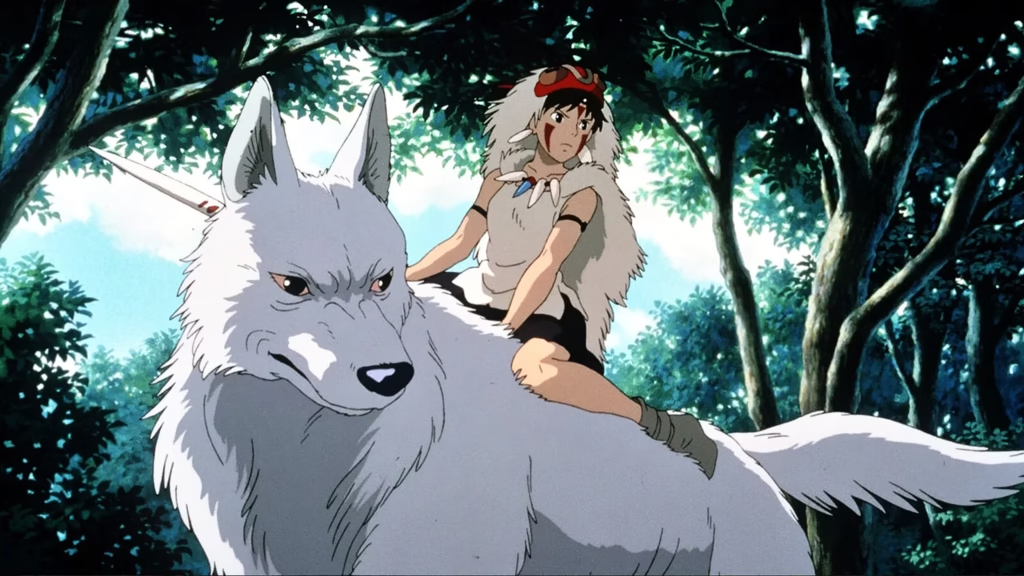
The story follows Ashitaka, the last prince of the Emishi people, who is cursed after slaying a demon-corrupted boar. Seeking a cure, he travels west and discovers the root of the corruption: the growing conflict between the industrial settlement of Irontown, led by Lady Eboshi, and the gods and spirits of the forest. Along the way, he encounters San, a fierce young woman raised by wolves, known as Princess Mononoke.
Caught between two worlds, Ashitaka becomes a mediator in a war where neither side is entirely good or evil. The humans strive for survival and progress, while the gods and animals fight desperately to protect their land. The film explores whether coexistence between nature and humanity is possible or doomed to fail.
Is Princess Mononoke Worth Watching?
Absolutely. Princess Mononoke is not just a movie—it’s an experience. It stands apart from traditional Western animation by treating its audience with maturity, offering a story filled with moral complexity, tragedy, and hope. The visuals are breathtaking, the score by Joe Hisaishi is unforgettable, and the narrative lingers long after the credits roll.
It’s worth watching for its timeless themes of environmentalism, war, and coexistence, as well as for its cultural importance as a milestone in anime history.
Why Should I Watch Princess Mononoke?
You should watch Princess Mononoke if you want:
-
A mature animated film that tackles serious issues like industrialization, environmental destruction, and societal diversity.
-
A feminist portrayal of characters, where figures like Lady Eboshi and San challenge traditional gender roles.
-
A visually stunning adventure, blending hand-drawn and early digital animation with lush natural landscapes and epic battle sequences.
-
A philosophical story that doesn’t offer easy answers, but instead invites you to reflect on humanity’s relationship with nature.
This isn’t a typical good vs. evil tale—it’s a morally layered story that leaves you questioning what it means to live in balance with the world.
Cast and Characters
The film features both Japanese and English dubs with standout performances:
-
Ashitaka – Yōji Matsuda (Japanese) / Billy Crudup (English)
-
San (Princess Mononoke) – Yuriko Ishida / Claire Danes
-
Lady Eboshi – Yūko Tanaka / Minnie Driver
-
Jigo – Kaoru Kobayashi / Billy Bob Thornton
-
Moro – Akihiro Miwa / Gillian Anderson
-
Okkoto – Hisaya Morishige / Keith David
The English dub, adapted by Neil Gaiman, brought star power to the project while making cultural adjustments for international audiences.
Development and Production
Miyazaki began developing ideas for Princess Mononoke as early as 1980, drawing inspiration from folklore, historical texts, and even his earlier works. Production officially began in 1994, with a record-breaking budget of ¥2.35 billion, making it the most expensive animated film in Japan at the time.
The animation combined traditional hand-drawn techniques with computer-generated effects, marking a first for Studio Ghibli. Miyazaki personally redrew or touched up nearly 80,000 animation cels himself.
Themes and Style
The film explores multiple themes:
-
Environmentalism: Humanity’s industrial ambitions clashing with nature’s survival.
-
Social diversity: The inclusion of outcasts, such as lepers and former prostitutes, as valued members of Irontown.
-
Feminism: Lady Eboshi and San embody different yet powerful female leadership roles.
-
Ambiguity: The film avoids black-and-white morality, showing that both sides have justifications and flaws.
Stylistically, it reflects the jidaigeki period-drama tradition while subverting it, offering a fantasy-infused take on Japanese history.
Release and Reception
-
Japanese release: July 12, 1997, where it shattered box office records.
-
International release: Distributed by Miramax with Neil Gaiman’s English adaptation in 1999.
-
Box office: Over $212 million worldwide as of 2025, including re-releases.
-
Critical reception: 93% on Rotten Tomatoes, with praise for its visuals, mature themes, and epic storytelling.
While the U.S. release underperformed at the box office, critics hailed it as one of Miyazaki’s masterpieces. Roger Ebert gave it his highest praise, calling it Miyazaki’s best work.
Music
The score, composed by Joe Hisaishi, is one of Studio Ghibli’s most iconic. It combines Japanese pentatonic scales with Western orchestration, performed by the Tokyo City Philharmonic Orchestra. The haunting main theme, sung by Yoshikazu Mera in Japanese and Sasha Lazard in English, became a classic in its own right.
Legacy
Princess Mononoke is considered a turning point for Studio Ghibli, cementing Miyazaki’s reputation as a filmmaker of international significance. It has influenced countless works, from James Cameron’s Avatar to modern video games, and continues to be studied for its themes of environmentalism and cultural diversity.
Stage adaptations, anniversary re-releases, and ongoing academic interest have ensured its place as a cultural touchstone more than two decades later.
Princess Mononoke FAQ
Is Princess Mononoke suitable for children?
Not entirely. While it is animated, the film contains violence, blood, and mature themes, making it more appropriate for teens and adults.
What does Mononoke mean?
“Mononoke” refers to vengeful spirits or supernatural beings in Japanese folklore, reflecting San’s role as the human aligned with the wolf gods.
Is the English dub faithful to the original?
The Neil Gaiman-scripted dub is well-regarded, though some cultural references were altered or removed to make it more accessible to Western audiences.
Why is the ending ambiguous?
Miyazaki intentionally avoided a happy or tragic conclusion. Instead, the film suggests coexistence is possible, but difficult, leaving the future uncertain.
How does it compare to other Studio Ghibli films?
It is darker, more violent, and more complex than titles like My Neighbor Totoro or Kiki’s Delivery Service, but shares Ghibli’s signature artistry and depth.
Conclusion
Princess Mononoke is more than just an animated film—it’s an epic exploration of humanity’s place in the natural world. Its layered characters, moral ambiguity, and breathtaking visuals make it one of the most important films in Studio Ghibli’s history and a landmark in global animation.
Even decades after its release, it remains as relevant as ever, urging audiences to reflect on the balance between progress and preservation, humanity and nature. Whether you’re a longtime anime fan or discovering Studio Ghibli for the first time, Princess Mononoke is essential viewing.
If you don’t know where to watch this Anime for FREE make sure to contact me via E-mail, or in the comments below. Thank you for reading and make sure to bookmark the site.
How useful was this post?
Click on a star to rate it!
Average rating 0 / 5. Vote count: 0
No votes so far! Be the first to rate this post.