
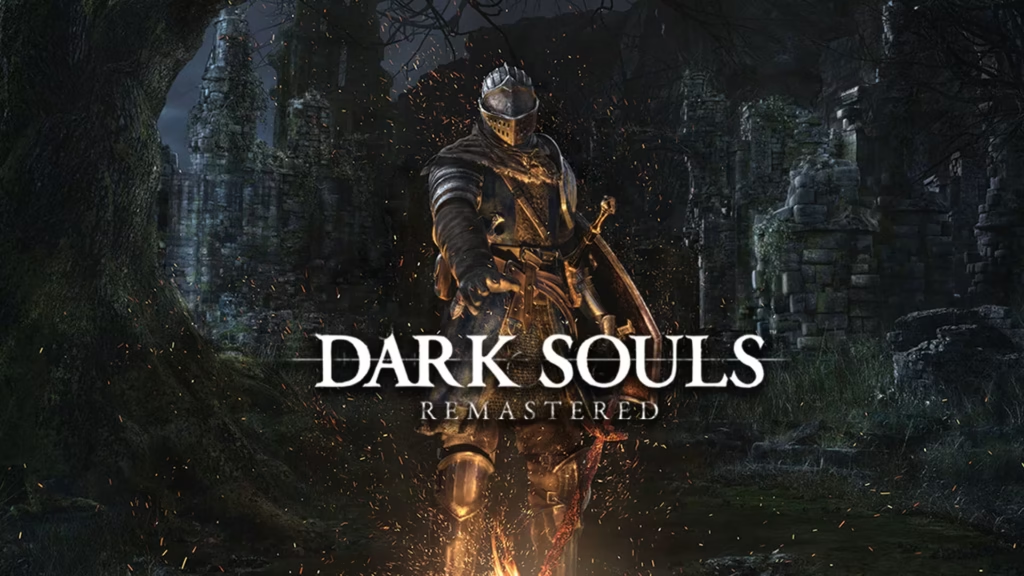
 8.8/10
Released in 2011, Dark Souls quickly cemented itself as one of the most iconic action role-playing games ever created. Developed by FromSoftware and directed by Hidetaka Miyazaki, the title followed in the footsteps of Demon’s Souls but expanded its vision into a more intricate, interconnected world. Set in the doomed kingdom of Lordran, players step into the role of an undead adventurer cursed to wander, fight, and ultimately choose the fate of an entire age. Its grim atmosphere, ruthless difficulty, and hidden lore have earned it legendary status, making it not just a game but a cultural phenomenon that continues to inspire developers and challenge gamers worldwide.
The game’s reception was extraordinary: while critics often debated whether the difficulty was too punishing, they universally praised the clever level design, the haunting narrative, and the sense of accomplishment it delivered. Its success spawned sequels, remasters, and the creation of an entirely new sub-genre — the “Soulslike.” Few games have left as permanent a mark on gaming history as Dark Souls.
Dark Souls Remastered – Official Trailer
Dark Souls – Gameplay Trailer
What is Dark Souls About?
At its core, Dark Souls is a tale of cycles: the rise and fall of fire, gods, and humanity. The player, known as the Chosen Undead, escapes imprisonment and ventures into Lordran to unravel the mystery of the Darksign — a curse that causes the dead to endlessly resurrect until they lose their sanity. Along the way, players confront fallen gods, corrupted knights, and beings warped by chaos. The central narrative culminates in the player’s decision to either prolong the Age of Fire by linking the First Flame or embrace the Age of Dark and humanity’s rise.
Unlike many RPGs, the story is not spoon-fed. Instead, it emerges through fragmented dialogue, item descriptions, and environmental clues. This minimalist storytelling is one of the game’s defining traits, allowing players to interpret and theorize about the deeper lore of Lordran.
Gameplay and Mechanics
Dark Souls is renowned for its unique mix of exploration, combat, and high stakes. Every corner of its interconnected world invites discovery — or death.
-
Bonfires act as checkpoints, healing players and restoring resources, but also respawning most enemies.
-
Combat demands precision: melee weapons, bows, shields, rolls, parries, and spells must all be mastered.
-
Death is a mechanic, not just a punishment. Souls, both currency and experience, are lost on death and can only be reclaimed if the player reaches their corpse. Fail twice, and they’re gone forever.
-
Humanity system lets players switch between human and undead form, opening the door to online co-op or PvP invasions.
Every encounter, whether with a simple hollow soldier or a towering boss, is designed to teach patience, adaptation, and perseverance.
Multiplayer and Online Features
The game’s online system was revolutionary in its subtlety. Players could summon allies for help, be invaded by hostile phantoms, or leave cryptic messages through orange soapstones. This sense of shared struggle — often without direct communication — created a community-driven experience that elevated the game’s difficulty into something communal and enduring. Even when servers were temporarily shut down, the fanbase kept the spirit alive through forums, mods, and shared lore discussions.
Expansion: Artorias of the Abyss
The Prepare to Die Edition introduced Artorias of the Abyss, an expansion that became legendary in its own right. Players are pulled into the ancient past to face Manus, the Father of the Abyss, and encounter the tragic Knight Artorias, who had fallen to darkness. This DLC not only enriched the lore but also delivered some of the game’s most challenging and memorable encounters, cementing its place as essential content for fans.
Development and Inspirations
Under Miyazaki’s direction, Dark Souls drew heavily from dark fantasy, mythology, and even the Berserk manga series. Real-world locations like France’s Château de Chambord and Italy’s Milan Cathedral influenced the majestic architecture of Anor Londo. The game’s philosophical underpinnings — existentialism, cyclical history, and humanity’s search for meaning in a dying world — gave it a thematic weight rarely seen in gaming.
Reception and Legacy
Upon release, Dark Souls was both praised and feared. Many critics lauded it as a masterpiece of design, while others called it punishing or inaccessible. Yet, for players willing to endure, it offered unmatched satisfaction. Its sales surpassed two million by 2013, and its reputation only grew with the release of sequels and the 2018 Dark Souls Remastered.
-
Widely considered one of the greatest games of all time.
-
Named Ultimate Game of All Time at the 2021 Golden Joystick Awards.
-
Inspired the entire Soulslike genre, influencing titles such as Nioh, The Surge, Hollow Knight, and even God of War.
Dark Souls isn’t just a video game — it’s a rite of passage. Its legacy lives on in every challenging boss fight, every hidden shortcut, and every player who proudly proclaims: You Died… and yet you kept going.
Is Dark Souls Worth Playing?
Yes — absolutely. Even over a decade after its release, Dark Souls offers a unique experience that few games can match. Its difficulty is harsh but fair, rewarding persistence and careful thought rather than brute force. For those willing to push through its challenges, the payoff is immense — unforgettable battles, a mysterious and beautifully tragic world, and a sense of accomplishment that lingers long after the credits roll.
Why Should You Play Dark Souls?
-
Timeless Challenge: Every death teaches you something new.
-
Unforgettable Atmosphere: Gothic castles, poisonous swamps, and haunting ruins create one of the most immersive worlds in gaming.
-
Player Freedom: Multiple builds, paths, and endings let you shape your journey.
-
Cultural Impact: Playing Dark Souls is stepping into gaming history.
This is not a game that hands you victory — it makes you earn it, and in doing so, it makes that victory sweeter than almost any other title.
Dark Souls FAQ
Q: Is Dark Souls too hard for beginners?
A: It is difficult, but not impossible. Patience, practice, and learning from mistakes are key. Many players who feared the difficulty later call it one of the most rewarding gaming experiences ever.
Q: Should I play the original or start with Dark Souls Remastered?
A: The Remastered edition is the best option today — smoother performance, better visuals, and more stable online features make it the definitive version.
Q: Do I need to play Demon’s Souls first?
A: No. Dark Souls is a spiritual successor, not a direct sequel. While fans of Demon’s Souls will notice similarities, newcomers can jump straight in.
Q: How long does it take to finish Dark Souls?
A: A first playthrough can range from 40–80 hours depending on your exploration and struggles. Completionists may spend well over 100 hours uncovering everything.
Q: Is co-op available?
A: Yes. You can summon friends or strangers for help during boss fights, though invasions from hostile players are also part of the challenge.
Conclusion
Dark Souls is more than a game — it’s an endurance test, a work of art, and a cultural milestone all at once. Its brutal but fair gameplay, haunting atmosphere, and deep lore have set a standard that countless games have since tried to match. Whether you’re a veteran adventurer or a newcomer curious about the legend, Lordran still waits, ready to test your courage.
If you’ve never played it, now is the perfect time to step through the fog gate and discover why Dark Souls is remembered as one of the greatest video games of all time.
Thank you for reading and make sure to bookmark the site, comment and follow up on the newest posts!
How useful was this post?
Click on a star to rate it!
Average rating 0 / 5. Vote count: 0
No votes so far! Be the first to rate this post.