
 7.8/10
 65% Critics / 83% Audience
Released in December 2003, The Last Samurai is an American epic period action drama directed and co-produced by Edward Zwick, with a screenplay by John Logan, Marshall Herskovitz, and Zwick himself. The film stars Tom Cruise in the lead role alongside an exceptional ensemble cast including Ken Watanabe, Timothy Spall, Billy Connolly, Tony Goldwyn, Hiroyuki Sanada, and Koyuki Kato.
The film is set during the Meiji Restoration of the late 19th century, a transformative period when Japan shifted from centuries of feudal rule to a modernized nation influenced heavily by Western powers. Drawing inspiration from real historical events such as the Satsuma Rebellion of 1877 and characters like Saigō Takamori, the story blends fact with fiction to explore cultural clashes, loyalty, and the meaning of honor.
With breathtaking cinematography, a stirring score by Hans Zimmer, and strong performances (particularly Ken Watanabe, who earned an Academy Award nomination), The Last Samurai became both a box office success and a cultural milestone. It grossed more than $456 million worldwide, ranking among the top films of 2003.
The Last Samurai – Official Trailer
What is The Last Samurai About?
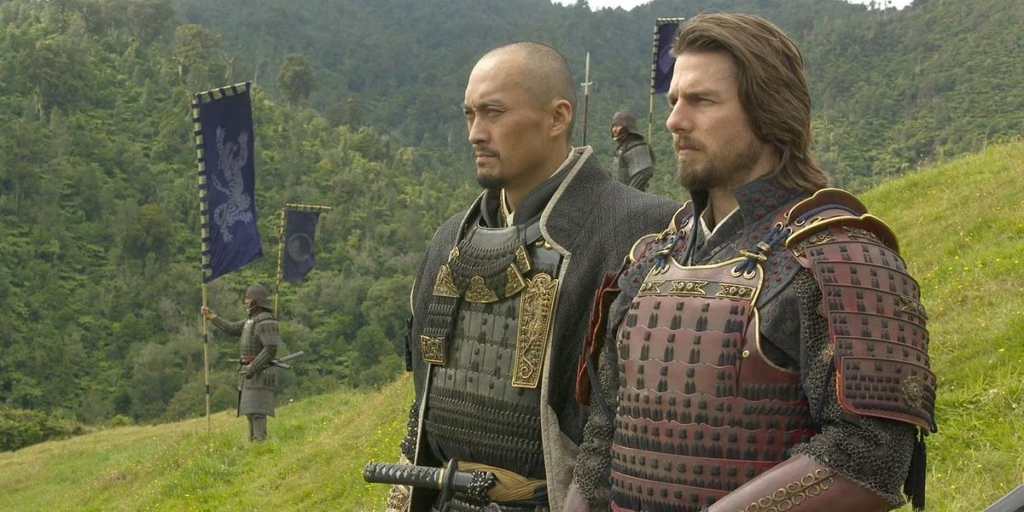
At its core, The Last Samurai explores the collision of tradition and modernization. The story follows Nathan Algren, a disillusioned American war veteran who is hired to train Japan’s fledgling Imperial Army. His encounter with the samurai, led by the noble Lord Katsumoto, forces him to confront not only Japan’s cultural transformation but also his own inner struggles.
The film examines questions of identity, morality, and loyalty while dramatizing the broader theme of how societies balance modern progress with preserving cultural heritage.
Is The Last Samurai Worth Watching?
Yes — The Last Samurai remains a must-watch for anyone who loves sweeping historical epics with emotional depth.
-
Cinematic Grandeur: The film’s visuals, from sweeping battle sequences to quiet moments in the Japanese countryside, remain strikingly beautiful.
-
Powerful Performances: Tom Cruise delivers one of his most nuanced roles, while Ken Watanabe’s portrayal of Katsumoto is widely considered a career-defining performance.
-
Musical Score: Hans Zimmer’s soundtrack, rich with Japanese influences and orchestral power, elevates the film’s emotional resonance.
-
Cultural Themes: The movie invites audiences to reflect on cultural preservation, the cost of modernization, and the universality of honor.
Why Should You Watch The Last Samurai?
Unlike many Hollywood productions of its era, The Last Samurai approaches Japanese history with a remarkable level of respect and authenticity.
-
It blends action and philosophy, offering more than just sword fights and battles.
-
It highlights the emotional journey of characters navigating cultural identity in a time of upheaval.
-
Its exploration of honor, duty, and redemption ensures that the story feels timeless, appealing to audiences beyond its historical setting.
The film remains not just an action epic, but a meditation on change and loss, making it one of the standout historical dramas of the 2000s.
Cast and Characters
The strength of The Last Samurai lies in its ensemble cast, each bringing complexity to their roles.
-
Tom Cruise as Nathan Algren – A haunted American soldier who finds unexpected purpose in Japan.
-
Ken Watanabe as Lord Moritsugu Katsumoto – The wise samurai leader inspired by Saigō Takamori; his performance earned critical acclaim and an Academy Award nomination.
-
Koyuki Kato as Taka – Katsumoto’s sister, whose quiet strength and compassion add emotional depth.
-
Timothy Spall as Simon Graham – A British interpreter and scholar who observes and records the events with keen insight.
-
Tony Goldwyn as Colonel Bagley – Algren’s ruthless former commander, representing Western arrogance and greed.
-
Hiroyuki Sanada as Ujio – A master swordsman and loyal retainer of Katsumoto, embodying discipline and honor.
-
Billy Connolly as Sergeant Zebulon Gant – Algren’s friend and fellow soldier, whose fate ties him deeply to the central conflict.
The supporting cast also includes notable Japanese actors such as Masato Harada, Shin Koyamada, and Shichinosuke Nakamura, each enriching the story’s authenticity.
Episodes / Release Order
As a film rather than a series, The Last Samurai was released worldwide on December 5, 2003 after a Tokyo premiere on November 20, 2003.
-
It became the sixth-highest-grossing film of 2003.
-
It performed exceptionally well in Japan, where it became one of the most successful international films of all time, grossing over ¥13.7 billion ($132 million).
Production and Development
The film’s production journey began in the early 1990s when the idea was first developed at Interscope Communications. After years of script refinement, director Edward Zwick (known for Glory and Legends of the Fall) took charge of the project.
Filming was conducted across New Zealand (chosen for its resemblance to Japan’s Mount Fuji landscapes), Kyoto, Himeji, and studio sets in California. The lush forests and farmland of New Zealand’s Taranaki region became the backdrop for many of the film’s most iconic scenes.
Tom Cruise famously performed many of his own stunts, while the battle sequences were overseen by veteran cinematographer John Toll and second-unit director Gary Capo, ensuring both scale and authenticity.
The film was loosely inspired by the experiences of real foreign military advisors such as Jules Brunet and Eugène Collache, who aided Japanese factions during the Boshin War.
Reception and Critical Response
Critical reaction to The Last Samurai was generally positive, with particular praise for its production values and performances.
-
Rotten Tomatoes: 66% approval rating.
-
Metacritic: 55/100, reflecting mixed reviews.
-
CinemaScore: Audiences graded it “A,” showing strong popular appeal.
Roger Ebert awarded the film 3.5 out of 4 stars, calling it “beautifully designed, intelligently written, acted with conviction, and an uncommonly thoughtful epic.”
In Japan, reception was especially strong. Many praised the authenticity of the casting and language use, though some noted the film leaned toward an idealized depiction of samurai life.
Box Office
Financially, The Last Samurai was a major success.
-
Worldwide gross: $456.8 million.
-
Budget: $140 million.
-
U.S. & Canada: $111 million.
-
International: $345 million, including an extraordinary $132 million in Japan alone.
Its Japanese box office success made it one of the most important cultural crossovers of the early 2000s.
Legacy and Impact
Beyond box office and awards, The Last Samurai sparked significant discussion. Some critics labeled it part of the “white savior” trope, while others, including Ken Watanabe, later argued that it was a turning point for Asian representation in Hollywood.
The film also inspired renewed Western interest in Japanese history and culture. Its themes of modernization, loyalty, and cultural survival continue to resonate, and Hans Zimmer’s score is considered one of his most memorable works.
Over time, The Last Samurai has earned a place as a modern historical epic — a film that blends spectacle with reflection, leaving a lasting mark on global cinema.
The Last Samurai FAQ
Is The Last Samurai based on a true story?
The film is fictional but inspired by real events, particularly the Satsuma Rebellion and figures like Saigō Takamori.
Did Tom Cruise do his own stunts?
Yes, Cruise performed many of his own stunts, adding realism to the action sequences.
Why was the film controversial?
Some critics argued it reinforced a “white savior” narrative. Others, however, praised it for improving Asian representation in Hollywood compared to earlier films.
Where was it filmed?
Primarily in New Zealand (Mount Taranaki standing in for Mount Fuji), with additional filming in Japan and California.
Did it win any awards?
The film was nominated for four Academy Awards and multiple Golden Globes. It won several technical awards, particularly for cinematography and Hans Zimmer’s score.
Conclusion
The Last Samurai (2003) is both a sweeping historical epic and a thoughtful character drama. By intertwining Japan’s moment of cultural transformation with the personal redemption of its protagonist, the film tells a story that transcends national boundaries.
It remains celebrated for its visual beauty, moving score, and strong performances, especially Ken Watanabe’s dignified portrayal of Katsumoto. Despite debates over its narrative framing, the movie has endured as one of the defining period dramas of the 21st century — a story about the price of change, the preservation of tradition, and the universal search for honor.
If you don’t know where to watch this Movie for FREE make sure to contact me via E-mail, or in the comments below. Thank you for reading and make sure to bookmark the site.
How useful was this post?
Click on a star to rate it!
Average rating 0 / 5. Vote count: 0
No votes so far! Be the first to rate this post.