
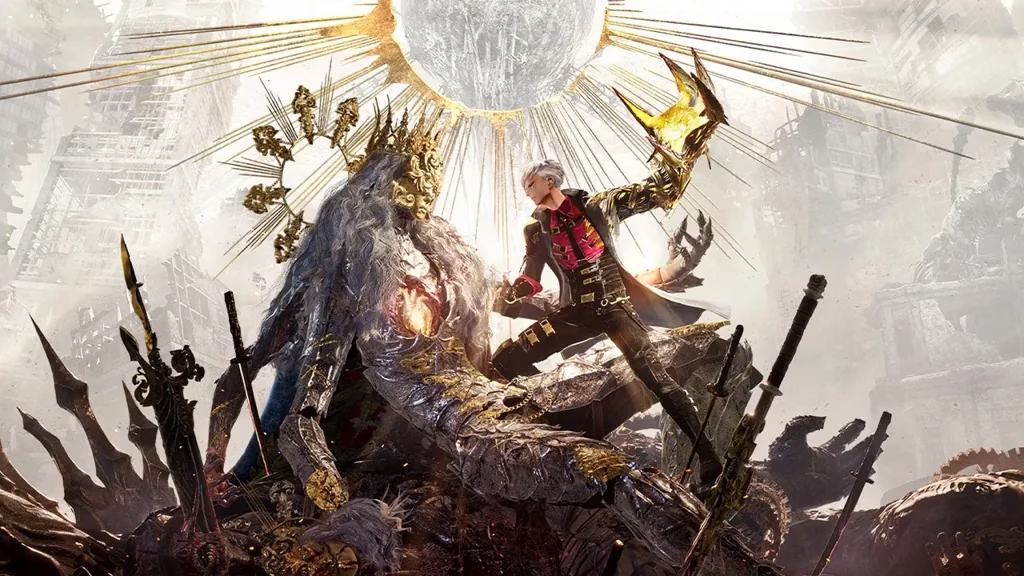
Released on January 29, 2026, Code Vein II is the sequel to the 2019 cult-favorite Code Vein, developed and published by Bandai Namco Entertainment. This follow-up shifts the formula in bold ways while retaining the signature anime-inspired Soulslike combat that defined the original.
Set in a new world with a fresh cast of characters, the game introduces players to the Revenant Hunter, who battles grotesque creatures known as Horrors — corrupted beings tied to a mysterious force called Luna Rapacis. Alongside him is Lou, a girl with the power to manipulate time itself. With expanded exploration, deeper customization, and a more open world design, the sequel attempts to push beyond its predecessor’s limits.
But does it succeed?
Code Vein II – Official Launch Trailer
What Is Code Vein II About?
Unlike the first game, Code Vein II takes place in an entirely new setting, separate from the original narrative. Players assume the role of the Revenant Hunter, a warrior fighting to contain the spread of Horrors threatening the fragile balance of this world.
The story revolves around time manipulation, with Lou’s abilities allowing players to revisit key moments in the past. These segments are not just narrative devices; they directly influence how certain events unfold in the present. This mechanic adds strategic weight to choices without turning the experience into a full branching narrative game.
The tone remains dark and melancholic, mixing apocalyptic themes with emotional character arcs. The world-building leans heavily into mystery, gradually revealing lore through exploration and dialogue rather than direct exposition. Importantly, the game avoids over-explaining its twists, allowing players to piece together the narrative through observation and environmental storytelling.
Gameplay & Combat Mechanics
Code Vein II remains a third-person action RPG with strong Soulslike foundations. Combat is deliberate and punishing, requiring stamina management, positioning, and careful timing. However, the sequel refines several core mechanics.
One of the most notable additions is Lou’s time manipulation ability. Players can revisit certain past states of the world to unlock alternate routes, modify encounters, or gain access to previously inaccessible areas. This mechanic blends exploration with narrative progression in a way that feels integrated rather than gimmicky.
Companions also return, but with a new twist. AI-controlled allies can assist in battle as before, but players now have the option to assimilate them. Doing so removes them from the field and grants stat boosts or unique abilities. This creates an interesting risk-reward dynamic: do you keep an ally for survivability, or sacrifice their presence for power?
The world itself is more open than the original game. Players can traverse certain regions using a motorcycle, giving exploration a greater sense of scale. Areas are interconnected, with multiple paths and hidden secrets encouraging replayability.
Boss encounters are more cinematic and mechanically layered than before. Some fights demand aggressive timing, while others emphasize endurance and environmental awareness. Difficulty remains high, but the learning curve feels more refined compared to the first game.
Customization & Progression
Customization has been significantly expanded. Players can alter appearance, weapons, and abilities with greater flexibility. Builds feel more specialized, allowing for distinct playstyles — whether focusing on heavy melee damage, agility-based combat, or ability-driven strategies.
Progression systems encourage experimentation. Rather than locking players into rigid class archetypes, the game supports fluid adaptation depending on the challenges ahead. This flexibility is especially useful during late-game encounters where certain builds shine more than others.
The anime aesthetic remains intact, with stylized character designs and dramatic visual effects. However, animations and environmental detail show clear improvement over the original game.
Critical Reception & Scores
Upon release, Code Vein II received mixed-to-positive reviews.
-
Metacritic (PS5): 72/100
-
OpenCritic: 51% recommend
Review scores varied widely. Some outlets praised the expanded world design and improved combat depth, while others criticized pacing issues and uneven difficulty spikes. Certain reviewers noted that while the game introduces bold ideas, not all of them are executed flawlessly.
However, many players appreciated its ambition. Compared to the original, the sequel feels more confident in its identity, even if it occasionally struggles to balance complexity and accessibility.
Is Code Vein II Worth Playing?
If you enjoyed the original Code Vein, the sequel offers a deeper and more experimental experience. The time manipulation mechanic adds strategic depth, and the larger world design makes exploration more engaging.
For newcomers, the difficulty curve and layered mechanics may feel overwhelming at first. However, the improved tutorials and build flexibility make it more approachable than many traditional Soulslike titles.
It may not redefine the genre, but it expands its own identity. Fans of anime aesthetics, challenging boss fights, and dark fantasy worlds will likely find a lot to appreciate here.
FAQ
Is Code Vein II connected to the first game?
No. It takes place in a new world with a new cast of characters, though it retains similar themes and gameplay foundations.
Can you play Code Vein II solo?
Yes. AI companions assist you, but you can also choose to assimilate them for stat bonuses.
What platforms is Code Vein II available on?
PlayStation 5, Windows (PC), and Xbox Series X/S.
Is Code Vein II open world?
It features a more open and interconnected world than the first game, including motorcycle traversal.
Conclusion
Code Vein II builds upon its predecessor with greater ambition and mechanical experimentation. While not universally praised, it demonstrates Bandai Namco’s willingness to evolve the anime Soulslike formula rather than simply repeat it.
With refined combat, expanded exploration, and a bold time-manipulation system at its core, the sequel delivers a darker, larger, and more complex experience. It may divide critics, but for the right audience, it offers exactly what a sequel should: risk, growth, and identity.
Thank you for reading and make sure to bookmark the site, comment and follow up on the newest posts!
How useful was this post?
Click on a star to rate it!
Average rating 0 / 5. Vote count: 0
No votes so far! Be the first to rate this post.