
 8.1/10
 73% Critics / 90% Audience
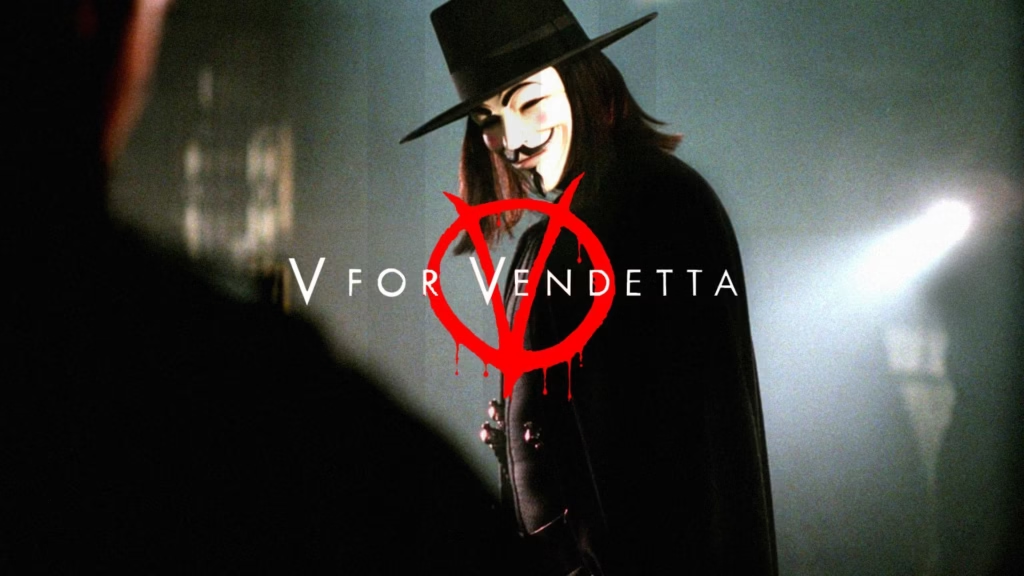
V for Vendetta is a 2005 dystopian political thriller directed by James McTeigue in his debut feature, with a screenplay written by Lana and Lilly Wachowski. Based on the 1988–1989 DC Vertigo Comics graphic novel by Alan Moore and David Lloyd, the film reimagines a future Britain ruled by a fascist regime — one where freedom, truth, and individuality are outlawed.
Starring Hugo Weaving as the mysterious revolutionary known only as “V” and Natalie Portman as Evey Hammond, the film explores themes of anarchy, state control, propaganda, and personal awakening. Released in March 2006 by Warner Bros., V for Vendetta became both a box office success and a symbolic cultural movement, inspiring real-world protest symbolism through its now-famous Guy Fawkes mask.
V for Vendetta – Official Trailer
What Is V for Vendetta About?
In a near-future totalitarian Britain, the Norsefire Party, led by High Chancellor Adam Sutler (John Hurt), governs with fear, censorship, and violence. Under constant surveillance, citizens live subdued lives — until a masked vigilante known as V launches a campaign to awaken the people.
Rescuing a young woman named Evey Hammond from the secret police, V draws her into his world of rebellion and symbolism. He wages war on the corrupt establishment through targeted assassinations and acts of sabotage, culminating in a plan to destroy the Houses of Parliament on Guy Fawkes Night — November 5th.
Through her time with V, Evey transforms from a frightened citizen into a believer in freedom and justice. As V’s identity remains shrouded in mystery, his message becomes clear: “Ideas are bulletproof.”
Why Should You Watch V for Vendetta?
V for Vendetta is more than a film — it’s a bold statement about the relationship between the individual and the state. It resonates because of its timeless themes and thought-provoking parallels to real-world politics.
-
Powerful Performances: Hugo Weaving delivers a commanding portrayal of V, while Natalie Portman’s transformation as Evey anchors the emotional core.
-
Social Commentary: The film explores censorship, fear politics, and media manipulation — issues still relevant today.
-
Cinematic Symbolism: From the Guy Fawkes mask to the explosive finale, every element serves a purpose.
-
Unforgettable Dialogue: Lines like “People should not be afraid of their governments. Governments should be afraid of their people.” have become modern quotes of defiance.
-
Aesthetic Brilliance: Striking visuals, shadowed cityscapes, and orchestral scores amplify its revolutionary tone.
Whether you’re drawn to its political message or its masterful storytelling, V for Vendetta remains one of the most influential dystopian films ever made.
Is V for Vendetta Worth Watching?
Absolutely. The film combines action, philosophy, and political intrigue in a way that still feels relevant nearly two decades later.
-
It’s a powerful allegory about freedom, resistance, and identity.
-
The atmosphere and storytelling rival classics like 1984 and The Matrix.
-
Its messages on courage, individuality, and rebellion transcend time and ideology.
If you enjoy stories that challenge authority and provoke thought, V for Vendetta is a must-watch masterpiece that continues to inspire discussions about liberty and government control.
Cast and Performances
-
Hugo Weaving as V – The masked anarchist inspired by Guy Fawkes. Weaving replaced James Purefoy midway through filming, redubbing all scenes.
-
Natalie Portman as Evey Hammond – A young woman caught in the revolution who evolves from victim to visionary.
-
Stephen Rea as Chief Inspector Eric Finch – A weary investigator who begins questioning the regime he serves.
-
Stephen Fry as Gordon Deitrich – A brave television host hiding forbidden material.
-
John Hurt as Adam Sutler – The authoritarian High Chancellor of Norsefire, ruling through fear.
Each actor contributes to a tapestry of fear, rebellion, and awakening, with Portman’s performance in particular earning critical acclaim and a Saturn Award for Best Actress.
Themes and Symbolism
The film is deeply rooted in historical and literary parallels:
-
Guy Fawkes and Revolution: V’s mask and actions echo the Gunpowder Plot of 1605, reimagined for modern rebellion.
-
Freedom vs. Control: It explores how fear and propaganda can justify tyranny — a reflection on both Orwell’s 1984 and real-world authoritarianism.
-
Identity and Ideology: By erasing his name and face, V becomes an idea rather than a person — an embodiment of resistance.
-
Art and Rebellion: References to The Count of Monte Cristo highlight themes of revenge and rebirth, while Valerie’s letter represents love and humanity amid oppression.
V for Vendetta ultimately argues that ideas can survive beyond death, inspiring others long after individuals are gone.
Production and Legacy
Produced by Joel Silver, the Wachowskis, and Virtual Studios, the film shares creative DNA with The Matrix. It was filmed primarily in London and Berlin, featuring elaborate sets such as The Shadow Gallery and the climactic destruction of Parliament.
Upon release, the film grossed $134.7 million worldwide and received positive critical reception for its visual power and social relevance. The Guy Fawkes mask, once confined to fiction, became a global protest symbol used by groups like Anonymous and the Occupy Movement.
Despite Alan Moore’s disapproval of the adaptation, co-creator David Lloyd praised it as a faithful translation of the comic’s spirit — a story about the struggle for freedom and the power of belief.
V for Vendetta FAQ
Is V for Vendetta based on a comic book?
Yes. It’s adapted from Alan Moore and David Lloyd’s DC Vertigo Comics graphic novel (1988–1989).
Who directed the movie?
James McTeigue directed it, with a screenplay by the Wachowskis.
What does the mask symbolize?
It represents resistance, anonymity, and the power of an idea — inspired by historical figure Guy Fawkes.
Where can I watch it?
The film is widely available on platforms like Netflix, Max, and Amazon Prime Video.
Did Alan Moore approve of the movie?
No. Moore distanced himself from the adaptation, though David Lloyd supported it.
Conclusion
V for Vendetta remains a cinematic revolution — not just for its thrilling narrative but for its enduring message that challenges the limits of power and conformity. It is both an allegory and a warning, reminding audiences that silence and fear enable tyranny, while courage and conviction can spark change.
Even today, the line “Remember, remember, the Fifth of November” continues to echo across protests, art, and political movements, proving that ideas, once unleashed, can never truly die.
If you don’t know where to watch this Movie for FREE make sure to contact me via E-mail, or in the comments below. Thank you for reading and make sure to bookmark the site.
How useful was this post?
Click on a star to rate it!
Average rating 0 / 5. Vote count: 0
No votes so far! Be the first to rate this post.