
 6.4/10
Where Winds Meet is preparing to enter its most ambitious era yet with Hidden Mountain, a major free expansion launching alongside Version 2.0. Instead of simply adding another region filled with quests and collectibles, Everstone Studio is using the update to overhaul exploration, combat, storytelling, progression, visual fidelity, and open-world interaction.
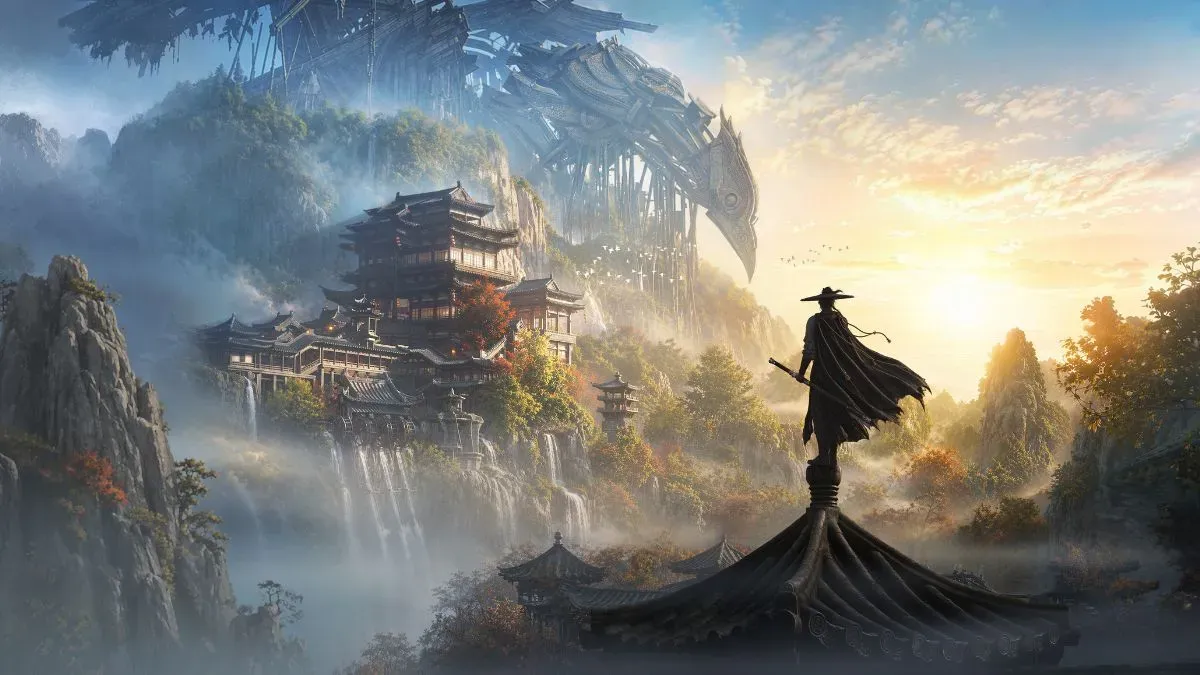
Hidden Mountain takes players to Bujian Mountain, a concealed mechanical civilization surrounded by mist-covered peaks. Traditional wuxia landscapes coexist with ancient Mohist engineering, suspended cities, underground ruins, enormous clockwork structures, mechanical transportation, environmental puzzles, and dangerous artificial enemies.
The expansion introduces four major areas, 14 subregions, more than ten bosses, eight Jianghu Legacies, dozens of side stories, a new joinable Sect, and a completely new weapon category. The region also contains over 2,000 meters of vertical exploration depth, making it considerably more layered than previous areas.
For returning players, Hidden Mountain represents much more than another content drop. It establishes a new direction for the game and appears designed to influence every major system in Where Winds Meet.
Highlights
- Launches with Version 2.0
- Introduces the Bujian Mountain region
- Four major areas and 14 subregions
- More than ten new bosses
- New Mohist Hill Sect
- New Gauntlets weapon category
- Over 2,000 meters of vertical exploration
Where Winds Meet: Hidden Mountain – Official Launch Trailer
When Does the Hidden Mountain Expansion Release?
The Where Winds Meet: Hidden Mountain expansion launches on July 23, 2026.
Everstone Studio first revealed the expansion during the Xbox Games Showcase 2026, where it received a broad July release window. The developer later confirmed the July 23 date through its official Version 2.0 developer letter.
Hidden Mountain is closely connected to Version 2.0, but the patch extends far beyond the new region. It also introduces combat-balancing changes, gear-development improvements, Arena networking updates, interface refinements, and numerous quality-of-life features.
Players should therefore expect the update to affect both the new map and their existing characters, equipment, Martial Arts, and progression systems.
Release Highlights
- Release date: July 23, 2026
- Arrives with Version 2.0
- Free regional expansion
- Includes broad system improvements
- Adds new combat and progression features
s Hidden Mountain a Free Expansion?
Hidden Mountain continues the game’s free content-update model.
Where Winds Meet is a free-to-play open-world action RPG, and its major regional expansions increase the size of the playable world without requiring players to buy a conventional premium expansion.
The new region, central story campaign, bosses, exploration mechanics, Sect content, and major gameplay features are presented as part of the evolving base game rather than a separate paid product.
Optional cosmetics and other monetized systems remain part of Where Winds Meet, but access to Hidden Mountain itself has not been described as requiring an expansion purchase.
Access Highlights
- No separate expansion purchase announced
- Continues the free-update model
- Main region and gameplay content included
- Optional monetization remains separate
What Is the Hidden Mountain Expansion?
Hidden Mountain is the next major explorable region in Where Winds Meet and the foundation of the Version 2.0 era.
The expansion takes place around Bujian Mountain, a secluded landscape shaped by Mohist philosophy, craftsmanship, machinery, and ideological conflict. Beneath its traditional wuxia scenery lies an advanced clockwork civilization filled with mechanical workshops, industrial structures, transportation devices, underground mechanisms, and enormous constructs.
Everstone Studio describes the update as an expansion of several major systems:
- World scale
- Exploration
- Combat
- Storytelling
- Visual fidelity
- Character progression
- Open-world interaction
Hidden Mountain is therefore not designed as an isolated side zone. Its weapons, progression changes, technical improvements, and new gameplay systems are intended to affect the wider game.
How Large Is the Hidden Mountain Map?
Hidden Mountain is one of the largest and most complex regions introduced to the game.
The expansion contains:
- Four major areas
- Fourteen subregions
- More than ten bosses
- Eight Jianghu Legacies
- Dozens of side stories
- More than 10,000 interactive NPCs
- Over 2,000 meters of vertical exploration depth
Unlike regions built primarily across wide horizontal landscapes, Bujian Mountain stretches upward and downward through valleys, cliffs, underwater ruins, underground caverns, mechanical cities, mountain cloudways, and structures suspended high above the landscape.
Visible landmarks may be accessible through several different routes. A path could begin beneath the surface, continue through a mechanical settlement, and eventually emerge near an elevated clockwork tower.
This emphasis on layered design should make exploration feel more deliberate and rewarding.
Map Highlights
- Large multi-layered environment
- Surface and underground routes
- Suspended cities and towers
- Underwater ruins
- Multiple paths toward landmarks
- Strong emphasis on environmental navigation
Hidden Mountain Introduces Vertical Exploration
Verticality is one of the expansion’s defining features.
Previous regions already contained rooftops, cliffs, caves, and elevated structures, but Hidden Mountain is designed as a deeply layered environment in which several locations may exist directly above or below one another.
Players may begin in a shadowed valley, descend into an ancient Mohist complex, travel through a mechanical city, and then rise toward enormous clockwork structures above the clouds.
Locations mentioned in the expansion material include:
- Underwater Mohist ruins
- Subterranean mechanical labyrinths
- Multi-level areas of Mohist City
- Mountain cloudways
- Ancient ruins
- Underground caverns
- High-altitude clockwork towers
- A mechanical city suspended among the clouds
Navigation should involve studying the landscape and understanding how different environmental levels connect rather than simply following a road toward the next marker.
The Eastern Clockwork Wuxia Art Style
Hidden Mountain combines traditional Chinese scenery with an advanced mechanical civilization.
The visual identity has occasionally been compared to Eastern steampunk, although the official presentation focuses more heavily on Mohist engineering and clockwork craftsmanship.
Stone cliffs, mist-covered forests, rivers, temples, traditional settlements, giant gears, suspended rails, mechanical towers, and elaborate transportation systems all exist within the same region.
The machinery is not merely decorative.
Waterwheels irrigate fields, mechanical devices process materials, transport systems connect settlements, and complex inventions support the daily lives of the people living in Bujian Mountain.
This approach should make the region feel like a functioning society that developed around practical engineering rather than an abandoned collection of puzzle chambers.
Visual Highlights
- Traditional wuxia landscapes
- Ancient clockwork machinery
- Suspended settlements
- Industrial workshops
- Mechanical transportation
- Dense atmospheric lighting and mist
The Meaning Behind Bujian Mountain
Bujian Mountain is shaped by the pursuit of truth, wisdom, and practical knowledge.
Where earlier regions may have drawn more heavily from poetry, military history, painting, or political conflict, Hidden Mountain focuses on thinkers and craftspeople attempting to understand the physical world.
Its inhabitants use mechanisms for:
- Transportation
- Agriculture
- Construction
- Research
- Manufacturing
- Public benefit
- Daily household activity
Three environmental elements play an important role in the region’s identity: stone, light, and wind.
Stone communicates the scale and permanence of the mountain. Light reveals or conceals distant structures through mist and changing weather. Wind affects foliage, cloud movement, machinery, and the player’s perception of height.
Together, these elements reinforce Bujian Mountain as both a physical location and a philosophical space built around observing nature and learning how to work with it.
Who Are the Mohists?
The Mohists are inspired by the teachings associated with Mozi, an influential philosopher from ancient China.
Within Where Winds Meet, Mohist Hill follows principles centered on utility, universal care, non-aggression, practical knowledge, and the belief that invention should benefit society.
Its philosophy is summarized through three central concepts:
- Utility
- Universal Love
- Non-Aggression
Mohist disciples view engineering as a way to solve problems rather than merely demonstrate superiority or accumulate power.
These ideals influence their architecture, inventions, daily routines, Sect progression, and conflict with rival mechanical factions.
The New Mohist Hill Sect
Hidden Mountain introduces Mohist Hill, a new Sect that players can join.
Unlike traditional martial-arts organizations built primarily around combat mastery, Mohist Hill places significant emphasis on engineering, research, invention, blueprints, craftsmanship, mentorship, and cooperative projects.
Players can begin as apprentices and gradually advance by contributing to the Sect’s work.
Expected activities include:
- Studying mechanisms
- Completing research
- Creating original designs
- Developing blueprints
- Submitting inventions
- Working with mentors
- Participating in cooperative projects
- Advancing toward master artisan status
Mohist Hill is also physically integrated into the region. Its disciples appear throughout workshops, research areas, settlements, and clockwork towers rather than existing only through menus or isolated quest NPCs.
This should help it feel like a genuine organization with an active culture.
Mohist Hill Highlights
- New joinable Sect
- Focus on engineering and research
- Blueprint-development systems
- Mentorship and progression
- Integrated throughout the region
- Strong choice for builders and crafters
How Mohist Hill Progression Works
Mohist Hill progression appears to differ from joining a purely combat-focused faction.
Activities associated with advancement may include:
- Research
- Original blueprint creation
- Co-authoring designs
- Submitting inventions
- Crafting
- Mentorship
- Cooperative construction
- Weekly promotion opportunities
Community information has also mentioned Research Value and blueprint-based advancement. However, the exact global rules should be verified in the live game because some early guides may rely on regional versions or pre-release material.
Players interested in Homestead content, creation systems, technical mechanics, and crafting may find Mohist Hill particularly appealing.
The Conflict With the Qiongqi Artificers
The expansion’s central ideological conflict involves Mohist Hill and the Qiongqi Artificers.
Both groups possess highly advanced mechanical knowledge, but they disagree about how that knowledge should be used.
Mohist Hill believes engineering should benefit society, improve daily life, and solve practical problems.
The Qiongqi Artificers value dominance, control, and raw mechanical power. They believe possessing superior technology gives them the right to determine the future of the region.
This transforms the story into more than a simple conflict between heroes and villains.
Hidden Mountain asks several larger questions:
- Who should control advanced knowledge?
- Should invention serve society or authority?
- Can power remain separate from responsibility?
- Does technological superiority justify political control?
The Wanderer’s actions are expected to influence the outcome of this confrontation and the future of Bujian Mountain.
Hidden Mountain’s New Story Campaign
The expansion continues the broader storyline of Where Winds Meet.
Following clues left by Aunt Han, the Wanderer travels into the mist-covered Mohist territories alongside familiar allies. Their journey leads toward a mystery hidden within the mountain for approximately one thousand years.
The campaign involves:
- A secluded mechanical Sect
- Forgotten Mohist history
- Ancient conflicts
- Skyward contraptions
- Hidden inventions
- Secrets beneath the mountain
- Rival beliefs about technology
The story is associated with the phrase Changeless Heart, although available material also connects that name to Zhang Wanshi. Players should therefore avoid assuming every use of the phrase refers exclusively to the campaign until the final global localization is available.
Who Is Changeless Heart – Zhang Wanshi?
Changeless Heart – Zhang Wanshi is one of the notable enemies connected to Hidden Mountain’s mechanical combat themes.
Despite his relaxed or careless appearance, Zhang Wanshi commands dangerous puppet formations. His Rosy-Faced Swordsworn use suspended wires and twin blades to attack players through coordinated formations.
His encounter demonstrates how combat in Hidden Mountain expands beyond conventional martial duels.
Players will increasingly face:
- Mechanical puppets
- Coordinated formations
- Environmental traps
- Clockwork enemies
- Linked attack patterns
- Mechanisms requiring observation
Success may require understanding how a formation works rather than simply overwhelming enemies with damage.
Gauntlets Are the New Weapon
Version 2.0 introduces Gauntlets, an entirely new weapon category.
Gauntlets focus on aggressive close-range combat built around:
- Rapid punches
- Fast combinations
- Heavy impact
- Close-quarters pressure
- Burst damage
- Aggressive repositioning
Compared with swords, spears, fans, and ranged weapons, Gauntlets are intended to feel immediate and physical.
Players stay close to their targets, chain quick attacks, and rely on timing and movement to maintain pressure.
The weapon should appeal to players who prefer fast melee combat and constant engagement over slower charged attacks or distant control.
Gauntlet Highlights
- New Version 2.0 weapon
- Fast close-range attacks
- Combination-focused combat
- Strong burst potential
- Aggressive movement
- Distinct from traditional weapon styles
Bamboocut Kite Martial Art Style
Gauntlets are associated with a new Martial Art style called Bamboocut Kite.
This style combines Gauntlets with a Rope Dart, allowing players to move between direct close-range attacks and flexible repositioning.
The Gauntlets provide pressure and burst damage, while the Rope Dart offers:
- Extended reach
- Distance control
- Rapid engagement
- Tactical repositioning
- Alternative attack angles
Rather than trapping the player at point-blank range, Bamboocut Kite creates a mobile combat style built around closing the gap, repositioning, and attacking again.
It may become a popular choice for players who enjoy aggressive play but still want control over movement and spacing.
Is Hand Guard Discipline the Same as Gauntlets?
Early descriptions of Hidden Mountain referred to a fast defensive style translated as Hand Guard Discipline.
More recent Version 2.0 material identifies Gauntlets as the confirmed weapon category and Bamboocut Kite as the associated Martial Art style.
The discrepancy may be the result of:
- Preliminary terminology
- Unofficial translation
- Regional localization differences
- Separate names for related mechanics
Based on the latest supplied information, Gauntlets and Bamboocut Kite are the terms players should prioritize.
Until Version 2.0 is fully playable across global servers, Hand Guard Discipline should not be presented as a confirmed separate weapon path.
New Divinecraft Exploration System
Hidden Mountain introduces a new exploration quest series called Divinecraft.
These quests teach players how Mohist mechanisms function.
Instead of treating every device as a basic interaction prompt, Divinecraft encourages players to examine structural designs, understand mechanical relationships, and determine how individual components work together.
Activities may include:
- Examining machinery
- Manipulating gears
- Redirecting moving components
- Activating transport systems
- Opening concealed passages
- Solving environmental mechanisms
- Reaching inaccessible areas
Divinecraft supports one of the region’s main ideas: intelligence and observation can be just as valuable as martial strength.
Celestial Seize Exploration Ability
Players can obtain new exploration abilities while progressing through Hidden Mountain, including Celestial Seize.
Celestial Seize can retrieve objects from a distance, but it also appears to have several environmental uses.
Potential functions include:
- Pulling distant items
- Repositioning mechanical components
- Activating machinery remotely
- Revealing hidden routes
- Solving traversal challenges
- Rearranging environmental objects
- Creating new pathways
This makes Celestial Seize both a convenience ability and an important part of the region’s puzzle design.
New Mechanical Transportation
Hidden Mountain’s extreme verticality requires new methods of transportation.
The region includes mechanical systems such as:
- Clockwork aircraft
- Shuttle trains
- Mountain mechanisms
- Connected cloudways
- Vertical transport devices
These machines link settlements, workshops, towers, underground locations, and high-altitude structures.
Some may need to be repaired, activated, redirected, or incorporated into puzzles before becoming usable.
Transportation therefore becomes part of exploration rather than merely a substitute for fast travel.
New Open-World Mechanical Marvels
Hidden Mountain contains at least five special mechanical marvels for players to discover.
Two confirmed examples include:
Jadesong Cicada
The Jadesong Cicada is a mechanical device associated with tracking or interpreting sound.
Wicker Ray
The Wicker Ray is a construct capable of gliding across water.
Each marvel appears to have a unique discovery method. Players may need to follow environmental clues, complete certain interactions, or understand nearby mechanisms before accessing them.
These inventions could be connected to:
- Exploration
- Regional progression
- Achievements
- Puzzle-solving
- Collectible systems
- Hidden rewards
More Than 10,000 Interactive NPCs
The Hidden Mountain map reportedly contains more than 10,000 interactive NPCs.
Players may encounter:
- Mohist researchers
- Artisans
- Workshop employees
- Local residents
- Disciples
- Machine operators
- Traveling workers
- Characters discussing regional events
This figure does not necessarily mean every NPC has a complete questline or long dialogue sequence.
Instead, it reflects the size of the simulated population and the number of characters contributing to the activity of the region.
Even so, it suggests that Bujian Mountain is intended to feel densely inhabited rather than like an empty collection of scenic landmarks.
Hidden Mountain Wildlife
Version 2.0 also improves wildlife behavior.
Animals can interact with both the environment and the player in more playful and unpredictable ways.
Examples include:
- Monkeys becoming irritated
- Monkeys throwing stones
- Monkeys riding wild boars
- Pelicans displaying unusual behavior
- Animals reacting to nearby activity
These details may not directly affect progression, but they support the developers’ goal of making the region feel reactive and alive.
Wildlife becomes part of the mountain’s personality rather than static environmental decoration.
New World Bosses
Hidden Mountain introduces more than ten new bosses across its major areas and subregions.
Several of these encounters use mechanical logic, structural weak points, and formation-based attacks.
Players may need to:
- Identify vulnerable components
- Observe mechanical patterns
- Interrupt specific processes
- Avoid environmental hazards
- Manage multiple targets
- Respond to formation changes
This design should make the new encounters more tactical than simply maximizing damage output.
Ci and Cuo Boss Fight
Ci and Cuo are a synchronized mechanical duo.
The encounter appears to focus on the coordination between two linked targets. Their movements and attacks may interact, forcing players to consider both enemies instead of focusing exclusively on one.
Potential challenges include:
- Linked attack patterns
- Coordinated positioning
- Target-switching
- Shared mechanical phases
- Punishment for ignoring one boss
- Formation-based pressure
The official material confirms Ci and Cuo as World Bosses, but a complete encounter guide and reward table will require live testing.
Ironheart Centipede Boss Fight
The Ironheart Centipede is another major mechanical World Boss.
Its many legs allow it to unleash rapid repeated attacks, while toxic mist creates hazardous zones across the battlefield.
Players may need to:
- Avoid being trapped beneath its body
- Move away from poison clouds
- Target vulnerable mechanical sections
- Watch the movement of its legs
- Respond to rapid attack sequences
- Control their positioning carefully
The fight appears designed to reward structural observation rather than treating the creature as one large damage target.
Future Hidden Mountain Bosses
Everstone Studio has also teased additional mechanical enemies, including:
- Bell Toller
- Golden Colossus
These appear to be future encounters rather than confirmed launch-day bosses.
Players should therefore not assume that every teased enemy will be available immediately on July 23.
Their reveal indicates that Hidden Mountain will continue receiving boss content throughout the Version 2.0 cycle.
Eight New Jianghu Legacies
Hidden Mountain contains eight Jianghu Legacies hidden throughout its mountain peaks, ruins, and mechanical environments.
Finding them may require:
- Completing puzzles
- Following environmental clues
- Reaching concealed areas
- Solving side stories
- Exploring underground chambers
- Climbing elevated towers
- Operating unusual machinery
Because the region is vertically layered, these Legacies may be more difficult to locate than those placed across flatter zones.
The official information confirms the total of eight, but their exact locations and rewards will need to be discovered in-game.
Dozens of New Side Stories
The expansion also includes dozens of side stories.
These smaller narratives should reveal more about:
- Mohist society
- Local craftspeople
- Research culture
- The Qiongqi conflict
- Ancient mechanisms
- Everyday life
- Bujian Mountain’s history
Side content may be especially important in this region because its central themes rely on understanding the people who construct and use its machinery.
Players who follow only the main campaign may miss a large part of Hidden Mountain’s world-building and philosophical depth.
Version 2.0 Visual Upgrade
Hidden Mountain launches alongside a major improvement to visual fidelity.
The developers have introduced a more realistic lighting system designed to change how sunlight, shadow, mist, and artificial illumination appear throughout the day.
Morning light can pass through forests and create layered shadows. Mist may conceal distant mechanical cities, while nighttime illumination transforms Mohist settlements into glowing industrial landscapes.
Environmental textures have also been improved, including:
- Mountain surfaces
- Rock erosion
- Water effects
- Mechanical architecture
- Vegetation
- Clockwork components
- Structural details
- Dynamic terrain
These upgrades are designed to make both natural landscapes and engineered structures feel more believable.
Improved Wind and Weather Effects
Wind has received a major environmental overhaul.
Wind fields can now influence:
- Foliage
- Fog
- Mist
- Valleys
- Cloud movement
- Mechanical surroundings
- The visual sense of height
This is particularly important in a mountainous region where weather and visibility can dramatically change the appearance of distant landmarks.
Moving mist may hide routes, reveal structures, or alter how the landscape feels at different times of day.
The improved environmental simulation should make the map feel less static and more responsive.
Version 2.0 Combat Balance Changes
The update introduces extensive balancing across existing Paths and Martial Arts.
Version 2.0 adjusts:
- Damage-over-time effects
- Qi damage
- Vulnerability calculations
- Talent interactions
- Skill chaining
- High-latency combat behavior
- Arena mechanics
- Individual Martial Arts
Styles mentioned in the update include:
- Nameless Sword
- Strategic Sword
- Heavenquaker Spear
- Thundercry Blade
- Infernal Twinblades
- Vernal Umbrella
- Mortal Rope Dart
The changes are not designed solely to weaken dominant combinations. Several underperforming Paths also receive improvements intended to make them smoother and more competitive.
Players should carefully review their builds after the update because rotations, talents, and preferred weapon combinations may perform differently.
Arena Network and Combat Improvements
Version 2.0 includes several Arena networking and combat refinements.
A reverse hit-validation system is intended to improve encounters involving players with high latency. When the server confirms that the defending player was inside dodge invulnerability during an attack, the damage can be rejected correctly.
Other improvements affect:
- Deflection against rapid attacks
- Melee dash speed
- Attack-chain consistency
- Hit registration
- Pull effects
- Knockback behavior
- Skill interruption timing
- Tenacity
- Control-removal indicators
- High-latency animations
These changes are particularly important for competitive players because they address inconsistencies between what appears on screen and what the server calculates.
Gear Tuning Reset and Modulating Stones
Version 2.0 introduces Modulating Stones, giving endgame players new control over gear development.
These stones can reset the tuning on eligible Tier 100 Epic and Legendary equipment. The item keeps its original attributes, allowing the player to tune it again.
This provides another opportunity to improve gear that originally received disappointing tuning results.
Important restrictions include:
- Previously used materials are not refunded
- Resets are irreversible
- Each item has a reset limit
- A cooldown applies
- Tier 91 and lower gear is not eligible
- Certain special equipment is excluded
Modulating Stones can also improve Relaid Gear by guaranteeing progress toward an attribute’s maximum value.
Additional Progression Improvements
Version 2.0 introduces several smaller progression and inventory improvements.
These include:
- Quick Add for Tuning materials
- Splitting Large Tuning Stones
- Gear favoriting
- Gear pinning
- Clearer maximum-affix indicators
- Improved Relaid Gear navigation
- Shorter Gear Retuning Correction cooldown
- Improved material tracking
- Better management of spare Legendary gear
These features may not be as visually impressive as Hidden Mountain itself, but they should reduce repetitive menu work and improve long-term equipment management.
Hidden Mountain Launch Rewards
Players who complete Hidden Mountain version content can earn:
- Up to 60 free pulls, including Echo Jade conversions
- Three outfits
The rewards celebrate the launch of Version 2.0.
Distribution may be divided across:
- Story quests
- Regional milestones
- Login activities
- Version events
- Exploration progress
Players should monitor the in-game event interface rather than expecting every reward to arrive immediately after logging in.
Yuen Woo-ping Collaboration
Everstone Studio has announced a collaboration with legendary martial-arts choreographer Yuen Woo-ping.
The collaboration focuses on martial-arts animation and action design.
The studio aims to combine traditional martial principles with the responsiveness, speed, and spectacle expected from a modern action RPG.
Yuen Woo-ping is presented as more than a promotional guest. The collaboration is intended to help the development team explore how authentic martial movement can influence animation and the game’s wider combat identity.
Future Version 2.0 Content
Hidden Mountain is only the beginning of the Version 2.0 cycle.
The developers have mentioned several future additions:
- Perception Forest map mode
- High-stakes treasure scavenging
- Additional multiplayer PvE content
- Stronger enemy challenges
- Horse Racing Chess
- More mechanical bosses
- Additional combat-system adjustments
These activities may arrive through later patches and should not all be treated as launch-day content.
Is Hidden Mountain the Xbox Release?
No.
Hidden Mountain is not the update that first introduces Where Winds Meet to Xbox.
The game became available on Xbox during the Xbox Games Showcase on June 7, 2026. Hidden Mountain follows in July as the first major expansion after that launch.
It should therefore be understood as a major post-release update for Xbox players rather than the platform’s initial version of the game.
What Platforms Support Hidden Mountain?
Because Hidden Mountain is an update to the existing global version, it is expected across the platforms currently supporting Where Winds Meet.
These include:
- PlayStation 5
- Xbox Series X|S
- Xbox on PC
- Steam
- Epic Games Store
- Supported mobile devices
- Cloud services where available
Platform-specific maintenance, certification, or patch timing may differ, so players should follow official service notices for their chosen platform.
How to Prepare for Hidden Mountain
Players do not necessarily need to complete every older region before starting Version 2.0, but preparation can make the transition easier.
Before entering Bujian Mountain, consider:
- Clearing inventory space
- Reviewing Martial Art balance changes
- Saving gear for the Modulating system
- Completing major story prerequisites
- Finishing limited-time activities
- Checking Sect requirements
- Preparing upgrade materials
- Reviewing Rope Dart builds
- Claiming launch rewards
- Updating the game before peak server activity
Players planning to join Mohist Hill should pay particular attention to current Sect membership and blueprint requirements.
Is Hidden Mountain Worth Playing?
Hidden Mountain appears essential for active Where Winds Meet players.
Its value extends far beyond the size of the map.
The expansion adds:
- A major new story
- A joinable Sect
- An entirely new weapon
- More than ten bosses
- Mechanical puzzle systems
- New transportation
- Exploration abilities
- Large visual improvements
- Gear-development changes
- Combat and network balancing
Exploration-focused players receive the game’s most ambitious vertical environment. Combat-focused players gain Gauntlets, Bamboocut Kite, boss encounters, and broad Martial Art changes. Story-focused players can uncover the Mohist mystery, while builders and crafters receive a Sect centered on research and creation.
Even players who do not immediately travel to Bujian Mountain will benefit from Version 2.0’s wider interface, progression, network, balance, and gear improvements.
FAQ
When does Where Winds Meet: Hidden Mountain release?
Hidden Mountain releases on July 23, 2026, as part of Version 2.0.
Is Hidden Mountain a paid expansion?
No separate expansion purchase has been announced. It continues the game’s free content-update model.
What is the new region called?
The expansion takes place around Bujian Mountain, a layered mechanical civilization shaped by Mohist philosophy and engineering.
How large is Hidden Mountain?
The region contains four major areas, 14 subregions, more than ten bosses, eight Jianghu Legacies, and over 2,000 meters of vertical exploration depth.
What is the new Sect?
Mohist Hill is a new Sect focused on engineering, research, invention, craftsmanship, utility, universal care, and non-aggression.
What is the new weapon?
Version 2.0 introduces Gauntlets, a fast close-range weapon built around punches, combinations, pressure, and burst damage.
What is Bamboocut Kite?
Bamboocut Kite is a Martial Art style combining Gauntlets with a Rope Dart for aggressive combat and flexible repositioning.
What new bosses are confirmed?
Confirmed World Bosses include Ci and Cuo and the Ironheart Centipede. Bell Toller and Golden Colossus have been teased for future content.
What is Divinecraft?
Divinecraft is a new quest and exploration system that teaches players how to understand and manipulate Mohist mechanisms.
What does Celestial Seize do?
Celestial Seize can retrieve distant objects and manipulate parts of the environment to solve puzzles and reveal hidden routes.
Are there free launch rewards?
Players can earn up to 60 pulls, including Echo Jade conversions, and three outfits through Hidden Mountain version content.
Is Where Winds Meet available on Xbox?
Yes. The game became available on Xbox before the Hidden Mountain expansion and is also supported through relevant Xbox and Game Pass services.
Conclusion
Where Winds Meet: Hidden Mountain represents the largest step forward the game has taken since its broader global expansion began.
Bujian Mountain is not simply another zone filled with additional quests. It is a deeply layered mechanical civilization containing more than 2,000 meters of vertical exploration, four major areas, 14 subregions, thousands of inhabitants, numerous bosses, and entirely new ways to interact with the environment.
The Mohist Hill Sect introduces progression built around invention, research, and craftsmanship, while Gauntlets and the Bamboocut Kite style expand combat with aggressive close-range pressure and flexible movement. Divinecraft, Celestial Seize, mechanical transportation, underwater ruins, suspended cities, and environmental mechanisms make observation and exploration just as important as fighting.
Version 2.0 also extends beyond the boundaries of the new map. Combat-balancing adjustments, Arena networking improvements, Modulating Stones, gear-tuning resets, progression refinements, interface changes, visual upgrades, and inventory features should improve the wider experience.
With its July 23 release, Hidden Mountain marks the beginning of a new era for Where Winds Meet. Whether players return for the story, join Mohist Hill, master Gauntlets, challenge mechanical World Bosses, or climb toward the city concealed above the clouds, Bujian Mountain appears ready to deliver one of the game’s most distinctive adventures yet.
Thank you for reading and make sure to bookmark the site, comment and follow up on the newest posts!
How useful was this post?
Click on a star to rate it!
Average rating 0 / 5. Vote count: 0
No votes so far! Be the first to rate this post.