
 8.1/10
Few fighting game franchises are as immediately recognizable as Soulcalibur. Developed by Bandai Namco Studios and published by Bandai Namco Entertainment, the series built its identity around fast 3D movement, weapon-based combat, dramatic historical fantasy, and a diverse cast of warriors from across the world. Its story revolves around two mythical blades: the corrupting Soul Edge and the sacred Soul Calibur, created to oppose it.
The franchise began with Soul Edge in arcades in 1996 before gaining wider recognition through Soulcalibur in 1998. The success of that sequel was so significant that its name became the title of the entire series. Since then, the franchise has expanded through seven main installments, several spin-offs, mobile games, soundtracks, books, and crossover appearances.
Although the games share similarities with other 3D fighters such as Tekken and Virtua Fighter, their emphasis on weapons, free arena movement, ring-outs, and historical fantasy gives them a distinctive identity. The series is also famous for including guest characters from major franchises such as The Legend of Zelda, Star Wars, God of War, Assassin’s Creed, The Witcher, and NieR: Automata.
Highlights
- Developed and published by Bandai Namco
- Began with Soul Edge in 1996
- Seven main installments
- Focuses on weapon-based 3D combat
- Story centers on Soul Edge and Soul Calibur
- Known for major crossover guest characters
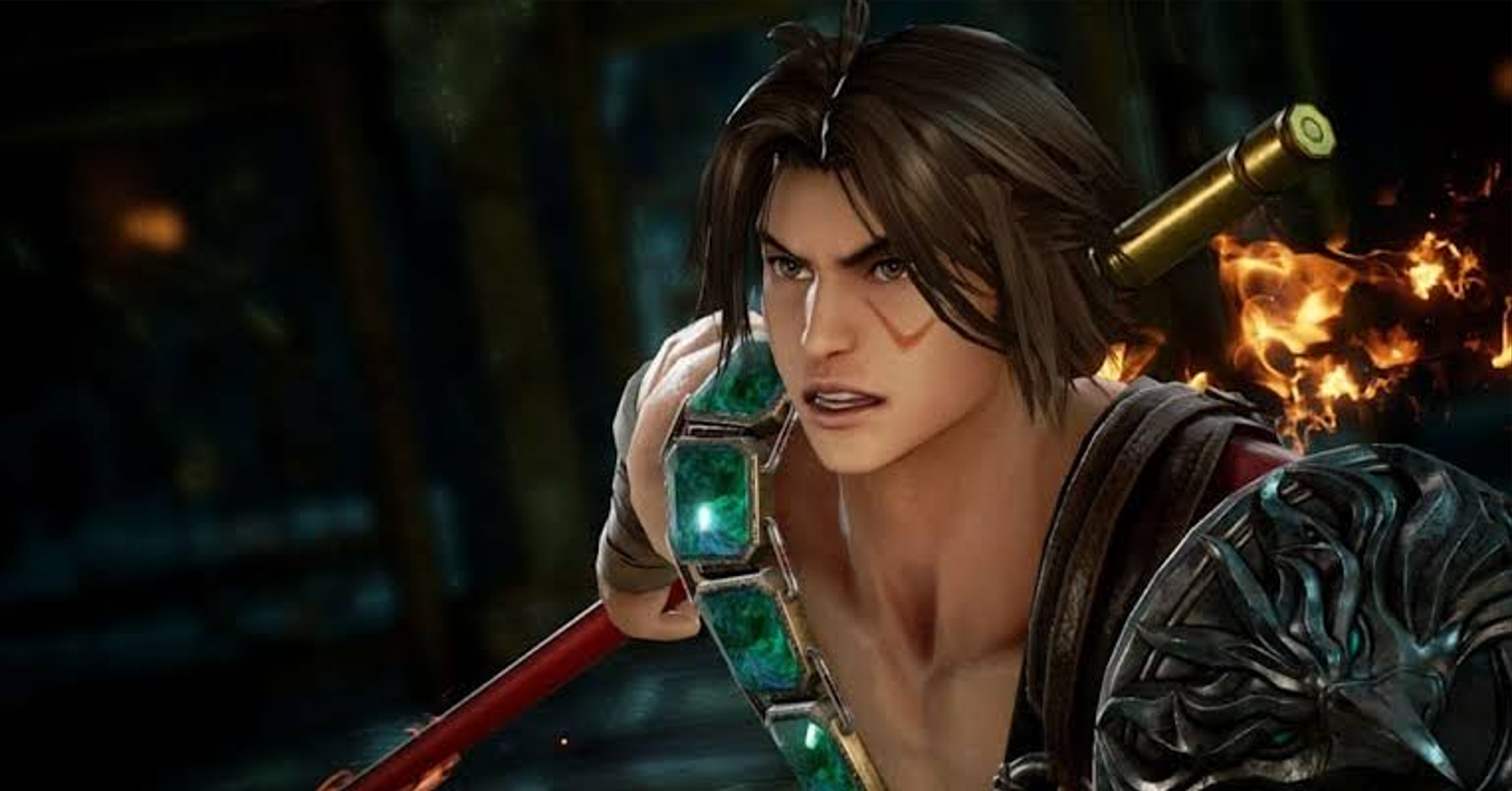
Soulcalibur VI – Official Announcement Trailer
What Is Soulcalibur?
Soulcalibur is a series of 3D fighting games set within a fictionalized version of the late 16th and early 17th centuries. Players select warriors equipped with swords, spears, staffs, axes, whips, and other weapons before fighting across enclosed arenas.
The central conflict involves Soul Edge, an evil weapon capable of corrupting its wielder, and Soul Calibur, a sacred blade associated with opposing that influence. Different characters pursue the swords for personal reasons, including revenge, power, duty, redemption, or the desire to protect someone close to them.
Rather than presenting one completely linear storyline across every character, many earlier games show separate journeys through arcade or story modes. These paths occasionally contradict one another, with later games establishing which events became part of the main continuity.
The result is a franchise that combines fighting game competition with mythology, historical influences, character drama, and large-scale fantasy.
Series Highlights
- Historical fantasy setting
- Magical and cursed weapons
- Individual character journeys
- Multiple competing storylines
- International roster of fighters
- Combination of arcade action and mythology
Is Soulcalibur Worth Playing?
Yes, especially for players who enjoy fighting games but prefer weapon-based combat over traditional hand-to-hand systems.
The controls are accessible enough for new players to understand quickly, while movement, spacing, defensive timing, and character-specific techniques provide considerable depth. Matches can be won by reducing an opponent’s health or knocking them out of the arena, which keeps positioning important at all times.
The franchise is also appealing to players who enjoy single-player content. Different installments have included mission modes, weapon collection, branching character stories, strategic campaigns, custom fighters, and role-playing elements.
Some games are more polished or complete than others, but the strongest installments remain among the most respected weapon fighters ever released.
Reasons to Play
- Distinctive weapon-based combat
- Accessible basic controls
- Deep movement and positioning
- Ring-out victories
- Strong single-player modes
- Memorable characters and guest fighters
Why Soulcalibur Stands Out
The franchise’s greatest strength is how naturally its weapons affect gameplay.
Characters do not simply hold different visual props while fighting in the same way. Weapon length, speed, attack direction, recovery time, and movement all shape how each fighter controls space.
A swordsman may specialize in balanced attacks, while a staff wielder can dominate longer distances. A heavily armed fighter may deal enormous damage but move more slowly, while faster characters rely on pressure, evasion, and precise positioning.
The arenas also matter because every movement creates the risk of a ring-out. A player with nearly full health can still lose if they are pushed over an edge.
This combination makes Soulcalibur easy to understand but difficult to master.
Defining Features
- Weapons directly affect range and style
- Strong emphasis on spacing
- Fast three-dimensional movement
- Ring-outs can end rounds instantly
- Distinct character identities
- Accessible but strategically deep combat
Soul Edge and Soul Calibur
The mythology of the series centers on two legendary weapons.
Soul Edge is a cursed blade that feeds on souls and corrupts those who attempt to wield it. Its influence has caused war, destruction, madness, and physical transformation throughout the franchise.
Soul Calibur is the weapon created to oppose that evil. Although it is often described as the holy counterpart, later stories also complicate the idea that either sword is entirely simple or harmless.
Characters across the series seek these blades for very different reasons. Some want to destroy Soul Edge, while others believe they can control its power. Several warriors pursue Soul Calibur as a source of protection, redemption, or personal purpose.
The conflict between the two swords provides a consistent foundation even when the roster, setting, and timeline change.
Weapon Highlights
- Soul Edge is the central cursed weapon
- Soul Calibur exists to oppose it
- Both influence the wider story
- Different characters seek them for personal reasons
- The swords shape major conflicts
- Their mythology evolves across the series
Soul Edge
The franchise began with Soul Edge, released in arcades in 1996 before receiving an enhanced console version. Outside Japan, the PlayStation release was known as Soul Blade.
The game follows nine warriors searching for the legendary Soul Edge. Each has a different motivation, but their paths eventually connect through the weapon and the people affected by it.
Although the gameplay is more limited than in later installments, the foundation of the franchise is already visible. Characters use distinctive weapons, fights take place in 3D arenas, and the story combines historical influences with supernatural danger.
The home version also included Edge Master mode, which introduced weapon collection and role-playing-style progression. This helped establish the franchise’s tradition of offering more substantial single-player content than a basic arcade conversion.
Soul Edge Highlights
- Released in 1996
- Known as Soul Blade outside Japan
- Introduced Soul Edge
- Featured nine central warriors
- Included Edge Master mode
- Established the franchise’s weapon-based identity
Soulcalibur
The first game using the Soulcalibur title was released in arcades before reaching the Dreamcast in 1999.
It became one of the most celebrated fighting games of its era and established many of the systems now associated with the series.
The most important addition was the 8-Way Run, which allowed players to move freely around opponents and take better advantage of three-dimensional arenas. This made movement feel smoother and more intuitive than in many competing fighters.
The game also expanded the cast, refined the combat, and introduced Soul Calibur as the sacred weapon opposing Soul Edge.
Its critical and commercial success transformed Soulcalibur into the official name of the franchise.
Soulcalibur Highlights
- Major Dreamcast release
- Introduced 8-Way Run
- Expanded movement and combat
- Introduced Soul Calibur
- Became the franchise’s defining title
- Widely praised as a landmark fighting game
Soulcalibur II
Soulcalibur II expanded nearly every part of the previous game.
It improved the visuals, refined the combat, added more characters, and released across the three major sixth-generation consoles.
The game became especially famous for its platform-exclusive guest fighters:
- Link on GameCube
- Heihachi Mishima on PlayStation 2
- Spawn on Xbox
These characters helped the game reach audiences beyond the existing franchise and established a guest-fighter tradition that continued in later installments.
An enhanced version titled Soulcalibur II HD Online was released in 2013 with improved visuals, online play, and achievement support.
Soulcalibur II Highlights
- Released across three major consoles
- Improved combat and presentation
- Link appeared on GameCube
- Heihachi appeared on PlayStation 2
- Spawn appeared on Xbox
- Later received an HD online version
Soulcalibur III
Soulcalibur III launched for PlayStation 2 in 2005 before later receiving an arcade version.
The game expanded the single-player experience through Tales of Souls, a story mode featuring decisions that could change the player’s route.
It also introduced Chronicles of the Sword, which combined created characters, battles, progression, and light strategy elements.
One of its most important additions was the character creation system. Players could design original fighters using different costumes, appearances, and weapon disciplines.
Interactive stages and environmental details also became more prominent.
The game later received a digital release for PlayStation 4 and PlayStation 5 in December 2025, according to the supplied material.
Soulcalibur III Highlights
- Originally released for PlayStation 2
- Added Tales of Souls
- Introduced character creation
- Featured Chronicles of the Sword
- Included branching decisions
- Expanded environmental interaction
Soulcalibur IV
Soulcalibur IV was released in 2008 for PlayStation 3 and Xbox 360.
It was the first main installment designed around console online play and introduced mechanics such as destructible armor, the Soul Gauge, and Critical Finishes.
Armor could break during battle, changing a character’s appearance and defensive protection. The Soul Gauge discouraged excessive blocking, while Critical Finishes provided a dramatic way to end a round under specific conditions.
The game also became famous for its Star Wars crossover.
Darth Vader appeared initially on PlayStation 3, while Yoda appeared on Xbox 360. The Apprentice from Star Wars: The Force Unleashed was included in both versions.
Soulcalibur IV Highlights
- Released for PlayStation 3 and Xbox 360
- Added online fighting
- Introduced armor destruction
- Featured Critical Finishes
- Included Darth Vader and Yoda
- Expanded custom character options
Soulcalibur V
Soulcalibur V was released in 2012 and moved the story forward by 17 years.
The time jump resulted in major changes to the roster, with several established characters absent or replaced by younger successors.
The game introduced a new power gauge used for Critical Edge and Brave Edge attacks, bringing its meter system closer to those found in other modern fighting games.
Its guest character was Ezio Auditore da Firenze from Assassin’s Creed.
The game also included a fighting style inspired by Devil Jin from Tekken for created characters.
While the combat received praise, the story and roster changes proved more divisive among long-time fans.
Soulcalibur V Highlights
- Set 17 years after Soulcalibur IV
- Introduced a heavily changed roster
- Added Critical Edge attacks
- Included Brave Edge mechanics
- Featured Ezio Auditore
- Divided fans with major character replacements
Soulcalibur VI
Soulcalibur VI was released in 2018 for PlayStation 4, Xbox One, and PC.
Although it is the seventh main entry, the game acts as a reboot by returning to a reimagined version of events surrounding the earlier titles.
It introduced Reversal Edge, a cinematic defensive mechanic, and the Lethal Hit system, which rewards specific attacks when certain conditions are met.
The game also reworked Soul Charge, allowing characters to temporarily access more powerful moves and altered abilities.
Guest fighters included Geralt of Rivia from The Witcher, 2B from NieR: Automata, and Haohmaru from Samurai Shodown.
Its story content was divided between Soul Chronicle and Libra of Soul, with the latter allowing players to create a custom protagonist.
Soulcalibur VI Highlights
- Released in 2018
- Rebooted the timeline
- Added Reversal Edge
- Introduced Lethal Hits
- Reworked Soul Charge
- Featured Geralt, 2B, and Haohmaru
Gameplay
The basic structure of Soulcalibur is easy to understand.
Two players select characters and fight across several rounds. A round can be won by emptying the opponent’s health bar or forcing them outside the arena.
The standard controls use four main buttons:
- Guard
- Horizontal attack
- Vertical attack
- Kick
These buttons are combined with directional inputs to perform each character’s moves.
Horizontal attacks are generally effective against opponents moving around the arena, while vertical attacks can offer stronger direct pressure. Kicks are often faster and useful at closer range.
The system appears simple, but movement, range, timing, and character knowledge create significant competitive depth.
Gameplay Highlights
- Four-button control layout
- Horizontal and vertical attacks
- Kicks and defensive guarding
- Health-based victories
- Ring-out victories
- Large character-specific move lists
The 8-Way Run System
The 8-Way Run is one of the franchise’s most important gameplay innovations.
It allows players to move freely in eight directions around the arena instead of being restricted mainly to forward and backward movement.
This creates several tactical possibilities.
Players can sidestep vertical attacks, reposition away from ring edges, circle slower opponents, or access attacks that are only available while moving.
The system makes arenas feel genuinely three-dimensional and distinguishes Soulcalibur from fighters where movement is more limited.
It also helps make the games feel fast and accessible because players can move naturally without relying entirely on specialized sidestep commands.
8-Way Run Highlights
- Free movement in eight directions
- Easier sidestepping
- Helps avoid ring edges
- Unlocks movement-based attacks
- Makes arenas feel more three-dimensional
- Defines the series’ combat identity
Guard Impacts
Guard Impacts are defensive techniques used to redirect or parry incoming attacks.
A successful Guard Impact interrupts an opponent and creates an opportunity to respond.
The mechanic requires accurate timing. Attempting it too early or too late can leave the player vulnerable.
Earlier installments required different inputs depending on the type or height of the incoming attack. Later games simplified parts of the system by allowing players to spend resources to counter a wider range of attacks.
Guard Impacts reward anticipation rather than passive blocking and give defensive players a way to reverse pressure.
Guard Impact Highlights
- Functions as a parry
- Requires precise timing
- Creates counterattack opportunities
- Punishes predictable offense
- Has changed across installments
- Adds depth to defensive play
Ring-Outs and Arena Positioning
Ring-outs are one of the most recognizable elements of Soulcalibur.
A player loses the round immediately if they are knocked outside the arena, regardless of how much health remains.
This makes positioning extremely important.
Fighters near an edge must consider movement carefully, while aggressive players can use attacks specifically designed to push opponents backward.
Ring-outs can create sudden victories, dramatic reversals, and occasional frustration.
However, they also ensure that arena awareness remains just as important as damage output.
Ring-Out Highlights
- Instantly ends the round
- Ignores remaining health
- Rewards positioning
- Creates sudden reversals
- Makes stage awareness essential
- Adds another strategic win condition
Character Creation
Character creation became a major feature beginning with Soulcalibur III.
Players can design original fighters using different faces, hairstyles, clothing, armor, colors, voices, and body proportions.
Created characters generally use weapon styles based on existing fighters, although some installments offered additional disciplines or class systems.
The feature became especially popular because the franchise’s historical fantasy setting supports an enormous range of designs.
Players have recreated characters from anime, games, films, comics, and history, while also creating completely original warriors.
Custom fighters can also appear in story modes and online matches, depending on the installment.
Creation Highlights
- Introduced in Soulcalibur III
- Detailed visual customization
- Uses existing weapon styles
- Supports original and crossover designs
- Appears in single-player modes
- Can be used in online battles
Main Characters
The Soulcalibur roster includes fighters from different nations, cultures, and martial traditions.
Although characters frequently share the goal of finding Soul Edge or Soul Calibur, their reasons vary considerably.
Some want to destroy the cursed sword, while others seek revenge, personal power, redemption, or protection for their families.
The historical fantasy setting also allows real-world events and figures to influence individual backstories.
Several characters have appeared repeatedly throughout the franchise, including Cervantes, Mitsurugi, Siegfried, Nightmare, Ivy, Sophitia, Taki, Astaroth, Voldo, and Yoshimitsu.
Character Highlights
- International roster
- Different weapons and martial traditions
- Personal motivations
- Historical influences
- Long-running rivalries
- Returning heroes and villains
Siegfried and Nightmare
Siegfried and Nightmare are two of the franchise’s most important figures.
Siegfried is a German warrior whose life becomes connected to Soul Edge after he discovers the cursed weapon.
Nightmare is the terrifying Azure Knight associated with Soul Edge’s corruption and destructive influence.
Their relationship forms one of the central emotional conflicts of the series.
Siegfried’s story involves guilt, manipulation, redemption, and the struggle to reclaim control over his own identity.
Nightmare, meanwhile, became one of the franchise’s most recognizable visual icons through his enormous weapon, corrupted armor, and monstrous appearance.
Siegfried and Nightmare Highlights
- Central to the Soul Edge storyline
- Connected through corruption
- Represent identity and loss of control
- Major recurring figures
- Nightmare is the Azure Knight
- Siegfried’s story focuses on redemption
Sophitia
Sophitia is a Greek warrior chosen to oppose Soul Edge.
She fights using a sword and shield and became one of the earliest heroes connected to the cursed weapon’s destruction.
Her story combines divine responsibility with concern for her family.
Sophitia is often portrayed as kind and compassionate, but she is also a skilled fighter willing to face supernatural danger.
Later games complicate her role by placing her family in situations where personal loyalty conflicts with her original mission.
Her balanced fighting style has also made her a popular choice for players learning the series.
Sophitia Highlights
- Greek sword-and-shield fighter
- Early opponent of Soul Edge
- Strong family motivations
- Balanced playstyle
- Long-running franchise character
- Combines compassion and determination
Mitsurugi
Heishiro Mitsurugi is a Japanese swordsman inspired by the age of samurai warfare.
He pursues powerful opponents and weapons while attempting to prove the strength of his swordsmanship.
Mitsurugi is one of the franchise’s most consistent characters and has appeared throughout nearly the entire series.
His style is built around powerful katana strikes, pressure, timing, and direct combat.
Unlike characters driven primarily by magic or destiny, Mitsurugi is often motivated by pride, rivalry, and the desire to surpass new forms of warfare.
Mitsurugi Highlights
- Japanese samurai
- Uses a katana
- Appears throughout the franchise
- Motivated by strength and rivalry
- Direct and powerful fighting style
- One of the series’ central icons
Ivy
Ivy Valentine is one of the franchise’s most visually and mechanically distinctive characters.
She fights using a weapon capable of shifting between a sword and a segmented whip.
This allows her to attack at several ranges and creates one of the most complicated move sets in the series.
Her story is closely connected to Soul Edge, her family history, and her determination to destroy the cursed weapon.
Ivy’s intelligence, confidence, appearance, and unusual fighting style made her one of the most recognizable characters in the franchise.
Ivy Highlights
- Uses a transforming sword-whip
- Strong at several ranges
- Closely connected to Soul Edge
- Complex fighting style
- Major recurring character
- One of the franchise’s most famous designs
Taki
Taki is a Japanese demon hunter and ninja who fights with short blades.
Her speed, mobility, and close-range pressure make her highly effective when she can stay near an opponent.
Within the story, she investigates supernatural threats and becomes involved in efforts to contain or destroy Soul Edge.
Taki is one of the franchise’s longest-running characters and has appeared in most major installments.
Her combination of ninjutsu, demon hunting, and rapid dual-weapon combat gives her a clear role within both the story and gameplay.
Taki Highlights
- Japanese demon hunter
- Uses dual short blades
- Fast close-range fighter
- Investigates supernatural threats
- Closely connected to Soul Edge
- Long-running series character
Guest Characters
The guest-fighter tradition is one of Soulcalibur’s most famous features.
Beginning prominently with Soulcalibur II, different games introduced characters from outside the franchise.
Notable guests include:
- Link from The Legend of Zelda
- Spawn
- Heihachi Mishima from Tekken
- Darth Vader
- Yoda
- The Apprentice from Star Wars
- Kratos from God of War
- Ezio Auditore from Assassin’s Creed
- Geralt of Rivia from The Witcher
- 2B from NieR: Automata
- Haohmaru from Samurai Shodown
These characters often attract new players while creating unusual matchups unavailable anywhere else.
Guest Highlights
- Major crossover tradition
- Platform-exclusive fighters
- Characters from games, comics, and films
- Often adapted carefully to the combat system
- Helps each installment feel distinctive
- Expands the franchise’s audience
Soulcalibur Legends
Soulcalibur Legends was released for Nintendo Wii in 2007.
Unlike the main fighting games, it is an action-adventure title with hack-and-slash combat.
Players control characters through enemy-filled stages before facing bosses.
The game includes single-player content along with competitive and cooperative options.
Its story takes place between Soul Edge and Soulcalibur, although it is generally treated as non-canon.
The change in genre made it an unusual experiment within the franchise.
Legends Highlights
- Released for Nintendo Wii
- Action-adventure spin-off
- Hack-and-slash gameplay
- Includes cooperative play
- Set between early games
- Considered non-canon
Soulcalibur: Broken Destiny
Soulcalibur: Broken Destiny was released for the PlayStation Portable in 2009.
It adapted many systems from Soulcalibur IV, including armor destruction, Critical Finishes, and character creation.
The game introduced Dampierre, a theatrical conman equipped with wrist-mounted blades.
It also included Kratos from God of War as a guest character.
Its Gauntlet mode provided a new story-driven structure designed partly to teach players advanced combat techniques.
The game received strong reviews and remains one of the franchise’s better-known portable releases.
Broken Destiny Highlights
- Released for PSP
- Based on Soulcalibur IV
- Introduced Dampierre
- Included Kratos
- Featured Gauntlet mode
- Well received as a portable fighter
Other Spin-Offs
The franchise has experimented with several other formats.
Soulcalibur: Lost Swords was a free-to-play single-player game based largely on Soulcalibur V. Its focus was collecting weapons, materials, and loot through battles.
Soulcalibur: Unbreakable Soul was a card-based mobile fighting game starring Cassandra and Edge Master. Players selected attack cards and used elemental systems during combat.
The series also received mobile adaptations, a pachislot game, manga, novels, soundtrack albums, art books, and strategy guides.
These projects expanded the franchise beyond traditional console fighting games, although not all were well received.
Spin-Off Highlights
- Free-to-play experiments
- Mobile fighting games
- Card-based combat
- Pachislot release
- Manga and novels
- Multiple soundtrack albums
Story and World-Building
The series takes place across a fictional version of Europe, Asia, and surrounding regions during the late Renaissance period.
Real countries, historical events, religions, legends, and political conflicts influence the characters and locations.
The magical elements exist alongside recognizable historical cultures.
Warriors travel across continents while encountering pirates, knights, samurai, assassins, alchemists, demons, and supernatural beings.
The search for Soul Edge connects these otherwise separate journeys.
This international structure allows the franchise to introduce a wide range of weapons and fighting styles without making the roster feel completely disconnected from its world.
World Highlights
- Late Renaissance setting
- Historical and fantasy influences
- International locations
- Warriors from different cultures
- Supernatural weapons and creatures
- Real events influence fictional stories
Presentation and Single-Player Modes
Earlier games usually presented each fighter’s journey through arcade-style story modes.
Players completed a series of battles before reaching a final confrontation linked to Soul Edge or Soul Calibur.
These stories used cutscenes, artwork, narration, and character-specific endings.
The franchise also became known for more elaborate side modes.
Depending on the game, these included Edge Master, Weapon Master, Chronicles of the Sword, Libra of Soul, and various mission modes.
These modes often introduced special battle conditions, equipment progression, alternate maps, or created characters.
Single-Player Highlights
- Character-specific arcade stories
- Cinematic scenes and artwork
- Weapon collection
- Mission-based campaigns
- Strategic modes
- Created-character adventures
Music and Soundtracks
Music has always played an important role in the series’ identity.
The soundtracks combine orchestral arrangements, historical influences, dramatic battle themes, choral elements, and character-specific motifs.
Two soundtrack albums were released for Soul Edge, while each major Soulcalibur installment received its own musical release.
The music helps create the sense of an international fantasy epic rather than a collection of disconnected fighting arenas.
Themes frequently reflect the culture, personality, or story of the fighter associated with a particular stage.
Music Highlights
- Orchestral battle themes
- Historical musical influences
- Character and location motifs
- Multiple official soundtrack albums
- Strong cinematic presentation
- Important part of the series’ atmosphere
Reception and Critical Response
The franchise has been reviewed positively across most of its main installments.
The original Soulcalibur became particularly celebrated for its Dreamcast conversion, movement system, graphics, content, and polished combat.
Soulcalibur II also received major acclaim and became one of the franchise’s most commercially visible releases.
Later games received more mixed reactions when they introduced controversial roster changes, limited story content, or divisive mechanics.
Despite those fluctuations, the franchise remained one of the most respected names in weapon-based fighting games.
According to the supplied material, the series had surpassed 17 million units sold worldwide by July 2021.
Reception Highlights
- Strong reviews for most main games
- Original Soulcalibur widely acclaimed
- Soulcalibur II became a major success
- Later entries received more mixed reactions
- More than 17 million units sold
- Respected within competitive fighting games
Current Status of the Franchise
The franchise became inactive after support for Soulcalibur VI ended.
Motohiro Okubo, the game’s producer, later departed Bandai Namco.
Project Soul, the internal development group associated with the franchise after Soulcalibur II, had already been dissolved following the completion of Soulcalibur V.
The supplied information describes development as dormant rather than permanently finished.
No new main installment is confirmed within the source material.
The series still retains a dedicated community, and renewed interest frequently appears whenever older games receive digital releases or backward-compatible support.
Current Status Highlights
- No confirmed new main game
- Soulcalibur VI remains the latest installment
- Post-launch support has ended
- Producer Motohiro Okubo left Bandai Namco
- Project Soul was previously dissolved
- Franchise is currently dormant
Legacy and Impact
Soulcalibur helped demonstrate how effective weapon-based combat could be within a 3D fighting system.
Its 8-Way Run influenced expectations for arena movement, while its ring-out mechanics made positioning a constant concern.
The franchise also helped establish guest fighters as major marketing events within fighting games.
Character creation became another important part of its identity and encouraged players to interact with the games beyond competitive matches.
Its strongest entries remain remembered for combining accessibility, visual spectacle, historical fantasy, music, and mechanical depth.
Even during its inactive periods, Soulcalibur continues to occupy a unique space that few other franchises have successfully replaced.
Legacy Highlights
- Major weapon-based fighting franchise
- Popularized free 3D movement
- Known for ring-out mechanics
- Expanded crossover guest characters
- Influential character creation
- Maintains a dedicated fan community
FAQ
What was the first Soulcalibur game?
The franchise began with Soul Edge in 1996. Its PlayStation version was called Soul Blade outside Japan.
How many main Soulcalibur games are there?
There are seven main installments when Soul Edge is included as the first entry.
What is the difference between Soul Edge and Soul Calibur?
Soul Edge is a cursed weapon that corrupts its wielder. Soul Calibur is the sacred sword associated with opposing it.
Is Soulcalibur a 2D or 3D fighting game?
It is a 3D fighting series built around free arena movement, weapon combat, and ring-outs.
What is 8-Way Run?
The 8-Way Run system allows players to move freely in eight directions around an opponent.
Which Soulcalibur game has Link?
Link appears as a guest fighter in the GameCube version of Soulcalibur II.
Which game has Darth Vader and Yoda?
Darth Vader and Yoda appeared in Soulcalibur IV, initially as platform-specific guest characters.
Is Geralt in Soulcalibur?
Yes. Geralt of Rivia appears as a guest character in Soulcalibur VI.
Which Soulcalibur game introduced character creation?
Soulcalibur III introduced the franchise’s full character creation system.
What is the latest Soulcalibur game?
Soulcalibur VI, released in 2018, is the latest main installment covered by the source.
Is Soulcalibur VI a reboot?
Yes. It retells and reimagines events from the earlier part of the timeline.
Is the Soulcalibur series finished?
No official ending has been announced, but development is currently described as dormant.
Conclusion
Soulcalibur remains one of the most distinctive franchises in fighting game history. Its combination of weapon-based combat, unrestricted arena movement, ring-outs, historical fantasy, and international characters gives it an identity that has never been fully replicated by its competitors.
The series evolved considerably from Soul Edge to Soulcalibur VI, adding online battles, cinematic mechanics, detailed character creation, branching story modes, and increasingly ambitious guest fighters. Some installments were stronger than others, but the franchise’s best games still provide an excellent balance between accessibility and depth.
Its mythology of Soul Edge and Soul Calibur gives the games a consistent narrative foundation without requiring every player to understand a complicated storyline. At the same time, memorable characters such as Siegfried, Nightmare, Sophitia, Mitsurugi, Ivy, and Taki ensure that the series remains more than a collection of mechanics.
Although the franchise is currently dormant, its influence is easy to recognize. Soulcalibur helped define what a 3D weapon fighter could be, and its strongest ideas remain exciting decades after the first blade was drawn.
Thank you for reading and make sure to bookmark the site, comment and follow up on the newest posts!
How useful was this post?
Click on a star to rate it!
Average rating 0 / 5. Vote count: 0
No votes so far! Be the first to rate this post.