
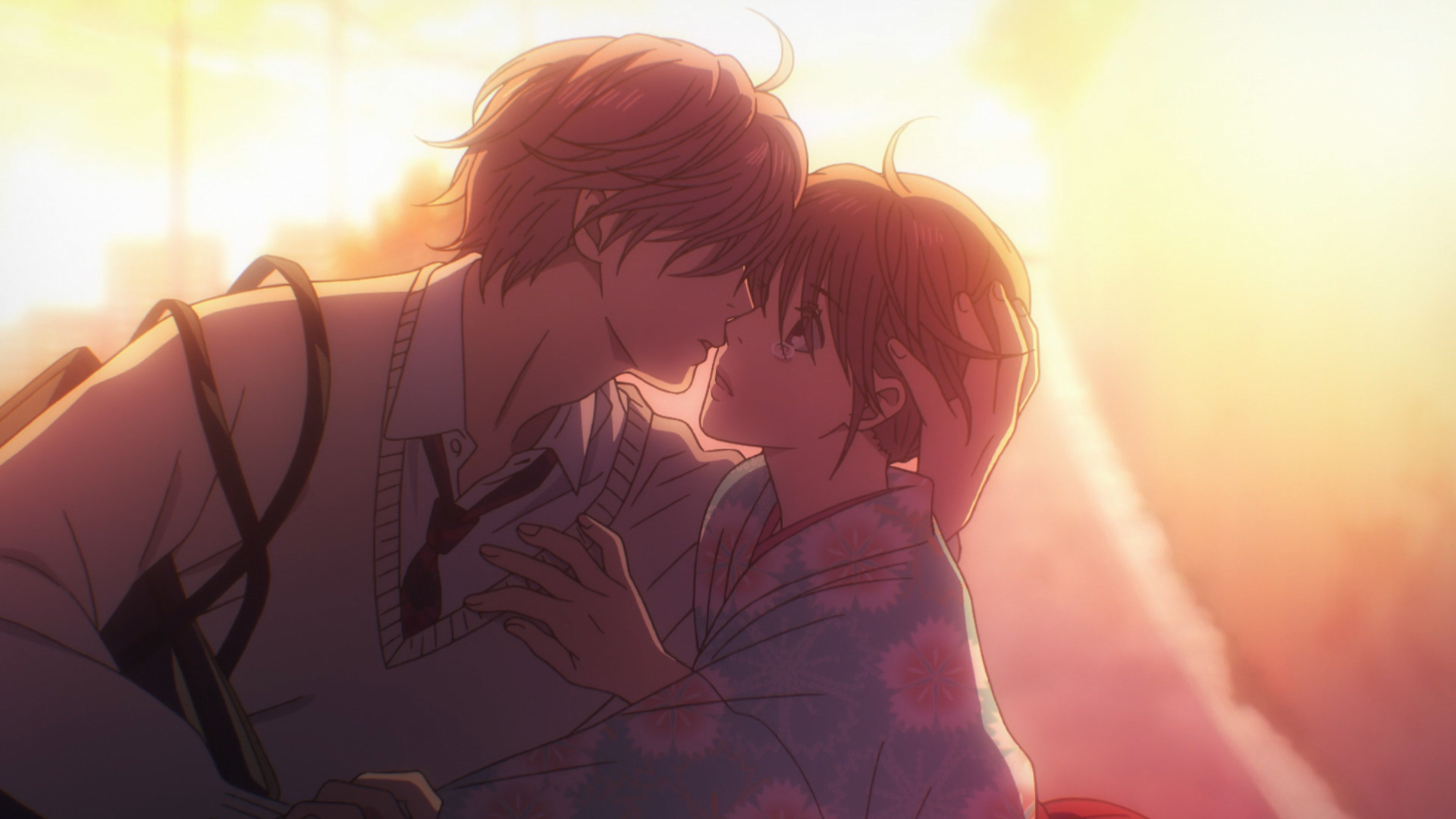
 8.1/10
Some anime become memorable because of spectacular battles, enormous fantasy worlds, or larger-than-life heroes. Chihayafuru accomplishes something far more unusual: it turns a centuries-old Japanese poetry card game into a competition that can feel every bit as intense as boxing, football, or a championship match. The result is one of the most distinctive blends of sports drama, coming-of-age storytelling, friendship, romance, and Japanese literary culture in modern anime.
Created by Yuki Suetsugu, Chihayafuru began as a josei manga serialized in Kodansha’s Be Love magazine from December 2007 to August 2022. The completed series spans 50 volumes, while a sequel manga titled Chihayafuru plus Kimi ga Tame began serialization in December 2023. By February 2025, the original manga had surpassed 29 million copies in circulation, won both the Manga Taishō and Kodansha Manga Award, and significantly increased public interest in competitive karuta.
The Madhouse anime adaptation began in 2011 and eventually reached three seasons, following Chihaya Ayase and the Mizusawa Karuta Club as they pursue increasingly ambitious competitive goals. Yet what makes Chihayafuru truly compelling is that karuta is never treated merely as a gimmick. Every match becomes an expression of personality, memory, rivalry, discipline, and emotional growth.
For viewers who usually avoid sports anime because they have little interest in conventional athletics, Chihayafuru may be one of the best places to reconsider the genre.
Highlights
- Created by Yuki Suetsugu
- Manga completed with 50 volumes
- More than 29 million copies in circulation by February 2025
- Three anime seasons produced by Madhouse
- Focuses on competitive Hyakunin Isshu karuta
- Combines sports drama, romance, friendship, and poetry
- Winner of major Japanese manga awards
Chihayafuru – Official Trailer
What Is Chihayafuru About?
Chihayafuru follows Chihaya Ayase, a girl who initially spends much of her childhood supporting the modeling ambitions of her older sister. Her life changes after meeting transfer student Arata Wataya, an exceptionally talented competitive karuta player who introduces her to the game and recognizes her natural potential.
For Chihaya, discovering karuta becomes the first time she develops an ambition that belongs entirely to her.
Years later, now attending high school, Chihaya reconnects with childhood friend Taichi Mashima and decides to create the Mizusawa Karuta Club. Her dream is simple to explain but incredibly difficult to achieve: she wants to become the strongest female karuta player in Japan.
From there, the series follows practices, tournaments, friendships, defeats, rivalries, personal insecurities, and the complicated emotional relationships surrounding Chihaya, Taichi, and Arata.
What makes the premise special is how naturally the personal drama and competition overlap. Karuta becomes more than something the characters play. It is how they communicate, compete, connect, and sometimes understand feelings they cannot express directly.
Story Highlights
- Chihaya discovers competitive karuta as a child
- Arata inspires her to pursue the game seriously
- Taichi becomes one of her closest teammates
- The Mizusawa Karuta Club forms in high school
- Team and individual tournaments shape the story
- Friendship and personal ambition remain equally important
Is Chihayafuru Worth Watching?
Absolutely.
Chihayafuru is one of those rare anime that can make viewers care deeply about a subject they may have known nothing about before pressing play.
You do not need to understand Japanese poetry or competitive karuta beforehand. The series gradually teaches the rules through character experiences, practices, tournaments, and tactical explanations without turning every episode into a lecture.
The bigger surprise is how tense the matches become.
Karuta requires memorization, reflexes, spatial awareness, card placement, listening ability, psychological pressure, and strategic preparation. Once the anime establishes these fundamentals, seemingly tiny differences in reaction speed or card position can make a match feel incredibly dramatic.
The series also avoids becoming repetitive because each major player approaches karuta differently. Some rely on speed, others on memory, sound recognition, positioning, endurance, or psychological control.
Reasons to Watch
- Unique competitive concept
- Strong character writing
- Excellent tournament tension
- Emotional but rarely melodramatic
- Beautiful cultural elements
- One of Madhouse’s strongest character-driven adaptations
Why You Should Watch Chihayafuru
The greatest strength of Chihayafuru is that it understands competition is most interesting when viewers understand why winning matters to each person.
Chihaya wants to reach the highest level because karuta gave her a dream.
Taichi’s motivations are considerably more complicated, mixing ambition, frustration, friendship, pride, and personal insecurity.
Arata has a deeply emotional relationship with karuta because the game is connected to his family, identity, and childhood.
Even supporting characters receive reasons to care that extend beyond simply wanting trophies.
As a result, matches are rarely just about determining which player has superior technique. They become confrontations between personalities and philosophies.
The series also has unusual emotional maturity for a school-based anime. Characters make mistakes, become jealous, struggle with confidence, and occasionally fail despite working incredibly hard. Improvement is rarely presented as a straight line.
Biggest Strengths
- Competition directly reflects character growth
- Defeats matter as much as victories
- Strong emotional realism
- Excellent rivalries
- Relationships develop gradually
- Personal ambition never disappears beneath romance
What Is Competitive Karuta?
Understanding competitive karuta helps explain why the series works so well.
The version played in Chihayafuru uses the Ogura Hyakunin Isshu, an anthology containing 100 classical Japanese poems written by 100 poets.
In competitive play, two opponents sit across from one another with 25 cards arranged in each player’s territory. A separate reader recites poems from a complete set, and players attempt to touch the corresponding card as quickly as possible.
That sounds straightforward until strategy enters the equation.
Players memorize the positions of all 50 cards on the floor. They must recognize poems from their opening sounds, anticipate which card is likely being read, move efficiently, defend their territory, and decide which card to send to the opponent whenever they successfully capture one from the other side.
The first player to eliminate every card from their own territory wins.
Karuta Basics
- Based on 100 classical Japanese poems
- 50 cards are used during each match
- Each player begins with 25 cards
- Players identify cards by listening to poem openings
- Memory and reaction speed are essential
- Card placement becomes part of the strategy
Why Karuta Becomes So Intense
Karuta looks calm compared with many sports.
Players sit on tatami mats. There are no stadium tackles, racing cars, or dramatic martial arts techniques.
Yet the actual match can be incredibly fast.
Elite players sometimes move the instant they recognize the earliest distinguishing sound of a poem. Their hands strike cards forcefully enough to send them across the room, and tiny delays can determine entire matches.
The game also creates mental pressure because players must continuously update their memorized card layout when cards move between territories.
A mistake can affect several later decisions.
The anime captures this intensity brilliantly through rapid animation, dramatic sound design, internal monologues, and sudden moments of silence before a card is taken.
Competitive Elements
- Extreme reaction speed
- Advanced memorization
- Psychological pressure
- Strategic card placement
- Listening precision
- Momentum can shift quickly
Chihaya Ayase
Chihaya is an unusual protagonist because she is simultaneously extremely focused and surprisingly oblivious.
Once she falls in love with karuta, the game dominates her attention. She thinks about cards, tournaments, club recruitment, training, and improvement constantly.
That obsession gives her enormous determination, but it also means she sometimes struggles to understand the emotional situations happening around her.
Her greatest natural advantage is her hearing.
Chihaya can recognize subtle differences in sounds remarkably quickly, giving her tremendous potential at competitive karuta.
However, natural ability alone is never enough.
She repeatedly encounters opponents who possess superior strategy, experience, memorization, composure, or specialized techniques.
Watching Chihaya gradually understand that becoming the best requires far more than speed is one of the series’ strongest long-term character arcs.
Chihaya Highlights
- Founder of Mizusawa Karuta Club
- Extremely passionate about karuta
- Exceptional hearing ability
- Naturally fast reactions
- Socially straightforward
- Constantly searching for ways to improve
Taichi Mashima
Taichi is arguably one of the most psychologically complex characters in the series.
As a child, he appears confident and privileged, but much of that confidence hides insecurity.
He has strong academic ability, athletic talent, and discipline, yet karuta constantly places him beside players whose natural gifts seem greater than his own.
That makes his development unusually compelling.
Taichi often has to rely on preparation, memory, tactical thinking, and relentless practice rather than a single overwhelming advantage.
His connection to Chihaya and rivalry with Arata also create emotional complications that become increasingly important without overwhelming the sports narrative.
Taichi’s story repeatedly asks whether effort can overcome talent—and what happens emotionally when effort still does not guarantee success.
Taichi Highlights
- Childhood friend of Chihaya and Arata
- Strong memorization ability
- Highly analytical player
- Hardworking and competitive
- Struggles with self-confidence
- One of the series’ most layered characters
Arata Wataya
Arata is the person who introduces Chihaya to competitive karuta.
Unlike Chihaya, who discovers the game as a new passion, Arata grows up surrounded by it.
Karuta is deeply connected to his family and personal history, giving his relationship with the game a different emotional weight.
His playing style reflects enormous experience and technical understanding.
While Chihaya frequently relies on explosive speed, Arata can appear calm and almost effortless during matches.
That difference creates a compelling contrast between them.
Arata is also central to the emotional relationship connecting the series’ three childhood friends, but the story wisely avoids reducing him to a simple romantic obstacle.
Arata Highlights
- Introduces Chihaya to karuta
- Raised around competitive play
- Exceptional technical ability
- Calm and highly focused
- Connected deeply to karuta tradition
- Central to both the competition and character drama
The Mizusawa Karuta Club
One of the smartest decisions in Chihayafuru is expanding the story beyond its three central characters.
When Chihaya and Taichi establish the Mizusawa Karuta Club, they recruit players with dramatically different backgrounds and motivations.
Some are immediately interested in karuta.
Others join reluctantly.
A few initially care more about poetry, school activities, or simply helping friends.
Watching this group gradually become a genuine team gives the anime much of its warmth.
Individual karuta and team karuta also create different kinds of tension. A player who might succeed individually can struggle when carrying responsibility for teammates, while an unexpected victory from a less experienced member can completely change the momentum of a tournament.
Club Highlights
- Multiple personalities and skill levels
- Strong team-building storyline
- Beginners grow alongside experienced players
- Team tournaments add strategic variety
- Every member contributes differently
- Friendship develops naturally through practice
Kanade Ōe
Kanade brings the literary side of Chihayafuru into focus.
While Chihaya initially approaches cards primarily through speed and competition, Kanade appreciates the poetry, historical meaning, seasonal imagery, and emotional context behind the Hyakunin Isshu.
Her perspective reminds viewers that karuta is built upon centuries-old literature.
This becomes increasingly valuable because understanding the poetry changes how both characters and audiences perceive the cards.
Kanade is therefore more than a supporting teammate.
She represents the cultural heart of the game.
Kanade Highlights
- Deep appreciation for classical poetry
- Helps explain Hyakunin Isshu meanings
- Values traditional clothing and presentation
- Brings literary depth to the team
- Develops steadily as a player
Yūsei Nishida
Yūsei Nishida, often nicknamed Nikuman-kun, already has experience with competitive karuta before joining Mizusawa.
His return to serious competition adds another experienced player to the team.
Unlike Chihaya’s instinctive style, Nishida understands many of the technical and competitive realities surrounding tournaments.
He can be comedic, but his knowledge frequently becomes important during practices and team preparation.
His character also demonstrates how people sometimes step away from passions before discovering that they still care deeply about them.
Nishida Highlights
- Experienced karuta player
- Strong competitive knowledge
- Important team contributor
- Mixes comedy with serious competition
- Provides tactical perspective
Tsutomu Komano
Tsutomu begins far removed from the world of competitive karuta.
He is academically focused and initially has little interest in joining Chihaya’s club.
What makes his development satisfying is that his analytical mindset eventually becomes an enormous advantage.
He studies opponents, tracks information, and approaches improvement methodically.
Rather than suddenly developing miraculous reflexes, Tsutomu finds a role that matches his personality.
His growth reinforces one of the series’ strongest ideas: there is no single correct way to become valuable to a team.
Tsutomu Highlights
- Academically driven
- Analytical thinker
- Initially reluctant to join
- Develops through strategy and observation
- Demonstrates a different form of competitive strength
Chihayafuru and Romance
Romance is an important part of Chihayafuru, but it never completely takes over the series.
The emotional relationship connecting Chihaya, Taichi, and Arata develops slowly across years of friendship, competition, separation, and reunion.
One of the reasons this works is that the characters do not exist primarily to complete a romantic triangle.
Each has goals outside romance.
Chihaya wants to master karuta.
Taichi wants to prove something to himself.
Arata has his own relationship with the game and his future.
Because their individual ambitions remain important, romantic tension develops naturally rather than feeling like an artificial plot device.
For viewers who enjoy romance but dislike stories where every character decision revolves around relationships, Chihayafuru offers an excellent balance.
Romance Highlights
- Slow development
- Strong childhood connection
- Feelings evolve alongside personal growth
- Never overshadows competitive karuta
- Characters maintain independent ambitions
- Emotional tension remains important without dominating
Themes and Character Development
At its core, Chihayafuru is about finding something worth dedicating yourself to.
Creator Yuki Suetsugu belonged to a karuta club during high school and has described those years as a period when people can devote the most genuine part of themselves to something. That philosophy is visible throughout the series.
The characters repeatedly sacrifice time, comfort, pride, and certainty because they care deeply about improving.
The series also explores talent versus effort.
Some players possess extraordinary natural abilities.
Others improve through repetition and analysis.
Most eventually discover that neither talent nor hard work alone guarantees victory.
The story treats failure as essential rather than embarrassing. Losing exposes weaknesses, forces players to adapt, and occasionally reveals what they genuinely want.
Major Themes
- Finding personal purpose
- Talent versus effort
- Friendship
- Competition
- Identity
- Tradition
- Failure and improvement
- Growing up
What Does Chihayafuru Mean?
The title comes directly from classical Japanese poetry.
Chihayaburu appears in the seventeenth poem of the Hyakunin Isshu anthology and functions as a traditional poetic epithet associated with the gods.
Translations vary, with interpretations including ideas such as “swift in fury,” “shaken in fury,” or “awesome.”
This origin connects the title directly to the poems printed on the cards used throughout the story.
It is an excellent example of how deeply the series integrates literary culture into its identity.
The name is not simply attractive branding—it belongs to the same poetic tradition the characters spend years memorizing and competing with.
Anime Adaptation
Madhouse adapted Chihayafuru into an anime television series beginning in October 2011.
Morio Asaka directed the adaptation, with Kunihiko Hamada handling character designs and Kousuke Yamashita composing the music.
The first season contains 25 episodes and ran until March 2012.
A second 25-episode season followed between January and June 2013.
After a long break, the anime returned for a third season in October 2019. Season 3 contains 24 regular episodes and concluded in March 2020.
The long gap between Seasons 2 and 3 was frustrating for fans, but Madhouse successfully returned with the core staff and cast intact.
Anime Highlights
- Produced by Madhouse
- Directed by Morio Asaka
- Season 1: 25 episodes
- Season 2: 25 episodes
- Season 3: 24 regular episodes
- Original cast and major staff returned for Season 3
Chihayafuru Season 1
Season 1 establishes the foundation of the story.
Viewers meet Chihaya, Taichi, and Arata during childhood before the timeline moves forward into high school.
Much of the season focuses on Chihaya’s determination to create a competitive karuta club despite the game having relatively limited recognition among her classmates.
The club’s formation gives the season a satisfying sense of progression.
Early episodes introduce the fundamentals of karuta before increasingly competitive opponents demonstrate how much Chihaya and her teammates still have to learn.
The first season succeeds because newcomers discover the sport alongside the characters.
Season 1 Highlights
- Childhood origins
- Formation of Mizusawa Karuta Club
- Introduction to competitive rules
- Early team development
- Establishes major rivals
- Strong balance between school life and competition
Chihayafuru Season 2
Season 2 expands the competitive scale considerably.
The Mizusawa team has more experience, but stronger opponents expose weaknesses that were less obvious during the first season.
The anime also places greater emphasis on how each club member contributes.
Rather than allowing Chihaya to carry every important match, team competition rewards depth, preparation, and emotional resilience.
New characters broaden the competitive environment and demonstrate that players can interpret karuta in dramatically different ways.
The second season therefore feels less like simply repeating the first tournament cycle and more like exploring how much deeper the game can become.
Season 2 Highlights
- Stronger tournament competition
- Greater emphasis on teamwork
- More advanced tactics
- New rivals
- Continued personal development
- Expanded competitive world
Chihayafuru Season 3
Season 3 arrived after more than six years away and moves the characters into an increasingly serious competitive stage.
The distinctions between talented high school players and established elite competitors become more apparent.
Individual ambition also grows more important.
Characters must decide what they genuinely want from karuta and how much they are willing to sacrifice to pursue it.
The third season retains the emotional style of the earlier adaptation while presenting increasingly sophisticated match strategy.
It aired from October 2019 through March 2020 after originally being planned for an April 2019 premiere.
Season 3 Highlights
- Returned after a long hiatus
- More advanced individual competition
- Stronger elite opponents
- Greater emotional pressure
- Continues Madhouse’s established visual style
How Many Episodes Does Chihayafuru Have?
Across its three television seasons, the anime contains 74 regular episodes, plus an OVA associated with Season 2.
Season breakdown:
- Season 1: 25 episodes
- Season 2: 25 episodes
- Season 3: 24 regular episodes
- OVA: additional episode released with manga Volume 22
The third season does not count its recap episode within the 24 regular episodes in the same way earlier seasons counted recap material.
For a character-driven sports series, this is a substantial amount of content while still being manageable compared with extremely long-running anime.
Manga
The original manga ran from December 28, 2007 to August 1, 2022.
Yuki Suetsugu wrote and illustrated all 247 chapters, which were eventually collected into 50 volumes. A side-story chapter followed in November 2022.
Kodansha began releasing the manga digitally in English in 2017, and the final English digital volume arrived on June 3, 2025.
That makes the complete original story accessible to English-language readers who want to continue beyond the anime adaptation.
For anime-only viewers, the manga also provides considerably more material because the television adaptation does not reach the conclusion of the original series.
Manga Highlights
- 247 chapters
- 50 collected volumes
- Completed in 2022
- Fully released digitally in English by June 2025
- Contains substantially more story than the anime
- Winner of major manga awards
Chihayafuru plus Kimi ga Tame
The franchise did not end permanently with Volume 50.
A sequel manga titled Chihayafuru plus Kimi ga Tame began serialization on December 1, 2023.
Rather than simply repeating the original high school story, the sequel expands the world of competitive karuta through a new chapter of the franchise.
Its existence demonstrates how much creative potential remains in the setting.
Competitive karuta is not tied exclusively to one group of characters. New players can experience the same sport differently depending on personality, generation, and circumstances.
Fans who finish the original manga therefore have additional material waiting beyond its conclusion.
Chihayafuru: Chūgakusei-hen
The franchise also includes a middle-school storyline.
Chihayafuru: Chūgakusei-hen began as a four-volume novel series written by Yui Tokiumi and illustrated by Yuki Suetsugu.
The novels explore the middle-school years of Chihaya, Taichi, and Arata, filling part of the chronological gap between their childhood and high school stories.
A manga adaptation of these novels later ran from October 2017 to November 2018 and was collected into three volumes.
For fans interested primarily in the original trio’s relationship and personal development, this material offers additional context.
Live-Action Chihayafuru Movies
The franchise also received a successful live-action trilogy.
The first film, Chihayafuru: Kami no Ku, premiered in March 2016.
The second, Chihayafuru: Shimo no Ku, followed in April 2016.
The final movie, Chihayafuru: Musubi, arrived in March 2018.
Rather than attempting to reproduce every manga event, the movies condense the story into a cinematic format while preserving its core themes of competition, friendship, and personal ambition.
Hulu Japan also released tie-in productions connected to the films, including Chihayafuru: Tsunagu and Chihayafuru: Manabi.
Live-Action Highlights
- Three theatrical films
- First two released in 2016
- Final film released in 2018
- Additional Hulu Japan tie-ins
- Adapted the story for a faster cinematic format
Chihayafuru: Full Circle
The live-action continuity continued beyond the trilogy.
A television sequel titled Chihayafuru: Full Circle, also known as Chihayafuru: Meguri, premiered on Nippon TV in July 2025. It is set ten years after the third live-action movie.
This is separate from the anime continuity and should not be mistaken for an anime Season 4.
Its existence is another indication of the franchise’s longevity.
Few stories centered around such a specialized competitive activity receive manga sequels, multiple anime seasons, a film trilogy, novels, spin-off manga, and a later television continuation.
Music and Sound Design
Music plays a subtle but important role in the anime.
Kousuke Yamashita composed the score, while each season uses different opening and ending themes.
Season 1 features “Youthful” by 99RadioService as its opening and “Soshite Ima” performed by Asami Seto as its ending.
Season 2 uses “Star” by 99RadioService and “Akane Sora” by Seto.
Season 3 features “Colorful” by 99RadioService and “Hitomebore” by Band Harassment.
More important than the soundtrack alone is the sound design during matches.
Because karuta depends entirely on listening, the moment a reader begins reciting a poem can create extraordinary tension.
Small differences in pronunciation become dramatic cues, making audio an essential part of the competition rather than background decoration.
Audio Highlights
- Score by Kousuke Yamashita
- Memorable seasonal openings
- Strong use of silence during matches
- Poem recitation drives competition
- Sound recognition is built directly into the story
Visual Style and Animation
Madhouse’s presentation fits the material extremely well.
The anime does not need constant elaborate movement because much of karuta involves players sitting still before exploding into action.
That contrast makes the animation particularly effective.
Hands can move suddenly across the tatami.
Cards scatter.
A character’s eyes shift toward a particular territory.
A quiet room can become frantic within a fraction of a second.
The production also uses seasonal imagery, soft lighting, traditional Japanese environments, and recurring visual references to poetry.
There were occasional criticisms of certain visual effects in early episodes, including CG sakura imagery, but reviewers generally responded positively to the overall polish and production quality.
Reception and Critical Response
Chihayafuru received substantial praise from both Japanese and international audiences.
The manga won the second Manga Taishō and the 35th Kodansha Manga Award in the shōjo category. It was also selected among Jury Recommended Works at the 16th Japan Media Arts Festival.
Its commercial growth was equally impressive.
Circulation increased from more than 16 million copies in 2016 to more than 24 million by late 2019, 27 million by early 2022, and more than 29 million by February 2025.
International reviewers frequently praised the series for making karuta exciting even to audiences unfamiliar with the game.
Crunchyroll included it among its top anime of the 2010s, while IGN also recognized it among the decade’s notable anime series.
Critical Highlights
- Manga Taishō winner
- Kodansha Manga Award winner
- More than 29 million copies in circulation
- International critical acclaim
- Recognized among top anime of the 2010s
- Praised for character writing and unusual sports focus
How Chihayafuru Changed Competitive Karuta
The cultural impact of Chihayafuru extends beyond manga and anime sales.
Its popularity significantly raised awareness of competitive karuta in Japan.
That is one of the most interesting parts of its legacy.
A traditional game connected to classical poetry could easily have remained unfamiliar to younger audiences.
Instead, Chihayafuru presented it as dynamic, competitive, emotionally meaningful, and accessible.
Viewers who began the series without knowing the difference between a reader card and a player card suddenly found themselves understanding tournament rankings, memorization techniques, card placement, and competitive strategy.
Very few fictional works can credibly claim to have increased participation or public interest in the real-world activity they portray.
Sports Anime Without a Conventional Sport
Calling Chihayafuru a sports anime initially sounds strange because karuta does not resemble football, baseball, basketball, or boxing.
Yet structurally, it belongs comfortably beside the strongest sports series.
There are training arcs.
Rivals.
Rankings.
Individual strengths and weaknesses.
Tournament pressure.
Team dynamics.
Psychological battles.
Unexpected losses.
Incremental improvement.
The difference is that all of those familiar sports-anime elements are filtered through poetry, memory, and Japanese cultural tradition.
That combination gives Chihayafuru an identity almost impossible to duplicate.
Sports Anime Elements
- Training and improvement
- Competitive rankings
- Team tournaments
- Individual championships
- Rival players
- Technical specialization
- Mental resilience
- Long-term goals
Originality and Why Chihayafuru Still Feels Different
One reason Chihayafuru remains so memorable is that its premise never feels like an arbitrary novelty.
Karuta is not simply an unusual activity chosen to make the series stand out.
The game shapes almost every part of the storytelling.
Its poetry supports themes of longing, memory, separation, seasons, and love.
Its competitive structure creates rivalries.
Its team format creates friendships.
Its individual format exposes insecurity.
Its reliance on sound explains Chihaya’s natural talent.
Its traditions connect younger characters to generations who played before them.
Few stories integrate subject matter and character development this completely.
Who Should Watch Chihayafuru?
The obvious audience is sports-anime fans.
Viewers who enjoy Haikyuu!!, March Comes in Like a Lion, Blue Period, Hikaru no Go, or other character-driven competition stories may find plenty to appreciate.
However, the series also works extremely well for viewers interested in romance, school drama, Japanese culture, poetry, or coming-of-age storytelling.
The largest barrier is probably the premise itself.
Competitive poetry cards do not immediately sound thrilling.
That is exactly why the series can be such a pleasant surprise.
Give it enough time to teach you why a single syllable can change an entire match, and the tension becomes remarkably easy to understand.
Recommended For
- Sports anime fans
- Character-driven drama viewers
- Slow-burn romance fans
- Anyone interested in Japanese culture
- Viewers who enjoy unusual competitive stories
- Fans of strong ensemble casts
Frequently Asked Questions
What Is Chihayafuru About?
Chihayafuru follows Chihaya Ayase as she becomes devoted to competitive Hyakunin Isshu karuta and forms a high school club with childhood friend Taichi while continuing her connection with gifted player Arata.
How Many Seasons Does Chihayafuru Have?
The anime currently has three television seasons.
How Many Episodes Are There?
There are 74 regular television episodes across the three seasons, plus an additional OVA released alongside manga Volume 22.
Is Chihayafuru Finished?
The original manga is finished. It concluded in August 2022 with 50 collected volumes. However, sequel manga Chihayafuru plus Kimi ga Tame began serialization in December 2023.
Does the Anime Cover the Entire Manga?
No. The manga continues substantially beyond the material adapted across the first three anime seasons.
Is Chihayafuru a Romance Anime?
Romance is important, but the series is equally focused on competitive karuta, friendship, personal growth, and ambition.
Is Karuta a Real Game?
Yes. Competitive karuta is a real Japanese card game using poems from the Hyakunin Isshu anthology.
Who Created Chihayafuru?
Yuki Suetsugu wrote and illustrated the original manga.
Which Studio Made the Anime?
Madhouse produced all three television seasons.
Is There a Live-Action Chihayafuru?
Yes. A trilogy of live-action films was released between 2016 and 2018, followed by additional tie-in productions and the 2025 television sequel Chihayafuru: Full Circle.
Is Chihayafuru Worth Watching?
Yes. Its combination of memorable characters, unusual competition, emotional storytelling, cultural depth, and genuine tournament tension makes it one of the strongest and most distinctive sports anime available.
Conclusion
Chihayafuru succeeds because it takes something that could easily appear inaccessible and reveals the emotion hiding inside it.
Competitive karuta begins as a game built around memorizing 100 classical poems, but through Chihaya and the people around her, it becomes a way to explore ambition, friendship, talent, insecurity, love, tradition, and the painful process of discovering just how difficult becoming exceptional really is.
Chihaya’s enthusiasm makes the game exciting, but the supporting cast gives the story its depth. Taichi’s struggles with effort and self-worth, Arata’s personal connection to karuta, Kanade’s appreciation for poetry, and the gradual development of the Mizusawa team ensure that every tournament carries emotional meaning beyond victory or defeat.
The franchise’s accomplishments reflect how effectively that formula worked. The manga reached 50 volumes, surpassed 29 million copies in circulation by February 2025, inspired three acclaimed anime seasons, produced a live-action trilogy, expanded through novels and spin-offs, launched a sequel manga, and even helped increase real-world interest in competitive karuta.
Most importantly, Chihayafuru demonstrates that almost any subject can become gripping when the audience understands why the characters care about it.
By the time a reader begins reciting the first syllable of a poem and two players launch toward the same card, it no longer feels like a quiet traditional pastime.
It feels like everything is on the line.
If you don’t know where to watch this Anime for FREE make sure to contact me via E-mail, or in the comments below. Thank you for reading and make sure to bookmark the site.
How useful was this post?
Click on a star to rate it!
Average rating 0 / 5. Vote count: 0
No votes so far! Be the first to rate this post.