
 8.3/10
What happens when a modern nation loses everything that once held it together? Its government, infrastructure, technological achievements, economic stability, and even its national identity? While many post-apocalyptic anime explore the immediate aftermath of civilization’s collapse, Nippon Sangoku: The Three Nations of the Crimson Sun takes a considerably different approach. Instead of following survivors struggling against monsters or environmental disasters, it imagines a future Japan that has regressed into a fractured society where military power, political manipulation, and the ambitions of influential individuals determine the fate of millions.
Based on the manga written and illustrated by Ikka Matsuki, Nippon Sangoku is a Japanese political and military drama that combines post-apocalyptic worldbuilding with historical-style warfare. The original manga began serialization on Shogakukan’s Ura Sunday website and MangaONE application on November 24, 2021, gradually attracting attention for its ambitious narrative, complex political relationships, and unconventional approach to rebuilding a fallen civilization.
The anime adaptation, produced by Studio Kafka in cooperation with Amazon MGM Studios, premiered in April 2026 and concluded its first season in June of the same year. Directed by Kazuaki Terasawa, the series brings Matsuki’s fictional Japan to life through a combination of political intrigue, military strategy, dramatic confrontations, and philosophical questions about leadership and national unity.
At the center of the story stands Aoteru Misumi, a seemingly ordinary man whose greatest strengths are neither physical power nor military experience. Instead, he possesses an exceptional understanding of administration, human behavior, and the mechanisms that allow societies to function. Living in a nation plagued by corruption and authoritarian leadership, Aoteru gradually develops an extraordinary ambition: to reunite Japan and establish a more peaceful future.
However, achieving such a goal requires navigating a world divided between three competing nations: Yamato, Buo, and Seii. Each possesses its own leadership, military forces, political ambitions, and interpretation of what Japan should become. As rivalries escalate into open warfare, Aoteru discovers that intelligence and idealism alone cannot prevent tragedy.
With twelve episodes in its first season, a critically recognized manga, and a sequel announced in September 2026, Nippon Sangoku has established itself as a distinctive addition to modern anime. Its combination of political philosophy, battlefield strategy, morally complicated characters, and post-apocalyptic historical fiction makes it particularly appealing to viewers who enjoy stories where intelligence can be more influential than physical strength.
Nippon Sangoku – Official Trailer
What Is Nippon Sangoku About?
Nippon Sangoku takes place approximately one hundred years after Japan experiences a catastrophic sequence of events that destroys its modern civilization.
During the final years of the Reiwa era, the country suffers the consequences of global nuclear warfare, an influx of refugees, a devastating epidemic, economic instability, and a major earthquake. These disasters place extraordinary pressure on the national government, whose corruption and mismanagement only accelerate the collapse.
Heavy taxation, food shortages, and political oppression eventually provoke widespread rebellion. Although the population succeeds in overthrowing the existing government, the revolution cannot restore the nation to its former condition.
Japan’s population falls to approximately one-tenth of its previous size, while its technological capabilities regress to a level comparable to the Meiji era. The country ultimately fractures into three competing states: Yamato, Buo, and Seii.
A century later, the surviving population lives in a world where regional governments compete for territory, resources, and political legitimacy. Military campaigns, administrative reforms, and diplomatic negotiations determine whether communities survive or disappear.
Within this divided society lives Aoteru Misumi, an intelligent and conscientious young man from Yamato. Unlike the military commanders and aristocratic leaders who dominate the political landscape, Aoteru initially possesses little personal influence.
However, his understanding of governance and his determination to challenge corruption gradually draw him into the struggle for national power.
His ultimate objective is to reunify Japan, but the path toward that dream forces him to confront ruthless officials, ambitious generals, competing ideologies, and the devastating consequences of war.
Is Nippon Sangoku Worth Watching?
Nippon Sangoku is worth watching for audiences who enjoy politically complex anime, military strategy, historical fiction, and character-driven stories centered on intelligence rather than overwhelming physical power.
Its greatest strength is its premise. Rather than presenting the apocalypse as the end of civilization, the series examines what happens after humanity begins rebuilding society under drastically different circumstances.
The resulting world feels both futuristic and historical. Although the story takes place after modern Japan’s collapse, its political structures, military organizations, and technological limitations resemble earlier periods of Japanese history.
Another compelling aspect is Aoteru Misumi’s unusual role as a protagonist. He is not introduced as an unstoppable warrior or supernatural hero. His strengths lie in observation, reasoning, administrative competence, and his ability to recognize weaknesses in political institutions.
The supporting cast also contributes significantly to the series’ appeal. Military leaders, ambitious aristocrats, corrupt ministers, and revolutionaries pursue competing objectives, creating a narrative where conflicts cannot always be reduced to simple distinctions between good and evil.
However, viewers seeking constant action may find the series’ emphasis on political dialogue and strategic planning less immediately accessible. Much of its tension emerges from negotiations, ideological disagreements, and the consequences of decisions made by powerful individuals.
For those who appreciate anime where conversations can be as consequential as battles, Nippon Sangoku offers an unusually engaging experience.
Why Should You Watch Nippon Sangoku?
One of the strongest reasons to watch Nippon Sangoku is its exploration of political power. The series demonstrates how governments can become unstable through corruption, poor administration, military overreach, and the concentration of authority in individuals who prioritize personal interests over public welfare.
Another attraction is its approach to military strategy. Rather than relying exclusively on spectacular combat, the narrative emphasizes logistics, intelligence, geography, morale, and the psychological weaknesses of commanders.
The post-apocalyptic setting also creates an interesting contrast between modern historical memory and the realities of a technologically diminished society. Japan’s former achievements remain part of the world’s background, but its inhabitants must operate within a much more limited environment.
Aoteru’s development provides an additional reason to follow the story. His ambition to reunite Japan emerges from personal experiences with injustice, but achieving that objective requires him to navigate institutions that frequently reward cruelty and manipulation.
The anime also benefits from a substantial supporting cast. Characters such as Yoshitsune Asama, Mitsuhide Ryumon, Denki Taira, and Ohga Wajima represent different approaches to leadership, creating ideological conflicts that extend beyond the battlefield.
Finally, the series offers a thoughtful examination of whether national unity can be achieved without reproducing the oppression that destroyed the previous political order.
The World of Nippon Sangoku – Japan After Civilization’s Collapse
The world of Nippon Sangoku is built around the consequences of a national catastrophe rather than the immediate spectacle of destruction.
At the end of the Reiwa era, Japan experiences a combination of disasters that gradually overwhelms its institutions. Global nuclear conflict disrupts international stability, while the resulting refugee crisis creates additional pressure on domestic resources.
A deadly virus and a devastating earthquake further weaken the country’s ability to function.
Instead of responding effectively, the government becomes increasingly oppressive, imposing heavy taxes while failing to prevent famine and economic collapse.
Eventually, widespread rebellion destroys the existing national government.
However, the uprising cannot reverse the demographic and technological damage already inflicted upon the country.
With the population reduced dramatically and modern infrastructure largely lost, Japan enters a prolonged period of political fragmentation.
One hundred years later, the nation exists as three competing kingdoms whose leaders struggle to control territory and resources.
This setting creates a society where military strength remains important, but agriculture, administration, and the ability to maintain public support can be equally decisive.
The Three Nations of Nippon Sangoku Explained
The title Nippon Sangoku refers to the division of Japan into three major political entities: Yamato, Buo, and Seii.
Each nation has its own government, military leadership, territorial interests, and internal political struggles.
Their rivalry forms the foundation of the story, creating a world where reunification would require more than a single military victory.
| Nation | Political Characteristics | Important Figures |
|---|---|---|
| Yamato | A powerful state troubled by authoritarian officials and internal political struggles | Aoteru Misumi, Denki Taira, Mitsuhide Ryumon, Yoshitsune Asama |
| Seii | A northern nation shaped by hardship, military ambition, and political upheaval | Ohga Wajima, Yayakichi Hei, Aterui Kura |
| Buo | A competing eastern power with its own leadership and strategic interests | Momokuni Hojo, Juro Musashikami, Himehito Okimi |
The three nations are not simply interchangeable enemies. Their governments and populations respond differently to famine, warfare, corruption, and the ambitions of their leaders.
This distinction gives the political conflict greater depth, allowing the series to examine competing approaches to national survival.
Yamato – A Powerful Nation Divided by Corruption
Yamato is the nation where Aoteru Misumi begins his journey.
Although it possesses an organized government and substantial military resources, its political system is deeply affected by corruption and the ambitions of influential officials.
The country’s ruler, Fuji III, holds a position of formal authority but frequently struggles to exercise independent judgment.
Much of the government’s practical power is concentrated around Denki Taira, a ruthless political figure who uses intimidation and executions to maintain control.
Yamato also possesses capable military leaders, including Mitsuhide Ryumon and his trusted strategist Yasuaki Kaku.
These figures represent a different approach to governance, emphasizing strategic thinking, military discipline, and the practical needs of the population.
The resulting political environment creates constant tension between individuals seeking national stability and those determined to expand their personal influence.
For Aoteru, Yamato becomes both the starting point of his ambition and the first major obstacle to achieving it.
Seii – A Nation Fighting for Survival
Seii is another major power within the divided Japanese landscape.
Its population faces serious hardship, including famine and political instability, creating conditions in which radical leadership changes become possible.
Ohga Wajima emerges as one of the nation’s most important military figures, eventually taking control through a coup.
Her rise reflects both personal ambition and a desire to restore the dignity of a nation weakened by previous defeats.
Unlike leaders who rely exclusively on intimidation, Ohga recognizes the importance of gaining support from ordinary citizens.
Her efforts to improve public morale and provide food demonstrate an understanding that military success depends partly on the population’s willingness to support its rulers.
However, her determination to confront Yamato also contributes to a dangerous escalation of regional conflict.
Seii therefore becomes an important example of how legitimate grievances can lead to military decisions with devastating consequences.
Buo – The Third Power in Japan’s Political Struggle
Buo is the third major nation competing for influence in the fractured Japanese archipelago.
Although its role differs from those of Yamato and Seii during the anime’s opening season, its existence is essential to the balance of power.
Buo’s leadership must consider the consequences of military developments elsewhere, particularly conflicts that could weaken neighboring states.
Momokuni Hojo serves as an important political figure within Buo, while Juro Musashikami contributes strategic experience.
Himehito Okimi represents another significant personality connected to the nation’s political future.
The presence of Buo prevents the story from becoming a simple conflict between two opposing countries.
Instead, every major decision must account for the possibility that a third power could exploit instability or intervene when circumstances become favorable.
This dynamic adds another layer of strategic complexity to the narrative.
Aoteru Misumi – The Man Who Dreams of Reuniting Japan
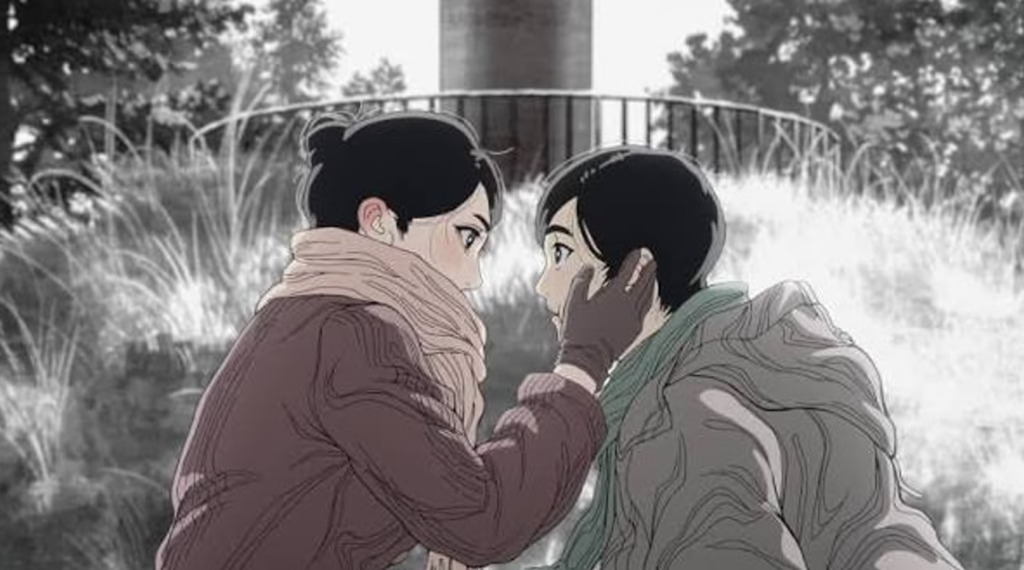
Aoteru Misumi is the central protagonist of Nippon Sangoku.
Initially introduced as a cautious and conscientious citizen of Yamato, he possesses a strong belief in proper administration and the importance of treating people fairly.
Unlike many influential figures in the series, Aoteru does not rely on military prestige, inherited authority, or physical intimidation.
His greatest strengths are his intelligence, observational abilities, and willingness to question established institutions.
Personal experiences with injustice reinforce his determination to challenge the political structures responsible for widespread suffering.
As he becomes involved in government and military affairs, Aoteru demonstrates an unusual ability to recognize the practical foundations of national strength.
He understands that agricultural production, public trust, economic stability, and effective administration can be just as important as battlefield victories.
His ambition eventually expands beyond improving Yamato’s government.
Aoteru begins pursuing the much greater objective of reuniting Japan, believing that the country’s continued division perpetuates instability and suffering.
Kenshō Ono voices Aoteru in Japanese, while Alejandro Ruiz provides his English-language performance.
Yoshitsune Asama – The Ambitious Swordsman
Yoshitsune Asama is one of the most important characters accompanying Aoteru’s development.
A member of the prestigious Asama clan, Yoshitsune possesses exceptional swordsmanship and considerable confidence in his own abilities.
Unlike Aoteru, who approaches problems through careful analysis, Yoshitsune frequently relies on decisive action and personal strength.
He also possesses strong political ambitions, hoping to achieve a position of authority within the government.
Their contrasting personalities create an entertaining relationship built around both cooperation and ideological disagreement.
Yoshitsune’s martial abilities complement Aoteru’s administrative intelligence, making their partnership valuable in situations requiring different forms of expertise.
However, their ambitions do not always align perfectly, and Yoshitsune occasionally struggles with the recognition Aoteru receives for his accomplishments.
Jun Fukuyama voices Yoshitsune in Japanese, while Kieran Regan provides the English voice.
Saki Higashimachi – Aoteru’s Righteous Wife
Saki Higashimachi is Aoteru Misumi’s wife and an important influence on his worldview.
She is characterized by her strong sense of justice, independent personality, and unwillingness to tolerate the mistreatment of ordinary citizens.
Where Aoteru initially approaches authority with caution, Saki is more willing to confront injustice directly.
Her determination demonstrates the moral courage required to challenge officials who abuse their positions.
The relationship between Saki and Aoteru establishes an important emotional foundation for the protagonist’s later ambitions.
She represents the belief that political authority should protect ordinary people rather than exploit them.
Chinatsu Akasaki voices Saki in Japanese, while Kristen McGuire provides the English-language performance.
Denki Taira – Yamato’s Ruthless Political Power
Denki Taira is one of the most intimidating political figures in Nippon Sangoku.
Serving as Yamato’s Minister of Home Affairs, he possesses extraordinary influence over the government.
Denki is willing to use executions, intimidation, and political manipulation to maintain authority.
His behavior reflects the dangers of a political system in which individual officials possess the power to act without meaningful accountability.
Unlike characters motivated primarily by national welfare, Denki frequently prioritizes his family’s influence and his own political ambitions.
His relationship with Fuji III also demonstrates the difference between possessing a formal title and exercising genuine power.
Denki’s methods create a dangerous environment for reformers such as Aoteru, whose commitment to administrative integrity threatens established networks of corruption.
Takashi Nagasako voices Denki in Japanese, while Steve Mize provides his English voice.
Mitsuhide Ryumon – The General of the Borderland Army
Mitsuhide Ryumon is one of Yamato’s most capable military leaders.
As General of the Borderland Army, he is responsible for protecting important territories and responding to threats from rival nations.
Ryumon combines military experience with a practical understanding of strategy and administration.
Unlike political officials who pursue conflict for personal advantage, he recognizes the importance of avoiding unnecessary warfare.
His leadership also demonstrates the value of intelligence, preparation, and understanding an opponent’s motivations.
Ryumon becomes an important figure in Aoteru’s development, recognizing the young man’s unusual abilities.
Their relationship reinforces one of the series’ central ideas: effective leadership requires the ability to recognize talent regardless of social background.
Kazuhiro Yamaji voices Ryumon in Japanese, while Ron Banks provides the English performance.
Yasuaki Kaku – Yamato’s Brilliant Strategist
Yasuaki Kaku is Mitsuhide Ryumon’s trusted adviser and one of the most intelligent military figures in the series.
His strategic abilities make him an essential contributor to the Borderland Army’s operations.
Kaku understands that warfare involves considerably more than the number of soldiers available to each side.
He considers geography, logistics, deception, political consequences, and the psychological condition of opposing forces.
His relationship with Ryumon is built on mutual trust and an understanding of their shared responsibilities.
Kaku also contributes to the development of younger figures who become involved in Yamato’s political and military struggles.
Yuichi Nakamura voices Kaku in Japanese, while Tom Choi provides his English voice.
Fuji III – Yamato’s Figurehead Ruler
Fuji III is the nominal ruler of Yamato.
Although he occupies the highest formal position within the government, he frequently struggles to exercise meaningful independence.
His political weakness allows powerful officials such as Denki Taira to manipulate major decisions.
The character illustrates how an institution can preserve the appearance of legitimate authority while allowing practical control to pass into other hands.
Fuji III’s decisions can have enormous consequences for the population, even when those decisions are influenced by intimidation or misleading information.
His presence also reinforces the importance of effective political institutions rather than relying exclusively on the character of individual rulers.
Taihi Kimura voices Fuji III in Japanese, while Michael Sinterniklaas provides the English performance.
Ohga Wajima – The Supreme Commander of Seii
Ohga Wajima is one of the most important military and political figures in Nippon Sangoku.
She rises to leadership in Seii through a coup, motivated partly by her desire to avenge her father, Byakko Wajima.
Her father previously served as a supreme commander before being killed during conflict with Yamato.
Ohga’s ambitions therefore combine personal grief, national pride, and the determination to restore Seii’s strength.
Unlike purely self-serving political leaders, she recognizes the importance of addressing the suffering of ordinary citizens.
However, her aggressive military ambitions create serious risks for her nation.
Ohga’s character demonstrates the complexity of leadership when legitimate grievances become intertwined with revenge and territorial conflict.
Minami Tsuda voices Ohga in Japanese, while Jennifer Sun Bell provides her English-language performance.
Yayakichi Hei – Seii’s Veteran Strategist
Yayakichi Hei is a senior strategist serving Seii.
He possesses extensive military experience and plays an important role in supporting Ohga Wajima.
His relationship with Ohga is particularly significant because he helped raise her alongside his own children.
This personal connection creates a bond that extends beyond conventional military loyalty.
Yayakichi understands the importance of maintaining confidence in leadership, particularly during periods of military instability.
His decisions reflect the difficult compromises that commanders may face when attempting to protect both their nation and its political institutions.
Kenyu Horiuchi voices Yayakichi in Japanese, while June Yoon provides his English voice.
Aterui Kura – Seii’s Aggressive Military Commander
Aterui Kura is a powerful soldier and Seii’s Military Affairs Supervisor.
He is characterized by his enthusiasm for battle and his willingness to use direct military force.
Unlike more cautious strategists, Kura frequently represents the aggressive side of Seii’s military leadership.
His personality contributes to the tension between calculated strategic planning and the desire for immediate battlefield success.
Kura’s actions also demonstrate how individual commanders can influence the direction and consequences of larger military campaigns.
Shunsuke Sakuya voices Kura in Japanese, while Michael Sorich provides the English-language performance.
Muuton Nagao – Seii’s Young Negotiator
Muuton Nagao is a young soldier associated with Seii’s leadership.
He serves as a negotiation supervisor and is strongly motivated by his admiration for Ohga Wajima.
His role demonstrates the importance of diplomacy, intelligence, and deception within the conflict between the three nations.
Although military strength remains central to the story, characters such as Muuton illustrate how negotiations and political maneuvering can influence the battlefield.
His personal motivations also complicate his decisions, making him more than a conventional military officer.
Shūichirō Umeda voices Muuton in Japanese, while John Patneaude provides his English performance.
Momokuni Hojo – The Leader of Buo
Momokuni Hojo is the elderly leader of Buo.
Despite his outwardly jovial personality, he is also an exploitative political figure whose decisions are influenced by personal interests.
One of his distinctive characteristics is his use of expressions associated with Japan’s earlier Reiwa era.
This detail creates an interesting connection between the post-apocalyptic setting and the civilization that existed before the country’s collapse.
Momokuni’s leadership demonstrates that the passage of time has not eliminated political opportunism.
Hōchū Ōtsuka voices Momokuni in Japanese, while William Salyers provides the English voice.
Juro Musashikami – Buo’s Experienced Strategist
Juro Musashikami is an elderly strategist serving Buo.
Despite his age, he remains capable of contributing valuable military and political insight.
His quiet manner of speaking is one of his most distinctive traits, with an interpreter often required to communicate his words to others.
This characteristic introduces an unusual element of humor while reinforcing his position as an experienced adviser.
Juro represents the value of accumulated knowledge in a world where military decisions can determine the survival of entire regions.
Chō voices Juro in Japanese, while Michael Johnston provides his English performance.
Himehito Okimi – A Young Figure With Royal Connections
Himehito Okimi is a young political figure associated with Buo.
He descends from royalty connected to the period before Japan’s division into three nations.
His distant relationship to Fuji III gives him a potential connection to broader questions of legitimacy and political succession.
Unlike older leaders whose authority is already established, Himehito represents a younger generation navigating the political consequences of inherited status.
His intelligence and background make him a potentially significant figure in the continuing struggle for national power.
Takeo Ōtsuka voices Himehito in Japanese, while Brent Mukai provides the English performance.
Additional Characters and Voice Cast
Beyond its principal figures, Nippon Sangoku features a substantial ensemble of soldiers, political officials, advisers, and members of influential families.
| Character | Japanese Voice Actor | English Voice Actor |
|---|---|---|
| Aoteru Misumi | Kenshō Ono | Alejandro Ruiz |
| Yoshitsune Asama | Jun Fukuyama | Kieran Regan |
| Saki Higashimachi | Chinatsu Akasaki | Kristen McGuire |
| Denki Taira | Takashi Nagasako | Steve Mize |
| Mitsuhide Ryumon | Kazuhiro Yamaji | Ron Banks |
| Yasuaki Kaku | Yuichi Nakamura | Tom Choi |
| Fuji III | Taihi Kimura | Michael Sinterniklaas |
| Go Sugo | Ryōta Takeuchi | Brent Mukai |
| Shiryo Nagamine | Shunsuke Takeuchi | Andrew Kishino |
| Tonotsugu Taira | Ayumu Murase | Michael Johnston |
| Junichi Tamaki | Kazuyuki Okitsu | Darius Johnson |
| Yoshinaga Sato | Yōji Ueda | Paul St. Peter |
| Hina Hiraizumi | Chinatsu Akasaki | Kristen McGuire |
| Kinta Moriyama | Nobuaki Kanemitsu | Brook Chalmers |
| Ohga Wajima | Minami Tsuda | Jennifer Sun Bell |
| Yayakichi Hei | Kenyu Horiuchi | June Yoon |
| Aterui Kura | Shunsuke Sakuya | Michael Sorich |
| Muuton Nagao | Shūichirō Umeda | John Patneaude |
| Yasuke Hei | Atsushi Tamaru | Clifford Chapin |
| Daisuke Hei | Tsuguo Mogami | Jamison Boaz |
| Jien Hibi | Seiichiro Yamashita | David McKahan |
| Haruichi Azami | Shinpachi Tsuji | Paul St. Peter |
| Momokuni Hojo | Hōchū Ōtsuka | William Salyers |
| Juro Musashikami | Chō | Michael Johnston |
| Himehito Okimi | Takeo Ōtsuka | Brent Mukai |
The extensive cast reflects the political complexity of the series. Rather than focusing exclusively on a small group of heroes, Nippon Sangoku develops a world where military officers, government officials, and regional leaders all contribute to the direction of the story.
Nippon Sangoku Anime – Release Date and Production
The anime adaptation of Nippon Sangoku was officially announced on January 27, 2026.
Studio Kafka was responsible for animation production, with Amazon MGM Studios participating as a co-producer.
Kazuaki Terasawa directed the series, while Teruko Utsumi handled series composition.
Takahiko Abiru served as character designer and chief animation director, helping translate Ikka Matsuki’s manga artwork into animated form.
The musical score was composed by Kevin Penkin, whose involvement added another notable creative figure to the production.
Megumi Han provided the narration.
The anime aired on Japanese television from April 7 to June 23, 2026, through Tokyo MX and BS NTV.
Amazon Prime Video began streaming the series internationally on April 5, 2026, two days before its Japanese television debut.
Studio Kafka – The Animation Studio Behind Nippon Sangoku
Studio Kafka produced the television adaptation of Nippon Sangoku.
Adapting a politically complex manga presents challenges that differ from those associated with conventional action-focused anime.
The story relies heavily on conversations, military planning, changes in political authority, and the relationships between numerous characters.
An effective adaptation therefore requires more than visually impressive battle sequences.
Character expressions, environmental details, scene composition, and pacing are important for communicating the tension behind political negotiations and strategic decisions.
The production also needed to establish the visual identity of a post-apocalyptic Japan whose technological capabilities resemble an earlier historical period.
This combination of historical-style environments and futuristic background history gives the anime a distinctive aesthetic.
Kazuaki Terasawa – The Director of Nippon Sangoku
Kazuaki Terasawa directed the anime adaptation.
His responsibilities included overseeing the translation of the manga’s narrative into a television format.
The series’ structure requires careful attention to the relationship between political dialogue and military conflict.
Unlike anime centered primarily on individual combat abilities, Nippon Sangoku frequently builds tension through conversations and decisions whose consequences become apparent later.
The director therefore plays an important role in determining how information is presented and how quickly the audience becomes familiar with the complicated political environment.
Terasawa also directed the first and final episodes of the opening season, helping establish and conclude its initial narrative arc.
Teruko Utsumi – Series Composition and Screenwriting
Teruko Utsumi handled series composition for the anime.
This role involves organizing the source material into a coherent television narrative while maintaining the relationships between major events.
For Nippon Sangoku, the challenge is particularly significant because the manga includes numerous political figures, military campaigns, and strategic developments.
The adaptation must introduce the three nations and their competing interests without overwhelming viewers with information.
Utsumi also contributed scripts for several episodes, including important installments involving the development of Aoteru’s political ambitions.
The resulting series places considerable emphasis on dialogue and the gradual consequences of political decisions.
Takahiko Abiru – Character Design and Animation Direction
Takahiko Abiru served as character designer and chief animation director.
His work involved adapting the manga’s characters for animation while preserving their recognizable personalities.
This is particularly important in a series with a large ensemble of political and military figures.
Distinctive facial features, clothing, and visual presentation help viewers distinguish between characters who may occupy similar positions within their respective governments.
The character designs also contribute to the anime’s unusual historical atmosphere.
Although the setting exists in a post-apocalyptic future, many visual elements evoke earlier periods of Japanese history.
Abiru’s contribution helps connect these different influences into a consistent animated presentation.
Kevin Penkin – The Music of Nippon Sangoku
Kevin Penkin composed the musical score for Nippon Sangoku.
His involvement is notable because the series requires music capable of supporting several different dramatic environments.
Political negotiations demand a different atmosphere from military confrontations, while moments of personal tragedy require a more restrained emotional approach.
The score contributes to the contrast between intimate character relationships and the large-scale conflicts affecting the three nations.
Music also plays an important role in establishing the atmosphere of a civilization attempting to rebuild itself after catastrophic collapse.
Rather than treating every scene as an action sequence, the soundtrack supports the show’s broader emphasis on tension, ambition, and political uncertainty.
Nippon Sangoku Opening Theme – Hidane
The opening theme of Nippon Sangoku is “Hidane”, performed by Tatsuya Kitani.
The Japanese title can be translated as “Flashpoint” or understood through its association with the spark that begins a fire.
This imagery fits the anime’s central themes of political upheaval, personal ambition, and the possibility that a single individual can initiate enormous historical change.
The opening provides a musical introduction to the series’ atmosphere while reinforcing its identity as a serious political drama.
Tatsuya Kitani’s participation also connects the production to the broader contemporary Japanese music industry.
Nippon Sangoku Ending Theme – Chikai
The ending theme is “Chikai”, performed by Leina.
The title translates to “Oath,” a concept closely connected to the ambitions and responsibilities of the series’ principal characters.
Promises, loyalty, and political commitments are central to Nippon Sangoku, particularly because the story frequently examines the consequences of decisions made in the name of national duty.
The ending theme provides an emotional counterbalance to the military and political conflicts depicted throughout the episodes.
Its title also reflects the importance of Aoteru’s determination to pursue a different future for Japan.
Nippon Sangoku Season 1 – Story Overview
The first season of Nippon Sangoku consists of twelve episodes and introduces the fractured political landscape of post-apocalyptic Japan.
The opening episodes establish Aoteru Misumi’s personal circumstances, the authoritarian government of Yamato, and the events that motivate him to challenge the existing political order.
As the story develops, Aoteru becomes involved with the Borderland General Corps, where his administrative intelligence begins attracting the attention of influential military leaders.
The narrative gradually expands beyond Yamato, introducing Seii’s internal political struggles and the growing possibility of war between the two nations.
Military strategy becomes increasingly important as commanders attempt to manipulate their opponents through deception, positioning, and psychological pressure.
The season also explores the dangers of political ambition, particularly when powerful officials place personal interests above national stability.
By its conclusion, the story has established the scale of Aoteru’s ambitions and the considerable obstacles standing between Japan’s divided nations and any possibility of lasting reunification.
Nippon Sangoku Season 1 Episode Guide
The first season contains twelve episodes, originally broadcast in Japan between April 7 and June 23, 2026.
| Episode | Title | Japanese TV Air Date |
|---|---|---|
| 1 | An Oath for Peace | April 7, 2026 |
| 2 | Toryumon | April 14, 2026 |
| 3 | Imperial Council | April 21, 2026 |
| 4 | The Seii Coup | April 28, 2026 |
| 5 | The Borderland General Corps Marches Out | May 5, 2026 |
| 6 | Eve of War | May 12, 2026 |
| 7 | The Kanazawa Night Raid | May 19, 2026 |
| 8 | Dragon vs. Tiger | May 26, 2026 |
| 9 | Tears for Yayakichi | June 2, 2026 |
| 10 | Reunion of Mortal Enemies | June 9, 2026 |
| 11 | Lie on Firewood and Council the Heavens | June 16, 2026 |
| 12 | The Fall of Seii | June 23, 2026 |
Amazon Prime Video began releasing episodes two days before their corresponding Japanese television broadcasts.
The season’s progression moves from personal tragedy and administrative reform toward increasingly complicated military conflicts.
Its later episodes emphasize the relationship between political decisions and battlefield consequences.
Nippon Sangoku Season 2 – Has a Sequel Been Announced?
Yes. A sequel to the Nippon Sangoku anime was announced on September 3, 2026.
The announcement confirms that the adaptation is intended to continue beyond its original twelve-episode season.
However, the supplied production information does not establish an official premiere date, episode count, or complete staff and cast lineup for the sequel.
It also does not confirm whether the continuation will be marketed specifically as Nippon Sangoku Season 2 or under another official designation.
The original manga contains additional material beyond the events adapted in the first season, providing a foundation for further storytelling.
For viewers interested in Aoteru’s ambition to reunify Japan, the sequel announcement is particularly important because the first season establishes a political conflict with consequences extending well beyond its initial episodes.
Until further details are announced, a specific release window should be treated as unconfirmed.
Nippon Sangoku Manga – The Original Story by Ikka Matsuki
Nippon Sangoku originated as a manga written and illustrated by Ikka Matsuki.
Serialization began on November 24, 2021, through Shogakukan’s Ura Sunday website and MangaONE application.
The manga attracted attention for its ambitious approach to political storytelling, combining post-apocalyptic worldbuilding with historical-style military strategy.
Unlike conventional action manga centered on supernatural combat abilities, the series emphasizes intelligence, governance, and the decisions of influential political figures.
Its fictional Japan provides a setting where characters can debate the nature of leadership while confronting the practical realities of famine, military conflict, and political instability.
The manga’s detailed cast and competing national interests create a narrative that extends beyond the personal journey of its protagonist.
By April 2026, seven collected volumes had been released in Japan.
The series also received recognition through several manga award nominations and rankings.
Nippon Sangoku Manga Volumes and Release Dates
As of April 2026, the manga had been collected into seven volumes.
| Volume | Japanese Release Date |
|---|---|
| Volume 1 | March 10, 2022 |
| Volume 2 | July 19, 2022 |
| Volume 3 | December 12, 2022 |
| Volume 4 | June 12, 2023 |
| Volume 5 | July 11, 2024 |
| Volume 6 | November 12, 2024 |
| Volume 7 | April 10, 2026 |
The manga’s publication history demonstrates the gradual development of its political narrative.
Each collected volume contributes to the broader story of Japan’s divided nations and the individuals attempting to influence their future.
The seven-volume count reflects the information available in the supplied April 2026 publication data and should not be interpreted as confirmation that the series has concluded.
Why Did the Nippon Sangoku Manga Go on Hiatus?
On June 1, 2026, Ikka Matsuki announced that Nippon Sangoku would enter a hiatus while the creator recovered from steroid withdrawal syndrome.
The announcement concerned the manga’s publication schedule rather than the completion of the anime’s first season.
Health-related interruptions are not uncommon within the manga industry, where demanding production schedules can create significant pressure on creators.
However, the specific duration of this hiatus and an official return date were not established in the supplied information.
Readers should therefore avoid assuming that the series has been canceled or permanently discontinued.
The manga’s future publication schedule depends on official announcements from the creator and publisher.
Nippon Sangoku Manga vs. Anime – What Are the Differences?
The manga and anime share the same central premise, characters, and political setting.
However, the two formats naturally present the story through different techniques.
The manga allows readers to control their pace, examine dialogue carefully, and revisit complicated political discussions whenever necessary.
This can be particularly valuable in a series featuring numerous characters, competing military strategies, and changing alliances.
The anime introduces voice performances, music, movement, and audiovisual direction, giving battles and political confrontations a different sense of immediacy.
The twelve-episode television format also requires careful organization of the source material.
While the anime offers an accessible introduction to the world of Nippon Sangoku, readers interested in exploring the full scope of Matsuki’s narrative may find additional value in the original manga.
Both versions emphasize the same central themes of leadership, political legitimacy, and national reunification.
Political Strategy – The Heart of Nippon Sangoku
Political strategy is one of the defining elements of Nippon Sangoku.
The series repeatedly demonstrates that national power cannot be measured exclusively through the size of an army.
Agricultural production, administrative competence, political legitimacy, and the confidence of ordinary citizens are equally important.
Aoteru Misumi recognizes these relationships and uses his intelligence to propose reforms that strengthen the foundations of government.
His approach contrasts with officials who prioritize immediate military victories or personal political advancement.
The story also examines the importance of public perception.
A leader who wins a battle but loses the confidence of the population may ultimately weaken the nation they claim to defend.
This emphasis on institutional strength gives Nippon Sangoku a distinctive identity within the military anime genre.
Warfare and Military Tactics in Nippon Sangoku
Military conflict plays a major role in Nippon Sangoku, but the series approaches warfare through strategy rather than spectacle alone.
Commanders must consider terrain, supply lines, troop morale, intelligence gathering, and the possibility of deception.
The outcome of a confrontation can depend on whether a general correctly interprets an opponent’s intentions.
This creates situations where an apparently weaker army may gain an advantage through careful planning.
The series also explores the consequences of political interference in military affairs.
When inexperienced officials prioritize personal prestige over practical considerations, their decisions can place entire armies at risk.
These elements reinforce the story’s central argument that intelligence and responsible leadership are essential to national survival.
The Influence of Chinese History and Romance of the Three Kingdoms
The title Nippon Sangoku immediately invites comparisons with the historical Three Kingdoms period of China.
That era has inspired numerous works of literature, television, anime, manga, and video games.
One of the most influential interpretations is Romance of the Three Kingdoms, which emphasizes military strategy, political alliances, charismatic leaders, and the struggle to reunify a divided country.
Nippon Sangoku adopts a comparable structural idea by dividing Japan into three competing powers.
Its narrative also emphasizes the importance of strategists, generals, political legitimacy, and shifting alliances.
However, the series is not a direct retelling of Chinese history.
Instead, it uses a post-apocalyptic Japanese setting to explore similar questions about leadership and national unity.
The result is a fictional political drama that combines recognizable historical storytelling traditions with a distinctly modern premise.
Leadership, Corruption, and the Cost of Power
One of the most important themes in Nippon Sangoku is the relationship between political authority and moral responsibility.
The series presents leaders whose decisions affect entire populations, yet whose motivations frequently differ from the interests of the people they govern.
Denki Taira represents the dangers of unchecked authority, using intimidation and political manipulation to maintain control.
Other characters demonstrate different approaches, including military discipline, administrative reform, and the pursuit of popular support.
Aoteru’s development is particularly important because he believes that effective government should be built around the welfare of ordinary citizens.
However, the story does not suggest that good intentions automatically produce good outcomes.
Even capable leaders must confront difficult choices, competing interests, and the consequences of decisions made under uncertain circumstances.
This complexity gives the series much of its dramatic substance.
National Unity – Can Japan Become One Country Again?
The ambition to reunify Japan forms the central long-term objective of Nippon Sangoku.
However, the series repeatedly demonstrates that political unity is considerably more complicated than defeating rival armies.
Each of the three nations possesses its own institutions, leadership, and historical grievances.
Their populations have experienced generations of conflict, creating divisions that cannot be erased through military victory alone.
Aoteru’s vision therefore raises difficult questions about how a unified nation should be governed.
Would reunification simply place all three territories under a new authoritarian ruler?
Could administrative reform and political compromise create a more stable society?
And how can a government establish legitimacy among people who have spent generations living under competing national identities?
These questions make the story more than a conventional tale of conquest.
Animation, Visual Style, and Worldbuilding
The visual identity of Nippon Sangoku is shaped by its unusual combination of futuristic history and historical-style society.
Although the story takes place after modern Japan’s collapse, the surviving nations possess technological capabilities comparable to an earlier period.
This allows the anime to feature military formations, traditional political institutions, and environments that evoke historical Japan.
At the same time, the audience understands that these societies exist in the aftermath of a technologically advanced civilization.
The contrast gives the world a distinctive atmosphere.
Character designs also play an important role because the story features numerous political and military figures whose identities must remain recognizable.
The adaptation’s visual presentation supports its emphasis on large-scale political conflict rather than relying exclusively on individual action scenes.
Nippon Sangoku Reception and Manga Awards
The original Nippon Sangoku manga received recognition through several Japanese manga rankings and award nominations.
In 2022, it was nominated in the web manga category of the eighth Next Manga Awards, finishing seventeenth among fifty nominees.
The series received another nomination in the ninth edition of the awards in 2023.
It also appeared in the 2023 edition of Kono Manga ga Sugoi!, ranking twelfth among manga recommended for male readers.
The manga was nominated for the sixteenth Manga Taishō awards and finished fifth.
Additional recognition included third place in the Nationwide Publishers Recommended Comics of 2023 list and twenty-second place in Da Vinci magazine’s 2023 Book of the Year ranking.
These achievements demonstrate that the manga attracted attention before receiving its anime adaptation.
However, the supplied information does not include verified aggregate review scores for the 2026 anime itself, so its critical reception should not be represented through invented numerical ratings.
Where Can You Watch Nippon Sangoku?
Nippon Sangoku is available through Amazon Prime Video, which began streaming the anime internationally on April 5, 2026.
The series subsequently began its Japanese television broadcast on April 7, 2026, through Tokyo MX and BS NTV.
The first season consists of twelve episodes, concluding its television run on June 23, 2026.
Prime Video’s international release provides an accessible way for audiences outside Japan to discover the adaptation.
However, streaming availability, subtitle options, and language selections may vary by region.
Viewers should consult the official Prime Video listing in their country for the most accurate information.
Anime Similar to Nippon Sangoku
Viewers who enjoy Nippon Sangoku may also appreciate anime that explore military strategy, political ambition, and the consequences of leadership.
Kingdom is one of the most natural comparisons. Set during China’s Warring States period, it follows military campaigns and the ambition to unify a divided nation. Its emphasis on generals, battlefield strategy, and political power makes it particularly relevant.
Legend of the Galactic Heroes offers a different setting but explores similarly complex questions about government, warfare, ideology, and leadership. Its science-fiction environment allows it to examine political institutions on an enormous scale.
The Heroic Legend of Arslan combines military conflict with questions of political legitimacy and the responsibilities of rulers.
Vinland Saga approaches violence and leadership through a more personal historical narrative, exploring the consequences of ambition and the search for a different way of living.
Code Geass offers another perspective on strategic intelligence, political rebellion, and the relationship between individual ambition and national transformation.
Although these series differ considerably in setting and tone, they share an interest in characters whose decisions influence the destinies of entire societies.
The Future of Nippon Sangoku
The future of Nippon Sangoku extends beyond its first anime season.
The sequel announcement made on September 3, 2026, indicates that the animated adaptation is expected to continue.
The manga also contains material beyond the events covered during the opening television season, providing additional possibilities for adaptation.
However, the manga’s publication hiatus introduces uncertainty regarding the pace at which new source material will become available.
The long-term direction of the anime will depend on production decisions, the availability of source material, and future announcements.
For now, the franchise has established a recognizable identity through its ambitious premise, substantial cast, and emphasis on political strategy.
Its continued development will be particularly interesting for viewers who want to see how Aoteru’s dream of national reunification evolves.
Frequently Asked Questions
What Is Nippon Sangoku?
Nippon Sangoku: The Three Nations of the Crimson Sun is a Japanese manga and anime series about a post-apocalyptic Japan divided into three competing nations, following Aoteru Misumi’s ambition to reunify the country.
Who Created Nippon Sangoku?
The manga was written and illustrated by Ikka Matsuki.
When Did the Nippon Sangoku Manga Begin?
The manga began serialization on November 24, 2021.
When Did the Nippon Sangoku Anime Premiere?
The anime began streaming on Amazon Prime Video on April 5, 2026, before its Japanese television premiere on April 7.
Who Animated Nippon Sangoku?
Studio Kafka produced the anime adaptation.
Who Directed Nippon Sangoku?
Kazuaki Terasawa directed the anime.
How Many Episodes Does Nippon Sangoku Season 1 Have?
The first season contains twelve episodes.
When Did Nippon Sangoku Season 1 End?
The Japanese television broadcast concluded on June 23, 2026.
Has Nippon Sangoku Season 2 Been Announced?
A sequel was announced on September 3, 2026, although its official release date and final title have not been confirmed in the supplied information.
When Will Nippon Sangoku Season 2 Be Released?
An official premiere date has not been established in the supplied information.
Who Is the Main Character of Nippon Sangoku?
Aoteru Misumi is the central protagonist.
Who Voices Aoteru Misumi?
Kenshō Ono voices Aoteru in Japanese, while Alejandro Ruiz provides his English-language voice.
What Are the Three Nations in Nippon Sangoku?
The three nations are Yamato, Buo, and Seii.
Is Nippon Sangoku Set in the Future?
Yes. It takes place approximately one hundred years after a catastrophic collapse of modern Japanese civilization.
Why Did Japan Collapse in Nippon Sangoku?
The story describes a combination of global nuclear warfare, a refugee crisis, disease, a major earthquake, economic instability, government corruption, and widespread rebellion.
Is Nippon Sangoku Based on a True Story?
No. It is a fictional post-apocalyptic political drama, although its storytelling draws on recognizable historical and political themes.
Is Nippon Sangoku Inspired by Romance of the Three Kingdoms?
Its three-nation structure and emphasis on political and military strategy invite comparisons with the Three Kingdoms tradition, although it is not a direct historical adaptation.
Does Nippon Sangoku Have Supernatural Powers?
The series primarily emphasizes political strategy, military conflict, and human intelligence rather than supernatural combat abilities.
Is Nippon Sangoku an Action Anime?
It includes military action, but political drama, strategy, and character relationships are equally important to its identity.
Where Can You Watch Nippon Sangoku?
The anime is available through Amazon Prime Video, subject to regional distribution arrangements.
Who Composed the Music for Nippon Sangoku?
Kevin Penkin composed the musical score.
What Is the Nippon Sangoku Opening Song?
The opening theme is “Hidane,” performed by Tatsuya Kitani.
What Is the Nippon Sangoku Ending Song?
The ending theme is “Chikai,” performed by Leina.
How Many Nippon Sangoku Manga Volumes Are There?
Seven collected volumes had been released in Japan as of April 2026.
Is the Nippon Sangoku Manga Finished?
The supplied information does not establish that the manga has concluded. It entered a hiatus in June 2026.
Why Is Nippon Sangoku on Hiatus?
Creator Ikka Matsuki announced a hiatus while recovering from steroid withdrawal syndrome.
Is Nippon Sangoku Worth Watching?
Yes, especially for viewers interested in political intrigue, military strategy, post-apocalyptic worldbuilding, and intelligent protagonists.
Conclusion
Nippon Sangoku: The Three Nations of the Crimson Sun stands out as an ambitious political anime that approaches the post-apocalyptic genre from an unusual perspective. Rather than focusing on the immediate destruction of civilization, it explores the political systems, military conflicts, and social divisions that emerge generations after a modern nation collapses. Its vision of Japan divided into Yamato, Buo, and Seii creates a compelling environment where national survival depends on far more than battlefield strength.
At the center of this world is Aoteru Misumi, a protagonist whose greatest abilities are intelligence, observation, and administrative competence. His ambition to reunify Japan emerges from a desire to challenge corruption and establish a more stable society. However, the story repeatedly demonstrates that achieving such a goal requires navigating institutions dominated by ambition, fear, personal loyalty, and competing interpretations of justice. Aoteru’s journey is therefore not simply about gaining political influence but about understanding what responsible leadership should mean.
The supporting cast contributes significantly to the series’ complexity. Characters such as Yoshitsune Asama, Mitsuhide Ryumon, Denki Taira, and Ohga Wajima embody different approaches to power, creating conflicts that cannot always be resolved through straightforward moral judgments. Their decisions influence entire populations, demonstrating how the ambitions of individual leaders can reshape the future of nations.
The 2026 anime adaptation brings Ikka Matsuki’s manga to a wider audience through Studio Kafka’s production, Kazuaki Terasawa’s direction, and Kevin Penkin’s musical score. Its twelve-episode first season establishes the political landscape and introduces the major personalities involved in Japan’s struggle for reunification. The sequel announcement in September 2026 further suggests that the animated story will continue developing beyond its initial installment.
The original manga also deserves recognition for its ambitious storytelling and the attention it received through Japanese manga awards and rankings. Its combination of historical inspiration, speculative worldbuilding, and political philosophy provides the foundation for an anime that prioritizes intelligence and institutional conflict alongside military action.
Ultimately, Nippon Sangoku is a story about the fragility of civilization and the difficult process of rebuilding a nation after catastrophe. It asks whether political unity can create lasting peace, whether intelligent leadership can overcome entrenched corruption, and whether individuals can change systems that appear too powerful to challenge. For viewers who appreciate strategic conflicts, morally complicated characters, and stories where ideas carry as much weight as weapons, Nippon Sangoku offers a distinctive and thought-provoking anime experience.
If you don’t know where to watch this Anime for FREE make sure to contact me via E-mail, or in the comments below. Thank you for reading and make sure to bookmark the site.
How useful was this post?
Click on a star to rate it!
Average rating 0 / 5. Vote count: 0
No votes so far! Be the first to rate this post.