
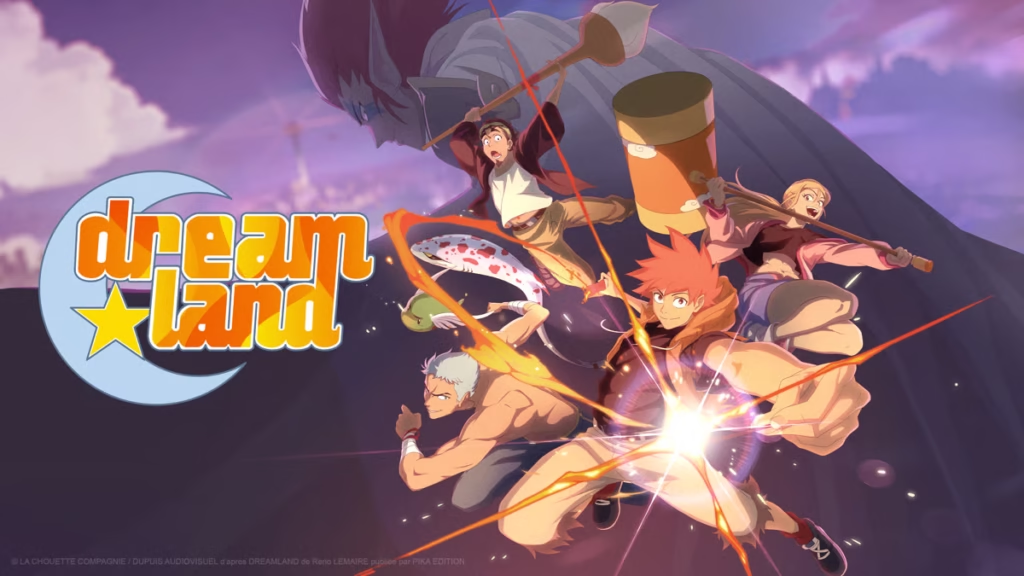
What if the world you entered every night while sleeping was more than a collection of forgotten memories, strange images, and imaginary experiences? What if dreams formed an entirely separate reality, filled with extraordinary kingdoms, dangerous creatures, powerful individuals, and conflicts capable of changing your waking life? This fascinating premise forms the foundation of Dreamland, a French fantasy adventure series that has developed a devoted following through its unusual mythology, imaginative storytelling, and distinctive combination of European comics and Japanese manga influences.
Created, written, and illustrated by French artist Reno Lemaire, Dreamland began publication in January 2006 through Pika Édition. The series belongs to a creative tradition frequently described as manfra, referring to French comics influenced by Japanese manga. Rather than simply imitating familiar Japanese storytelling conventions, Lemaire developed an original fantasy universe built around dreams, nightmares, personal fears, friendship, and the extraordinary possibilities hidden within the human imagination.
Nearly two decades after the comic’s debut, Dreamland finally received an animated television adaptation. Produced by Ellipse Animation and La Chouette Compagnie, the series premiered in October 2026, introducing its unusual world to audiences in France, Japan, and international streaming markets. The adaptation represents a significant milestone not only for the original comic but also for the growing international exchange between European and Japanese animation cultures.
The story follows Terrence Meyer, a high school student whose life has been shaped by a devastating childhood tragedy. Ever since his mother died in a fire, Terrence has struggled with an overwhelming fear of flames. However, during a particularly significant dream, he confronts that fear and undergoes an extraordinary transformation. Instead of remaining an ordinary dreamer, he becomes a Traveler, an individual capable of consciously exploring the mysterious world known as Dreamland.
Within this extraordinary realm, Terrence discovers that overcoming his greatest fear has granted him the ability to control fire. His new powers introduce him to a world filled with other Travelers, dangerous nightmares, unusual creatures, and conflicts that extend far beyond ordinary dreams. Alongside new allies, he begins exploring a universe where imagination can become a source of extraordinary strength, but where fear and personal weakness can also create serious dangers.
With its imaginative worldbuilding, energetic fantasy action, emotional character development, and long-awaited transition from comic pages to animation, Dreamland stands out as one of the most interesting international fantasy anime projects of 2026. Its arrival also highlights the growing recognition of French manga-inspired storytelling and the possibility of introducing European-created properties to a worldwide anime audience.
Dreamland Anime – Official Trailer
What Is Dreamland About?
Dreamland follows Terrence Meyer, a seemingly ordinary high school student whose life changes after he discovers the existence of a mysterious world accessible through dreams. For years, Terrence has suffered from an intense fear of fire, a trauma connected to the death of his mother. This fear has shaped his emotional life and remains one of the greatest obstacles preventing him from moving beyond his past.
One night, while dreaming, Terrence confronts the flames that have haunted him for so long. Rather than fleeing from the experience, he manages to overcome his fear, triggering an extraordinary transformation. He becomes a Traveler, a special kind of dreamer who can consciously enter and explore Dreamland.
Dreamland is not an ordinary dreamscape. It is an expansive fantasy universe containing strange territories, powerful inhabitants, unusual rules, and dangerous conflicts. Within this world, individuals who overcome their greatest fears can acquire extraordinary abilities connected to those fears.
For Terrence, this transformation grants him the power to manipulate fire. The element that once represented his greatest source of terror becomes the foundation of his new strength, creating an important connection between his emotional development and supernatural abilities.
As he explores Dreamland, Terrence encounters other Travelers and begins discovering the complexities of this mysterious realm. Some individuals become valuable allies, while others possess motivations that may bring them into conflict with his growing ambitions.
The story combines fantasy adventure with personal growth, exploring how individuals confront trauma, develop friendships, and discover new possibilities by overcoming the limitations imposed by fear. Although the dream world provides spectacular action and imaginative environments, the emotional experiences of its characters remain central to the narrative.
Is Dreamland Worth Watching?
Dreamland is worth considering for viewers who enjoy fantasy anime built around unusual supernatural systems, adventurous worldbuilding, and characters who gradually develop their abilities through personal experiences. Its central premise offers a refreshing variation on familiar action-fantasy storytelling by connecting supernatural powers directly to the fears individuals must overcome.
One of the series’ greatest attractions is the concept of Dreamland itself. Rather than presenting a conventional fantasy kingdom governed by a single set of familiar rules, the story introduces a world shaped by dreams and imagination. This allows for unusual locations, unpredictable encounters, and abilities that reflect the emotional experiences of different characters.
Terrence’s personal journey also provides an engaging emotional foundation. His fear of fire is not simply a convenient weakness introduced to justify a power upgrade. It originates from a traumatic experience and influences the way he understands himself. His transformation into a Traveler therefore represents both a supernatural development and a symbolic step toward confronting his past.
The series also offers an interesting cultural identity. Although its visual language and storytelling conventions draw heavily from Japanese manga, Dreamland originated in France and developed through the work of a French creator. This combination gives it a distinctive place within the broader international anime landscape.
The animated adaptation introduces another reason for interest, particularly for readers who have followed the comic since its early publication. Seeing its characters, environments, and supernatural abilities translated into movement, sound, and voice performances represents an important milestone.
However, viewers should distinguish the established reputation of the long-running comic from the reception of the newly premiered animated series. As of October 2026, the adaptation is still relatively new, and its long-term critical standing cannot yet be established.
Why Should You Watch Dreamland?
One of the strongest reasons to watch Dreamland is its imaginative approach to supernatural powers. Instead of granting abilities through conventional training, inherited bloodlines, or mysterious artifacts, the story connects extraordinary strength to the process of overcoming fear. This creates an interesting relationship between emotional development and action-oriented storytelling.
The world itself is another major attraction. Dreamland contains unusual environments, dangerous creatures, and individuals whose abilities can differ dramatically depending on their personal experiences. Because the setting is rooted in dreams, the possibilities for creative locations and encounters are especially broad.
The protagonist also offers an accessible emotional perspective. Terrence begins as an ordinary teenager struggling with a painful memory, making his journey understandable even before the supernatural elements become important. His growing confidence and developing relationships provide a foundation for the larger fantasy adventure.
The series’ combination of French creative origins and Japanese manga influences gives it an identity distinct from many conventional anime productions. Its animated adaptation also represents an important achievement for the international recognition of European manga-inspired comics.
Finally, Dreamland offers an opportunity to explore a fantasy universe that has been developing for approximately twenty years. With twenty-four French comic volumes released by July 2026, the source material provides an extensive foundation of characters, mythology, and potential storylines.
The World of Dreamland – A Universe Hidden Inside Dreams
The central setting of Dreamland is a mysterious fantasy realm that exists beyond ordinary waking reality. Although people enter dreams every night, most remain unaware of the deeper structure of the world they experience while sleeping. For ordinary dreamers, these experiences may appear temporary and disconnected, but Travelers discover that Dreamland possesses a much more complex existence.
The realm contains unusual territories, strange inhabitants, and dangerous individuals whose abilities are shaped by the supernatural rules governing the world. Its dream-based nature allows environments and encounters to differ considerably from those found in conventional fantasy settings.
One of the most interesting aspects of Dreamland is the relationship between imagination and personal identity. Dreams often reflect memories, emotions, anxieties, and desires, and the series uses these associations as the foundation for its fantasy mythology.
For Travelers, Dreamland becomes a place of discovery and confrontation. They can encounter others who possess extraordinary powers, explore unfamiliar locations, and become involved in conflicts that reveal more about the realm’s structure.
However, the freedom associated with dreams does not necessarily mean that Dreamland is safe. The world contains threats capable of challenging even experienced Travelers, and unfamiliar environments can create unpredictable dangers.
This combination of imagination, supernatural rules, and personal risk gives the setting its distinctive appeal. Dreamland is simultaneously a place of extraordinary possibility and a realm where confronting one’s fears can have meaningful consequences.
Who Are the Travelers in Dreamland?
Travelers are individuals who possess the extraordinary ability to enter Dreamland consciously. Unlike ordinary dreamers, they can recognize the world around them, make deliberate decisions, and interact with its inhabitants while maintaining awareness of their experiences.
Becoming a Traveler is closely connected to overcoming a significant personal fear. This transformation represents an important psychological and supernatural achievement, allowing individuals to develop abilities associated with the fear they have confronted.
Terrence Meyer becomes a Traveler after overcoming his fear of fire. As a result, he gains the ability to manipulate flames within Dreamland, transforming the source of his greatest anxiety into a powerful tool.
Other Travelers possess different abilities, reflecting the variety of fears and experiences that shape human psychology. This creates opportunities for imaginative confrontations in which powers are connected to personal identity rather than arbitrary combat classifications.
The existence of multiple Travelers also introduces an important social dimension to the story. Some individuals cooperate, develop friendships, and pursue shared objectives, while others may become rivals or enemies.
The Traveler concept is central to Dreamland’s appeal because it connects character development directly to the fantasy power system. A person’s emotional history can influence their abilities, making psychological growth an important part of the adventure.
Terrence Meyer’s Fire Powers Explained
Terrence Meyer’s ability to control fire is one of the defining elements of Dreamland. His powers originate from the traumatic fear that shaped his childhood following his mother’s death.
For years, fire represented danger, helplessness, and painful memories. The emotional weight of this experience prevented Terrence from approaching flames without intense fear.
His transformation begins when he confronts that fear during a dream. By overcoming the psychological obstacle, he becomes a Traveler and gains control over the very element that once terrified him.
This development creates a compelling symbolic reversal. Fire changes from something associated exclusively with destruction and loss into a source of personal strength and possibility.
Within Dreamland, Terrence can use his abilities to confront threats and participate in battles against powerful opponents. However, possessing extraordinary powers does not automatically make him invincible, and his journey involves learning how to understand and apply his abilities.
The relationship between fear and power also provides an important emotional foundation for the series. Terrence’s abilities are meaningful because they emerge from his personal history rather than appearing without explanation.
The Meaning of Fear in Dreamland
Fear is one of the most important themes in Dreamland, influencing both its supernatural mythology and the emotional development of its characters.
In everyday life, fear can function as a protective response, warning individuals about danger. However, it can also become an obstacle when traumatic experiences or persistent anxieties prevent people from pursuing meaningful goals.
Dreamland transforms this psychological concept into a fantasy power system. Individuals who confront and overcome significant fears can develop extraordinary abilities connected to those experiences.
This approach allows the series to explore the idea that personal weaknesses can become sources of strength. Terrence’s fire powers provide the clearest example, demonstrating how an experience associated with loss can eventually contribute to personal growth.
The concept also creates opportunities for different characters to possess powers reflecting their individual histories. Rather than relying on identical training methods, Travelers develop abilities connected to their unique emotional experiences.
Importantly, overcoming fear does not necessarily mean that a person’s past disappears or that emotional difficulties are permanently resolved. The series’ central premise is more interesting when understood as a process of confrontation and growth rather than an instant solution to trauma.
Friendship and Teamwork – The Heart of Dreamland
Although Dreamland features supernatural abilities and fantasy battles, friendship plays an important role in its storytelling. Terrence’s journey is not limited to discovering his own powers; it also involves forming relationships with individuals who understand the extraordinary world he has entered.
These connections provide emotional support while introducing different perspectives on Dreamland and its dangers. Each Traveler approaches the realm through personal experiences, creating opportunities for cooperation and disagreement.
Teamwork also becomes important because supernatural abilities vary considerably. Characters with different strengths can complement one another, making cooperation potentially more effective than relying exclusively on individual power.
The relationships between Terrence and his companions help establish the story’s emotional identity. Their interactions create opportunities for humor, conflict, loyalty, and personal development.
Friendship is particularly meaningful within a world shaped by fear. Characters who have confronted difficult experiences may discover that mutual trust provides strength beyond their individual supernatural abilities.
This balance between action and relationships helps distinguish Dreamland from stories focused entirely on combat progression.
Characters and Voice Cast
The animated adaptation of Dreamland features separate French and Japanese voice casts, reflecting the project’s international production and distribution. The characters originate from Reno Lemaire’s comic, while the animated series introduces new vocal interpretations for audiences in different markets.
Terrence Meyer
French voice: Luca Garzo
Japanese voice: Kakeru Hatano
Terrence Meyer is the central protagonist of Dreamland. A high school student whose childhood was marked by the death of his mother, he has developed an overwhelming fear of fire that continues to affect his everyday life.
His transformation into a Traveler begins when he confronts that fear during a dream. After overcoming the experience, he gains the ability to manipulate fire within Dreamland.
Terrence’s journey combines supernatural adventure with emotional growth. As he explores the mysterious realm, he encounters individuals with extraordinary powers and begins discovering the responsibilities associated with his new abilities.
His personality and experiences provide the foundation for the series’ central themes of courage, friendship, and personal transformation.
Eve Bright
French voice: Valérie Bescht
Japanese voice: Asami Tano
Eve Bright is one of the important characters in the Dreamland universe, contributing to the network of relationships surrounding Terrence and his adventures.
Her presence helps expand the story beyond the protagonist’s individual experiences, introducing another perspective on the extraordinary world of dreams.
The animated adaptation gives Eve distinct French and Japanese vocal performances, allowing the character to reach audiences across different language markets.
As with several characters in the series, her relationships and personal development contribute to the broader emotional identity of the story.
Lydia Neri
French voice: Émilie Marié
Japanese voice: Kaede Hondo
Lydia Neri is another notable character in Dreamland, appearing within the story’s expanding cast of individuals connected to Terrence’s adventures.
Her involvement contributes to the relationships and interactions that shape the protagonist’s experiences within the dream world.
Kaede Hondo, who provides Lydia’s Japanese voice, is an established anime performer whose credits include numerous prominent television productions.
The character’s inclusion reflects the series’ emphasis on developing a broader ensemble rather than focusing exclusively on a single protagonist.
Savane Donelli
French voice: Adrien Larmande
Japanese voice: Takuya Eguchi
Savane Donelli is part of the principal character lineup associated with Dreamland. His presence contributes to the interactions, rivalries, and relationships that develop as the story explores its supernatural world.
Takuya Eguchi is a recognizable Japanese voice actor whose career includes a wide range of anime roles, from dramatic protagonists to comedic characters.
His casting brings additional experience to the Japanese-language adaptation.
Savane’s role also reinforces the importance of the wider cast in a story where different individuals possess unique experiences and abilities.
Sabba Malouki
French voice: Grégory Laisné
Japanese voice: Hiroyuki Yoshino
Sabba Malouki is another character connected to the expanding Dreamland universe.
The character contributes to the story’s larger network of personalities, helping establish the variety of individuals encountered through the protagonist’s adventures.
Hiroyuki Yoshino provides the Japanese voice, bringing extensive experience from action, comedy, and dramatic anime productions.
The inclusion of performers with established careers reflects the production’s effort to provide the Japanese adaptation with a recognizable professional cast.
Ben Meyer
French voice: Bruno Meyere
Japanese voice: Takuya Matsumoto
Ben Meyer is a character whose surname connects him to the protagonist’s family background.
The emotional history surrounding Terrence’s mother is central to the story, making family relationships an important part of the narrative foundation.
Ben’s presence contributes to the wider personal context surrounding Terrence’s experiences.
The French and Japanese versions are performed by Bruno Meyere and Takuya Matsumoto, respectively.
Nyti
French voice: Jeanne Chartier
Japanese voice: Serika Hiromatsu
Nyti is one of the unusual characters featured in Dreamland, contributing to the fantasy atmosphere and expanding the range of personalities encountered within the story.
The character’s inclusion highlights the imaginative possibilities of a world that exists beyond conventional waking reality.
Jeanne Chartier provides the French voice, while Serika Hiromatsu performs the role in Japanese.
Nyti’s presence adds another distinctive element to the adaptation’s ensemble.
Neil
French voice: Charles Mendiant
Japanese voice: Daisuke Namikawa
Neil is another character appearing in the Dreamland animated series.
The Japanese voice is provided by Daisuke Namikawa, a prominent performer with an extensive career across anime, video games, and dubbing.
His involvement adds another experienced voice actor to the Japanese cast.
Neil’s role contributes to the variety of characters populating the series’ fantasy world.
Sealvia
French voice: Bruno Meyere
Japanese voice: Makoto Furukawa
Sealvia is included among the characters featured in the animated adaptation.
The Japanese voice is performed by Makoto Furukawa, known for a wide range of anime roles.
His involvement strengthens the adaptation’s Japanese-language ensemble.
The character also demonstrates the variety of personalities and unusual figures associated with the Dreamland universe.
Carl Gustav Jung
French voice: Martial Le Minoux
Japanese voice: Masahiko Tanaka
Carl Gustav Jung is one of the most intriguing names appearing in the Dreamland character lineup.
The name immediately evokes the influential Swiss psychiatrist associated with theories concerning dreams, symbols, and the unconscious mind.
This connection is especially interesting within a fantasy series built around the supernatural significance of dreaming.
However, the character’s precise narrative role should be distinguished from the historical figure unless the story explicitly establishes a relationship.
Martial Le Minoux provides the French voice, while Masahiko Tanaka performs the Japanese version.
Asmodehus
French voice: Not confirmed in the supplied cast information
Japanese voice: Junichi Suwabe
Asmodehus is another character included in the animated adaptation’s announced Japanese cast.
The Japanese performance is provided by Junichi Suwabe, an established voice actor known for numerous prominent anime roles.
His casting has attracted interest because of his recognizable vocal presence and experience portraying commanding or mysterious characters.
The supplied material does not establish the character’s full narrative significance or confirm the French voice performer.
Shun
French voice: Not confirmed in the supplied cast information
Japanese voice: Miyu Irino
Shun is another character appearing in the announced Japanese voice cast.
Miyu Irino provides the Japanese performance, bringing experience from a wide range of anime productions and animated films.
The character’s exact relationship to Terrence and the wider storyline is not established in the supplied information.
The French voice performer also remains unconfirmed in the available cast details.
Dreamland’s French Origins – What Is Manfra?
One of the most important aspects of Dreamland is its identity as a French manga-inspired comic, frequently described using the term manfra.
The word combines elements associated with manga and French comics, referring to works created by French artists who draw inspiration from Japanese manga aesthetics and storytelling techniques.
These influences can include expressive character designs, dynamic action sequences, serialized narratives, and visual conventions commonly associated with Japanese comics.
However, manfra should not be understood simply as an imitation of Japanese manga. French creators often combine these influences with European artistic traditions, cultural references, and their own storytelling approaches.
Dreamland is an important example because it developed a substantial readership and continued publication over many years. Its success demonstrates that manga-inspired storytelling can emerge from outside Japan while maintaining a distinctive creative identity.
The animated adaptation further reinforces this international exchange, bringing a French-created fantasy property to Japanese television and global anime streaming platforms.
Reno Lemaire – The Creator of Dreamland
Reno Lemaire is the French artist and storyteller responsible for creating, writing, and illustrating Dreamland.
His work on the series began with its publication through Pika Édition in January 2006, establishing a long-running fantasy narrative built around dreams, supernatural abilities, and personal fears.
As both writer and illustrator, Lemaire developed the story’s central mythology while shaping its visual identity. This dual role allowed the comic’s characters, environments, and action sequences to emerge from a consistent creative vision.
The concept of Travelers and fear-based abilities became one of the series’ most recognizable features, distinguishing it from more conventional fantasy adventures.
Over time, Dreamland developed into a substantial body of work, reaching twenty-four published French volumes by July 2026.
The animated adaptation represents an important milestone in Lemaire’s career, bringing a story that originated in French comics to a wider international audience through television animation.
Dreamland Manga – How Many Volumes Are There?
The original Dreamland comic began publication in January 2006 through Pika Édition.
By July 2026, the series had reached twenty-four published volumes in French, reflecting approximately two decades of ongoing storytelling and worldbuilding.
This extensive publication history provides the animated adaptation with a substantial foundation of established characters, locations, and narrative developments.
The comic’s longevity is also significant within the broader history of French manga-inspired publishing. Maintaining a serialized fantasy adventure over such a long period demonstrates sustained interest in the property.
In October 2024, Dreamland also entered the Japanese publishing market through Euromanga and Asukashinsha, marking another important step in its international development.
For readers interested in exploring the original story, the comic offers the most extensive version of the Dreamland universe currently available.
However, the animated adaptation’s exact coverage of the source material should not be assumed without confirmed episode-by-episode information.
Dreamland’s Publication in Japan
The Japanese publication of Dreamland in October 2024 represented a significant development for a series originally created within the French comics industry.
Japanese manga has influenced creators around the world for decades, but the international movement of manga-inspired works is not limited to Japanese titles being translated for foreign audiences.
Dreamland illustrates the reverse process: a French creator develops a work inspired partly by Japanese storytelling traditions, and that work eventually receives publication in Japan.
The involvement of Euromanga and Asukashinsha helped introduce the property to Japanese readers before the animated television adaptation premiered.
This development also reflects the increasingly international nature of comics and animation. Creative influences move between markets, while publishers and studios seek stories capable of appealing to audiences across cultural boundaries.
The later Japanese television premiere further strengthened this connection, giving Dreamland a presence in both publishing and animation markets.
Dreamland Anime Adaptation – Production and Development
The animated adaptation of Dreamland was announced during the summer of 2022, beginning a new phase in the franchise’s development.
The series is produced by Ellipse Animation and La Chouette Compagnie, with France Télévisions also involved as a commissioner.
Juan Pablo Machado serves as director, while Jean-Luc Cano and Antoine Maurel are responsible for the series’ writing leadership.
Bénédicte Ciaravino handles character design, translating the original comic’s visual identity into a format suitable for television animation.
Fabien Nataf composes the music, contributing to the atmosphere of the fantasy world and its action sequences.
Mediatoon Distribution handles international sales, reflecting the production’s ambitions beyond its original French market.
The adaptation premiered in October 2026, approximately four years after its initial announcement and twenty years after the comic’s original publication.
Ellipse Animation and La Chouette Compagnie
Ellipse Animation and La Chouette Compagnie are the two principal animation companies responsible for producing the Dreamland television series.
Their involvement is significant because the adaptation requires the transformation of a visually imaginative comic into a moving fantasy world containing unusual environments, supernatural abilities, and action sequences.
Adapting a long-running comic presents several creative challenges. Character designs must remain recognizable while functioning effectively in animation, and the story must be organized into episodes that maintain narrative momentum.
The production also has to communicate the rules of Dreamland clearly enough for newcomers while preserving the mystery and imagination that define the original work.
The participation of multiple production partners reflects the international scope of the project, particularly given its distribution in France and Japan.
Together, these companies are responsible for bringing Reno Lemaire’s fantasy universe to television audiences.
Juan Pablo Machado – The Director of Dreamland
Juan Pablo Machado directs the animated adaptation of Dreamland, overseeing the creative translation of the comic into television animation.
The director’s responsibilities include establishing the visual rhythm of scenes, coordinating performances, and ensuring that the fantasy world remains coherent across episodes.
For a story built around dreams, these challenges are particularly important. The animation must communicate unusual environments and supernatural events while preserving enough consistency for viewers to understand the narrative.
Machado also works within a production structure involving writers, designers, animators, and music professionals.
The adaptation’s success depends partly on how effectively these departments combine to preserve the original comic’s identity.
His direction therefore plays an important role in determining how audiences experience Dreamland’s unusual mixture of emotional storytelling and fantasy adventure.
Animation Style and Visual Presentation
The animated adaptation of Dreamland faces the challenge of translating Reno Lemaire’s expressive comic artwork into a television format.
The original series draws heavily from manga-inspired visual conventions, including energetic character expressions, dynamic action, and imaginative supernatural designs.
Animation introduces new opportunities for presenting these elements. Fire manipulation, unusual dream environments, and encounters between Travelers can be communicated through movement, lighting, effects, and sound.
The dream-based setting also provides considerable creative freedom. Unlike stories restricted to a realistic environment, Dreamland can introduce visually unusual locations and transformations that reflect its supernatural mythology.
Character design is handled by Bénédicte Ciaravino, whose role includes adapting the comic’s visual language for consistent animation.
The result is an international fantasy production whose visual identity draws from both European and Japanese creative traditions.
Dreamland Opening Theme – “movin’on” by Faulieu.
The opening theme for the Dreamland animated series is “movin’on”, performed by the Japanese band Faulieu.
Opening themes play an important role in establishing an anime’s identity, introducing its atmosphere, characters, and emotional tone before each episode begins.
For a fantasy adventure centered on dreams and personal transformation, an energetic opening can reinforce the story’s themes of movement, courage, and discovery.
The involvement of a Japanese musical act also reflects the adaptation’s international ambitions, particularly its simultaneous presence in French and Japanese markets.
Although the song’s title suggests forward movement, its precise lyrical relationship to the story should not be assumed without examining the complete lyrics and official commentary.
Nevertheless, the opening theme forms an important part of the animated series’ presentation.
Dreamland Ending Theme – “dream catcher” by Ai Tomioka
The ending theme for Dreamland is “dream catcher”, performed by Japanese singer Ai Tomioka.
The title is especially appropriate for a series built around dreams, imagination, and the relationship between personal fears and supernatural experiences.
Ending themes frequently provide a different emotional atmosphere from opening sequences, allowing viewers to reflect on the events of an episode.
In a story that combines action with personal growth, this contrast can be particularly effective.
Ai Tomioka’s involvement adds another recognizable Japanese musical contribution to the production.
Together, “movin’on” and “dream catcher” help establish the animated adaptation’s musical identity.
Dreamland Anime Release Date – When Did It Premiere?
The Dreamland animated series premiered in October 2026, marking the first television adaptation of Reno Lemaire’s long-running French comic.
The Japanese broadcast began on October 18, 2026, through the Animazing!!! programming block, which airs across affiliates of the All-Nippon News Network, including ABC Television and TV Asahi.
The series also became available through Animation Digital Network in France, while Crunchyroll provides international streaming distribution in supported territories.
This release arrangement is particularly significant because the original comic began as a French publication but has now reached Japanese television audiences.
The premiere also coincided with the twentieth anniversary year of the comic’s original publication.
As of October 25, 2026, the animated adaptation is still in its early release period, making it too soon to establish a complete picture of its reception or long-term performance.
Where Can You Watch Dreamland?
Dreamland is available through Animation Digital Network and Crunchyroll, depending on the viewer’s location and the distribution rights applicable to their region.
Animation Digital Network is particularly relevant to the French market, where the original comic has an established readership.
Crunchyroll provides an international platform for anime distribution, potentially introducing the series to audiences who may be unfamiliar with French manga-inspired comics.
In Japan, the series airs through the Animazing!!! television programming block, including broadcasts on ABC Television and TV Asahi affiliates.
However, availability may differ between countries, and not every platform necessarily offers identical language options or release schedules.
Viewers should consult the relevant streaming service in their region for the most accurate information about current episodes, subtitles, and dubbing options.
How Many Episodes Does Dreamland Have?
The supplied information confirms the animated series’ October 2026 premiere but does not establish a verified total episode count.
Because the adaptation has only recently begun airing, viewers should avoid relying on unofficial listings that may contain incomplete or speculative episode information.
The original comic contains a substantial amount of source material, with twenty-four French volumes published by July 2026.
However, the length of the comic does not determine how many episodes the animated adaptation will contain.
The production may choose to adapt selected story arcs, restructure events, or introduce adjustments for television pacing.
An accurate episode guide will depend on official scheduling information and the actual broadcast progression.
Is Dreamland a Japanese Anime or a French Cartoon?
Dreamland occupies an interesting position between different animation and comics traditions.
The original work is a French comic created by Reno Lemaire, heavily influenced by Japanese manga storytelling and visual conventions.
Its animated adaptation is produced by French animation companies, including Ellipse Animation and La Chouette Compagnie.
However, the series also has a Japanese television broadcast, Japanese voice cast, and Japanese opening and ending theme performers.
This international structure makes it reasonable to describe Dreamland as a French animated series with strong anime influences and an international anime-oriented release strategy.
The distinction is useful because it highlights the project’s cultural origins without ignoring the Japanese influences that helped shape its identity.
Dreamland vs. Traditional Isekai Anime
At first glance, Dreamland may resemble certain isekai anime because its protagonist gains access to an extraordinary world with supernatural rules.
However, its premise differs from the conventional structure of many isekai stories. Terrence does not permanently abandon his original world after being transported to another reality.
Instead, he accesses Dreamland through dreaming, creating a relationship between ordinary life and supernatural adventure.
This structure allows the story to explore the contrast between waking responsibilities and experiences within the dream world.
The power system also differs from many conventional fantasy adventures. Rather than relying primarily on levels, inherited abilities, or magical equipment, Dreamland connects supernatural powers to the process of overcoming personal fears.
These distinctions give the series its own identity while preserving elements that fans of fantasy adventure anime may find familiar.
Dreamland and the Influence of Shonen Manga
Dreamland draws inspiration from Japanese shonen manga traditions, particularly through its emphasis on action, friendship, character growth, and imaginative supernatural abilities.
Shonen adventure stories frequently follow young protagonists who discover unusual powers and gradually develop through challenges, rivalries, and relationships.
Terrence Meyer’s transformation into a Traveler follows a recognizable version of this structure, beginning with an ordinary teenager who discovers access to an extraordinary world.
However, the connection between fear and power provides a distinctive foundation. His abilities emerge from an emotional experience rather than a conventional source of supernatural strength.
The series also reflects the influence of manga through its visual storytelling, expressive character designs, and emphasis on dynamic encounters.
At the same time, its French origins contribute a different cultural perspective, demonstrating how shonen conventions can be adapted and reinterpreted by creators outside Japan.
Reception and Critical Response
The original Dreamland comic has maintained a long publication history since 2006, reaching twenty-four French volumes by July 2026.
This longevity indicates sustained interest in the property and provides an important foundation for understanding why an animated adaptation was eventually developed.
The comic’s publication in Japan in 2024 also reflects growing international recognition, particularly given the challenges involved in introducing foreign manga-inspired works to the Japanese market.
However, the animated series only premiered in October 2026, making its reception a developing subject.
The supplied material does not include verified critic scores, audience ratings, or a comprehensive review consensus for the new adaptation.
It would therefore be premature to describe the animated series as universally acclaimed or commercially successful.
Its long-term reputation will depend on factors including animation quality, storytelling, pacing, faithfulness to the original comic, and audience response across different markets.
Why Dreamland Matters for French Manga and International Anime
Dreamland represents an important example of how manga-inspired storytelling has developed beyond Japan.
For decades, Japanese manga and anime have influenced artists around the world, encouraging creators to experiment with expressive visual storytelling and serialized fantasy narratives.
Reno Lemaire’s work demonstrates that these influences can support original stories created within different cultural environments.
The series’ long publication history is particularly significant because it shows that French manga-inspired comics can sustain complex narratives and dedicated readerships over many years.
Its Japanese publication in 2024 and television adaptation in 2026 represent additional milestones in the international movement of comics and animation.
Rather than simply importing Japanese anime into France, Dreamland illustrates a more reciprocal cultural exchange in which a French-created property can reach Japanese audiences through publishing and broadcasting.
This development makes the adaptation notable beyond its individual story, contributing to a broader discussion about the increasingly international nature of anime-inspired entertainment.
Legacy and Impact
The legacy of Dreamland begins with its original comic, which has remained in publication for approximately two decades.
Created by Reno Lemaire and published through Pika Édition, the series established a distinctive fantasy mythology centered on dreams, personal fears, and supernatural abilities.
Its combination of manga-inspired storytelling and French creative identity helped demonstrate the possibilities of manfra as a long-form storytelling format.
The Japanese publication of the comic in 2024 represented an important expansion of its international reach, while the animated adaptation introduced the property to new audiences in 2026.
The television series also demonstrates the growing potential for European-created comics to participate in international animation markets traditionally dominated by Japanese and American productions.
Although the adaptation’s long-term impact remains uncertain, its existence is already significant for the original work and its creator.
Ultimately, Dreamland stands as an example of how imaginative storytelling can cross cultural boundaries while preserving a distinctive identity.
Frequently Asked Questions
What Is Dreamland About?
Dreamland follows Terrence Meyer, a high school student who overcomes his fear of fire during a dream and becomes a Traveler capable of exploring a mysterious fantasy world.
Is Dreamland an Anime?
Dreamland is a French animated series based on a manga-inspired comic. It has strong anime influences and is broadcast in Japan with a Japanese voice cast.
Who Created Dreamland?
The original comic was created, written, and illustrated by French artist Reno Lemaire.
When Did Dreamland First Begin?
The comic began publication through Pika Édition in January 2006.
When Did the Dreamland Anime Premiere?
The animated adaptation premiered in October 2026, with its Japanese television broadcast beginning on October 18.
Where Can You Watch Dreamland?
The series is available through Animation Digital Network and Crunchyroll in supported regions, while Japanese television broadcasts air through the Animazing!!! programming block.
How Many Dreamland Manga Volumes Are There?
As of July 2026, twenty-four volumes had been published in French.
Who Is the Main Character of Dreamland?
Terrence Meyer is the central protagonist.
What Are Terrence Meyer’s Powers?
Terrence gains the ability to control fire after overcoming his fear of flames.
What Is a Traveler in Dreamland?
A Traveler is an individual capable of consciously entering Dreamland and interacting with its supernatural world.
How Do Travelers Gain Powers?
The series connects the development of extraordinary abilities to overcoming significant personal fears.
Why Is Terrence Afraid of Fire?
His fear is connected to the death of his mother, a traumatic experience that shaped his childhood.
Is Dreamland Based on a Manga?
It is based on a French manga-inspired comic, commonly described as manfra.
What Does Manfra Mean?
Manfra refers to French comics influenced by Japanese manga storytelling and visual styles.
Who Animates Dreamland?
The television adaptation is produced by Ellipse Animation and La Chouette Compagnie.
Who Directs the Dreamland Anime?
Juan Pablo Machado directs the animated series.
Who Voices Terrence Meyer?
Luca Garzo voices Terrence in French, while Kakeru Hatano performs the Japanese version.
What Is the Dreamland Opening Song?
The opening theme is “movin’on” by Faulieu.
What Is the Dreamland Ending Song?
The ending theme is “dream catcher” by Ai Tomioka.
How Many Episodes Does Dreamland Have?
The supplied production information does not establish a verified total episode count.
Is Dreamland an Isekai?
The series shares some similarities with isekai fantasy, but Terrence enters Dreamland through dreaming rather than permanently leaving his original world.
Is Dreamland Worth Watching?
It is worth considering for viewers interested in imaginative fantasy worlds, supernatural abilities, friendship, and stories connecting emotional growth to personal power.
Conclusion
Dreamland is one of the most distinctive fantasy properties to emerge from the French manga-inspired comics scene, combining imaginative worldbuilding with a supernatural power system rooted in personal fears. Since its debut in January 2006, Reno Lemaire’s creation has developed into an extensive fantasy universe filled with unusual characters, dangerous encounters, and opportunities for emotional growth. Its central premise, in which individuals gain extraordinary abilities by confronting their greatest fears, provides an engaging foundation that connects action-oriented storytelling with recognizable human experiences.
Terrence Meyer’s journey is particularly compelling because his supernatural transformation emerges from a deeply personal tragedy. The fire that once represented his greatest fear becomes the source of his extraordinary abilities, creating a meaningful relationship between emotional recovery and fantasy adventure. As he explores Dreamland and encounters other Travelers, the story expands beyond individual trauma into a broader exploration of friendship, courage, identity, and the unpredictable possibilities of imagination.
The animated adaptation represents an important milestone in the series’ history. Produced by Ellipse Animation and La Chouette Compagnie, the show brings Lemaire’s world to television audiences approximately twenty years after the original comic began publication. Its October 2026 premiere in France and Japan, together with international streaming availability through Crunchyroll, demonstrates the growing reach of European-created anime-inspired storytelling. The involvement of French and Japanese voice casts further reinforces the project’s international identity.
The adaptation also arrives at an interesting moment for the broader animation industry. As audiences increasingly discover stories originating outside traditional Japanese manga publishing, productions such as Dreamland demonstrate that compelling fantasy worlds can emerge from different creative cultures. The comic’s publication in Japan and subsequent animated adaptation illustrate a form of cultural exchange in which Japanese manga influences inspire original European works that later return to Japanese audiences.
Ultimately, Dreamland offers a fascinating combination of emotional storytelling, supernatural adventure, and imaginative fantasy. Its long-running comic provides a substantial narrative foundation, while the animated series introduces its characters and mythology to a new generation of viewers. For audiences who enjoy action-fantasy stories with unusual power systems, memorable characters, and worlds that challenge the boundaries between imagination and reality, Dreamland is a series well worth discovering.
If you don’t know where to watch this Anime for FREE once it’s out, make sure to contact me via E-mail, or in the comments below. Thank you for reading and make sure to bookmark the site.
How useful was this post?
Click on a star to rate it!
Average rating 0 / 5. Vote count: 0
No votes so far! Be the first to rate this post.