
 8.2/10
Few films manage to completely transform the way audiences experience a character’s perspective. Rather than simply telling viewers about memory loss or asking them to sympathize with someone living with dementia, The Father places them inside that experience. It blurs the line between reality, memory, and perception so effectively that the audience becomes just as uncertain as its protagonist.
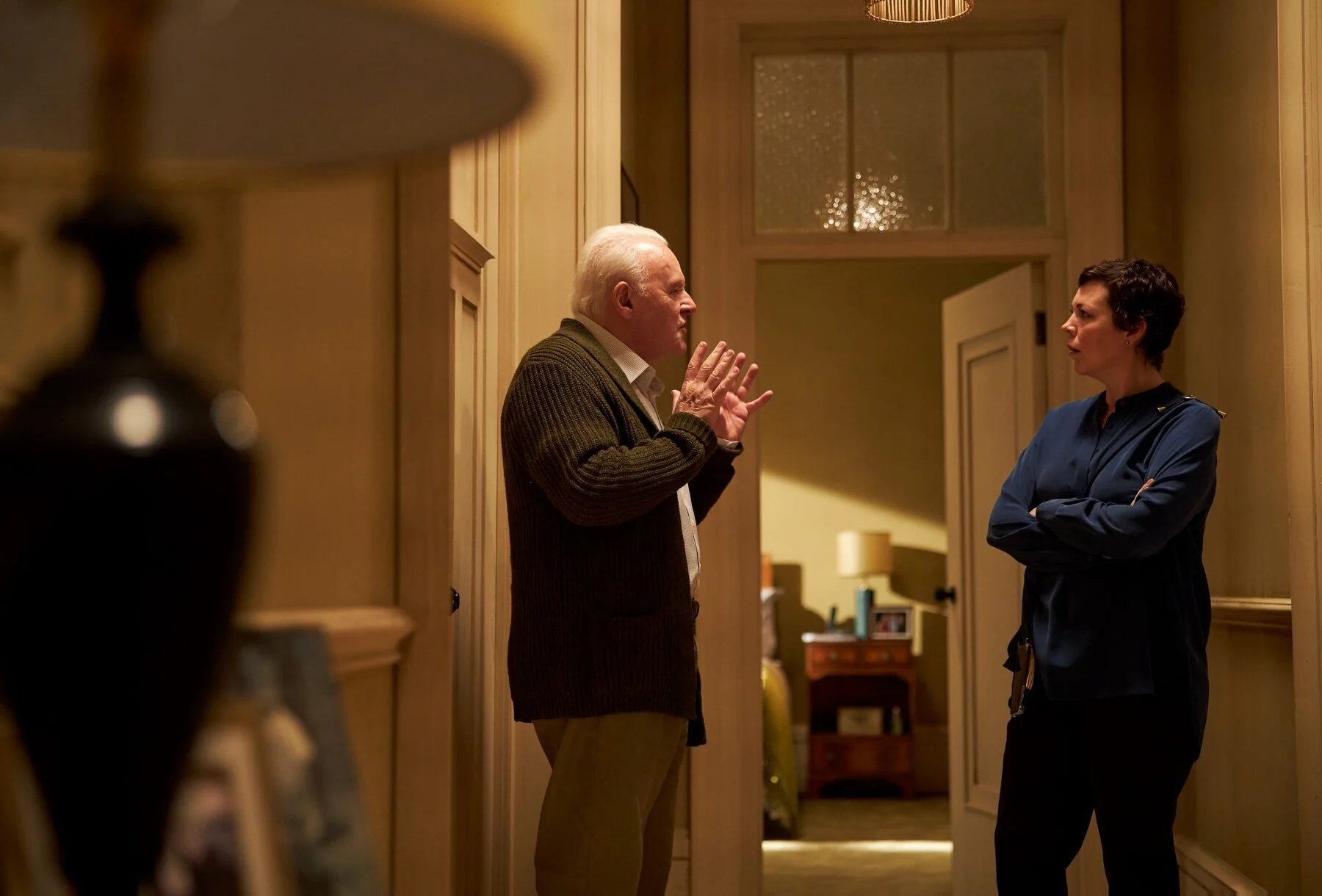
Directed by Florian Zeller in his feature-film debut and adapted from his acclaimed stage play Le Père, The Father is far more than a traditional family drama. It is an intimate psychological experience that explores aging, identity, love, loss, and the devastating effects dementia has on both the individual and their loved ones. Anthony Hopkins leads the film with a career-defining performance, while Olivia Colman provides an equally moving portrayal of a daughter struggling to balance compassion, exhaustion, and guilt.
Premiering at the Sundance Film Festival in 2020 before receiving a wider release in 2021, the film became one of the most celebrated dramas of the decade. Critics praised its innovative storytelling, emotional honesty, and extraordinary performances, culminating in Academy Awards for Best Actor and Best Adapted Screenplay.
Unlike many films about illness, The Father never relies on sentimentality or melodrama. Instead, it creates empathy by allowing viewers to experience confusion, fear, and uncertainty alongside its central character. The result is a deeply affecting film that lingers long after the credits roll.
Highlights
- Directed by Florian Zeller
- Adapted from the play Le Père
- Stars Anthony Hopkins and Olivia Colman
- Oscar winner for Best Actor and Best Adapted Screenplay
- One of the highest-rated psychological dramas of the decade
- A powerful portrayal of dementia from the patient’s perspective
The Father – Official Trailer
What Is The Father About?
The Father follows Anthony, an elderly man who fiercely values his independence despite showing increasingly severe symptoms of dementia.
Living with fading memories and growing confusion, Anthony struggles to understand the world around him. Familiar faces seem unfamiliar, conversations repeat themselves in different ways, rooms change appearance, and time itself appears to shift without warning. His daughter Anne desperately wants to care for him, but she is also trying to maintain her own life while confronting impossible decisions about his future.
Rather than telling the story from Anne’s perspective, the film immerses viewers inside Anthony’s mind. Reality constantly changes without explanation, forcing the audience to question what is real alongside him. This narrative approach transforms what could have been a conventional family drama into one of the most emotionally immersive psychological films ever made.
Without relying on major plot twists or suspense, The Father generates extraordinary emotional tension simply by portraying how frightening it can be to lose confidence in one’s own memories and surroundings.
Story Highlights
- A deeply personal portrayal of dementia
- Told through Anthony’s perspective
- Focuses on memory, identity, and family
- Psychological storytelling instead of conventional drama
- Emotionally powerful without becoming sentimental
- Minimalist yet unforgettable narrative
Is The Father Worth Watching?
Absolutely.
While The Father is emotionally demanding, it is also one of the most rewarding dramatic films of recent years.
Its greatest achievement is that it does not ask viewers to observe dementia from the outside. Instead, it recreates the uncertainty, confusion, frustration, and fear experienced by someone living with the condition. That creative decision makes the film uniquely immersive.
Anthony Hopkins delivers a performance widely regarded as one of the finest of his remarkable career. Every moment feels authentic, shifting effortlessly between confidence, anger, vulnerability, humor, and heartbreaking confusion.
Olivia Colman is equally exceptional. Rather than portraying Anne as simply patient or endlessly supportive, she presents a daughter wrestling with love, responsibility, guilt, exhaustion, and impossible choices.
Although the subject matter is difficult, The Father ultimately succeeds because it approaches its characters with extraordinary compassion rather than pity.
Reasons to Watch
- Anthony Hopkins’ unforgettable performance
- Outstanding screenplay
- Innovative storytelling
- Deep emotional impact
- Exceptional direction
- Beautifully restrained filmmaking
Why You Should Watch The Father
Many films about illness focus primarily on the people providing care.
The Father does something remarkably different.
It allows viewers to experience what dementia feels like from within.
Rooms subtly change without warning. Conversations contradict one another. Familiar people suddenly appear unfamiliar. Time becomes unreliable. The audience is never entirely certain whether events are happening as remembered or as imagined.
This technique creates empathy more effectively than any amount of exposition could.
The film also refuses simplistic answers. Anne’s struggle is not portrayed as either noble or selfish. Anthony is neither a helpless victim nor an unreasonable burden. Every character behaves like a real person attempting to navigate an impossible situation.
That emotional honesty is what elevates The Father beyond conventional dramas.
Biggest Strengths
- Immersive perspective
- Honest portrayal of dementia
- Outstanding performances
- Emotional authenticity
- Exceptional screenplay
- Memorable direction
Anthony Hopkins as Anthony
Anthony Hopkins delivers what many critics consider the greatest performance of his career.
Anthony is intelligent, witty, proud, and determined to remain independent. He insists nothing is wrong with him, even as his memories become increasingly fragmented and his confidence slowly disappears.
Hopkins portrays every emotional shift with astonishing subtlety. One moment Anthony appears charming and humorous; the next he becomes frightened, suspicious, confused, or desperately vulnerable.
Importantly, Hopkins never reduces the character to his illness. Anthony remains a fully realized person whose dignity, humor, and personality continue to exist despite his deteriorating memory.
His performance earned him the Academy Award for Best Actor, making him the oldest performer ever to win in the category.
Anthony Highlights
- Career-defining performance
- Oscar-winning role
- Complex emotional range
- Authentic portrayal of dementia
- One of cinema’s greatest dramatic performances
Olivia Colman as Anne
Olivia Colman’s performance is equally remarkable because it avoids easy emotional shortcuts.
Anne loves her father deeply, but she is also exhausted.
She wants to protect him while preserving some sense of her own future. Every decision she makes feels impossible, and Colman communicates that emotional conflict with extraordinary restraint.
Rather than delivering dramatic speeches, she often expresses Anne’s emotions through subtle facial expressions, quiet conversations, and moments of hesitation.
Her chemistry with Hopkins creates one of the most believable father-daughter relationships seen in recent cinema.
Anne Highlights
- Emotionally layered performance
- Loving but conflicted daughter
- Outstanding chemistry with Hopkins
- Honest portrayal of caregiving
- Oscar-nominated performance
Supporting Cast
Although The Father primarily focuses on Anthony and Anne, its supporting cast plays an essential role in creating the film’s unique psychological structure.
Rufus Sewell, Imogen Poots, Olivia Williams, and Mark Gatiss portray characters whose identities and appearances seem to shift throughout the story. Rather than functioning merely as supporting roles, they become part of the audience’s experience of Anthony’s confusion and uncertainty.
Each actor subtly adjusts their performance depending on Anthony’s perception, reinforcing the film’s immersive storytelling without ever becoming distracting.
Supporting Cast Highlights
- Rufus Sewell
- Imogen Poots
- Olivia Williams
- Mark Gatiss
- Ayesha Dharker
- Carefully layered performances
Themes and Emotional Depth
At its heart, The Father explores much more than dementia.
It examines identity itself.
If memories disappear, what remains of the person we once were?
The film also explores:
- Aging
- Family responsibility
- Love
- Loss
- Independence
- Fear
- Human dignity
Unlike many dramas dealing with illness, The Father avoids presenting clear heroes or villains.
Anne is not wrong for feeling overwhelmed.
Anthony is not wrong for wanting independence.
The tragedy comes from the fact that neither can fully solve the situation.
This emotional complexity makes the film remarkably human.
Theme Highlights
- Memory
- Identity
- Family
- Aging
- Compassion
- Loss
Direction and Screenplay
Florian Zeller’s direction is extraordinary precisely because it remains understated.
Instead of relying on flashy cinematography or dramatic visual effects, he gradually alters familiar environments in subtle ways that leave both Anthony and the audience questioning reality.
Doors appear in different places.
Rooms become unfamiliar.
Characters seem to change.
Time shifts unexpectedly.
These small changes recreate cognitive confusion far more effectively than conventional exposition ever could.
The screenplay, co-written with Christopher Hampton and adapted from Zeller’s own stage play, brilliantly transforms theatrical material into a deeply cinematic experience.
Production Highlights
- Directed by Florian Zeller
- Adapted from Le Père
- Innovative psychological perspective
- Brilliant screenplay
- Elegant visual storytelling
- Powerful directorial debut
Visual Style and Music
The film’s visual design is deceptively simple.
Most scenes occur inside apartments, hallways, or nursing home environments. However, subtle production design changes gradually create profound psychological unease.
Furniture moves.
Paintings disappear.
Rooms change layout.
These nearly invisible alterations mirror Anthony’s deteriorating perception without requiring explicit explanation.
The restrained musical score complements rather than overwhelms the emotional storytelling, allowing silence to become just as important as dialogue.
Visual Highlights
- Minimalist cinematography
- Subtle production design
- Psychological visual storytelling
- Naturalistic performances
- Effective use of silence
- Immersive atmosphere
Reception and Critical Response
The Father received overwhelming critical acclaim.
Reviewers praised Anthony Hopkins’ performance, Florian Zeller’s direction, Christopher Hampton’s adaptation, and the film’s uniquely immersive portrayal of dementia. Many critics described it as one of the finest dramas of the decade, with particular appreciation for its ability to place audiences inside Anthony’s perspective rather than observing him from a distance.
The film currently holds a 98% approval rating on Rotten Tomatoes and a Metacritic score of 88, reflecting universal acclaim.
Rather than focusing on sentimentality, critics consistently highlighted the film’s honesty, emotional intelligence, and remarkable empathy.
Critical Highlights
- 98% Rotten Tomatoes
- 88 Metacritic score
- Universal acclaim
- Outstanding performances
- Innovative storytelling
- Widely regarded as one of the decade’s best films
Awards and Legacy
The Father earned six Academy Award nominations, winning two of the night’s biggest honors:
- Best Actor – Anthony Hopkins
- Best Adapted Screenplay – Florian Zeller & Christopher Hampton
It also received nominations for Best Picture, Best Supporting Actress, Best Editing, and Best Production Design.
Since its release, the film has frequently appeared on lists celebrating the greatest films of the 2020s and has become an important reference point for cinematic portrayals of dementia and aging.
Its influence extends beyond awards, as it has reshaped conversations about how films can authentically portray cognitive decline without relying on stereotypes.
Legacy Highlights
- Academy Award winner
- One of the defining dramas of the decade
- Widely studied for its narrative structure
- Influential portrayal of dementia
- Enduring critical acclaim
FAQ
Is The Father based on a true story?
No. It is adapted from Florian Zeller’s stage play Le Père, although it authentically reflects the experiences of many people living with dementia and their families.
Is The Father difficult to watch?
Emotionally, yes. It deals with dementia, aging, and family relationships in an honest and deeply affecting way.
Why is The Father considered so unique?
Because it presents dementia from the patient’s perspective rather than simply showing its effects on others.
Did Anthony Hopkins win an Oscar for The Father?
Yes. He won the Academy Award for Best Actor, becoming the oldest actor ever to receive the honor.
Is The Father suitable for everyone?
While there is little graphic content, its emotional subject matter may be especially difficult for viewers with personal experience caring for loved ones with dementia.
Is The Father worth watching?
Absolutely. It is widely regarded as one of the finest psychological dramas of the modern era and features one of Anthony Hopkins’ greatest performances.
Conclusion
The Father is more than an award-winning drama—it is an extraordinary exercise in empathy. By placing viewers inside Anthony’s increasingly fragile perception of reality, Florian Zeller creates a cinematic experience that is both intellectually inventive and emotionally devastating.
Anthony Hopkins delivers one of the greatest performances ever captured on film, portraying not simply a man with dementia but a proud, intelligent individual desperately trying to hold onto his identity as his memories slowly slip away. Olivia Colman complements him perfectly, bringing remarkable nuance to a daughter facing impossible choices with love, patience, and heartbreaking vulnerability.
Rather than offering easy answers or comforting resolutions, The Father invites audiences to experience confusion, fear, tenderness, and compassion firsthand. It is a film that challenges, moves, and ultimately reminds us of the profound importance of dignity, connection, and understanding in the face of life’s most difficult realities. For those seeking one of the most powerful dramas of the 21st century, The Father is essential viewing.
If you don’t know where to watch this Movie for FREE make sure to contact me via E-mail, or in the comments below. Thank you for reading and make sure to bookmark the site.
How useful was this post?
Click on a star to rate it!
Average rating 0 / 5. Vote count: 0
No votes so far! Be the first to rate this post.