
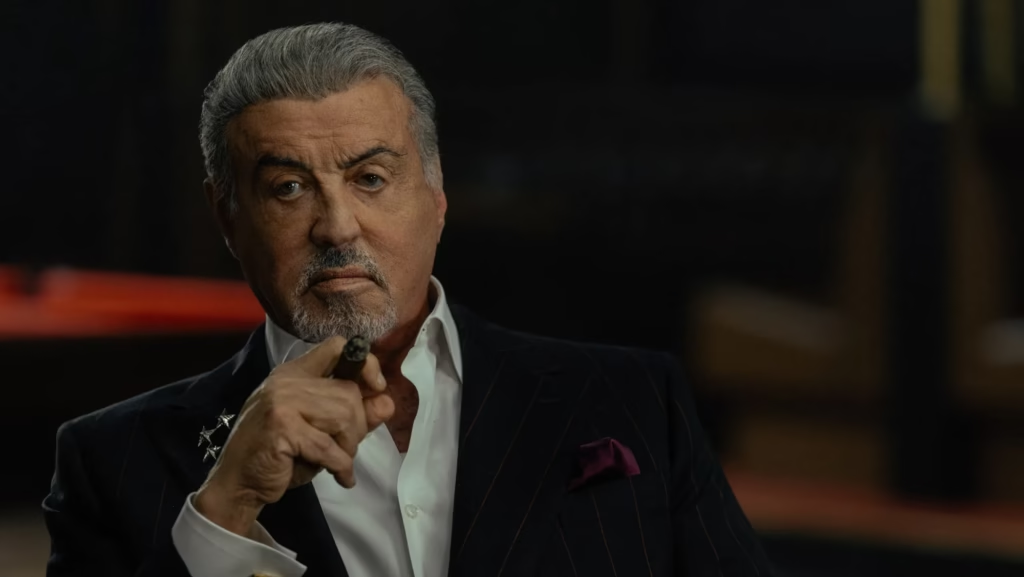
 7.9/10
What happens when an old-school New York mobster spends twenty-five years behind bars, remains loyal to his criminal family, and discovers that his reward is exile to a city where nobody knows his name? That is the entertaining premise behind Tulsa King, the American crime comedy-drama that brought Hollywood legend Sylvester Stallone to his first leading role in a scripted television series. Created by Taylor Sheridan for Paramount+, the show combines traditional Mafia storytelling with sharp humor, contemporary culture clashes, unexpected friendships, and the gradual construction of a criminal empire in one of America’s most unlikely gangster settings.
Premiering on November 13, 2022, Tulsa King introduces Dwight “The General” Manfredi, a veteran Mafia capo who has spent a quarter-century in prison without betraying his associates. When he finally returns to New York, however, the criminal organization he protected no longer has a meaningful place for him. Instead of receiving the respect and influence he believes he deserves, Dwight is dispatched to Tulsa, Oklahoma, where he is expected to establish a new source of income for the family.
What begins as an insulting assignment quickly develops into an opportunity. Dwight discovers that Tulsa is unfamiliar territory for traditional organized crime, but its local businesses, unusual personalities, and emerging opportunities provide fertile ground for an ambitious gangster. With a combination of intimidation, street intelligence, old-fashioned loyalty, and surprisingly effective business instincts, he begins assembling an unconventional crew that bears little resemblance to the Mafia families he once knew.
The series blends the familiar elements of organized crime dramas with a more playful approach to character development. Dwight may be a dangerous criminal, but he is also a man struggling to understand smartphones, modern banking, legalized marijuana, and a society that has changed dramatically during his imprisonment. His confusion creates some of the show’s funniest moments, while his attempts to reconnect with family and build genuine relationships add emotional depth to the story.
By October 2026, Tulsa King has expanded into its fourth season, which premiered on October 16, following three completed seasons of criminal rivalries, shifting alliances, and increasingly ambitious business ventures. The series has also received a fifth-season renewal, demonstrating Paramount+’s continued investment in Stallone’s television franchise. With its combination of charismatic performances, fast-moving conflicts, and an unusually entertaining protagonist, Tulsa King has established itself as a recognizable entry in the modern crime-drama landscape.
Tulsa King – Official Trailer
What Is Tulsa King About?
Tulsa King follows Dwight Manfredi, a seasoned New York Mafia captain who is released from federal prison after serving twenty-five years. During his incarceration, Dwight remained loyal to the Invernizzi crime family, accepting the consequences of his conviction rather than cooperating with authorities. He expects that his sacrifice will be recognized when he returns to the organization, but the reception he receives is considerably colder than anticipated.
The Mafia leadership has changed, old relationships have deteriorated, and the younger generation has little interest in accommodating a man whose methods belong to an earlier era. Dwight is instructed to relocate to Tulsa, Oklahoma, and establish criminal operations in a city far removed from the familiar streets of New York.
Although initially furious about the assignment, Dwight recognizes an opportunity to rebuild his influence independently. He begins making connections with local businesses and individuals who have little experience dealing with a traditional Mafia figure. Among his earliest associates are Tyson Mitchell, a young driver fascinated by Dwight’s confidence, and Lawrence “Bodhi” Geigerman, the owner of a marijuana dispensary.
As Dwight’s influence expands, he forms an unlikely alliance with Mitch Keller, a bar owner and former convict who understands the practical realities of running a business in Tulsa. Together, they explore ventures that combine legitimate commercial opportunities with the darker methods of organized crime.
However, Dwight’s growing empire inevitably attracts attention. Local criminal organizations, rival Mafia families, powerful businessmen, and federal investigators begin recognizing that a dangerous new player has entered their territory. The more successful Dwight becomes, the more difficult it is to separate his ambitions from the enemies determined to undermine him.
Beneath the criminal activity, the series also follows Dwight’s efforts to rebuild a personal life after decades of absence. His relationship with his estranged daughter, his attempts to understand modern society, and his growing attachment to his unconventional crew reveal a man whose loyalty and emotional limitations are often as important as his capacity for violence.
Is Tulsa King Worth Watching?
Tulsa King is worth watching for viewers who enjoy crime dramas that combine charismatic antiheroes, sharp dialogue, humor, and escalating criminal conflicts. Its greatest strength is Sylvester Stallone’s performance as Dwight Manfredi, a character who feels simultaneously familiar and surprisingly different from the action heroes that defined much of the actor’s career.
Unlike crime dramas that focus almost exclusively on violence, corruption, and moral deterioration, Tulsa King frequently embraces comedy. Dwight’s reactions to modern technology, changing social customs, and unfamiliar business practices create entertaining situations that contrast with his intimidating reputation.
The Oklahoma setting also gives the show a distinctive personality. Rather than relying on the crowded streets of New York or the established criminal hierarchies of traditional Mafia stories, the series places its protagonist in a region where his experience is valuable but not always directly applicable.
Another attraction is the supporting cast. Characters such as Tyson, Bodhi, Mitch, and Margaret develop relationships with Dwight that introduce different perspectives on loyalty, ambition, and personal freedom. Their interactions often provide some of the show’s most enjoyable moments.
The series is not without weaknesses. Some viewers may find its criminal conflicts exaggerated, certain plot developments convenient, or its mixture of comedy and serious violence inconsistent. Nevertheless, these qualities are also part of its deliberately heightened entertainment style.
For audiences seeking a character-driven gangster series that does not take itself quite as seriously as The Sopranos or Boardwalk Empire, Tulsa King offers an appealing alternative.
Why Should You Watch Tulsa King?
One of the strongest reasons to watch Tulsa King is Sylvester Stallone’s commanding central performance. Dwight Manfredi is written as a man whose experience, confidence, and intimidating presence allow him to dominate situations even when he does not fully understand the modern world around him. Stallone brings humor, authority, and occasional vulnerability to the role, making Dwight engaging even when his decisions are morally questionable.
The series also benefits from its unusual setting. Tulsa provides a different atmosphere from the familiar urban environments associated with Mafia television, allowing the writers to explore conflicts between established criminal traditions and contemporary American business culture.
Another major attraction is the show’s pacing. Rather than spending entire seasons establishing criminal hierarchies through lengthy conversations, Tulsa King frequently moves between business negotiations, personal conflicts, unexpected comedy, and sudden confrontations.
Its supporting characters also provide variety. Dwight’s crew includes people from different backgrounds who would rarely belong to the same organization under conventional Mafia rules. Their interactions create a found-family dynamic that makes the series more than a straightforward story about criminal expansion.
Finally, the show offers an accessible introduction to Taylor Sheridan’s television universe for viewers who may not be interested in traditional Western dramas. Although Sheridan is closely associated with Yellowstone, Tulsa King explores different territory through a combination of gangster fiction, modern entrepreneurship, and fish-out-of-water comedy.
Cast and Characters
The cast of Tulsa King combines established Hollywood performers with recognizable television actors and newer talents. While Sylvester Stallone remains the central attraction, the supporting ensemble plays an important role in developing the show’s distinctive balance between crime, comedy, and personal relationships.
Sylvester Stallone as Dwight “The General” Manfredi
Dwight Manfredi is the central protagonist of Tulsa King, a veteran Mafia capo who is forced to rebuild his life after spending twenty-five years in federal prison. His nickname, “The General,” reflects his authority, strategic instincts, and reputation within organized crime.
Dwight belongs to an older generation of gangsters who value loyalty, respect, personal relationships, and direct confrontation. Although these principles often conflict with modern society, they also provide him with an advantage when dealing with individuals who underestimate his experience.
Stallone portrays Dwight as a complicated combination of intimidating criminal, charismatic businessman, stubborn traditionalist, and emotionally wounded father. His confidence frequently borders on arrogance, but his determination to protect the people he considers loyal adds another dimension to his personality.
The character’s attempts to understand contemporary technology and social customs create many of the series’ comedic moments. At the same time, his criminal history ensures that the consequences of his decisions remain serious.
For Stallone, Tulsa King represents an important career milestone, allowing him to develop a leading character across multiple television seasons rather than within the structure of a single feature film.
Martin Starr as Lawrence “Bodhi” Geigerman
Lawrence “Bodhi” Geigerman is the owner of a marijuana dispensary who becomes one of Dwight’s earliest business associates in Tulsa.
Initially, Bodhi has little interest in working with a traditional gangster. His personality, business methods, and worldview contrast sharply with Dwight’s old-school approach, creating an entertaining relationship built around mutual frustration and reluctant cooperation.
However, Bodhi possesses valuable financial knowledge and technological abilities that become increasingly useful as Dwight’s organization expands.
Martin Starr brings a dry, understated comedic style to the role, frequently providing a contrast to Stallone’s forceful personality.
As the series progresses, Bodhi becomes more deeply involved in the operation, demonstrating how Dwight’s influence transforms the lives of people who initially wanted nothing to do with organized crime.
Jay Will as Tyson Mitchell
Tyson Mitchell is a young Tulsa resident who becomes Dwight’s driver and gradually develops into one of his closest associates.
Their relationship begins when Tyson recognizes an opportunity to improve his circumstances by working for the newly arrived gangster. Dwight, meanwhile, sees potential in Tyson’s enthusiasm, intelligence, and willingness to learn.
The relationship develops into a mentor-and-protégé dynamic, although Dwight’s influence exposes Tyson to increasingly dangerous situations.
Tyson’s family provides an important counterbalance to his fascination with organized crime. His parents recognize the risks associated with Dwight’s lifestyle, creating emotional tension between ambition, loyalty, and responsibility.
Jay Will gives Tyson a youthful energy that contrasts effectively with Stallone’s veteran presence.
Garrett Hedlund as Mitch Keller
Mitch Keller is a former convict and bar owner who becomes one of Dwight’s most important allies.
Unlike some of Dwight’s other associates, Mitch understands the dangers of criminal activity through personal experience. His practical intelligence and willingness to defend his interests make him a valuable partner.
Their relationship develops through mutual respect, with both men recognizing that cooperation can provide opportunities neither could easily pursue alone.
Mitch’s establishment becomes an important location within the series, serving as a meeting place and a foundation for expanding business operations.
Garrett Hedlund brings a relaxed but convincing toughness to the role, making Mitch one of the most dependable members of the supporting ensemble.
Dana Delany as Margaret Devereaux
Margaret Devereaux is the owner of Fennario Ranch and an important figure in Dwight’s personal life.
She possesses confidence, independence, and an understanding of Tulsa’s social environment that Dwight initially lacks.
Their relationship introduces a different emotional dimension to the series, allowing Dwight to interact with someone who is not simply impressed by his criminal reputation.
Margaret also maintains connections with influential individuals, placing her near the intersection of legitimate business, local politics, and Dwight’s expanding interests.
Dana Delany portrays her as an intelligent and self-assured character whose relationship with Dwight becomes increasingly important across the show’s development.
Andrea Savage as Stacy Beale
Stacy Beale is a senior agent with the Bureau of Alcohol, Tobacco, Firearms and Explosives who develops a complicated personal connection with Dwight.
Her professional responsibilities place her in direct conflict with the criminal activities he begins establishing in Tulsa.
This tension creates one of the first season’s most important personal dilemmas, forcing both characters to confront the consequences of their relationship.
Andrea Savage brings intelligence, humor, and emotional complexity to Stacy, making her more than a conventional law-enforcement antagonist.
Her storyline also highlights the difficulty of separating personal feelings from professional obligations.
Max Casella as Armand “Manny” Truisi
Armand Truisi is a former member of the Invernizzi crime family who has attempted to establish a new life in Tulsa.
His unexpected reunion with Dwight brings unresolved tensions from their shared criminal past into the present.
Armand’s experiences demonstrate that leaving organized crime behind is considerably more difficult than simply moving to another city.
Max Casella portrays him as an anxious and complicated individual whose decisions are influenced by fear, financial pressure, and the desire to protect his family.
His storyline provides a darker contrast to the more humorous aspects of Dwight’s criminal enterprise.
Domenick Lombardozzi as Chickie Invernizzi
Chickie Invernizzi is an influential member of the New York Mafia family that Dwight served before his imprisonment.
He represents the established criminal hierarchy that increasingly views Dwight as a problem rather than a respected veteran.
Their relationship is shaped by resentment, ambition, and competing interpretations of loyalty.
Domenick Lombardozzi brings an aggressive intensity to the role, creating an antagonist whose personal insecurities are closely connected to his criminal ambitions.
Chickie’s presence reinforces the idea that Dwight’s greatest enemies may come from the organization he once considered his family.
Vincent Piazza as Vince Antonacci
Vince Antonacci is another prominent member of the Invernizzi organization.
His involvement helps establish the internal politics and shifting power relationships within the New York Mafia.
Vince represents a generation of criminals attempting to maintain influence while adapting to changing circumstances.
Vincent Piazza gives the character a controlled, calculating presence that contrasts with the more openly aggressive personalities around him.
His role becomes important whenever Dwight’s independent activities attract renewed attention from New York.
Tatiana Zappardino as Tina Manfredi-Grieger
Tina Manfredi-Grieger is Dwight’s estranged daughter, whose relationship with her father has been damaged by his long imprisonment.
Her experiences reveal the personal consequences of Dwight’s criminal loyalty, demonstrating that his decisions affected far more than his own freedom.
Tina is understandably reluctant to welcome him back into her life, and their attempts to rebuild a relationship introduce some of the show’s most emotional material.
Tatiana Zappardino portrays Tina as a woman balancing anger, disappointment, and the possibility of reconciliation.
Their relationship reminds viewers that Dwight’s desire to build a new empire cannot erase the years he lost with his family.
Annabella Sciorra as Joanne Manfredi
Joanne Manfredi is Dwight’s younger sister and an important connection to his family history.
She understands his personality, recognizes his weaknesses, and is willing to challenge him when necessary.
Her presence helps explore Dwight’s relationships beyond the criminal organization, revealing how his imprisonment affected the people closest to him.
Annabella Sciorra brings emotional authority to the role, creating a believable sibling relationship built on familiarity and difficult shared experiences.
As the series develops, Joanne becomes increasingly connected to Dwight’s life in Tulsa.
Frank Grillo as Bill Bevilaqua
Bill Bevilaqua is a Kansas City Mafia boss who becomes a significant presence beginning in the second season.
His criminal organization has interests that overlap with Dwight’s expanding operations, creating disputes over territory, influence, and business opportunities.
Unlike Dwight’s inexperienced local associates, Bevilaqua understands traditional organized crime and the rules governing relationships between competing families.
Frank Grillo brings a dangerous, confrontational energy to the role.
His character helps expand the series beyond Tulsa, demonstrating that Dwight’s growing ambitions inevitably attract established criminal powers.
Neal McDonough as Cal Thresher
Cal Thresher is a wealthy and politically connected Oklahoma businessman introduced during the second season.
His influence extends into legitimate commercial activities, but his interests also overlap with the criminal opportunities Dwight pursues.
Thresher represents a different kind of power from the traditional Mafia hierarchy, relying on wealth, connections, and business influence.
Neal McDonough portrays him with controlled confidence and an intimidating sense of entitlement.
His presence reinforces the show’s recurring idea that the boundaries between respectable business and organized crime can become surprisingly blurred.
Robert Patrick as Jeremiah Dunmire
Jeremiah Dunmire becomes a major antagonist during the third season.
A powerful figure connected to the regional liquor business and the Dixie Mafia, he challenges Dwight’s attempt to expand into premium bourbon production and distribution.
Jeremiah represents an entrenched form of regional criminal influence, making him a particularly dangerous opponent.
Robert Patrick brings authority and menace to the character, creating a villain whose reputation and resources present a serious obstacle.
His introduction also allows the series to explore new criminal territories beyond the businesses established in earlier seasons.
Beau Knapp as Cole Dunmire
Cole Dunmire is Jeremiah’s son and another important character introduced during the third season.
His relationship with his father and his involvement in the family’s activities place him within the larger conflict surrounding Dwight’s bourbon enterprise.
Cole’s personal ambitions and interactions with other characters create additional tensions.
Beau Knapp portrays him as a volatile figure whose actions contribute to the season’s increasingly dangerous atmosphere.
The character helps develop the Dunmire family’s internal dynamics rather than presenting Jeremiah as an isolated antagonist.
Bella Heathcote as Cleo Montague
Cleo Montague is introduced in the third season and is connected to a family-owned bourbon business.
Her personal history with Mitch Keller adds another layer to the relationships surrounding Dwight’s expanding organization.
Cleo’s involvement also connects the show’s business ambitions to longstanding local disputes.
Bella Heathcote gives the character an independent personality, allowing her to contribute to the story beyond her connection to the principal cast.
Her presence becomes particularly relevant as the series explores the bourbon industry.
Kevin Pollak as FBI Agent John Musso
John Musso is an FBI agent introduced during the third season.
His relationship with Dwight adds a different kind of pressure to the protagonist’s increasingly complicated life.
Rather than functioning solely as a conventional investigator, Musso becomes involved in circumstances that challenge the boundaries between law enforcement, coercion, and criminal cooperation.
Kevin Pollak brings a distinctive mixture of authority and unpredictability to the role.
The character introduces another layer of institutional power into a series already populated by rival gangsters and influential businessmen.
James Russo as “Quiet” Ray Renzetti
Ray Renzetti is an established New York Mafia figure whose influence becomes increasingly important as Dwight’s ambitions expand.
He represents the old criminal world from which Dwight originally emerged, but with enough authority to threaten his independence.
James Russo portrays Ray as a seasoned gangster whose measured behavior can be as intimidating as open aggression.
His involvement connects Tulsa’s growing criminal enterprise to broader organized crime networks.
By the fourth season, Ray’s influence becomes especially relevant to the show’s changing balance of power.
Gretchen Mol as Amanda Clark
Amanda Clark is introduced in the fourth season as Oklahoma’s lieutenant governor.
Her position places her near the intersection of state politics, influential business interests, and the criminal conflicts surrounding Dwight’s organization.
Gretchen Mol brings an established television and film presence to the ensemble.
Amanda’s introduction broadens the show’s political dimension and creates opportunities for conflicts involving government authority and commercial influence.
Her storyline forms part of the fourth season’s expansion beyond traditional Mafia rivalries.
Tulsa King Season 1 – Dwight Manfredi Arrives in Oklahoma
The first season of Tulsa King premiered on November 13, 2022, and concluded on January 8, 2023, consisting of nine episodes.
Its central focus is Dwight Manfredi’s arrival in Tulsa and his attempt to establish a new criminal organization after being pushed aside by the New York Mafia.
The season introduces the show’s principal relationships, including Dwight’s connections with Tyson, Bodhi, Mitch, Stacy, and Margaret.
Much of the early humor comes from Dwight’s unfamiliarity with contemporary society. After spending twenty-five years in prison, he must navigate a world shaped by smartphones, modern banking, legalized cannabis, and social attitudes that differ considerably from those he remembers.
However, the series gradually introduces more serious conflicts as Dwight’s growing influence attracts the attention of local criminal organizations.
The first season also explores his damaged family relationships, particularly the emotional distance between Dwight and his daughter.
By combining fish-out-of-water comedy with traditional gangster conflicts, the opening season establishes the formula that defines the series.
Tulsa King Season 2 – New Rivals and Expanding Criminal Ambitions
The second season premiered on September 15, 2024, and concluded on November 17, 2024, featuring ten episodes.
With Dwight’s Tulsa operations becoming more established, the story expands to include powerful individuals who view his success as a threat.
Among the most significant additions are Cal Thresher, a wealthy businessman with considerable influence, and Bill Bevilaqua, a Kansas City Mafia boss with interests in the region.
The season also introduces Jackie Ming, a dangerous criminal figure connected to Chinese organized crime.
These new characters create a more complicated environment for Dwight, whose operations now attract attention from multiple directions.
Meanwhile, the supporting cast receives additional development as characters confront the consequences of their growing involvement in criminal activity.
The second season broadens the show’s scope by exploring the intersection of legitimate business, political influence, and organized crime.
Tulsa King Season 3 – Bourbon, Business, and Dangerous New Enemies
The third season premiered on September 21, 2025, and concluded on November 23, 2025, with ten episodes.
This installment introduces a significant new direction for Dwight’s expanding empire: the premium bourbon business.
Rather than relying exclusively on the operations established during earlier seasons, Dwight recognizes the potential of alcohol production and distribution as another avenue for financial growth.
However, this expansion brings him into conflict with Jeremiah Dunmire, a powerful figure whose interests are deeply connected to the regional liquor industry.
The season also introduces new characters, including Cleo Montague and FBI Agent John Musso, while expanding the role of established criminal figures.
One of the most notable additions is Samuel L. Jackson as Russell Lee Washington Jr., a veteran hitman with a connection to Dwight’s past.
The third season demonstrates the increasingly ambitious scale of the series, combining regional business conflicts with broader Mafia rivalries and federal pressure.
Tulsa King Season 4 – The Latest Chapter in Dwight’s Criminal Empire
The fourth season of Tulsa King premiered on October 16, 2026, continuing Dwight Manfredi’s story after the events of the previous installment.
The season consists of ten scheduled episodes, with the supplied release schedule extending through December 18, 2026.
By this stage, Dwight’s organization has evolved considerably from the small operation he began assembling after arriving in Tulsa.
His business interests now extend into multiple industries, while his relationships with established Mafia figures and powerful local individuals remain complicated.
The fourth season introduces Gretchen Mol as Amanda Clark and expands the involvement of James Russo’s Ray Renzetti.
Additional characters include figures connected to technology, politics, and new criminal networks, broadening the series’ range of conflicts.
As of October 26, 2026, only the first two episodes of the fourth season have been released according to the supplied schedule. The remaining episodes are upcoming, and their storylines should not be treated as completed events.
Tulsa King Season 5 – Has the Series Been Renewed?
Yes. According to the supplied production history, Tulsa King received a fifth-season renewal in October 2026, ahead of the fourth season’s premiere.
The renewal reflects the continuing importance of the series within Paramount+’s original programming lineup.
Sylvester Stallone remains closely associated with the franchise, and Dwight Manfredi’s story has developed beyond its original premise into a larger criminal drama involving multiple organizations and business interests.
However, the supplied information does not establish an official premiere date for the fifth season.
It also does not confirm the complete episode count, full cast, or principal storyline of the next installment.
For now, viewers can follow the fourth season while awaiting additional production announcements.
Tulsa King Episodes and Release Schedule
The first three seasons of Tulsa King contain twenty-nine episodes in total, while the fourth season has ten scheduled installments.
| Season | Episodes | Premiere | Finale |
|---|---|---|---|
| Season 1 | 9 | November 13, 2022 | January 8, 2023 |
| Season 2 | 10 | September 15, 2024 | November 17, 2024 |
| Season 3 | 10 | September 21, 2025 | November 23, 2025 |
| Season 4 | 10 scheduled | October 16, 2026 | December 18, 2026 (scheduled) |
| Season 5 | Not announced | TBA | TBA |
The fourth season’s first two episodes, “W.W.D.D.” and “Blind Rooster,” premiered on October 16 and October 23, 2026, respectively.
Its third episode is scheduled for October 30, with subsequent episodes expected to continue weekly through December 18.
If the announced fourth-season schedule is completed, the series will have reached thirty-nine episodes by the end of 2026.
Production and Development – How Tulsa King Was Created
Tulsa King originated from a collaboration between Taylor Sheridan and Terence Winter, two television writers associated with very different but complementary approaches to drama.
Sheridan had already established himself through projects such as Yellowstone, while Winter was known for his work on major crime dramas including The Sopranos and Boardwalk Empire.
The project was initially developed under the title Kansas City, with the story centered on a New York gangster assigned to establish criminal operations in Missouri.
However, Winter suggested moving the setting to Tulsa, Oklahoma, believing that a more unfamiliar environment would create greater opportunities for character-driven comedy and conflict.
The title was subsequently changed to Tulsa King, reflecting the new location and Dwight’s ambition to establish his own authority.
Sheridan wrote the pilot quickly, while Winter became heavily involved in developing the series and overseeing its first season.
Stallone also participated extensively in the creative process, contributing to discussions about dialogue, character behavior, and the presentation of Dwight Manfredi.
The resulting series combined Sheridan’s interest in powerful personalities and regional American settings with Winter’s experience in organized crime storytelling.
Taylor Sheridan – The Creator Behind Tulsa King
Taylor Sheridan is the creator of Tulsa King and one of the most influential figures in contemporary American television drama.
He is particularly associated with stories involving loyalty, power, territorial conflict, and individuals operating outside conventional institutions.
These themes are central to Tulsa King, even though the series adopts a more humorous tone than many of Sheridan’s other projects.
Dwight Manfredi resembles several Sheridan protagonists in his refusal to accept external authority and his determination to establish control over his environment.
However, the show’s Mafia setting introduces a different cultural perspective, drawing on Italian-American organized crime traditions rather than Western ranching or frontier conflicts.
Sheridan’s involvement helped establish the series’ initial creative direction, while other writers and producers contributed substantially to its development across subsequent seasons.
The result is a crime drama that shares thematic similarities with his broader television work while maintaining a recognizable identity of its own.
Terence Winter and the Changing Creative Leadership
Terence Winter played a major role in shaping Tulsa King, serving as showrunner during the first season.
His background in organized crime television made him an important contributor to the show’s Mafia dialogue, character relationships, and criminal hierarchies.
However, creative differences between Winter and Sheridan led to changes in the production’s leadership before the second season.
Winter eventually returned in a writing capacity, while Craig Zisk assumed responsibility for overseeing much of the second season’s production.
Dave Erickson later became showrunner for the third season, bringing another experienced television writer into the franchise.
The fourth season saw Winter return to a leading writing role, continuing the show’s evolving creative structure.
These changes demonstrate that Tulsa King has developed through the contributions of several prominent television professionals rather than remaining under a single showrunner throughout its run.
Sylvester Stallone’s First Leading Scripted Television Role
Although Sylvester Stallone had enjoyed a film career spanning decades, Tulsa King represented his first leading role in a scripted television series.
The actor was already internationally recognized for portraying Rocky Balboa and John Rambo, two characters who became defining figures in action cinema.
Dwight Manfredi draws on some of the same qualities that made those performances memorable, including physical presence, determination, and an ability to communicate authority through relatively restrained dialogue.
However, television provides a different storytelling structure. Rather than developing a character over approximately two hours, Stallone has the opportunity to explore Dwight’s personality across multiple seasons.
This longer format allows the character’s relationships, business ambitions, and emotional conflicts to evolve gradually.
Stallone has also been involved in creative decisions beyond acting, making his contribution to the series particularly significant.
For longtime fans, Tulsa King offers an opportunity to see a familiar screen legend working within a different dramatic format.
Filming Locations – Where Was Tulsa King Shot?
Despite its Oklahoma setting, Tulsa King has used several filming locations across the United States.
The first season was primarily filmed in Oklahoma City, Tulsa, and Bethany, with additional scenes photographed in New York.
Production also made use of recognizable Tulsa locations, including Tulsa International Airport, the Mayo Hotel, and the Center of the Universe.
Many interior scenes were filmed at Prairie Surf Studios in Oklahoma City, which also housed production offices.
The second season relocated much of its principal photography to the Atlanta, Georgia, area, with production using Eagle Rock Studios in Norcross.
The move was associated with production costs and concerns about working conditions during Oklahoma’s extreme temperatures.
Additional photography continued in Tulsa to preserve the series’ geographical identity.
The third season also used filming locations in Atlanta and Oklahoma, maintaining the combination of studio production and regional exterior footage.
Why Tulsa Is the Perfect Setting for the Series
Tulsa is more than an unusual backdrop for a Mafia story. The city plays an important role in establishing the show’s humor, character relationships, and central conflicts.
For Dwight, arriving in Tulsa means entering a world far removed from the criminal culture of New York.
He initially assumes that his experience and reputation will allow him to dominate unfamiliar territory, but he quickly discovers that local businesses and social relationships operate according to different expectations.
This contrast creates opportunities for comedy while challenging Dwight’s assumptions about power.
The Oklahoma setting also allows the series to explore industries and business opportunities that would feel less distinctive in a conventional New York Mafia drama.
Ranches, cannabis businesses, regional entertainment venues, and later bourbon distribution contribute to the show’s evolving economic landscape.
By placing a traditional gangster in an unfamiliar environment, Tulsa King creates a setting where the protagonist must adapt without abandoning the personality that defines him.
Costume Design – Dwight Manfredi’s Signature Style
Dwight Manfredi’s wardrobe is one of the most recognizable visual elements of Tulsa King.
Costume designer Suzanne McCabe drew inspiration from historical Mafia figures and photographs associated with organized crime during the 1980s.
This approach reflects Dwight’s background as a man whose understanding of style was largely established before his lengthy imprisonment.
His tailored suits, distinctive jewelry, polished shoes, and occasional bolo ties create an appearance that combines traditional gangster confidence with elements associated with the American West.
The contrast is particularly effective in Tulsa, where Dwight frequently appears more formally dressed than the people around him.
Stallone also contributed to decisions about the character’s wardrobe, helping establish the visual identity that has become closely associated with the series.
The costumes therefore communicate an important aspect of Dwight’s personality: he may be adapting to a new world, but he refuses to surrender his sense of identity.
Tulsa King Soundtrack and Opening Theme
Music plays an important role in establishing the tone of Tulsa King, particularly through its opening theme.
The series’ theme music was composed by Saunder Jurriaans and Danny Bensi, whose work contributes to the show’s distinctive atmosphere.
The music helps reinforce the contrast between Dwight’s traditional Mafia identity and the unfamiliar environment in which he finds himself.
Throughout the series, musical selections also support moments of humor, tension, and emotional reflection.
The soundtrack complements a narrative that frequently moves between criminal intimidation, everyday comedy, and personal drama.
Rather than relying exclusively on the ominous musical conventions of traditional gangster television, Tulsa King embraces a broader tonal range.
Comedy and Crime – What Makes Tulsa King Different?
One of the defining qualities of Tulsa King is its ability to combine traditional gangster storytelling with comedy.
Dwight Manfredi is a dangerous criminal, but he is also a man who has missed twenty-five years of technological and cultural development.
His reactions to contemporary society create humor without completely undermining his intimidating presence.
The supporting characters contribute to this balance. Bodhi’s dry sarcasm, Tyson’s enthusiasm, and Mitch’s practical personality frequently challenge Dwight’s assumptions.
The series also finds comedy in the contrast between elaborate criminal ambitions and ordinary business problems.
At the same time, the consequences of organized crime remain central to the narrative. Rivalries, betrayals, investigations, and violence ensure that the story never becomes a conventional workplace comedy.
This combination gives Tulsa King a lighter identity than many prestige crime dramas while preserving enough danger to maintain dramatic tension.
The Themes of Tulsa King – Loyalty, Reinvention, and Power
Although Tulsa King is primarily designed as an entertaining crime drama, several recurring themes give its story additional substance.
Loyalty is perhaps the most important. Dwight spends twenty-five years in prison without betraying his Mafia family, only to discover that his sacrifice has not earned the respect he expected.
This disappointment forces him to reconsider what loyalty actually means and whether it should be given automatically to established institutions.
Reinvention is another major theme. Dwight must rebuild his life in an unfamiliar environment while adapting to social and technological changes.
The series also explores the relationship between legitimate business and criminal power. As Dwight’s organization expands, his ventures increasingly resemble conventional enterprises, even when their foundations remain illegal.
Family provides an emotional counterbalance to these ambitions. Dwight’s attempts to reconnect with his daughter and maintain relationships outside organized crime reveal the personal cost of his previous decisions.
Together, these themes create a story about a man who wants to regain control of his life but repeatedly discovers that power cannot repair every form of damage.
Tulsa King and the Modern Mafia Drama
Tulsa King belongs to a long tradition of American television and cinema centered on organized crime.
Classic gangster stories frequently explore loyalty, betrayal, family relationships, and the tension between personal ambition and criminal hierarchy.
These themes are clearly present in Tulsa King, particularly through Dwight’s relationship with the New York Mafia.
However, the series distinguishes itself by emphasizing comedy and geographical displacement.
Instead of focusing on a powerful crime family operating within an established urban environment, the story follows a veteran gangster attempting to build influence from almost nothing.
This approach creates a different kind of protagonist. Dwight is experienced and intimidating, but he must also learn how to function in unfamiliar circumstances.
The series therefore combines recognizable Mafia conventions with a more accessible and frequently humorous form of television storytelling.
Tulsa King vs. The Sopranos – How Do They Compare?
Comparisons between Tulsa King and The Sopranos are understandable because both series explore organized crime through charismatic central characters.
Terence Winter’s involvement also creates a direct creative connection, given his extensive work on The Sopranos.
However, the two shows approach their subjects differently.
The Sopranos is primarily a psychological crime drama that examines family dysfunction, moral contradictions, and the emotional consequences of organized crime.
Tulsa King, by contrast, places greater emphasis on entertainment, humor, and the adventures of an experienced gangster rebuilding his influence.
Dwight Manfredi is also presented differently from Tony Soprano. While both characters are capable of violence and intimidation, Dwight’s story revolves around exile, reinvention, and the formation of a new criminal organization.
Neither approach needs to replace the other. Viewers interested in psychological realism may prefer the complexity of The Sopranos, while those seeking a lighter, more energetic gangster series may find Tulsa King particularly enjoyable.
Reception and Critical Response
Tulsa King has received generally positive critical attention, with Sylvester Stallone’s performance frequently identified as one of its strongest qualities.
Reviewers have praised the actor’s charisma and his ability to balance intimidation with humor.
The show’s unusual premise has also attracted attention, particularly its decision to place a traditional New York Mafia figure in Oklahoma.
However, critical responses have not been uniformly enthusiastic. Some reviewers have questioned the plausibility of certain storylines, the quality of individual dialogue, and the consistency of its larger narrative arcs.
These criticisms reflect the series’ deliberately heightened style, which often prioritizes entertainment over strict realism.
The show’s continuing popularity and multiple renewals demonstrate that its approach has connected with a substantial audience.
Nevertheless, critical reception should be distinguished from commercial performance, as strong streaming interest does not necessarily mean every season has received identical reviews.
Tulsa King Viewership and Streaming Success
Tulsa King has become an important streaming property for Paramount+.
The first season attracted significant attention, benefiting from Sylvester Stallone’s established popularity and the broader audience associated with Taylor Sheridan’s television projects.
The series also received additional exposure through broadcasts on Paramount Network and CBS.
According to the supplied viewing figures, the first season accumulated approximately 3.36 billion minutes viewed on Paramount+.
Its initial Paramount Network broadcast also attracted a substantial television audience, helping introduce the series to viewers who may not have discovered it through streaming alone.
The show’s subsequent renewals indicate continued confidence in its commercial potential.
However, exact viewership comparisons across different seasons require consistent measurement periods and reporting methods, so individual figures should not be treated as directly interchangeable.
Awards and Nominations
Tulsa King received a Primetime Creative Arts Emmy Award nomination in 2023.
The recognition reflects the show’s visibility within the American television industry during its early run.
Awards consideration is only one measure of a series’ cultural presence, particularly for a production designed to appeal to broad streaming audiences.
The show’s most recognizable achievement remains its successful transition of Sylvester Stallone into a sustained leading television role.
Its continued production across multiple seasons also demonstrates the durability of the central character and premise.
Future awards recognition will depend on the reception of subsequent seasons and the contributions of their casts and creative teams.
The Tulsa King Spin-Off – What Is Frisco King?
Paramount has also developed plans to expand the Tulsa King franchise through a spin-off titled Frisco King.
The project is associated with Samuel L. Jackson, who appears in the third season of Tulsa King as Russell Lee Washington Jr.
Jackson’s character is an experienced criminal with connections to Dwight’s past, making him a suitable figure for a story exploring another corner of the franchise’s criminal world.
The spin-off represents an effort to expand beyond Dwight Manfredi’s activities in Oklahoma.
However, the supplied information does not establish a confirmed premiere date, final episode count, or complete cast for Frisco King.
Until additional announcements are available, it should be treated as a planned franchise expansion rather than a completed television series.
Where Can You Watch Tulsa King?
Tulsa King is primarily available through Paramount+, the streaming service responsible for the show’s original release.
The first season premiered on the platform in November 2022, followed by the second season in September 2024 and the third season in September 2025.
The fourth season began its release on October 16, 2026.
The series has also received selected television broadcasts, including appearances on Paramount Network and CBS.
International availability may vary depending on regional distribution agreements and the services operating in each country.
Viewers should check Paramount+ or an authorized local distribution partner for the most accurate information about available seasons, subtitles, and release schedules.
Legacy and Impact
Although Tulsa King remains an ongoing series, it has already established an important place within Sylvester Stallone’s career and Paramount+’s television programming.
For Stallone, the role of Dwight Manfredi represents a successful transition from feature-film stardom to a sustained leading role in scripted television.
The character draws on the actor’s established screen presence while allowing him to explore humor, aging, family relationships, and the challenges of adapting to a changing world.
The series has also expanded Taylor Sheridan’s television portfolio beyond the Western-oriented stories with which he is most closely associated.
Its combination of Mafia drama and fish-out-of-water comedy has helped distinguish it from more conventional crime series.
The planned Frisco King spin-off and fifth-season renewal suggest that Paramount sees potential for the franchise to continue expanding.
Ultimately, Tulsa King’s long-term legacy will depend on how effectively it develops Dwight’s story while preserving the humor and character relationships that made its opening seasons appealing.
Frequently Asked Questions
What Is Tulsa King About?
Tulsa King follows Dwight Manfredi, a New York Mafia capo who is released from prison after twenty-five years and sent to Tulsa, Oklahoma, where he begins building his own criminal organization.
Who Plays Dwight Manfredi in Tulsa King?
Sylvester Stallone portrays Dwight “The General” Manfredi.
Who Created Tulsa King?
The series was created by Taylor Sheridan, with Terence Winter playing a major role in its early development.
When Did Tulsa King Premiere?
The series premiered on Paramount+ on November 13, 2022.
Where Can You Watch Tulsa King?
Tulsa King is primarily available on Paramount+, with regional availability depending on distribution agreements.
How Many Seasons of Tulsa King Are There?
As of October 2026, three seasons have been completed, and the fourth season is currently airing.
How Many Episodes Are in Tulsa King Season 1?
The first season contains nine episodes.
How Many Episodes Are in Tulsa King Season 2?
The second season contains ten episodes.
How Many Episodes Are in Tulsa King Season 3?
The third season contains ten episodes.
How Many Episodes Are in Tulsa King Season 4?
The fourth season has ten scheduled episodes.
When Did Tulsa King Season 4 Premiere?
The fourth season premiered on October 16, 2026.
Has Tulsa King Been Renewed for Season 5?
Yes. According to the supplied production information, the series was renewed for a fifth season in October 2026.
When Will Tulsa King Season 5 Be Released?
An official premiere date has not been established in the supplied information.
Is Tulsa King Based on a True Story?
No. Tulsa King is a fictional crime drama rather than a direct adaptation of a documented criminal biography.
Is Dwight Manfredi a Real Person?
No. Dwight Manfredi is a fictional character portrayed by Sylvester Stallone.
Why Was Dwight Sent to Tulsa?
After spending twenty-five years in prison, Dwight is assigned to Tulsa by his New York Mafia family, which no longer wants him operating within its established territory.
Is Tulsa King Connected to Yellowstone?
Both series were created by Taylor Sheridan, but Tulsa King is not presented as part of the Yellowstone fictional universe.
Is Tulsa King a Comedy or a Crime Drama?
It combines crime drama with comedy, using Dwight’s unfamiliarity with modern society and his interactions with unusual associates to create humor.
Where Was Tulsa King Filmed?
The first season was filmed primarily in Oklahoma, while later seasons used locations in Georgia and Oklahoma.
Who Plays Bodhi in Tulsa King?
Martin Starr portrays Lawrence “Bodhi” Geigerman.
Who Plays Tyson Mitchell?
Jay Will portrays Tyson Mitchell.
Who Plays Mitch Keller?
Garrett Hedlund portrays Mitch Keller.
Who Plays Margaret Devereaux?
Dana Delany portrays Margaret Devereaux.
Does Samuel L. Jackson Appear in Tulsa King?
Yes. Samuel L. Jackson appears in the third season as Russell Lee Washington Jr.
What Is Frisco King?
Frisco King is a planned spin-off associated with Samuel L. Jackson’s character, Russell Lee Washington Jr.
Is Tulsa King Worth Watching?
Yes, particularly for viewers who enjoy charismatic antiheroes, gangster storytelling, dark humor, and crime dramas that emphasize entertainment alongside character development.
Conclusion
Tulsa King has developed into one of the most recognizable crime comedy-dramas on Paramount+, largely because of its unusual premise and Sylvester Stallone’s commanding performance as Dwight Manfredi. The story of a veteran Mafia capo exiled to Oklahoma after twenty-five years in prison provides a compelling combination of traditional gangster themes and modern fish-out-of-water humor. By placing an old-school criminal in an unfamiliar environment, the series creates opportunities for comedy, conflict, and personal reinvention that distinguish it from more conventional Mafia television.
Dwight’s journey is particularly entertaining because he refuses to abandon the principles that defined his earlier life, even when those principles no longer fit the world around him. His confidence, stubbornness, and loyalty help him build an unlikely organization, but they also create problems that cannot always be solved through intimidation. The relationships he develops with Tyson, Bodhi, Mitch, Margaret, and his family give the series emotional depth, reminding viewers that criminal ambition is only one aspect of his complicated personality.
The show’s continued expansion across multiple seasons demonstrates the flexibility of its central premise. What begins as a relatively small criminal operation gradually develops into a larger network of businesses, rival organizations, and influential personalities. Each season introduces new challenges while preserving the combination of humor and danger that defines Dwight’s world. The fourth season, which began in October 2026, continues this development, while the fifth-season renewal confirms that Paramount intends to extend the story further.
Behind the scenes, Tulsa King also represents an important collaboration between Taylor Sheridan, Terence Winter, and Sylvester Stallone. Their combined experience in television drama, organized crime storytelling, and character-driven entertainment helped establish a series capable of appealing to audiences with different expectations. Although the production has experienced creative leadership changes, its central identity remains closely connected to Stallone’s performance and the unconventional criminal world surrounding Dwight.
Ultimately, Tulsa King succeeds by understanding that a gangster story does not need to rely exclusively on grim realism to remain entertaining. Its blend of action, comedy, loyalty, family conflict, and criminal ambition creates an accessible series with a memorable protagonist. For viewers interested in seeing Sylvester Stallone command the screen in a different format, or anyone searching for a crime drama that combines familiar Mafia traditions with an unexpected setting, Tulsa King remains a compelling television experience.
If you don’t know where to watch this Series for FREE make sure to contact me via E-mail, or in the comments below. Thank you for reading and make sure to bookmark the site.
How useful was this post?
Click on a star to rate it!
Average rating 0 / 5. Vote count: 0
No votes so far! Be the first to rate this post.